
Hawk-Headed Parrot: Personality, Food & Care
Master the art of caring for hawk-headed parrots with expert guides on their unique personalities and needs.
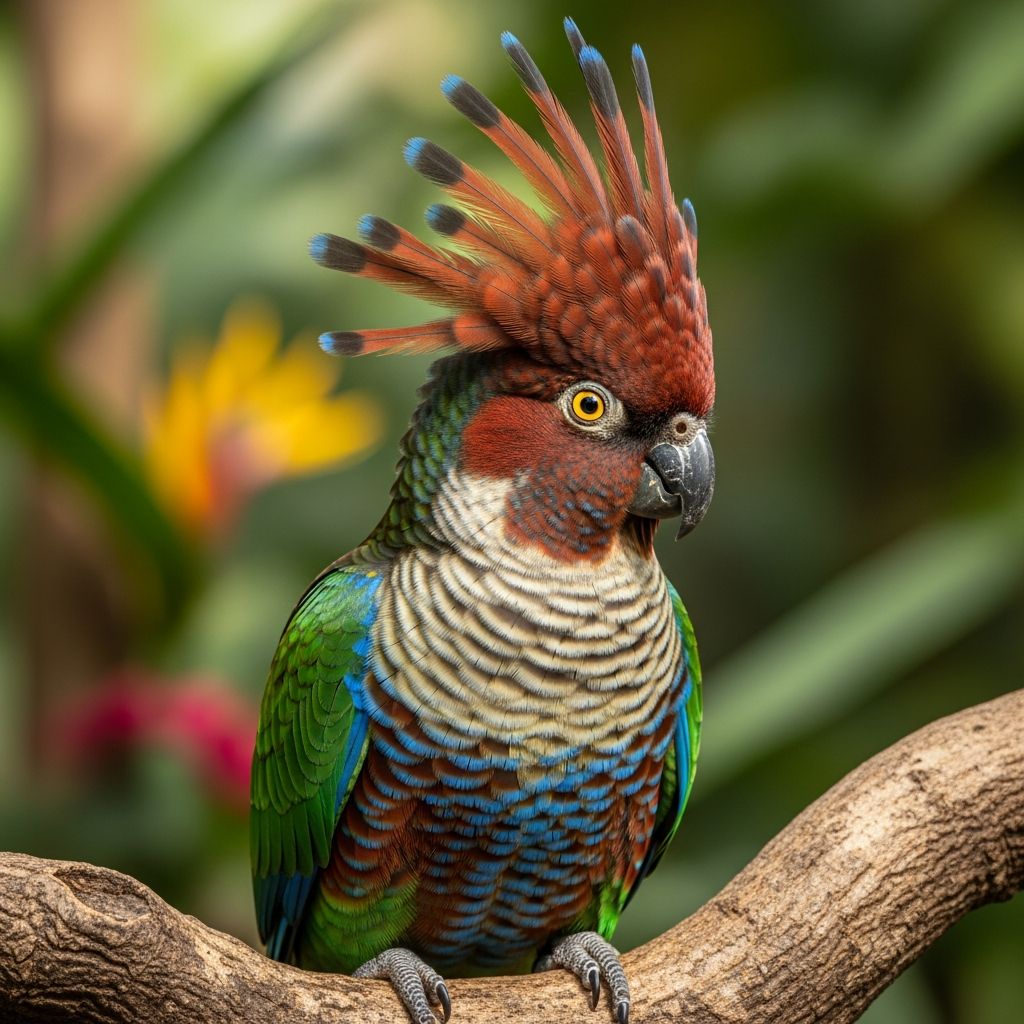
Hawk-headed parrots are truly one-of-a-kind birds, combining stunning beauty with remarkable intelligence and bold, expressive personalities. Their dramatic crest, fascinating social behaviors, and playful demeanor make them a standout species among parrots, but they require experienced, knowledgeable care to thrive as pets. These vibrant South American natives have captured the hearts of bird enthusiasts for generations, and understanding their unique needs is essential for anyone considering bringing one into their home.
Understanding the Hawk-Headed Parrot
Hawk-headed parrots, also known as red-fan parrots, are native to the rainforests of South America and their range includes Brazil, Venezuela, Colombia, Ecuador, Peru, Guyana, Suriname, and French Guiana. These remarkable birds belong to the Psittacidae family, which includes approximately 350 living and extinct bird species such as macaws, budgies, cockatoos, and parakeets. Members of this family possess zygodactyl feet, meaning two toes point forward and two point backward, giving them exceptional dexterity to move and hold food items. They also feature tough, hooked bills with the upper mandible attached to the skull and the lower mandible resting below, along with extremely strong tongue muscles that allow them to manipulate food in their mouths.
Name and Origin
The name “hawk-headed parrot” derives from their unique ability to raise a distinctive fan of red and blue feathers around their head and neck. This dramatic display resembles the ruff or hood seen in some hawks, giving them a striking “hawk-like” appearance. This extraordinary feature is what distinguishes them from other New World parrot species and makes them instantly recognizable.
Physical Characteristics and Appearance
Hawk-headed parrots are relatively small parrots, with adults weighing approximately 6.7 to 10.6 ounces (190 to 300 grams) and measuring about 14 inches (36 centimeters) long. Despite their modest size, their long, square tail and large beak and head make them appear larger than they actually are. Their striking coloration includes a sable brown face with white flecks, emerald green wings, back, and tail, with the underside of tail feathers being black.
The most distinctive feature of the hawk-headed parrot is undoubtedly its remarkable crest. These elegant feathers of rich maroon edged in electric blue form a crown of glory that frames the entire head. The crown of color extends down the back of the head, circling the neck and extending down the entire belly, creating a breathtaking display of color and texture. The breast, belly, vent, and base of the neck are covered with gray and red feathers, each edged in blue, while the forehead is a creamy white mixed with brown.
Adult hawk-headed parrots have yellow eyes, a gray bill, and black feet, while juveniles display brown eyes and a light-colored bill. Males and females lack sexual dimorphism, meaning they appear virtually identical, making it difficult to determine sex based on appearance alone. There are two subspecies: the nominate (Deroptyus accipitrinus accipitrinus) with a buff-colored patch on the crown, commonly called the buff-head hawk-head, and the subspecies D.a.fuscifrons lacking this buff coloration, commonly called the Brazilian hawk-head.
The Dramatic Crest Display
One of the most captivating aspects of hawk-headed parrots is their ability to raise their head feathers into a spectacular fan-like display. When excited or if they feel threatened, these birds raise their fan-shaped crest of red and blue feathers around their head and neck, creating a truly dazzling sight. Hawk-heads use their crest to give social signals such as excitement and curiosity. They also raise their crests to make themselves appear larger and more intimidating to potential threats, so a raised crest can indicate aggression or defensive behavior.
This display plumage is unique among New World parrots and serves multiple purposes in their social and survival strategies. The ability to dramatically change their appearance makes them one of the most visually impressive parrot species in the avian world.
Native Habitat and Natural Behavior
In their natural environment, hawk-headed parrots inhabit the lowland rainforests of South America, preferring areas with dense canopy cover. These birds typically live in pairs or small groups of four to seven birds and are quite territorial. They can most frequently be seen perching on high, bare branches displaying their long tails and colorful plumage, where they observe their surroundings and forage for food.
Unlike many other parrot species that are heavily collected for the pet trade, hawk-headed parrots are more solitary and harder to capture in the wild, making them less commonly available in aviculture. This rarity has made them highly sought after by dedicated enthusiasts who appreciate their unique characteristics and challenging care requirements.
Personality and Behavior
Hawk-headed parrots are known for their strong, independent personalities and complex behavioral patterns. These intelligent birds display remarkable individuality and are highly opinionated about their preferences and boundaries. While they can form strong bonds with their caregivers, hawk-headed parrots have a reputation for being headstrong and demand respect for their personal space and limits.
In the household, wild hawk-headed parrots observed to live in pairs or small groups explain their tendency to form a strong bond with one particular person. They might be shy around strangers but devoted to their favored people, showing affection and companionship in their own distinctive ways. Some suggest that hawk-headed parrots are typically not the best choice for first-time bird parents due to their complex behavior and need for experienced handling, though there are always exceptions to this general rule.
These parrots tend to be highly inquisitive and love investigating their surroundings, often displaying energetic and playful behaviors. They have a reputation for being confident and enjoy exploring, solving puzzles, and interacting with their environment. They are extremely affectionate and rambunctious, with a knack for entertaining themselves, so caregivers are not constantly at their beck and call.
Diet and Nutritional Needs
In the wild, hawk-headed parrots consume a varied diet that reflects their intelligent and creative foraging abilities. They eat guavas, Inga fruits, berries, seeds, nuts, buds, leaves, and occasionally feed on insects or other meat sources. These parrots are intelligent and creative, with the ability to solve puzzles when foraging for their food, demonstrating remarkable cognitive abilities in their natural habitat.
For captive birds, proper nutrition is crucial for maintaining optimal health. At facilities such as the Smithsonian’s National Zoo, hawk-headed parrots eat high-quality pellets supplemented with a variety of fresh fruits and vegetables. Keepers train the birds using small pieces of fruit and peanuts as positive reinforcement during training sessions and enrichment activities. A well-rounded diet for captive hawks should include:
- High-quality formulated pellets as the dietary base
- Fresh fruits including apples, berries, papayas, and mangoes
- Fresh vegetables such as leafy greens, carrots, and squash
- Nuts and seeds in moderation as treats
- Occasional protein sources like cooked chicken or hardboiled eggs
Fresh water should be available at all times, changed daily to maintain hygiene and prevent bacterial growth. Dietary variety not only ensures proper nutrition but also provides mental enrichment through foraging and exploration.
Lifespan and Longevity
Hawk-headed parrots are long-lived birds that form lasting partnerships with their human caregivers. In human care, these birds have been known to live into their early 30s, making them a significant long-term commitment. This extended lifespan means that adopting a hawk-headed parrot is truly a lifelong responsibility that requires dedication, resources, and unwavering commitment to the bird’s wellbeing across decades.
Communication and Vocalizations
Hawk-headed parrots produce a unique range of vocalizations that are distinct from many other parrot species. In courtship, male hawk-headed parrots produce musical whistles and bugle-like sounds while flashing their head feathers and bobbing their heads. The female also raises her crest feathers during courtship displays, and both males and females weave their heads from side to side in synchronized movements that strengthen their pair bond.
These birds are vocal communicators that use sound to express emotions, establish territories, and maintain social connections with their flock members or human caregivers.
Reproduction and Development
Breeding Season and Mating Behavior
Hawk-headed parrots begin their mating season in December, with larger foraging flocks separating into nesting pairs from December to January. These birds are monogamous and often select lifelong mating partners before they reach sexual maturity, forming bonds that may endure for decades. The breeding season itself takes place between January and March but varies by region and in some places extends to June.
Nesting and Egg-Laying
The female hawk-headed parrot lays one to three medium-sized white eggs in a nest cavity within an abandoned tree hole. Hawk-headed parrot parents often use the same nest cavity in an abandoned tree hole for years and may be seen resting in their nest hollow year-round. The male hawk-head cares for the female while she incubates the eggs, providing food and protection during this critical period.
Incubation and Chick Development
The chicks hatch after being incubated for 26 days and are initially blind and helpless, requiring constant parental care and attention. The chicks leave the nest after 10 to 12 weeks and become independent, though they may remain in close association with their parents for extended periods.
Care Requirements for Pet Hawk-Headed Parrots
Housing and Environment
Hawk-headed parrots require spacious, well-designed enclosures that allow for movement, flight, and natural behaviors. A large cage with multiple perches of varying diameters should be provided, along with plenty of toys and enrichment items. The enclosure should be placed in a quiet area away from kitchen fumes, drafts, and direct sunlight. Temperature should be maintained between 65-75°F (18-24°C), with adequate humidity levels to replicate their tropical origins.
Social Interaction and Enrichment
These intelligent birds require significant daily interaction with their caregivers and mental stimulation through puzzles, foraging toys, and environmental enrichment. Without adequate socialization and enrichment, hawk-headed parrots may develop behavioral problems such as feather plucking or aggression. Regular out-of-cage time, supervised exploration, and positive training sessions are essential components of proper care.
Frequently Asked Questions
Q: Are hawk-headed parrots good pets for beginners?
A: Hawk-headed parrots are generally not recommended for first-time bird owners due to their complex personalities, need for experienced handling, and demanding care requirements. They are better suited for experienced parrot enthusiasts who understand their unique behavioral needs.
Q: How long do hawk-headed parrots live?
A: In human care, hawk-headed parrots can live into their early 30s, making them a significant long-term commitment that requires decades of dedicated care and attention.
Q: What should I feed my hawk-headed parrot?
A: A balanced diet consists of high-quality pellets, fresh fruits, fresh vegetables, nuts, seeds, and occasional protein sources. Fresh water should be provided daily, and dietary variety is essential for both nutrition and mental enrichment.
Q: Why do hawk-headed parrots raise their crest feathers?
A: Hawk-headed parrots raise their distinctive red and blue crest feathers to display excitement, curiosity, or as a defensive mechanism to appear larger and more intimidating when threatened or agitated.
Q: How social are hawk-headed parrots?
A: In the wild, hawk-headed parrots live in pairs or small groups. As pets, they typically form strong bonds with one person in the household but may be shy around strangers. They can be quite territorial and require respect for their boundaries.
Q: Do hawk-headed parrots make good companions for families?
A: While hawk-headed parrots can be affectionate and playful, their strong personalities and need for experienced handling make them better suited for dedicated individuals or experienced bird enthusiasts rather than busy family environments.
References
- Hawk-headed Parrot – National Zoo — Smithsonian Institution. 2024. https://nationalzoo.si.edu/animals/hawk-headed-parrot
- Hawk-headed Parrot – The Dallas World Aquarium — Dallas World Aquarium. 2024. https://dwazoo.com/animal/hawk-headed-parrot/
- Hawk-headed Parrots – Small, Beautiful & Affectionate! — Birds’n’Ways. 2024. https://birdsnways.com/hawk-headed-parrots/
- Hawk-Headed Parrot Personality, Food & Care — Lafeber Company. 2024. https://lafeber.com/pet-birds/species/hawk-headed-parrot/
- Brazilian Hawk-Headed Parrot Facts and Information — SeaWorld Parks & Entertainment. 2024. https://seaworld.org/animals/facts/birds/brazilian-hawk-headed-parrot/
Similar Articles








Read full bio of medha deb


