

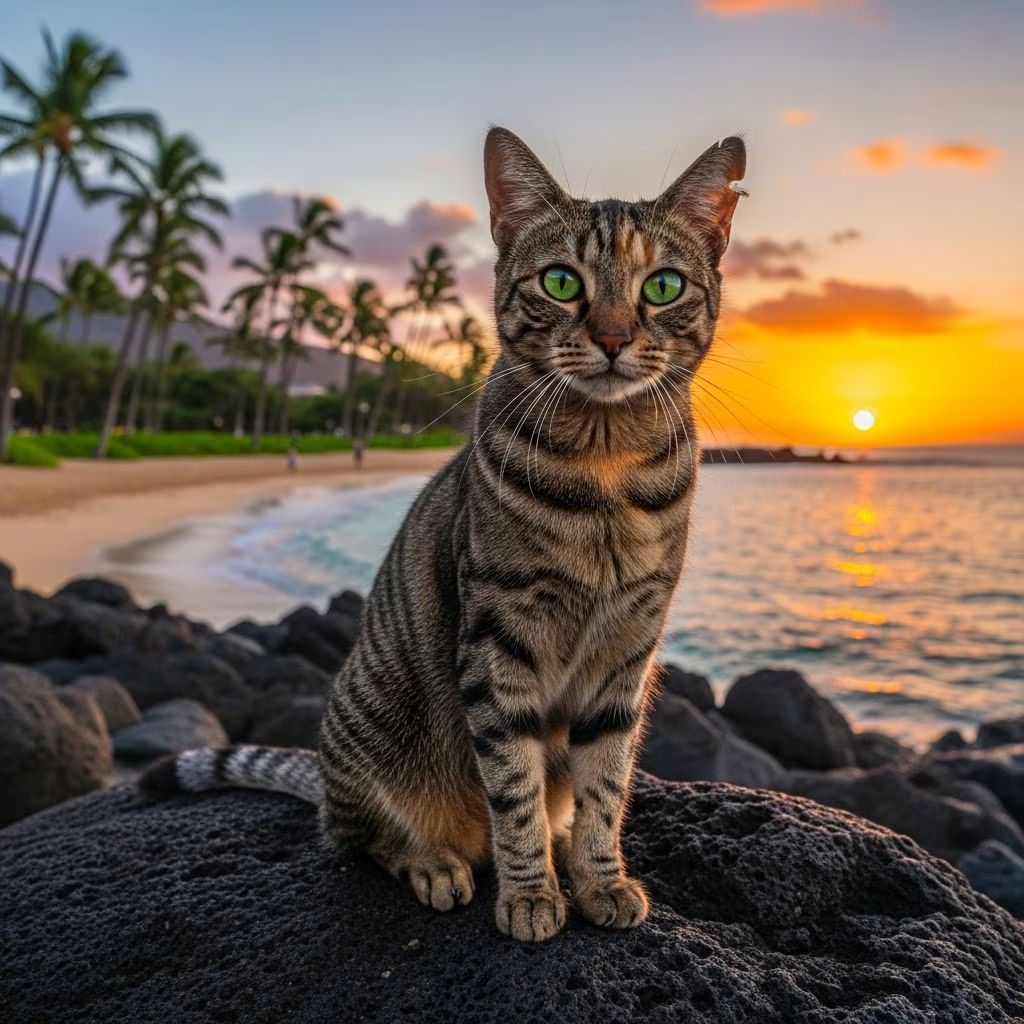
Hawaii’s idyllic islands face a hidden ecological disaster driven by vast populations of feral cats, numbering in the hundreds of thousands across the archipelago. These free-roaming felines, descendants of domesticated pets gone wild, prey relentlessly on the state’s fragile native wildlife, exacerbating extinction risks for endemic birds, reptiles, and other species.
The Explosive Growth of Feral Cat Populations
Feral cats thrive in Hawaii’s warm climate and abundant food sources, leading to unchecked proliferation. On Kauai alone, detailed surveys estimate around 15,500 feral cats, with a margin of error of ±4,000, distributed across residential areas, beaches, and wilderness zones. Some analyses suggest even higher figures, up to 25,000 on the same island, highlighting discrepancies in data collection methods.
Statewide, populations are staggering. Maui hosts an estimated 500,000 cats, many feral, according to health department figures. A recent mapping initiative identified approximately 900 cat colonies scattered across all major islands, providing the first comprehensive overview of their geographic spread. These colonies cluster in high-density areas like urban neighborhoods, tourist hotels, and coastal regions, where human-provided food sustains rapid reproduction.
| Island | Estimated Feral Cats | Main Habitats |
|---|---|---|
| Kauai | 15,500–25,000 | Beaches (26%), neighborhoods (18%), wilderness |
| Maui | 500,000 total cats (thousands feral) | Forests, urban edges |
| Statewide | Hundreds of thousands | 900+ colonies |
Density varies significantly: coastal business districts may support up to 1,500 cats per square mile, while remote beaches average 500. This proliferation stems from early European introductions, with cats establishing on all eight main islands and adapting to diverse environments from rugged coasts to interior wildlands.
Devastating Impacts on Native Ecosystems
Feral cats rank among Hawaii’s most destructive invasive predators, responsible for at least 14% of global island bird, mammal, and reptile extinctions. In Hawaii, the “extinction capital” of the U.S. with over 400 threatened or endangered species, cats pose the principal threat to nearly 8% of critically endangered birds.
Seabirds and ground-nesters suffer most. A single cat can kill over a dozen adult seabirds in three days, decimating colonies of species like the ‘a’o. Forest birds, marine nesting sites, and hatchling sea turtles fall victim routinely, as documented by wildlife specialists. Cats also transmit Toxoplasma gondii, a lethal parasite devastating native wildlife and contaminating water sources.
- Direct Predation: Birds (e.g., nene geese), lizards, bats, and turtle hatchlings.
- Indirect Effects: Disease spread, competition for resources, habitat alteration via scent marking.
- Case Study: Hilo’s Liliuokalani Park saw a nene gosling killed amid feral cat feeding, contributing to ongoing population struggles despite recovery from near-extinction lows of 30 birds in the 1950s.
With only 3,800 wild nene remaining, such incidents underscore the peril. On Lanai, feral cats threaten seabird habitats, prompting dual-protection efforts for felines and avifauna.
Management Strategies: Challenges and Approaches
Addressing feral cats involves balancing animal welfare, public sentiment, and conservation imperatives. The state Department of Land and Natural Resources (DLNR) does not track colonies officially, as cats lack protected status, complicating responses.
Trap-Neuter-Release (TNR): Popular among advocates, TNR sterilizes and releases cats to curb breeding. However, studies show it fails to reduce colony sizes effectively, as immigration and survival rates sustain populations.
Trapping and Euthanasia: Employed by groups like Hallux Ecosystem Restoration on Kauai, this targets high-threat areas near seabird habitats, working with utilities and state agencies.
Sanctuaries: Facilities like Lanai Cat Sanctuary house 800 cats on four acres, funded by donations, offering a humane alternative while protecting birds.
Feeding regulations exist but enforcement is lax; it’s legal except at state harbors, though mixed feeding harms wildlife. A Hilo woman faced citation for feeding cats and nene birds, illustrating tensions.
Mapping and Monitoring Innovations
Recent advancements include a pioneering statewide feral cat colony map by researcher Lerma, pinpointing 900 sites. Though not yet public, it could guide targeted interventions, prioritizing threats to birds. Conservationists like Alex Dutcher advocate sharing it to maximize gains for species protection.
Population modeling on Kauai used demographic data, cat censuses, and density estimates across land-use types (e.g., 790 cats per square mile in some business areas). Such tools reveal hotspots: 29% of Kauai cats in beaches/rugged coasts, 20% in residential zones.
Community and Policy Dynamics
Public attitudes fuel the crisis. Feeding sustains colonies, driven by compassion but ignoring ecological costs. Education campaigns by groups like Friends of Kauai Wildlife Refuges push for zero free-roaming cats through multi-pronged efforts.
Policy lags: No unified strategy exists, with counties contracting private firms for control. Inter-island variations persist—Lanai lacks shelters beyond its sanctuary, amplifying reliance on such models.
Pathways to Resolution
Sustainable solutions demand integration: expanded TNR with removal, public awareness, stricter feeding enforcement, and data-driven mapping. Incentives for pet ownership (microchipping, spaying) could stem abandonment. Collaboration among DLNR, NGOs, and communities is essential to safeguard Hawaii’s biodiversity without vilifying cats.
Success stories, like nene recovery, prove intervention works. Scaling these amid a 900-colony challenge requires urgency.
Frequently Asked Questions (FAQs)
How many feral cats are in Hawaii?
Estimates range from 15,500–25,000 on Kauai to hundreds of thousands statewide, with 500,000 total cats on Maui.
Why are feral cats a problem in Hawaii?
They prey on native species, spread diseases like Toxoplasma, and contribute to extinctions in island ecosystems.
Does trap-neuter-release work for feral cats?
Studies indicate TNR does not effectively reduce populations due to ongoing recruitment.
Is it legal to feed feral cats in Hawaii?
Generally yes, except at state harbors and when it harms wildlife; enforcement targets violations.
What can individuals do about feral cats?
Report colonies, support sanctuaries, avoid feeding, and advocate for responsible pet ownership.
References
- Kauai’s Feral Cats Estimate — Kauai Community Cats. 2016-05. https://kauaicommunitycats.org/wp-content/uploads/2016/05/Kauai_FeralCats_Estimate.pdf
- New Feral Cat Colony Map Could Save Hawaii’s Native Birds — Civil Beat. 2024-11. https://www.civilbeat.org/2024/11/new-feral-cat-colony-map-could-save-hawaiis-native-birds-but-its-secret/
- Feral Cats Profile — Hawaii Invasive Species Council (DLNR). N/A. https://dlnr.hawaii.gov/hisc/info/invasive-species-profiles/feral-cats/
- Feral Cats — Big Island Invasive Species Committee. N/A. https://www.biisc.org/pest/feral-cats/
- Feral Cats Harm Our Wildlife — Kauai Refuges. N/A. https://www.kauairefuges.org/blog/feral-cats-harm-our-wildlife
- Cats on Maui — Maui Forest Bird Recovery Project. N/A. https://www.mauiforestbirds.org/invasive-small-mammals-on-maui-cats/



