

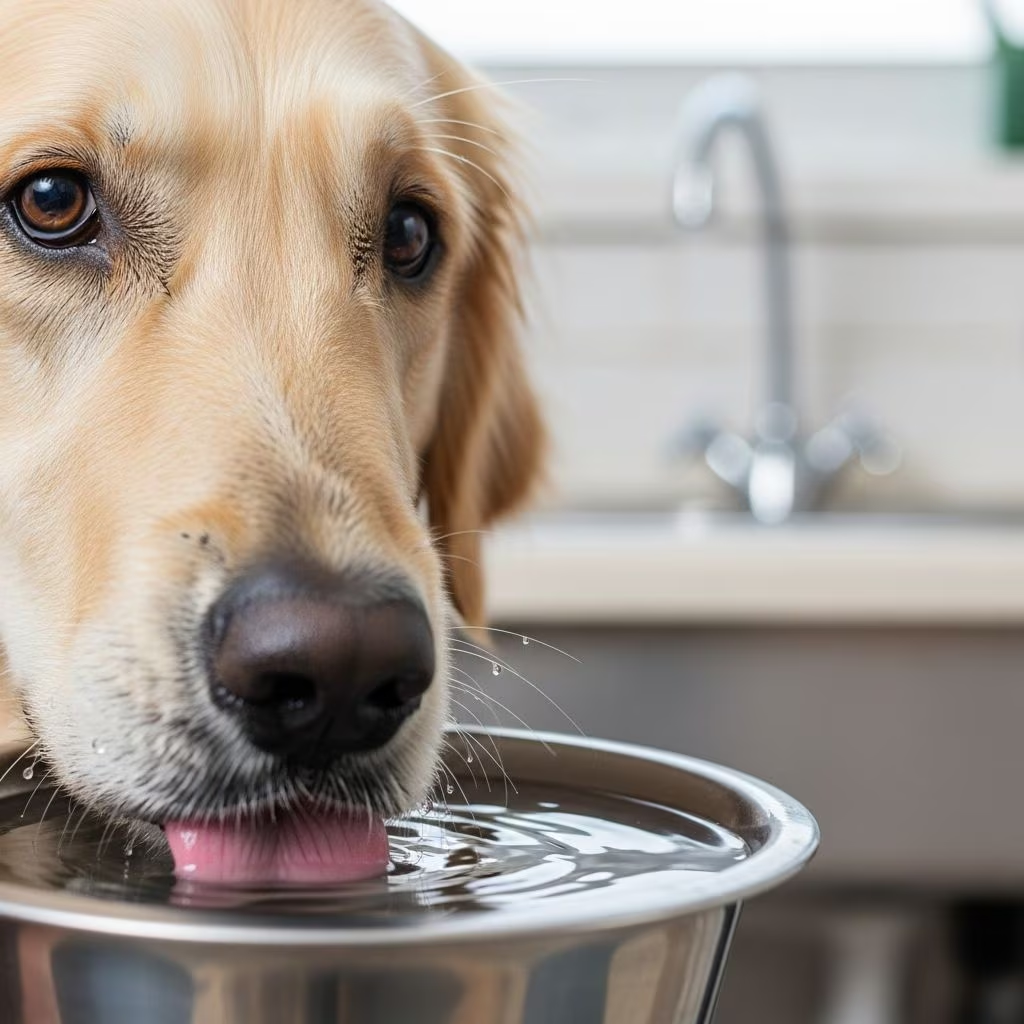
Hard water, characterized by elevated levels of minerals such as calcium and magnesium, is common in many regions and raises questions about its suitability for canine consumption. While these minerals support essential bodily functions, emerging evidence suggests potential links to urinary tract problems in pets, prompting dog owners to evaluate their local water quality.
Defining Hard Water and Its Composition
Hard water forms when groundwater passes through limestone or chalk, absorbing ions like calcium (Ca²⁺) and magnesium (Mg²⁺). Water hardness is measured in grains per gallon (gpg) or parts per million (ppm): soft water is under 1 gpg, moderately hard ranges from 3.5-7 gpg, hard is 7-10.5 gpg, and very hard exceeds 10.5 gpg. For dogs, the primary concern isn’t toxicity but how these minerals interact with their physiology over time.
Calcium aids bone density, muscle contraction, and nerve signaling, while magnesium supports enzyme reactions and energy metabolism. In moderation, they pose no harm and may even offer benefits, as noted in general health assessments. However, excessive intake through drinking water could contribute to crystal formation in urine, particularly in susceptible animals.
Potential Health Impacts on Canine Urinary Systems
Urinary health represents the most discussed area of concern. High mineral content may promote crystalluria—crystals in urine that irritate the bladder and lead to infections or stones. Struvite (magnesium ammonium phosphate) and calcium oxalate stones are prevalent in dogs, with hard water potentially exacerbating risks by supplying extra precursors.
A key study by pet insurer Trupanion analyzed claims data, revealing that in extremely hard water areas (e.g., parts of California, Florida, and Massachusetts), cats faced triple the urinary complications like cystitis and obstructions compared to softer water zones. Dogs showed lower incidence but still elevated risks, especially females who are 2.5 times more prone to issues like incontinence and tract infections.
- Crystalluria: Early crystals signal stone risk.
- Cystitis: Bladder inflammation from irritation.
- Bladder stones: Painful blockages requiring intervention.
- UTIs: Infections secondary to crystal damage.
Breeds like Dalmatians, Bulldogs, Yorkshire Terriers, and Miniature Schnauzers, predisposed to urolithiasis, may face heightened vulnerability in hard water environments.
Skin and Coat Challenges from Mineral Buildup
Beyond internals, hard water affects external health. Bathing in it leaves mineral residues on skin and fur, causing dryness, itchiness, and dull coats. Owners report flakiness, hot spots, and excessive scratching post-baths, mirroring human effects. Drinking hard water might indirectly worsen this by altering skin pH or hydration balance.
Dogs with allergies or sensitive skin (e.g., Bulldogs, Labs) notice amplified symptoms. Residue clogs follicles, hindering natural oils and leading to brittle hair. Regular exposure without mitigation can escalate to dermatitis.
Assessing Your Local Water Hardness
Check your area’s hardness via municipal reports or online maps from the USGS. Home testing kits, available at pet stores, use strips or drops for quick ppm readings. Professional lab analysis provides precise ion breakdowns.
| Hardness Level | Grains per Gallon (gpg) | Potential Dog Impact |
|---|---|---|
| Soft | <1 | Minimal risks; may lack beneficial minerals |
| Moderately Hard | 1-3.5 | Generally safe |
| Hard | 3.5-7 | Monitor urinary signs |
| Very Hard | 7-10.5 | Increased crystal risk |
| Extremely Hard | >10.5 | Filtration recommended |
Solutions for Providing Optimal Hydration
Switching to filtered or softened water mitigates risks without stripping essentials. Reverse osmosis (RO) systems remove 90-99% of minerals, ideal for high-risk dogs. Ion-exchange softeners swap calcium/magnesium for sodium, but monitor sodium for heart-sensitive pets.
- Activated carbon filters: Reduce chlorine/taste issues.
- Distillation: Pure but mineral-free; supplement diet.
- Bottled spring water: Convenient, check labels for hardness.
- Water additives: Dilute minerals temporarily.
For baths, vinegar rinses (1:10 dilution) dissolve residues. Holistic vets advocate raw, meat-based diets low in plant magnesium to counter water intake.
Recognizing Symptoms and When to Seek Vet Care
Watch for straining to urinate, blood in urine, frequent small voids, or licking genitals excessively—these signal urinary distress. Skin signs include persistent itching, bald patches, or greasy fur. Lethargy or appetite loss warrants immediate checks.
Vets may recommend urinalysis, X-rays for stones, or dietary shifts. Early intervention prevents surgeries, common in stone cases.
Nutritional and Lifestyle Adjustments
Balance water with diet: High-moisture raw foods promote dilutional urination, flushing crystals. Avoid grain-heavy kibble rich in magnesium. Encourage 1 oz water per lb body weight daily, more in heat.
Exercise aids urinary flow; obesity heightens stone risks. Annual checkups include sediment exams for proactive monitoring.
Regional Variations and Broader Context
U.S. Midwest and Southwest often report very hard water (e.g., Florida averages 10+ gpg). Globally, WHO deems hard water safe, citing possible cardiovascular perks from magnesium, though pet-specific data lags.
Chlorine/fluoride in tap water concerns holistic experts more than hardness, advocating filtration broadly.
FAQs
Is hard water toxic to dogs?
No, minerals aren’t poisonous, but excess may promote urinary crystals in prone dogs.
Can boiling tap water soften it for my pet?
Boiling precipitates some calcium but leaves magnesium; ineffective for full softening.
Which breeds need extra caution?
Dalmatians, Bulldogs, Yorkies, and Shih Tzus due to genetic urinary predispositions.
Does softened water harm dogs?
Slight sodium increase is fine for most; consult vet for kidney/heart cases.
How often should I test my dog’s water source?
Annually or after plumbing changes; more if symptoms appear.
Long-Term Strategies for Pet Wellness
Integrate water quality into routine care: Install point-of-use filters at bowls, rotate sources, and track health trends. Educate on local geology—limestone areas signal hardness. Community water softeners benefit households but verify pet safety.
Research evolves; Trupanion’s findings spur calls for vet-led studies. Meanwhile, proactive owners minimize risks, ensuring vibrant health.
References
- Hardness in Drinking Water — World Health Organization. 2009-10-01. https://www.who.int/publications/i/item/9789241563550
- Does water type matter? — University of Minnesota College of Veterinary Medicine. Accessed 2026. https://vetmed.umn.edu/urolith-center/advice-and-facts/does-water-type-matter
- Can Dogs Drink Hard Water? Is Hard Water Bad For Dogs? — Dogster (summarizing Trupanion study). 2023-05-15. https://www.dogster.com/dog-health-care/can-dogs-drink-hard-water
- Can Hard Water Harm Your Dog? — Dogs Naturally Magazine (referencing Trupanion). 2023-08-20. https://www.dogsnaturallymagazine.com/can-hard-water-harm-dog/
- Should You Give Your Pets Hard Water Or Soft Water? — Water-Right. 2024-02-10. https://www.water-right.com/homeowner-resources/pets-hard-water-soft-water/



