

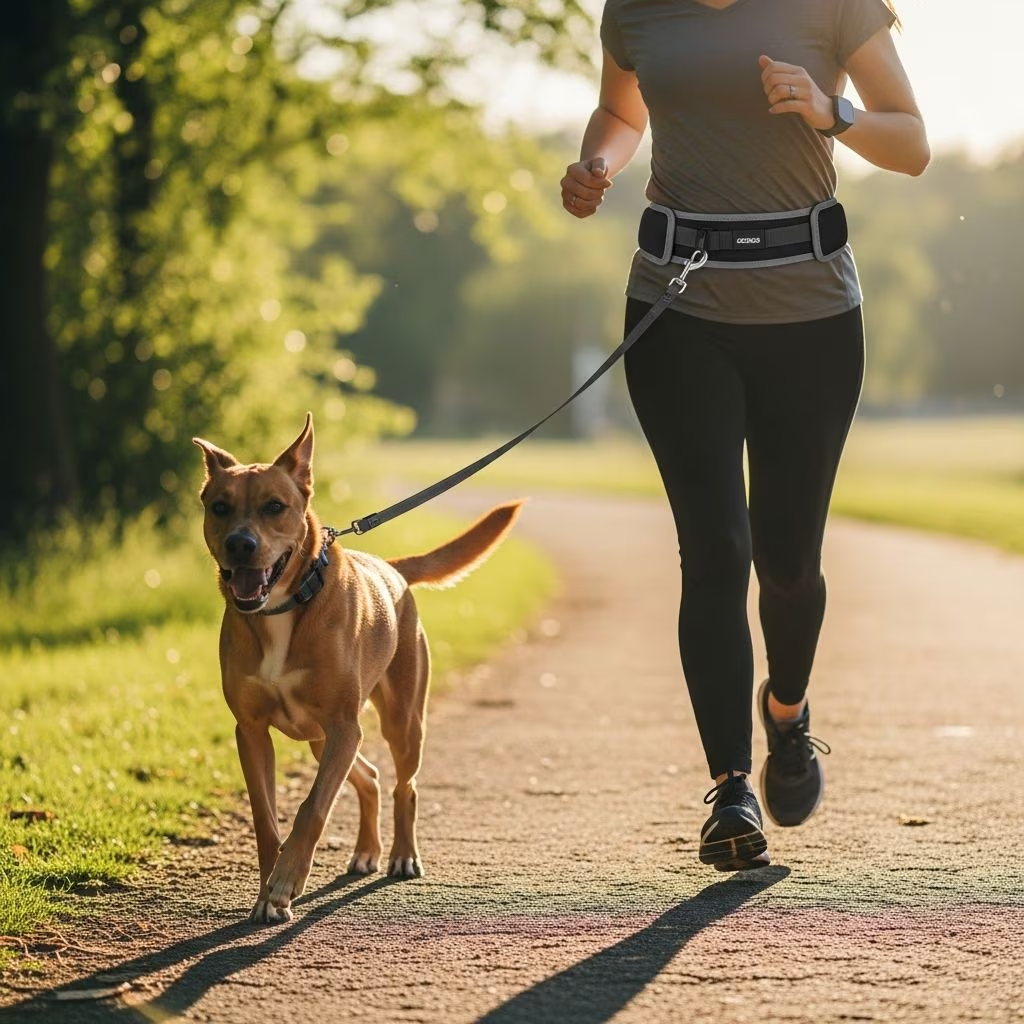
The traditional dog leash has been a constant companion for pet owners for generations, but modern innovations continue to reshape how we interact with our canine friends during outdoor activities. Among these innovations, hands-free dog leashes have emerged as a practical solution for individuals seeking greater convenience and flexibility during walks, runs, and training sessions. These leashes, which attach to a belt worn around the waist or hips, represent a significant shift in how dogs and owners can move together through various environments.
Unlike conventional handheld leashes that require constant grip and attention, hands-free designs redistribute the responsibility of control across your torso, fundamentally changing the dynamics of walking or running with your dog. This shift offers compelling advantages for certain lifestyles while simultaneously presenting unique challenges that deserve careful consideration. Understanding both dimensions of hands-free leashes enables dog owners to make informed decisions about whether this tool aligns with their specific needs and their dog’s behavioral profile.
The Core Mechanics: How Hands-Free Leashes Function
A hands-free dog leash operates on a deceptively simple principle: rather than holding a leash handle in your hand, the leash attaches directly to a belt or harness system positioned around your waist or hips. This attachment point becomes the central anchor for your dog’s movement, with many modern designs incorporating elastic bungee sections that absorb shock and accommodate your dog’s natural gait variations.
The typical hands-free system features several essential components:
- A waist belt or hip attachment point, usually padded for comfort during extended wear
- A leash line extending from the belt, typically ranging from 36 to 48 inches in standard configurations
- An elastic bungee section designed to absorb pulling forces and reduce jarring movements
- Additional attachment points for carrying essentials like waste bags or keys
- Weather-resistant or waterproof materials for durability across seasons
Some advanced models include quick-release mechanisms that allow you to rapidly detach your dog in emergency situations without fumbling with traditional clip systems. This feature adds an important safety layer for owners of reactive dogs or those frequenting high-traffic environments.
Advantages for Active Lifestyles and Specific Scenarios
Hands-free leashes excel in particular contexts where traditional handheld options create practical or physical limitations. The absence of a constant grip requirement fundamentally changes what becomes possible during outdoor activities with your dog.
Physical Comfort and Health Considerations
The most immediate benefit for many users involves eliminating the strain associated with holding and controlling a leash. Traditional leashes concentrate pulling force through your hands, wrists, and arms, which can lead to fatigue, soreness, or exacerbation of existing conditions like arthritis or tendonitis. By distributing this force across your waist and hips, hands-free systems protect vulnerable joints and allow for more natural arm movement during walks or runs.
This advantage particularly benefits individuals with mobility challenges, chronic pain conditions, or those recovering from upper extremity injuries. Runners discover that hands-free leashes eliminate the awkward imbalance of holding a leash in one hand while attempting to maintain proper running form.
Training and Behavioral Management
Dog trainers and behavioral specialists recognize significant value in hands-free leashes during training sessions. With your hands completely free, you can simultaneously manage multiple training tools: holding treats in one hand while operating a training clicker with the other. This capacity for multitasking streamlines reward delivery timing, which directly impacts training effectiveness.
Additionally, the reduced physical connection between your hand and the leash can encourage dogs to develop better loose-leash walking habits. Without feeling constant tension adjustments from your hands, dogs may naturally learn to maintain appropriate pace without pulling, especially when combined with structured training protocols.
Multi-Task Capability
Modern life frequently requires managing multiple responsibilities simultaneously during outdoor time with your dog. Whether pushing a stroller, carrying groceries, managing a phone, or holding a coffee cup, hands-free leashes enable you to maintain dog control while attending to these necessities. This practical flexibility makes hands-free systems particularly attractive to busy dog owners juggling complex schedules and competing demands.
Hiking and Trail Activities
Off-leash hiking and trail walking benefit enormously from hands-free designs. Maintaining balance on uneven terrain becomes significantly easier when your arms remain free for stabilization. Additionally, having free hands allows you to manage gear, navigate technical sections, or photograph scenery without compromising your dog’s safety and control.
Significant Challenges and Risk Factors
Despite compelling advantages, hands-free leashes introduce genuine safety and control complications that prospective users must carefully evaluate before adoption.
Increased Risk of Personal Injury
The distribution of pulling force across your waist and hips, while beneficial in many scenarios, creates distinct fall and injury risks. A sudden, forceful pull from a strong dog can disrupt your balance and potentially cause you to stumble or fall, particularly if you’re not braced for the jerk. This risk escalates with larger dogs or those with established pulling behaviors.
Chronic pulling against a hands-free system can also generate strain in your hip flexors, lower back, and abdominal muscles—areas not accustomed to bearing leash tension. Over time, this repeated stress may contribute to musculoskeletal complaints, particularly for individuals already managing joint or spine conditions.
Reduced Responsiveness and Control Precision
Hands-free leashes inherently sacrifice the immediacy of directional correction and feedback available through traditional handheld systems. When your dog suddenly lunges, exhibits reactive behavior, or attempts to pursue a distraction, your response capacity is compromised compared to having direct physical control through a handheld leash.
In crowded urban environments, congested parks, or situations requiring split-second directional changes, this reduced responsiveness can create dangerous scenarios. You cannot quickly guide your dog away from traffic, other aggressive dogs, or hazardous situations with the same precision as a handheld leash permits.
Behavioral Misinterpretation
Dogs lacking appropriate training may interpret the freedom inherent in hands-free systems as permission to increase pulling behavior. Without the familiar feedback of your hand adjusting leash tension, some dogs escalate their pulling attempts, creating a self-reinforcing cycle of problematic behavior.
Furthermore, the reduced feedback mechanism can make hands-free leashes less suitable for dogs with strong prey drive or reactive tendencies. These dogs require immediate, clear communication through leash pressure to interrupt undesired behavioral sequences before they escalate.
Material Durability Limitations
Many hands-free leash designs prioritize comfort and lightweight construction over the robust durability of traditional leather or heavy-duty nylon leashes. Dogs that consistently pull with significant force can exceed the structural integrity of these systems, potentially leading to failure when safety is most critical.
Comparative Analysis: Hands-Free versus Traditional Leashing
| Feature | Hands-Free Leash | Traditional Handheld Leash |
|---|---|---|
| Hand Availability | Both hands free for multitasking | One hand required for grip |
| Upper Body Strain | Minimal; force distributed to hips/waist | Concentrated through hand, wrist, arm |
| Directional Control Precision | Moderate; slower feedback loop | Immediate; direct hand contact |
| Running/Jogging Suitability | Excellent with elastic absorption | Awkward, creates imbalance |
| Responsiveness to Reactive Behavior | Limited; delayed correction capability | Optimal; instantaneous adjustment |
| Material Durability | Variable; often lighter-weight materials | Traditional leather very durable |
| Ideal Dog Temperament | Well-trained, moderate pullers | All temperaments, strong pullers |
| Multitasking Compatibility | Excellent; designed for this purpose | Poor; requires constant attention |
Determining Suitability: Is a Hands-Free Leash Right for You?
Selecting appropriate leash equipment requires honest assessment of both your lifestyle and your individual dog’s behavioral characteristics. Hands-free systems offer genuine value for specific user profiles while potentially creating complications for others.
Ideal Candidates for Hands-Free Systems:
- Active individuals who run, hike, or engage in trail activities regularly
- Dog owners with upper extremity injuries, chronic pain, or mobility limitations
- Professional trainers working with clicker training or reward-based methods
- People managing multiple tasks during walks (stroller pushing, shopping, etc.)
- Owners of well-trained dogs with established loose-leash walking behaviors
- Individuals walking multiple dogs who need one system on their waist while maintaining additional control
Situations Requiring Caution or Alternative Options:
- Large, powerful dogs with strong pulling tendencies requiring immediate correction
- Reactive or aggressive dogs needing split-second behavioral intervention
- Dogs with significant prey drive in environments with distractions
- Owners with balance or stability concerns who could be injured by unexpected jerks
- High-traffic urban environments requiring precise directional control
- Dogs with histories of lunging at other animals or people
Essential Training Protocols for Hands-Free Success
Successful hands-free leash use depends fundamentally on proper training preparation. Simply transitioning from traditional leashes without behavioral groundwork invites frustration and potential safety complications.
Foundation Training Requirements
Before attaching a hands-free leash, your dog should demonstrate reliable loose-leash walking on traditional equipment. This foundational skill transfers to the new system but becomes critically important because you cannot apply the same corrective techniques through a hands-free apparatus as you can with a handheld leash.
Gradually introduce the hands-free system during low-distraction environments where your dog has previously demonstrated consistent behavior. This transition period allows your dog to acclimate to the different attachment point and elastic characteristics without encountering the compounded stress of novel distractions.
Reinforcing Appropriate Behavior
Use positive reinforcement extensively during the transition period. Reward your dog consistently for maintaining appropriate pace, not pulling, and responding to directional cues. The freedom permitted by hands-free systems can sometimes encourage increased pulling if your dog doesn’t receive clear feedback that pulling remains undesirable behavior.
Practice emergency stops and rapid directional changes in controlled settings before navigating challenging real-world scenarios. This preparation ensures you understand how your dog responds to your body language and voice commands when physical leash tension cannot provide immediate correction.
Frequently Asked Questions About Hands-Free Leashes
Q: Can hands-free leashes work for large, powerful dogs?
A: While technically possible, hands-free systems require exceptionally well-trained large dogs. The force distribution across your waist, while beneficial, cannot accommodate sudden explosive pulls from extremely strong dogs without risking your personal safety. Consider your specific dog’s pulling tendencies carefully.
Q: Are hands-free leashes suitable for puppies?
A: Not typically during early development stages. Puppies need frequent directional adjustments and behavioral corrections that hands-free systems cannot deliver effectively. Wait until your dog demonstrates consistent loose-leash walking before considering this equipment.
Q: How do I know if a hands-free leash will work for my dog?
A: Test the system during short walks in familiar, low-distraction environments. Monitor whether your dog maintains appropriate pace or escalates pulling behavior. If pulling increases significantly or you feel unsafe, return to traditional equipment.
Q: What size dog do hands-free leashes accommodate?
A: Most commercial systems work best for dogs ranging from 25 to 100 pounds. Very small dogs may be overpowered by the system’s mechanics, while extremely large dogs may generate forces exceeding the equipment’s design specifications.
Practical Recommendations for Implementation
If you decide to adopt a hands-free leash system, several practical considerations enhance success probability. Begin with quality equipment designed specifically for hands-free use rather than improvising with standard leashes attached to belts. Commercial systems incorporate proper weight distribution, elastic shock absorption, and attachment mechanisms engineered for this specific purpose.
Invest time in gradual transition rather than abrupt switching. Alternate between traditional and hands-free systems across multiple walks, allowing your dog to build positive associations with the new equipment without overwhelming sensory or behavioral changes.
Maintain regular practice with basic obedience commands, particularly “heel,” “stop,” and directional cues. These commands become your primary tools for managing your dog’s behavior when you cannot apply instant physical corrections through a handheld leash.
Pay attention to your own physical response to the system. If you experience back pain, hip strain, or feel consistently unbalanced during hands-free walks, these signals indicate the system may not suit your body mechanics, regardless of how well your dog adapts.
Conclusion: Matching Equipment to Your Circumstances
Hands-free dog leashes represent legitimate innovation in canine management equipment, offering compelling advantages for active individuals and professional trainers working with well-trained dogs. The freedom to multitask, combined with reduced upper body strain, creates genuine appeal for the right applications.
However, these advantages come with meaningful tradeoffs in control precision and responsiveness. Hands-free leashes demand greater behavioral preparation from your dog and require personal physical capability to manage the different force dynamics. Honest assessment of your specific dog’s temperament, your physical capacity, and your primary activities with your dog ensures you select equipment truly serving your needs rather than pursuing a trend incompatible with your situation.
Whether hands-free leashes prove beneficial ultimately depends on matching the equipment’s strengths to your actual lifestyle requirements and your dog’s behavioral profile. When that alignment exists, hands-free systems can genuinely enhance both comfort and functionality in your daily interactions with your canine companion.
References
- Hands Free Dog Leash Pros & Cons — Mighty Paw. 2024. https://mightypaw.com/blogs/news/hands-free-dog-leash-pros-cons
- Why Choose a Hands Free Leash for Training — The Exceptional Dog Shop. 2024. https://theexceptionaldogshop.com/blogs/featured-articles/why-choose-a-hands-free-leash-for-training
- Hands-Free Dog Leads: The Pros, the Risks, and Training Tips for Success — PK9 Gear. 2024. https://pk9gear.com.au/blogs/the-dog-owners-guide/hands-free-dog-leads-the-pros-the-risks-and-training-tips-for-success
- Hands-Free vs Traditional Leashes: Which Style Works Best for You — The Lille Bjørn. 2024. https://thelillebjorn.com/blogs/dog-style-and-health-diaries/hands-free-dog-leashes-vs-classic-leather-leashes
- Hands-Free Dog Leashes: What’s the Hype? — Bolder K9. 2024. https://www.bolderk9.com/blogs/bolder-blog/hype-behind-hands-free-leashes
- 5 Advantages of Using a Hands-Free Dog Leash — HUND Denmark. 2024. https://www.hunddenmark.com/blogs/news/5-advantages-of-using-a-hands-free-dog-leash



