

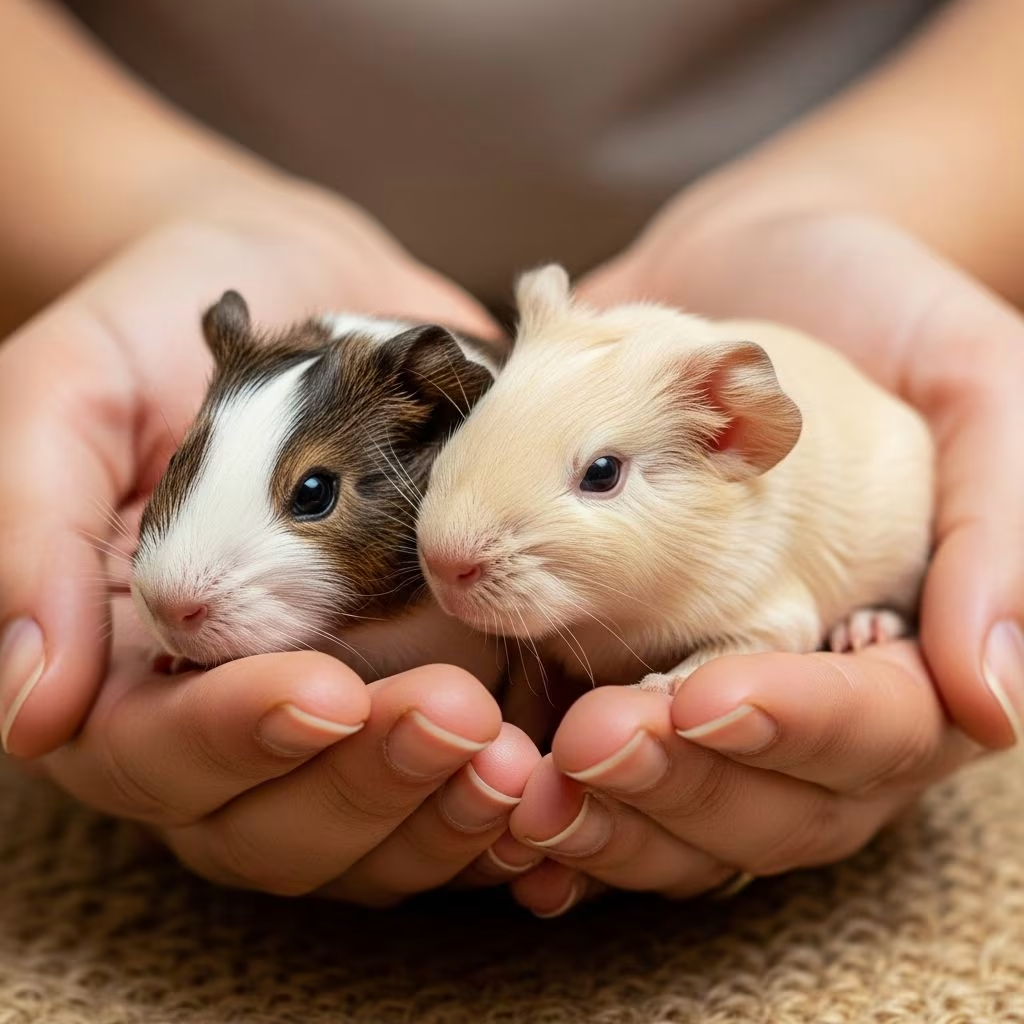
Handling Rules for Newborn Guinea Pigs: A Complete Care Guide
Newborn guinea pigs are delicate creatures that require specialized care and attention from the moment they enter the world. With their disproportionately large ears and legs, baby guinea pigs are undeniably adorable, but their fragility demands that owners approach them with utmost care and gentleness. The good news is that these tiny cavies can be handled from birth if proper precautions are taken and the handling does not interfere with the birthing process. Understanding the fundamentals of newborn guinea pig handling is essential for any breeder or owner expecting a litter.
Can You Handle Newborn Guinea Pigs?
One of the most common questions new guinea pig owners ask is whether it is safe to handle newborn guinea pigs immediately after birth. The answer is yes, but with important caveats. Newborn guinea pigs can be handled from the moment they are born, provided that you exercise extreme care and do not interfere with the mother’s birthing process. The mother guinea pig will not reject her babies simply because you have handled them, contrary to popular myth. However, it is crucial to wash your hands thoroughly before any contact to eliminate harmful bacteria and remove odors from other animals that might stress the mother or babies.
When first handling newborns, keep these essential guidelines in mind: use gentle, deliberate movements, support the baby’s body weight evenly, and never squeeze or apply pressure. Hold your baby guinea pig to your chest for short periods, allowing them to acclimate to human contact gradually. If the baby becomes wriggly, fidgety, or emits distressed squeals, return them immediately to their mother. These vocalizations indicate stress, and prolonged separation from the mother can negatively impact the baby’s development and nursing schedule.
Sexing Newborn Guinea Pigs
Determining the sex of newborn guinea pigs is possible at birth, though it requires careful observation and, ideally, experience. Most guinea pig owners should rely on veterinarians or experienced breeders to sex their babies accurately, as mistakes can lead to unwanted breeding later on.
Male guinea pigs display a characteristic white ring in their genital area when examined closely. This distinguishing feature becomes more apparent within the first few days of life. Additionally, male guinea pigs can become sexually active as early as three weeks of age, though their effectiveness at this young age is minimal. Nonetheless, separating males from females before this age is important to prevent accidental breeding.
Female guinea pigs have a genital area that resembles a tiny grain of rice when viewed from above. This subtle distinction requires a careful, gentle examination to identify correctly. Female guinea pigs must remain with their mother for at least four weeks to ensure proper weaning and development.
Early Nursing and Feeding Timeline
Understanding the nursing timeline is critical for supporting both the mother and her offspring. Baby guinea pigs follow a predictable developmental pattern that guides their nutritional needs and care requirements.
The First 24 Hours
Baby guinea pigs are born with impressive vitality and will begin nursing within a 24-hour period, though the exact timing varies. It is crucial not to panic if newborns do not latch on immediately. The mother guinea pig must first clean her babies and consume the afterbirth, which triggers chemical processes that generate her mammary glands and stimulate milk production. Similar to human mothers, guinea pig mothers do not produce milk instantaneously; milk production typically begins within the first day or two after birth. During this critical window, the mother is performing essential grooming and bonding behaviors that prepare her for nursing.
Days Three Through Weaning
By day three of life, baby guinea pigs will begin eating solid foods as their mother demonstrates proper foraging behavior. This early introduction to solid food is natural and healthy, but it does not mean the babies are ready for weaning. Nursing must continue for at least three weeks, regardless of solid food consumption, as maternal milk provides irreplaceable antibodies and essential nutrients.
During the nursing period, the mother performs multiple critical functions beyond providing milk. She stimulates her babies to urinate and defecate by cleaning their bottoms periodically throughout the day—a behavior that continues for at least three weeks. The mother also produces softer stools that babies consume to establish proper bacterial flora in their digestive systems. This microbial foundation is essential for lifelong digestive health. Separating babies from their mother too early disrupts this crucial process and can lead to digestive complications.
Supporting the Nursing Mother
Proper nutrition for the nursing mother directly impacts the health and development of her offspring. During lactation, the mother guinea pig requires enhanced nutrition to meet the demands of milk production.
Alfalfa is an excellent supplement during nursing, as it is a nutrient-rich grass with high calcium content. This is one of the few times alfalfa can be safely offered to guinea pigs without concern about excessive calcium intake. The additional calcium supports milk production and helps maintain the mother’s health during this metabolically demanding period.
Provide the mother guinea pig and her babies with the freshest, highest-quality foods available. Fresh hay should be offered continuously, supplemented with fresh vegetables and a measured amount of high-quality pellets. Clean water must be available at all times. This nutritional foundation ensures that babies develop strong bones, healthy immune systems, and achieve appropriate growth milestones.
Proper Handling Techniques for Baby Guinea Pigs
Correct handling methods protect newborns from injury and stress while helping them acclimate to human interaction. These techniques should be employed from the first days of life.
Before You Handle
Always wash your hands thoroughly before any contact with baby guinea pigs. Handwashing accomplishes two important goals: it removes harmful bacteria that could cause infection in these vulnerable creatures, and it eliminates odors from other animals or objects that might stress the babies or their mother. Use warm water and mild soap, and dry your hands completely before handling.
The Proper Hold
Support is the foundation of safe handling. Slide one hand under the baby’s chest while using your other hand to support the bottom. This two-handed approach distributes weight evenly and ensures maximum comfort. Never pick up a baby guinea pig by the scruff or allow their rear legs to dangle unsupported. The spinal column and back legs are particularly vulnerable to injury in young animals.
Once you have properly supported your baby, hold them gently to your chest. The warmth and familiar heartbeat of a human body can be surprisingly soothing to newborns. However, keep these sessions brief—just a few minutes initially. As the baby becomes more accustomed to handling, you can gradually increase duration, always watching for signs of stress such as squealing or excessive wriggling.
Safety Considerations
Never make sudden movements when handling baby guinea pigs. Quick, jerky motions startle these animals and cause stress. Pick up and put down babies slowly and deliberately, speaking in a calm, soothing voice throughout the process. Even a fall of just one or two feet can be fatal to a newborn guinea pig, so always keep them in a safe environment when handling. Never allow babies to jump or climb on elevated surfaces, and never leave them unattended outside their enclosure.
Hand-Rearing Baby Guinea Pigs
Although mother-rearing is always preferable, circumstances sometimes require hand-rearing or assisted feeding. Understanding proper hand-rearing techniques ensures survival and healthy development of orphaned or rejected babies.
Before Beginning Hand-Rearing
Before starting any syringe or bottle-feeding, attempt to assist babies with natural nursing. If the mother tolerates it and is not stressed, gently but firmly hold her and carefully position each baby onto one of her nipples to self-feed. Expressing a small amount of milk from the nipple can entice babies to suckle. If natural nursing fails after multiple attempts, hand-rearing becomes necessary.
Obtain an appropriate milk replacer formulated specifically for guinea pigs, as cow’s milk and human baby formulas can cause digestive upset. Invest in a small scale to monitor daily weight gain, as this is the most reliable indicator of adequate nutrition. The milk replacer package will include a weight chart specifying the daily volume to feed based on the baby’s weight.
Hand-Feeding Procedure
Step 1: Preparation — Thoroughly wash all syringes and bottles before use to eliminate bacteria. Sterilization is ideal if possible.
Step 2: Safe Environment — Baby guinea pigs are unpredictable and jump suddenly without warning. Always feed in a safe location where falls are impossible. A table with cushioning or the floor is appropriate.
Step 3: Positioning — Hold the baby in its natural sitting position in one hand while holding the bottle or syringe in the other. Alternatively, place the baby safely on a table or floor and present the bottle or syringe slightly vertically in front of its mouth.
Step 4: Overcoming Initial Resistance — Babies often resist feeding initially. Do not force-feed. Instead, wet the baby’s lips with a drop of warm formula and allow it to lick the formula off. Once the baby swallows, repeat this process patiently and gently. The baby will learn to associate feeding time with the bottle or syringe and will eventually accept it willingly.
Step 5: Controlled Formula Delivery — Avoid squeezing too much formula into the baby’s mouth. Babies can inhale milk easily, leading to aspiration pneumonia. Drip the formula slowly, allowing the baby to lick it up at its own pace.
Step 6: Allow Independent Suckling — If the baby grabs the teat and begins suckling, allow it to continue without applying additional pressure. The baby should possess sufficient strength to empty the bottle or syringe independently. Excessive force can cause aspiration of formula moving too rapidly.
Step 7: Lapping as an Alternative — If the baby does not suckle, this is not necessarily problematic. Most babies will learn to lap or sip from the teat tip, and this is often safer for reducing aspiration risk. Hold the teat or syringe sideways or downward-pointing relative to the mouth to further minimize aspiration danger.
Toileting Assistance
Newborn guinea pigs cannot urinate or defecate independently. In nature, the mother’s grooming tongue on the baby’s belly and genital region stimulates the release of urine and feces. Hand-reared babies require artificial stimulation to accomplish this essential function.
To mimic the mother’s grooming behavior, use a cotton ball moistened with warm water. Gently tap or rub the urogenital area until you feel the baby’s abdominal muscles tense and urine is released. This stimulation may take 15 to 20 seconds or longer. Perform this procedure after each feeding to maintain bladder and bowel health. Without proper stimulation, babies can develop urinary retention and serious complications.
Introduction to Solid Foods
Although baby guinea pigs begin consuming solid food within days of birth, this does not indicate readiness for weaning. Parents should introduce appropriate solid foods gradually and carefully.
Provide unlimited access to fresh timothy hay and oaten hay, as hay forms the foundation of a healthy guinea pig diet. Introduce small amounts of high-quality pellets formulated for guinea pigs. Fresh vegetables can be offered in tiny portions, finely chopped to prevent choking. Always research specific vegetables to ensure they are safe for baby guinea pigs, as some vegetables contain compounds harmful to young animals.
Feed solid foods twice daily in small amounts using sturdy, tip-proof bowls. Remove any leftover food at the end of the day to prevent spoilage and digestive upset. Exposing babies to a variety of safe foods during these early weeks enriches their diet and allows their sensitive digestive systems time to adapt to different foods in a controlled manner.
Weaning Timeline and Process
Mother guinea pigs naturally wean their babies over several weeks, gradually decreasing the frequency of nursing sessions as babies consume more solid food. Understanding the proper weaning timeline ensures healthy development.
Weaning typically occurs at three to four weeks of age, though some mothers may continue nursing longer. Babies will begin losing interest in nursing as solid food consumption increases. Importantly, continuing hand-feeding formula alongside solid food helps control the growth of potentially harmful bacteria as babies introduce new pathogens into their digestive systems through novel foods.
If babies continue begging for nursing by five to six weeks of age, you can begin diluting the formula with clean drinking water. Start with a mixture of 25 percent water and 75 percent formula, then gradually decrease the milk percentage as babies lose interest. This gradual transition prevents digestive upset and naturally encourages complete weaning.
Frequently Asked Questions
Q: Will the mother guinea pig reject her babies if I handle them?
A: No. The mother will not reject her babies simply because you have handled them. However, always wash your hands first and handle babies gently to avoid stressing the mother. If she seems overly protective or stressed, minimize handling until babies are older.
Q: How do I know if my baby guinea pigs are getting enough milk?
A: Monitor daily weight gain using a small scale. Healthy babies gain weight consistently. They should appear plump and active, with no visible ribs. Contact a veterinarian if weight gain stalls or babies appear lethargic.
Q: When can I separate baby guinea pigs from their mother?
A: Babies must remain with their mother for at least three to four weeks to ensure proper nutrition and development. Male babies should be separated by three weeks to prevent accidental breeding, while females can stay slightly longer for optimal weaning.
Q: What should I feed a mother guinea pig during nursing?
A: Provide unlimited fresh timothy hay, high-quality pellets, fresh vegetables, and alfalfa as a calcium-rich supplement. Ensure clean water is always available. Good nutrition for the mother directly supports the health of her nursing babies.
Q: Can newborn guinea pigs eat solid food immediately?
A: Yes, baby guinea pigs can nibble solid food within days of birth, but this does not mean they are ready for weaning. Nursing must continue for at least three weeks to provide essential nutrients, antibodies, and beneficial bacteria.
References
- Handling Rules For Newborn Guinea Pigs — Chewy. 2025. https://www.chewy.com/education/small-pet/guinea-pig/handling-rules-for-newborn-guinea-pigs
- Hand-Raising Baby Guinea Pigs — Unusual Pet Vets. 2025. https://www.unusualpetvets.com.au/hand-raising-baby-guinea-pigs/
- The Guide to Caring for Baby Guinea Pigs — Kavee. 2025. https://kavee.com/blogs/the-piggy-blog/baby-guinea-pigs



