

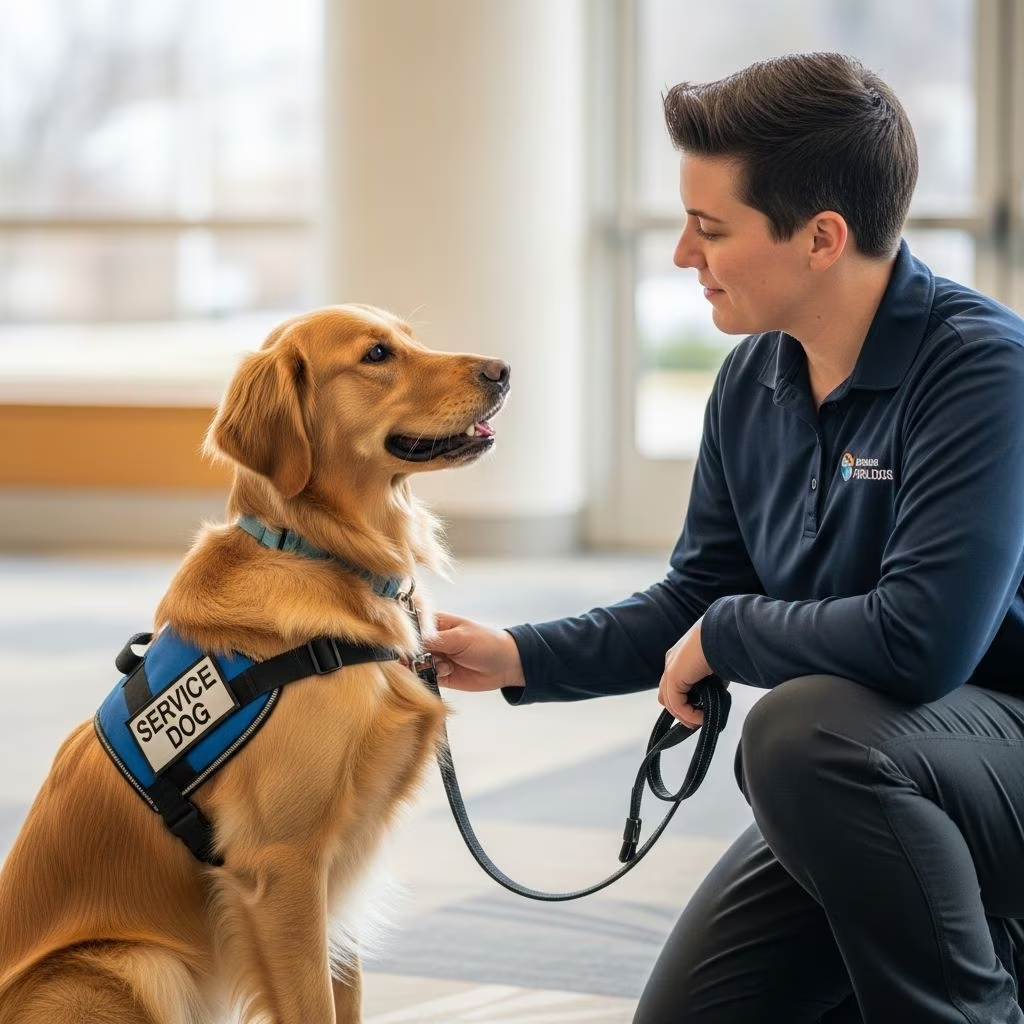
Service dogs play a vital role in supporting individuals with disabilities, providing tasks like alerting to medical episodes or guiding through crowded spaces. However, when these dogs display disruptive actions such as barking, jumping, or sniffing excessively, it raises concerns for public safety and the credibility of legitimate teams. This article examines the reasons behind such behaviors, outlines legal options for businesses, and offers actionable training strategies to maintain high standards.
Understanding the Roots of Service Dog Disruptions
Disruptive behaviors in service dogs often stem from unmet needs or environmental stressors rather than outright disobedience. Dogs may bark or growl to create distance from perceived threats, relieving stress by prompting objects or people to move away. Sniffing serves as a displacement behavior, allowing the dog a mental break during challenging situations. These actions are normal canine responses but become problematic in public settings where focus and calm are required.
Handlers must recognize that what appears as misbehavior might reflect the dog’s emotional state. Fear, excitement, or confusion can trigger learned responses, where repeated exposure strengthens neural pathways. For instance, a dog that barks and sees the target retreat learns this as an effective stress-reliever. Addressing these requires viewing incidents from the dog’s perspective to identify underlying triggers.
Legal Framework for Public Access and Business Rights
Under the Americans with Disabilities Act (ADA), businesses can ask two specific questions to verify a service animal: whether it is required due to a disability and what task it performs. Answers must be credible. If a dog is out of control—exhibiting uncontrolled barking, growling, jumping, or lack of housebreaking—the handler must take effective action. Failure to do so allows removal from the premises.
Business owners often hesitate due to lawsuit fears, but inaction harms the disability community by tolerating fakes and poorly trained dogs. Encouraging removal upholds standards, deterring pet owners from misrepresenting animals. Alternatives include offering accommodations without the dog, like staff-assisted shopping, or suggesting a return visit during quieter times.
| Legal Questions Allowed | Business Actions for Disruptions |
|---|---|
| 1. Is the dog a service animal for a disability? | Request removal if out of control |
| 2. What task does it perform? | Offer non-dog accommodations |
| Require credible responses | |
Evaluating Suitability Before Service Dog Training
Not every dog is cut out for service work. Those with histories of aggression toward people or dogs are automatically unsuitable for public access due to safety risks. High stress, anxiety, or fear also disqualify candidates, as these can worsen under pressure. Minor issues might be trainable, but serious problems demand careful assessment over months.
- Test stability with evaluations like Canine Good Citizen (CGC).
- Avoid high-stress placements for untrained dogs.
- Match dog temperament to handler needs.
- Consider at-home-only roles for unsuitable public access dogs.
Placing an unfit dog in service roles exacerbates issues, potentially sparking new behaviors and endangering others. Repeated testing ensures only qualified teams access public spaces.
Practical Training Techniques to Curb Disruptions
Effective management starts with prevention and redirection. Use a head halter with leash for immediate control: an upward-forward pull interrupts barking, jumping, or lunging by redirecting the head, prompting the body to follow. Repeat commands promptly, rewarding compliance with treats or play.
Focus on replacing unwanted actions rather than punishment, which can heighten anxiety. For barking, identify triggers and teach alternative calm signals. Displacement sniffing decreases with structured mental breaks and gradual exposure to stressors.
- Observe context: Note what precedes the behavior.
- Address dog’s needs: Provide outlets for stress relief.
- Use positive reinforcement: Reward desired responses.
- Practice in low-distraction settings before public outings.
Handlers bear moral responsibility to qualify dogs rigorously, ensuring basic obedience and public manners before deployment.
Business Strategies for Managing Disruptive Dogs
Empower staff with clear protocols. Politely ask the two ADA questions, then monitor behavior. If disruptions occur, inform the handler calmly: “The dog appears out of control; please control it or remove it.” Offer compromises like quieter entry times for training teams.
Educational campaigns, such as those from service dog programs, inform owners of rights, fostering cooperation. This protects customers, maintains hygiene, and supports true service animal access.
Handler Responsibilities for Reliable Performance
Trained handlers prioritize inconspicuous work, intervening swiftly. Daily care—fresh water, clean toys—supports health and focus. Redefine success: A “good” outing allows the dog to cope without extremes, building long-term reliability.
Behavior modification plans prioritize canine needs, using empathy to foster appropriate responses. Relaxed handlers yield better results, creating positive cycles.
Common Misbehaviors and Targeted Fixes
| Behavior | Possible Cause | Solution |
|---|---|---|
| Barking/Growling | Stress from triggers | Leash redirection, distance building |
| Sniffing Excessively | Mental overload | Scheduled breaks, focus cues |
| Jumping/Lunging | Excitement | Head halter control, rewards |
| Not Housebroken | Training gap | Immediate removal, retraining |
FAQs on Service Dog Behavior Management
What behaviors justify removing a service dog?
Uncontrolled barking, growling, jumping, or lack of housebreaking, if the handler fails to correct it.
Can businesses ask for proof of training?
No, only the two ADA questions. Documentation isn’t required.
Are all dogs with minor issues unfit for service?
No, but serious aggression or fear rules them out. Assessments determine suitability.
How do head halters help?
They control the head to prevent or interrupt many disruptions effectively.
What if the handler is training in public?
Businesses can compromise with less busy times but must prioritize safety.
Building a Culture of Accountability
Collective efforts from handlers, trainers, and businesses ensure service dogs enhance lives without compromising public trust. Rigorous selection, ongoing training, and clear policies create environments where legitimate teams thrive. By addressing misbehavior proactively, we safeguard rights and responsibilities alike.
References
- ADA National Network. What if a service animal barks or growls at other people, or otherwise acts out of control? — ADA National Network. 2023. https://adata.org/faq/what-if-service-animal-barks-or-growls-other-people-or-otherwise-acts-out-control
- Disobedient, Unruly and Excitable Dogs. — VCA Animal Hospitals. 2024-01-15. https://vcahospitals.com/know-your-pet/disobedient-unruly-and-excitable-dogs
- Behavior Problems and Service Dog Candidates. — Cooperative Paws. 2023-05-20. https://cooperativepaws.com/service-dog-behavior-problem/
- The First and Most Important Step to Solving Behavior Issues in Service Dogs. — Service Dog Training Institute. 2024. https://servicedogtraininginstitute.online/important-steps-to-solving-behavior-issues-in-service-dogs/
- Stopping Badly Behaved Service Dogs. — Partners Dog Training. 2023-11-10. https://partnersdogs.com/how-to-stop-badly-behaved-service-therapy-and-emotional-support-dogs/



