

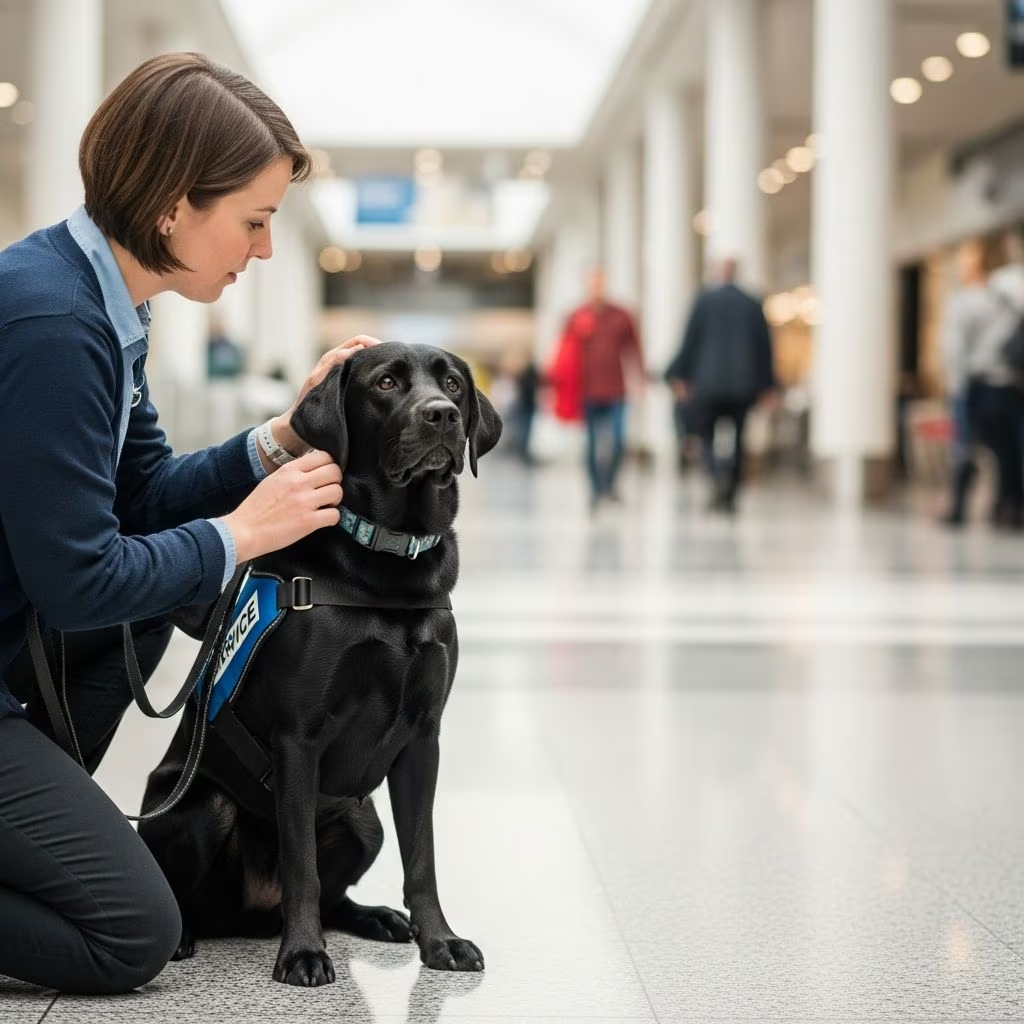
Service dogs play vital roles in supporting individuals with disabilities, but occasional misbehavior can compromise their effectiveness and public acceptance. Addressing these issues requires understanding underlying causes, implementing targeted training, and knowing legal boundaries for handlers and businesses.
Understanding the Roots of Service Dog Disruptions
Misbehavior in service dogs often stems from unmet needs rather than deliberate defiance. Common triggers include insufficient exercise, stress from novel environments, or gaps in early socialization. Dogs may sniff excessively, bark uncontrollably, or lunge due to anxiety or overstimulation, signaling a need for better coping mechanisms.
Distinguishing normal canine instincts from problematic actions is key. For instance, brief sniffing can serve as a displacement behavior, allowing the dog a mental pause during challenging tasks. However, persistent or intense reactions like growling at strangers indicate deeper issues that could disqualify a dog from service work.
- Physical Factors: Lack of daily exercise leads to pent-up energy, manifesting as jumping or pulling.
- Mental Stimulation Gaps: Without puzzle toys or obedience drills, boredom prompts unwanted exploration.
- Socialization Deficits: Dogs underexposed to crowds may react fearfully in public spaces.
- Health Concerns: Pain or illness can alter temperament, necessitating veterinary checks.
Legal Framework for Public Access and Control
Under the Americans with Disabilities Act (ADA), businesses can inquire about a dog’s service status with two specific questions: whether it’s required for a disability and what tasks it performs. If behavior disrupts operations—such as uncontrolled barking, growling, or lack of housebreaking—owners may request removal without legal repercussions.
This right protects public safety while encouraging handler accountability. Failing to act can erode trust in legitimate service teams, as poorly managed dogs fuel misconceptions about faking service status.
| Acceptable Behavior | Unacceptable Behavior | Business Response |
|---|---|---|
| Calm sitting, task-focused | Barking/growling at patrons | Request removal |
| Heel walking quietly | Jumping on people/objects | Offer alternate service |
| Housebroken, non-disruptive | Not under control | Two-question verification |
Practical Training Techniques for Correction
Positive reinforcement forms the cornerstone of behavior modification. Reward calm responses with treats, praise, or play, gradually fading treats to avoid dependency. Consistency in commands—using clear cues like “settle” paired with a hand signal—builds reliability.
Tools like head halters redirect attention effectively. A gentle upward pull interrupts jumping or lunging, followed by immediate praise for compliance. Leash management during outings reinforces boundaries without punishment.
- Assess the Trigger: Observe patterns; is misbehavior context-specific, like near other dogs?
- Desensitize Gradually: Expose to low-level stressors, rewarding focus on handler.
- Build Impulse Control: Practice “leave it” with distractions, increasing complexity.
- Incorporate Mental Work: Scent games or obedience sequences tire the mind, reducing reactivity.
For service candidates, early evaluation prevents escalation. Dogs with aggression histories or chronic fear are unsuitable, as public stress amplifies risks.
Business Strategies for Managing Disruptive Dogs
Business owners should approach situations calmly. Politely ask the two ADA questions; evasive answers warrant scrutiny. If disruption persists, offer compromises like shopping assistance without the dog or rescheduling for quieter times.
Education campaigns empower owners to enforce rules confidently, deterring misuse of pet dogs as “service animals.” This upholds standards for true teams, fostering mutual respect.
Frequently Asked Questions
Can any dog be trained as a service dog?
No, only stable dogs without aggression or severe fear pass rigorous public access tests.
What if a service dog has a minor slip-up?
Handlers must correct immediately; one-off issues differ from patterns of out-of-control behavior.
How do I know if it’s a real service dog?
Limit questions to ADA-approved ones; vests or certifications aren’t legally required.
Is punishment effective for misbehavior?
Avoid; it heightens stress. Focus on rewards for desired actions.
Can businesses ban all service dogs?
No, but they can remove disruptive ones and provide alternatives.
Preventive Measures for Long-Term Success
Proactive routines minimize issues. Daily schedules with walks, training sessions, and rest prevent fatigue-induced errors. Handlers should monitor for stress signals like yawning or lip-licking, intervening early.
Professional trainers specializing in service work offer tailored plans, evaluating temperament and matching dogs to handler needs. Regular refreshers maintain skills amid life changes.
Ultimately, responsible ownership ensures service dogs remain assets, not liabilities. By prioritizing welfare, training, and compliance, teams thrive in diverse settings.
References
- 5 Main Causes of Dogs Misbehaving and How to Correct These Unwanted Behaviours — Good Dog People. 2023-05-15. https://gooddogpeople.com/blogs/dog-talk/5-main-causes-of-dogs-misbehaving-and-how-to-correct-these-unwanted-behaviours
- When Service Dogs Misbehave — Whole Dog Journal. 2023-08-20. https://www.whole-dog-journal.com/behavior/when-service-dogs-misbehave/
- Important Steps to Solving Behavior Issues in Service Dogs — Service Dog Training Institute. 2024-02-10. https://servicedogtraininginstitute.online/important-steps-to-solving-behavior-issues-in-service-dogs/
- How to Stop Badly Behaved Service, Therapy, and Emotional Support Dogs — Partners Dogs. 2023-11-05. https://partnersdogs.com/how-to-stop-badly-behaved-service-therapy-and-emotional-support-dogs/
- Disobedient, Unruly and Excitable Dogs — VCA Animal Hospitals. 2024-01-12. https://vcahospitals.com/know-your-pet/disobedient-unruly-and-excitable-dogs
- Behavior Problems and Service Dog Candidates — Cooperative Paws. 2023-09-18. https://cooperativepaws.com/service-dog-behavior-problem/
- What if a service animal barks or growls at other people, or otherwise acts out of control? — ADA.gov. 2023-06-01. https://adata.org/faq/what-if-service-animal-barks-or-growls-other-people-or-otherwise-acts-out-control



