

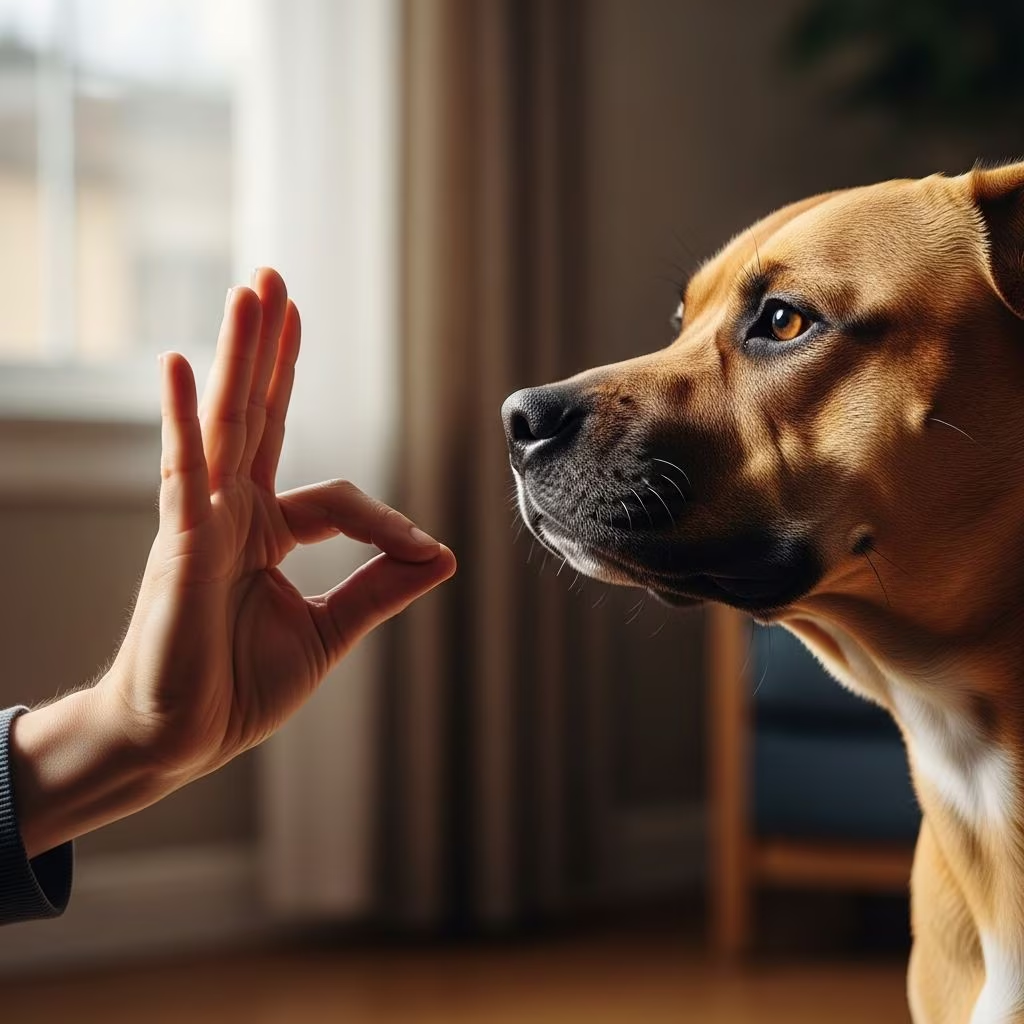
Teaching hand signals to dogs with hearing loss transforms their world, allowing them to respond to commands, stay safe, and bond deeply with owners through visual communication. This approach compensates for auditory deficits, enabling full participation in family life and activities.
Understanding Canine Hearing Challenges
Hearing loss in dogs can occur suddenly or gradually, stemming from various causes like aging, infections, genetics, or trauma. Common indicators include ignoring calls, sleeping through noises, head tilting, or startling easily. Early detection via veterinary exams, such as BAER testing, confirms the extent of impairment. While some cases from infections or blockages may resolve with treatment like antibiotics or cleaning, many—especially congenital or age-related—are permanent.
For permanent deafness, adaptation is key. Dogs rely heavily on vision, smell, and vibration, making hand signals an ideal bridge. Breeds like Dalmatians, Australian Cattle Dogs, and seniors are prone, but any dog can adapt with consistent training.
Why Visual Cues Outshine Voice Commands
Verbal commands falter when hearing fades, but hand signals persist regardless of noise or distance. They engage a dog’s natural attentiveness to movement, fostering quicker learning and reliability. Studies show visual learners like dogs process gestures faster in distracting environments. Plus, signals reduce frustration, building confidence in deaf pets who might otherwise feel isolated.
Essential Hand Signals Every Deaf Dog Needs
Start with core commands using clear, distinct gestures. Use treats and praise to reinforce. Here’s a foundational set:
- Sit: Raise one hand palm-up from your side to shoulder height, like lifting an invisible cup.
- Stay: Extend palm outward at chest level, fingers together, holding steady.
- Come: Pat chest twice with both hands, then sweep outward invitingly.
- Down: Point downward with a flat palm, lowering it smoothly to the ground.
- Leave It: Wave hand sideways, palm facing out, like swatting a fly away.
Practice in short, 5-minute sessions multiple times daily. Always pair with a release signal, like clapping hands, to end the command.
| Command | Hand Signal Description | Training Tip |
|---|---|---|
| Sit | Palm-up lift | Lure with treat above nose |
| Stay | Flat palm out | Build duration gradually |
| Come | Chest pat to sweep | Use high-value rewards |
| Down | Descending palm | Gently guide shoulders if needed |
| Leave It | Sideways wave | Practice with distractions |
Step-by-Step Training Blueprint
Build skills progressively to avoid overwhelming your dog.
- Foundational Attention: Wiggle fingers at eye level until they look, then reward. This “watch me” signal is crucial.
- Basic Shaping: Lure into position with gestures and treats, fading the lure over repetitions.
- Add Distance and Distractions: Start close, indoors; advance to yards or parks.
- Proofing: Test in real scenarios, like near doors or during walks.
- Generalize: Teach family members the same signals for consistency.
Positive reinforcement reigns supreme—never punish errors, as deaf dogs can’t hear corrections. Tools like vibrating collars signal via touch, complementing visuals.
Safety Measures for Deaf Pets
Hearing loss heightens risks like traffic or intruders. Equip with LED collars for night visibility and ID tags noting “Deaf Dog—Use Visuals.” Wake them by stomping for vibrations or gentle touches. For outdoors, strong recall signals prevent wandering. Indoor bells on doors, activated by nose or paw, teach alerting without sound.
Advanced Signals for Enriched Lives
Beyond basics, expand to lifestyle enhancers:
- Bed: Point to bed with circling finger.
- Food: Rub tummy in circles.
- Play: Wave hands like tossing a ball.
- Quiet: Finger to lips, then point down.
- Walk: March fingers forward.
These foster independence, reducing anxiety. Competition-ready deaf dogs excel in agility and obedience using signals exclusively.
Real-World Success Stories
Owners report transformative results. One senior Lab, deaf from age, mastered 20 signals, enjoying hikes via recall gestures. A puppy with congenital deafness competed in rallies, proving limitations are mindset-bound. Consistency yields responsive, joyful companions.
Common Hurdles and Fixes
- Ignoring Signals: Boost motivation with better treats; ensure clear visibility.
- Mixing Commands: Slow pace; use one signal per session initially.
- Regression: Revert to basics; add play for engagement.
- Multi-Dog Homes: Train separately, cue by name sign first.
Health Monitoring and Vet Insights
Regular checkups rule out progressing issues like tumors or infections[10]. BAER tests objectively measure loss. While no cure for sensorineural deafness, managing causes like ototoxicity preserves remaining function.
FAQs
Can all dogs learn hand signals?
Yes, especially deaf ones, who adapt swiftly to visuals. Puppies learn fastest, but seniors thrive too.
How long until mastery?
Basics in 1-2 weeks with daily practice; advanced in months.
Are vibrating collars safe?
Yes, when used humanely for attention, not punishment.
What if my dog has partial hearing?
Combine signals with voice initially, phasing out sound.
Can deaf dogs live normally?
Absolutely—with adaptations, they lead active, happy lives.
Daily Routines Tailored for Deaf Dogs
Incorporate signals into meals, walks, and bedtime. Morning “sit-stay” for breakfast builds routine. Evening “bed” wind-downs promote calm. Track progress in a journal to celebrate milestones.
Exercise minds with puzzle toys signaled by gestures. Socialization via controlled playdates sharpens responses. Nutrition supports cognition—omega-3s aid brain health amid sensory shifts.
Community and Resources
Join online groups for deaf dog owners sharing signal variations. Trainers specializing in visual methods accelerate success. Books and videos demo techniques, emphasizing patience.
Deaf dogs teach resilience, rewarding owners with unwavering loyalty. Embrace this journey; your visual bond deepens mutual understanding.
References
- Hearing Loss in Dogs (Sudden & Gradual): Causes, Signs, Treatment — ToeGrips. 2023. https://toegrips.com/hearing-loss-in-dogs/
- Signs Your Dog Has Hearing Loss — GoodRx. 2024. https://www.goodrx.com/pet-health/dog/hearing-loss
- Deafness in Dogs: Signs, Symptoms, and Treatment — American Kennel Club. 2023. https://www.akc.org/expert-advice/health/deafness-in-dogs/
- Hearing Loss in Dogs – Symptoms, Causes, Diagnosis, Treatment — WagWalking. 2024. https://wagwalking.com/condition/hearing-loss
- Deafness in Dogs — PetMD. 2023. https://www.petmd.com/dog/conditions/ears/deafness-dogs
- Your Guide to Deafness and Hearing Loss in Dogs — CareCredit. 2024. https://www.carecredit.com/well-u/pet-care/dog-deafness/
- Dog Hearing Loss: Symptoms & Testing — Sound Relief. 2023. https://soundrelief.com/blogs/hearing-loss-in-dogs-and-dog-hearing-tests



