

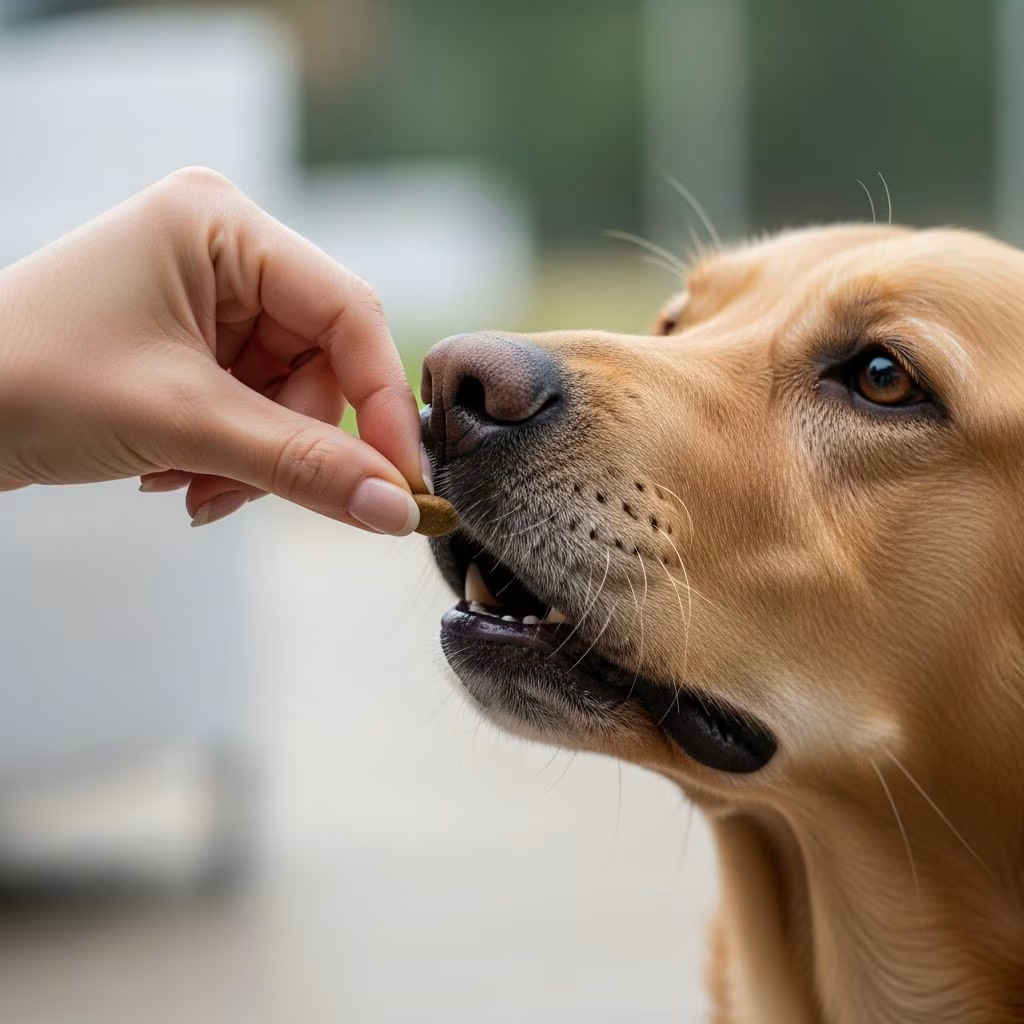
Hand feeding involves delivering a dog’s entire meal or portions directly from your hand rather than a bowl, serving as a versatile tool in canine care. This practice integrates nutrition with training, fostering deeper connections and addressing common behavioral challenges effectively.
Why Consider Hand Feeding Your Dog?
Many dog owners overlook hand feeding due to time concerns, yet it provides unique opportunities for interaction that bowls cannot match. By positioning yourself as the source of sustenance, you elevate your role in the dog’s world, encouraging attentiveness and cooperation during daily routines.
This method shines in early puppy stages or with rescue dogs needing socialization. It transforms mealtimes into structured sessions that reinforce leadership without force, aligning with modern positive reinforcement principles.
Key Advantages of Hand Feeding
Hand feeding yields multiple benefits, from behavioral improvements to health monitoring, making it a staple for proactive owners.
- Strengthens Owner-Dog Bond: Dogs learn to associate your presence with positive outcomes, building trust essential for long-term companionship. When hands deliver food, reaching toward the dog signals rewards, reducing fear responses.
- Prevents and Manages Resource Guarding: By controlling food access, you demonstrate that human approach means addition, not theft, of resources. This counters possessive tendencies early, promoting calm around meals.
- Develops Impulse Control: Teach patience by withholding food until the dog backs off or waits politely. This simple technique curbs mugging behaviors, fostering self-regulation quickly.
- Slows Down Fast Eaters: Inhaler dogs risk bloat or digestion issues; hand delivery naturally paces intake, acting as a built-in slow feeder while incorporating commands.
- Boosts Training Focus: Use kibble bits for obedience drills between bites, saving on treats and minimizing distractions. Dogs prioritize you over surroundings when food depends on engagement.
- Supports Shy or Fearful Dogs: Gradual exposure via family or friends desensitizes nervousness, expanding comfort zones safely.
These gains compound over time, creating a respectful dynamic where the dog views you as a dependable provider.
Potential Challenges and How to Overcome Them
Despite merits, hand feeding demands commitment and awareness of pitfalls to avoid counterproductive results.
| Challenge | Impact | Solution |
|---|---|---|
| Time-Intensive | Requires 10-20 minutes per meal, challenging for busy schedules | Start with one meal daily; transition gradually or use for training sessions only |
| Risk of Reinforcing Bad Habits | Begging or jumping rewarded if inconsistent | Maintain strict criteria: reward calm behaviors exclusively |
| Not Ideal for All Temperaments | Stressed dogs may worsen anxiety | Observe reactions; adapt or skip for high-anxiety cases |
| Adjustment Period | Bowl-trained dogs resist initially | Mix methods first, then phase to full hand feeding |
Addressing these ensures hand feeding enhances rather than complicates routines. Consistency prevents mixed signals, key to success.
Practical Techniques for Effective Hand Feeding
Implement hand feeding systematically for maximum impact, tailoring to your dog’s needs.
- Prepare the Meal: Portion kibble or wet food into a small container. Reduce total calories if supplementing training treats.
- Set the Environment: Choose a quiet space; sit comfortably to avoid looming over the dog.
- Start Simple: Offer a piece with an open palm, saying the dog’s name for focus. Reward eye contact.
- Incorporate Commands: Between bites, cue “sit,” “down,” or “stay.” Release with “take it” for the next morsel.
- Practice Impulse Drills: Close fist if mugging occurs; open when calm. Progress to distance cues.
- Monitor Intake: Note appetite changes signaling health issues; consult vets for concerns.
- End Positively: Save a favorite piece last, praising generously.
For families, supervise children during sessions to build mutual respect safely. Occasionally use a bowl to maintain versatility.
Health and Nutritional Considerations
Hand feeding aids wellness oversight but requires nutritional balance. Track consumption to detect issues like reduced appetite, potentially indicating illness. It also promotes mindful eating, reducing gulping risks like gastric dilatation-volvulus (GDV).
While not a cure-all, pairing with once-daily feeding may support better body composition per some studies, though evidence in dogs remains exploratory. Always align with vet-recommended diets.
Real-World Applications and Success Stories
Owners report transformative results: resource guarders relax around food, hyper pups gain focus, and shy rescues bloom socially. One technique variation mixes 50% hand-fed with bowl for transition ease.
For multi-dog homes, feed separately to prevent competition. Puppies benefit most, imprinting positive human associations early.
Common Myths Debunked
- Myth: It Spoils the Dog. No—structured delivery teaches value, unlike free bowls fostering entitlement.
- Myth: Only for Puppies. Effective across ages, especially behavior rehab.
- Myth: Causes Dependence. Builds security, not helplessness; rotate methods for independence.
Frequently Asked Questions (FAQs)
Is hand feeding suitable for all dogs?
Most benefit, but assess anxious dogs individually. Start slow and monitor stress.
How long does transition take?
1-2 weeks typically; patience yields compliance.
Can I hand feed wet food?
Yes, use fingers or utensils for mess control.
Does it replace bowl feeding entirely?
Not necessarily; use 80/20 split for practicality.
What if my dog refuses?
Offer bowl after 15 minutes; hunger motivates next try.
When to Avoid or Modify Hand Feeding
Skip for dogs with severe bite histories or if time constraints persist. Alternatives like puzzle feeders mimic benefits partially. Consult certified trainers for tailored plans.
Integrate with comprehensive programs for holistic gains, ensuring ethical, force-free approaches.
References
- Enhancing Canine Behavior: The Power of Hand Feeding — Stamford Dog Trainer. 2023. https://stamforddogtrainer.com/enhancing-canine-behavior-the-power-of-hand-feeding/
- Hand Feed Your Dog Its Dinner – There are Many Benefits — American Kennel Club (AKC). 2022-10-15. https://www.akc.org/expert-advice/training/hand-feed-your-dog-dinner/
- The Modern View On Hand Feeding — Positively.com. 2021. https://positively.com/dog-training/post/training-methods-the-modern-view-on-hand-feeding
- Hand Feeding Your Dog: Pros and Cons — HD Interactions. 2023. https://www.hdinteractions.com/hand-feeding-your-dog-pros-and-cons/
- Handfeeding your Puppy with Your Child: The Whys and Hows — Animal Kingdom AZ. 2022. https://www.animalkingdomaz.com/uncategorized/handfeeding-your-puppy-with-your-child-the-whys-and-hows/
- Once-daily feeding is associated with better health in companion dogs — PMC (PubMed Central, peer-reviewed). 2022-06-15. https://pmc.ncbi.nlm.nih.gov/articles/PMC9213604/



