Hand-Feeding Baby Birds: Complete Guide
Master the essentials of hand-feeding baby birds with proper techniques, temperature control, and nutrition.
Hand-Feeding Baby Birds: A Comprehensive Care Guide
Hand-feeding baby birds is a rewarding yet demanding responsibility that requires knowledge, patience, and dedication. Whether you’re caring for orphaned wild birds, breeding pet birds, or assisting with hand-rearing young avians, understanding the fundamentals of proper nutrition and feeding techniques is essential for their survival and healthy development. This comprehensive guide will walk you through every aspect of hand-feeding baby birds, from preparing the right formula to understanding feeding schedules and successfully transitioning birds to independent feeding.
Understanding Baby Bird Nutritional Needs
Baby birds grow at an extraordinarily rapid rate, and this accelerated growth demands significant nutritional resources to support their development. Young birds require approximately 10 to 12 percent of their body weight in food at each feeding to meet their metabolic demands and support feather development, bone formation, and organ growth. The crop, a specialized storage organ in birds’ digestive systems, has a limited capacity, which means babies must be fed frequently throughout the day and night to ensure adequate nutrition without overloading their systems.
The nutritional requirements of baby birds change as they mature, requiring adjustments to both feeding volume and frequency. Newly hatched birds with minimal or no feathers require different nutritional compositions compared to older chicks with developing or fully-formed plumage. Understanding these developmental stages and their corresponding nutritional needs is crucial for preventing malnutrition, developmental abnormalities, and other health complications.
Preparation and Safety Considerations
Before beginning the hand-feeding process, thorough preparation is essential to ensure the safety and health of the baby bird. Proper hygiene practices must be implemented at every stage of the feeding process to prevent bacterial contamination and potential illness.
Essential Supplies and Setup
To hand-feed baby birds successfully, you will need several key items:
– Appropriate hand-feeding formula (species-specific when possible)- Feeding syringes or spoons designed for avian feeding- Clean, warm water for formula preparation- Accurate thermometer for monitoring formula temperature- Soft towels or cloth for bird positioning- Brooding equipment for maintaining proper temperature- Clean utensils and feeding area
Before each feeding session, wash your hands thoroughly and sanitize all feeding equipment. Use fresh formula at each feeding, and never reheat or reuse formula from previous feedings, as this can promote bacterial growth and compromise the bird’s digestive health. Always follow the manufacturer’s instructions completely when preparing the hand-feeding formula, stirring until smooth and free of lumps.
Temperature Management
Temperature control is one of the most critical factors in successfully hand-feeding baby birds. The appropriate temperature varies significantly based on the bird’s developmental stage and whether it has feathers.
| Stage of Development | Temperature Range | Key Considerations |
|---|---|---|
| Hatchlings (no feathers) | 95-97°F (35-36°C) | Require maximum heat; cannot regulate body temperature |
| Early feathering stage | 90-95°F (32-35°C) | Some temperature regulation developing |
| Mostly feathered | 85-90°F (29-32°C) | Can maintain body temperature more effectively |
| Nearly fledged | 80-85°F (27-29°C) | Transitioning to ambient temperatures |
The feeding formula itself must also be maintained at the correct temperature—lukewarm, approximately 100-102°F (38-39°C)—before offering it to the baby bird. Never use a microwave to heat formula, as this can create dangerous hot spots that may burn the bird’s delicate digestive tract. Instead, use a water bath or specialized formula warmer to achieve and maintain the proper temperature. Always test the formula temperature before feeding to prevent thermal injuries.
Hand-Feeding Techniques
Several effective techniques exist for hand-feeding baby birds, each with distinct advantages and considerations. The method you choose may depend on the bird species, your experience level, and the individual bird’s responsiveness.
Spoon Feeding Technique
Spoon feeding is considered one of the safest methods for beginners, with minimal risk of aspiration (formula entering the lungs). This technique involves using a specially prepared spoon, such as one carved from a small chopstick, to deliver formula to the baby bird. The bird is positioned gently, and as it opens its mouth to beg, the spoon is inserted carefully so the bird can consume the formula at its own pace. While this method is very safe and allows the bird greater control over the feeding process, it requires significant time and patience, as each feeding involves multiple small portions.
Syringe Feeding Technique
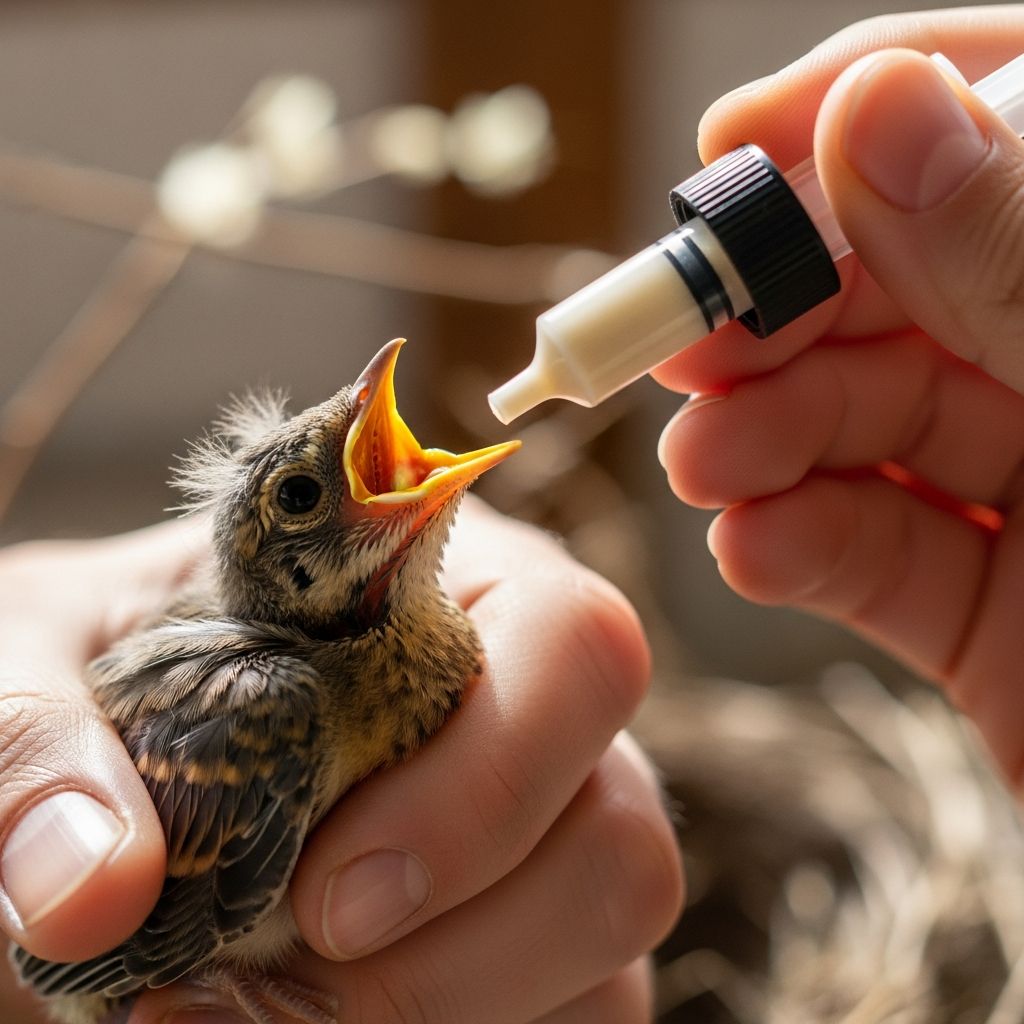
Syringe feeding is an intermediate technique that requires good hand control and careful attention to prevent aspiration. The syringe is filled with prepared formula and inserted into the bird’s mouth when it gapes (opens widely in anticipation of feeding). The plunger must be pressed slowly and deliberately, releasing only small amounts of formula at a time and only when the chick is actively begging. This technique is faster than spoon feeding but demands practice to master the proper pressure and timing. Aspiration risk increases significantly if formula is pushed too quickly or if the bird is not actively swallowing.
Crop Feeding Technique
Crop feeding is an advanced technique performed by experienced breeders and aviculturists. In this method, the syringe tip is passed directly into the crop (the bird’s food storage organ) via the esophagus. Once the tip is positioned in the crop, the plunger is pressed to fill the crop directly with formula. This technique should only be attempted after acquiring proper training and understanding of avian anatomy, as improper placement can cause serious injury.
Proper Feeding Positioning and Technique
Correct positioning is essential for safe and effective feeding. The bird should be held gently in your non-dominant hand (if right-handed, hold the bird in your left hand). Use your fingers to stabilize the bird’s head carefully while allowing access to its mouth. The bird can be held upright or at a slight angle, never completely on its back, to facilitate natural swallowing and reduce aspiration risk.
To initiate the feeding response, gently tap or stroke the sides of the bird’s mouth with the feeding device or your finger. Most healthy baby birds will instinctively gape in response to this stimulation. Once the mouth opens, carefully introduce the feeding device into the left side of the mouth, directing it toward the right side to avoid blocking the bird’s airway. Allow the bird to set the pace of feeding, pausing between swallows to ensure proper consumption.
Feeding Frequency and Schedule
Feeding frequency and volume depend critically on the bird’s age, growth rate, and the specific formula being used. Improper feeding frequency—either too little or too much—can result in malnutrition, aspiration, crop impaction, or other serious health complications.
| Age (Weeks) | Feeding Frequency | Feeding Schedule |
|---|---|---|
| 0-1 week | Every 2 hours | 24 hours around the clock |
| 1-2 weeks | Every 2-3 hours | 6:00 AM to midnight |
| 2-3 weeks | Every 3-4 hours | 6:00 AM to midnight (safest period to begin) |
| 3-4 weeks | Every 4 hours | 6:00 AM to midnight |
| 4-5 weeks | Every 5 hours | 6:00 AM to midnight |
| 5-7 weeks | Two feedings daily | Morning and evening |
Young hatchlings in their first week of life require feeding every two hours around the clock, including overnight feedings. If a bird is kept in especially warm and comfortable conditions, the 2:00 AM and 4:00 AM feedings can sometimes be eliminated, but this should only be considered after the first few days and with careful monitoring. As birds mature and their crop capacity increases, feeding intervals gradually lengthen, and nighttime feedings can be discontinued, typically starting around 2-3 weeks of age.
Monitoring Crop Health
The crop should be checked before each feeding to ensure it has emptied completely from the previous feeding. A crop that remains full indicates either overfeeding or a potential digestive problem requiring veterinary attention. You should be able to feel the crop as a soft pouch on the front of the bird’s neck. If the crop feels distended or warm, delay feeding and monitor closely. Proper crop function is essential for preventing serious conditions like crop stasis or aspiration.
Weaning: Transitioning to Independent Feeding
Weaning is a critical transition period that requires careful planning and gradual implementation. Birds should not be weaned until they demonstrate they are eating adequately on their own. Most hand-reared birds begin showing interest in solid food around 3-4 weeks of age and can typically be weaned by 15 days of age if they are eating well independently.
Weaning Strategy
Begin the weaning process by offering appropriate foods near the baby bird, such as softened pellets, small seeds, fresh fruits, and vegetables. Pelleted diet is often recommended as the first weaning food, as it provides balanced nutrition and helps establish healthy adult eating patterns. Some birds learn to eat more quickly by observing other birds or older babies eating, so group feeding during weaning can be beneficial.
As the bird begins consuming solid food independently, gradually reduce hand-feedings by eliminating the midday feeding first. Once the bird is eating well during the day, discontinue the morning feeding, and finally eliminate the evening hand-feeding as the bird demonstrates sustained independent feeding. This gradual approach prevents nutritional deficiencies and ensures the bird has developed proper eating skills before hand-feeding is completely stopped.
Common Feeding Mistakes and Prevention
Several common mistakes can compromise a baby bird’s health and safety:
– Overfeeding: Filling the crop too much can lead to aspiration, crop stasis, and death- Incorrect temperature: Formula that is too hot can burn the digestive tract; formula too cold reduces digestive efficiency- Poor hygiene: Contaminated formula or equipment can introduce bacteria and cause serious infections- Improper technique: Forcing food too quickly or at incorrect angles dramatically increases aspiration risk- Rushing weaning: Discontinuing hand-feeding before the bird is truly eating independently can result in starvation- Using reheated formula: Old formula promotes bacterial growth and can sicken young birds- Incorrect bird positioning: Feeding a bird on its back increases aspiration risk
Frequently Asked Questions About Hand-Feeding Baby Birds
Q: What is the best hand-feeding formula for baby birds?
A: Use species-specific commercial hand-feeding formulas from reputable manufacturers like Kaytee or Lafeber’s. Always follow package directions carefully, and never use human baby formula or improvised mixtures, which lack proper avian nutrition.
Q: Can I hand-feed a wild baby bird I found?
A: Before hand-feeding, determine if the bird actually needs help. Fledglings should be left with parents when possible. If hand-feeding is necessary, minimize handling, use a nest box for feeding when available, and consult with a wildlife rehabilitation specialist for proper care protocols.
Q: What should I do if a baby bird aspirates formula?
A: Aspiration is a medical emergency. Stop feeding immediately and seek veterinary care urgently. Signs include labored breathing, wheezing, or unusual vocalizations. Prevention through proper technique is far preferable to treatment.
Q: How long does the hand-feeding process typically take?
A: Hand-feeding usually lasts 6-8 weeks depending on the species. The entire process from hatchling to independent bird requires consistent care, patience, and dedication throughout this period.
Q: Is hand-feeding recommended for beginners?
A: Hand-feeding is best performed by experienced bird breeders or aviculturists. If you’re a beginner, start with spoon-feeding techniques, get proper training, and ideally work under the guidance of an experienced mentor.
References
- Hand Feeding – Kaytee — Kaytee Products. https://www.kaytee.com/learn-care/pet-birds/hand-feeding
- Instructions For Hand-Feeding Baby Birds — Future Pets. https://www.futurepets.com/trivia/birds-handfeeding.htm
- Hand Rearing Companion Birds — The Unusual Pet Vets. https://www.unusualpetvets.com.au/wp-content/uploads/2021/12/hand-rearing-companion-birds.pdf
- Hand Feeding Baby Birds — Alta Rancho Pet & Bird Hospital. https://altaranchopet.com/wp-content/uploads/2020/05/baby-bird-feeding.pdf
- Bird Hand Feeding Formula: Complete Guide for Pet Bird Owners — CK Pets World. https://ckpetsworld.com/blog/bird-hand-feeding-formula-complete-guide-for-pet-bird-owners/
- Handfeeding – Lovebirds Plus Aviary — Lovebirds Plus. https://www.lovebirdsplus.com/handfeeding.html
Similar Articles







Read full bio of Sneha Tete