Hamster vs Guinea Pig: Complete Pet Comparison
Discover key differences between hamsters and guinea pigs to choose the perfect small pet.
When it comes to choosing a small pet, hamsters and guinea pigs are two of the most popular options for families and individuals alike. However, despite both being adorable furry companions, these animals are quite different in many important ways. Understanding the distinctions between these two rodents is crucial for making an informed decision about which pet will best fit your lifestyle, home, and commitment level. This comprehensive guide will help you explore the key differences between hamsters and guinea pigs so you can determine which one is the perfect fit for you.
Size and Physical Appearance
The most obvious difference between hamsters and guinea pigs is their size. Guinea pigs are significantly larger animals, typically measuring between 8-12 inches in length and weighing 1-3 pounds. In comparison, hamsters are much smaller, ranging from 2-8 inches in length depending on the species, with weights between 1-10 ounces. This size difference is substantial—guinea pigs can be nearly twice the size of hamsters, which has important implications for housing and handling.
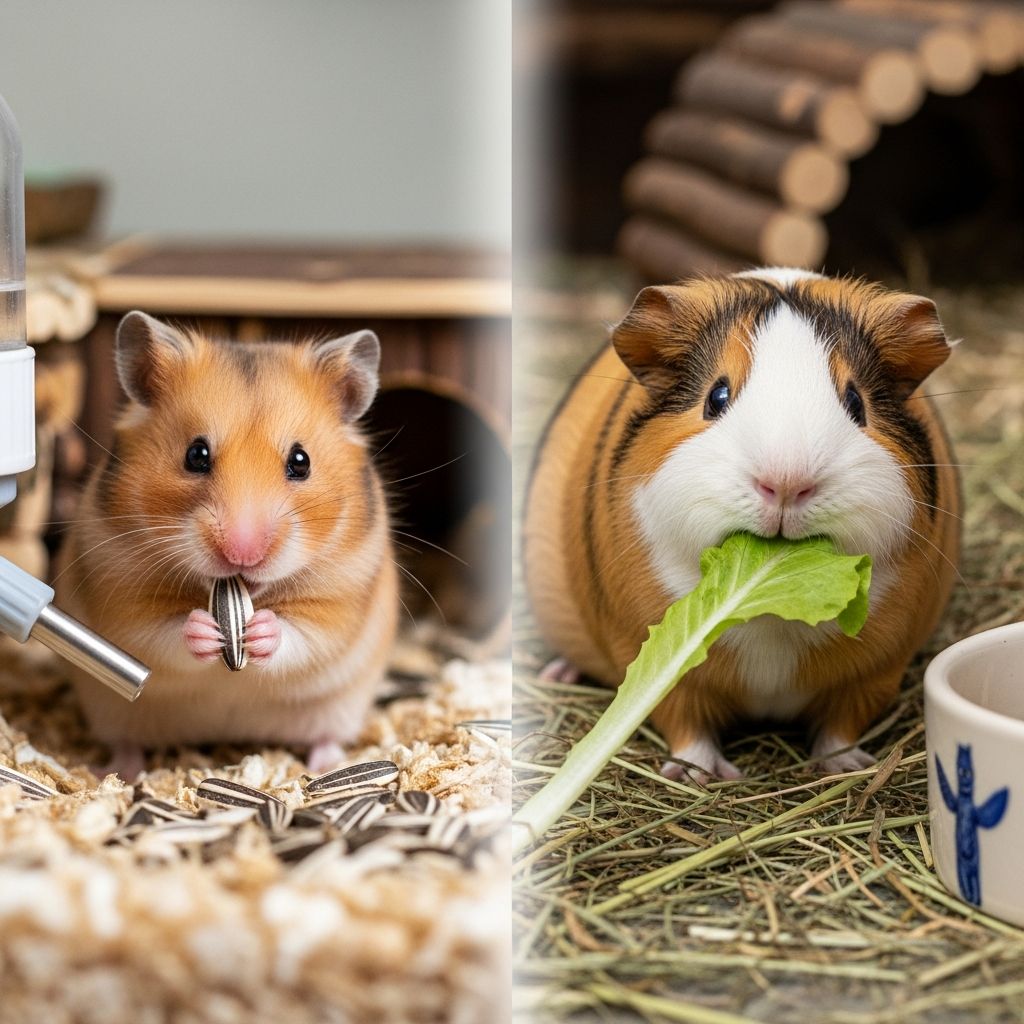
Beyond size, these two pets have distinctly different body shapes and features. Guinea pigs have a more rounded, stocky, and potato-like appearance with a large round head and rump, short stumpy necks, and no tail. Their overall look is more compact and robust. Hamsters, by contrast, have more traditional rodent-like features with a chubbier round appearance, though their face tends to be more pointed than a guinea pig’s. A key distinguishing feature is that hamsters possess a small stub tail, while guinea pigs are completely tailless.
Hamsters tend to be more flexible and can fit into tight spaces and positions, which is useful for their natural burrowing behaviors. Guinea pigs, due to their stockier build, are less flexible and tend to stay low to the ground. Both animals come in various colors and patterns, providing options for those with aesthetic preferences.
Lifespan and Longevity
One of the most significant differences between these pets is their lifespan. Guinea pigs have a considerably longer life expectancy, living 5-8 years on average when properly cared for, with some individuals living even longer—sometimes reaching 10 years or more. Hamsters, on the other hand, have much shorter lifespans, typically living only 2-3 years. This means that when you adopt a guinea pig, you’re committing to a much longer-term relationship with your pet. This extended lifespan also means higher long-term costs for food, bedding, and veterinary care for guinea pigs compared to hamsters.
Dietary Needs and Feeding Habits
Hamsters and guinea pigs have fundamentally different dietary requirements. Guinea pigs are herbivores, meaning they eat only plant-based foods. Their diet should consist primarily of high-quality hay, fresh grass, and a variety of green vegetables. They also consume specially formulated guinea pig pellets designed to meet their nutritional needs. It’s important to note that guinea pigs cannot synthesize vitamin C on their own, so their diet must include vitamin C-rich foods like bell peppers, kale, or cilantro.
Hamsters are omnivores, which means they eat both plant and animal matter. Their diet typically includes grains, seeds, nuts, insects, and worms in addition to vegetables and plant material. One interesting adaptation hamsters have is cheek pouches—expandable pouches inside their cheeks where they store food to eat later. This is a natural food-hoarding behavior that allows them to carry food back to their nests. Guinea pigs do not have this ability and instead tend to eat their food immediately when offered, often making characteristic “wheek” sounds when demanding more food.
Behavioral Differences and Temperament
The personalities and behaviors of hamsters and guinea pigs are quite different, which significantly impacts how they interact with their owners and environment.
Social Needs
Guinea pigs are highly social animals that do not cope well when kept in isolation. They thrive in pairs or small groups and benefit greatly from constant companionship, whether with other guinea pigs or their human caregivers. A lonely guinea pig can develop behavioral problems and depression. In contrast, hamsters are solitary creatures that prefer to live alone. They are territorial by nature and often display aggressive behavior toward other hamsters, even when they are introduced at a young age. Housing hamsters together can result in fighting and injury.
Activity Patterns
Guinea pigs are diurnal, meaning they are active during the day and sleep at night. This makes them ideal pets for families who want daytime interaction with their pets. Hamsters, however, are primarily nocturnal creatures that are most active during nighttime hours. If you’re a light sleeper, a hamster’s nighttime running wheel activity might disturb you. Additionally, hamsters are relatively quiet animals, whereas guinea pigs are more vocal and will make various sounds including squeaks, chirps, and their signature “wheek” call.
Handling and Personality
Hamsters are known for their entertaining antics—they love climbing, hanging upside down in their cages, and generally putting on a show. However, they tend to be squirmy when handled and can be quick to bite when stressed or frightened, particularly dwarf hamster species which are known for being “nibbly.” Guinea pigs, by comparison, are generally more relaxed and slower-moving during playtime outside their cage. They are typically easier to handle and less likely to bite, making them better suited for young children. However, individual temperament varies, and any small animal can bite when scared or provoked.
Housing and Habitat Requirements
Due to their size differences, hamsters and guinea pigs have different housing needs. Hamsters are smaller and can be content in more compact habitats. Many hamster owners use small cages with play tubes for tunneling and climbing. These spaces should still be well-enriched with bedding, hideouts, and exercise wheels, but they don’t require enormous amounts of space.
Guinea pigs, being much larger and more active, require significantly larger enclosures. A single guinea pig needs a minimum of 7.5 square feet of continuous floor space, and pairs should have at least 10.5 square feet. The cages need to be large enough for them to run, jump, and play. Guinea pigs cannot fit into the small tubes and play structures that hamsters enjoy, so their habitats need to be designed with their larger bodies in mind. Guinea pig enclosures require larger hideouts, spacious floor areas, and appropriate furniture designed for their size.
Reproductive Considerations
There are important differences in how these animals reproduce and develop. Hamster babies, called pups, are born hairless and blind and require significant parental care. Guinea pigs produce well-developed young, called piglets, which are born with fur and with their eyes open, making them relatively independent from birth. This difference reflects the different gestation periods and developmental stages of the two species.
Comparison Table
| Feature | Hamster | Guinea Pig |
|---|---|---|
| Size | 2-8 inches, 1-10 ounces | 8-12 inches, 1-3 pounds |
| Lifespan | 2-3 years | 5-8 years |
| Diet | Omnivore (seeds, nuts, insects) | Herbivore (hay, vegetables, pellets) |
| Social Nature | Solitary, territorial | Social, needs companionship |
| Activity | Nocturnal (night) | Diurnal (day) |
| Cheek Pouches | Yes | No |
| Tail | Small stub | None |
| Cage Size Needed | Small to medium | Large (minimum 7.5 sq ft) |
| Temperament | Entertaining, can bite | Gentle, easy to handle |
| Noise Level | Low | Vocal (wheeks, chirps) |
Evolutionary Background and Origin
Understanding where these animals come from can provide insight into their behaviors and needs. Guinea pigs originate from South America, where they were domesticated by indigenous peoples centuries ago. Hamsters come from different parts of Europe and Asia, with various species adapted to different climates and environments. These geographic origins have shaped their dietary preferences, social behaviors, and physical characteristics. Guinea pigs are more heavily domesticated animals, while hamsters retain more of their wild instincts, which explains some of their territorial and aggressive behaviors.
Making Your Choice: Which Pet Is Right for You?
Choosing between a hamster and a guinea pig depends on several factors related to your lifestyle, living situation, and commitment level. If you have limited space, prefer a shorter-term commitment, and enjoy watching entertaining acrobatic behaviors, a hamster might be suitable. They require less space and food investment, though they may not be ideal for young children due to their tendency to bite and their nocturnal activity patterns.
If you prefer a pet that is active during the day, easier to handle, more social with humans, and you’re willing to commit 5-8+ years to pet ownership, a guinea pig is an excellent choice. They require more space and resources but offer more interactive and gentle companionship. Guinea pigs are generally better for families with children who want a pet that can be regularly handled and interacted with.
Frequently Asked Questions
Q: Can hamsters and guinea pigs live together?
A: No, hamsters and guinea pigs should never be housed together. They have different dietary and environmental needs, and hamsters can be aggressive toward guinea pigs. Additionally, the size difference could result in injury.
Q: Which pet is better for children?
A: Guinea pigs are generally better for children due to their gentle temperament, daytime activity, and ease of handling. Hamsters can bite when stressed and are nocturnal, making them less ideal for young children.
Q: How much does it cost to care for each pet?
A: While hamsters have lower initial costs and shorter lifespans (reducing long-term expenses), guinea pigs require larger, more expensive setups initially but live longer. Both require ongoing costs for food, bedding, and veterinary care.
Q: Do guinea pigs need to live with other guinea pigs?
A: While guinea pigs are social and benefit from companionship, they can live alone if given sufficient human interaction and enrichment. However, a compatible guinea pig companion often contributes to better emotional health and happiness.
Q: Can you house train a hamster or guinea pig?
A: Guinea pigs can be partially litter trained using a designated area in their cage. Hamsters are less likely to be reliably litter trained due to their instinctive burying behaviors, though some success can be achieved with patience.
Q: What’s the best bedding for hamsters and guinea pigs?
A: Both animals need soft, absorbent, dust-free bedding. Paper-based beddings and aspen shavings are good options, while cedar and pine should be avoided as they can cause respiratory problems.
Q: How often should I clean their cages?
A: Hamster cages should be spot-cleaned daily and fully cleaned weekly. Guinea pig cages require daily spot cleaning and full cleaning 2-3 times per week due to their larger size and greater waste production.
References
- What’s The Difference Between a Guinea Pig and Hamster — Coops and Cages Australia. https://www.coopsandcages.com.au/blog/guinea-pig-vs-hamster/
- What is the difference between a hamster and a guinea pig? — Hay Pigs. https://haypigs.com/blogs/haypigs/what-is-the-difference-between-a-hamster-and-a-guinea-pig
- Hamsters vs Guinea Pigs: Which One Is Best for You? — Kavee. https://kavee.com/blogs/the-piggy-blog/hamsters-vs-guinea-pigs
- Difference Between Guinea Pigs and Hamsters — Kaytee. https://www.kaytee.com/learn-care/small-animals/difference-between-guinea-pigs-and-hamsters
- Hamster vs. Gerbil vs. Guinea Pig: What’s the Difference? — Mental Floss. https://www.mentalfloss.com/animals/pets/hamster-vs-gerbil-vs-guinea-pig-whats-the-difference
- Guinea Pigs or Hamsters: Which Pet is Best For You? — Oxbow Animal Health. https://oxbowanimalhealth.com/blog/guinea-pigs-vs-hamsters/
Similar Articles








Read full bio of medha deb