Hamster Breeding Essentials: Complete Guide For 2025
Master the art of responsibly breeding hamsters with expert insights on timing, care, and newborn nurturing for healthy litters.
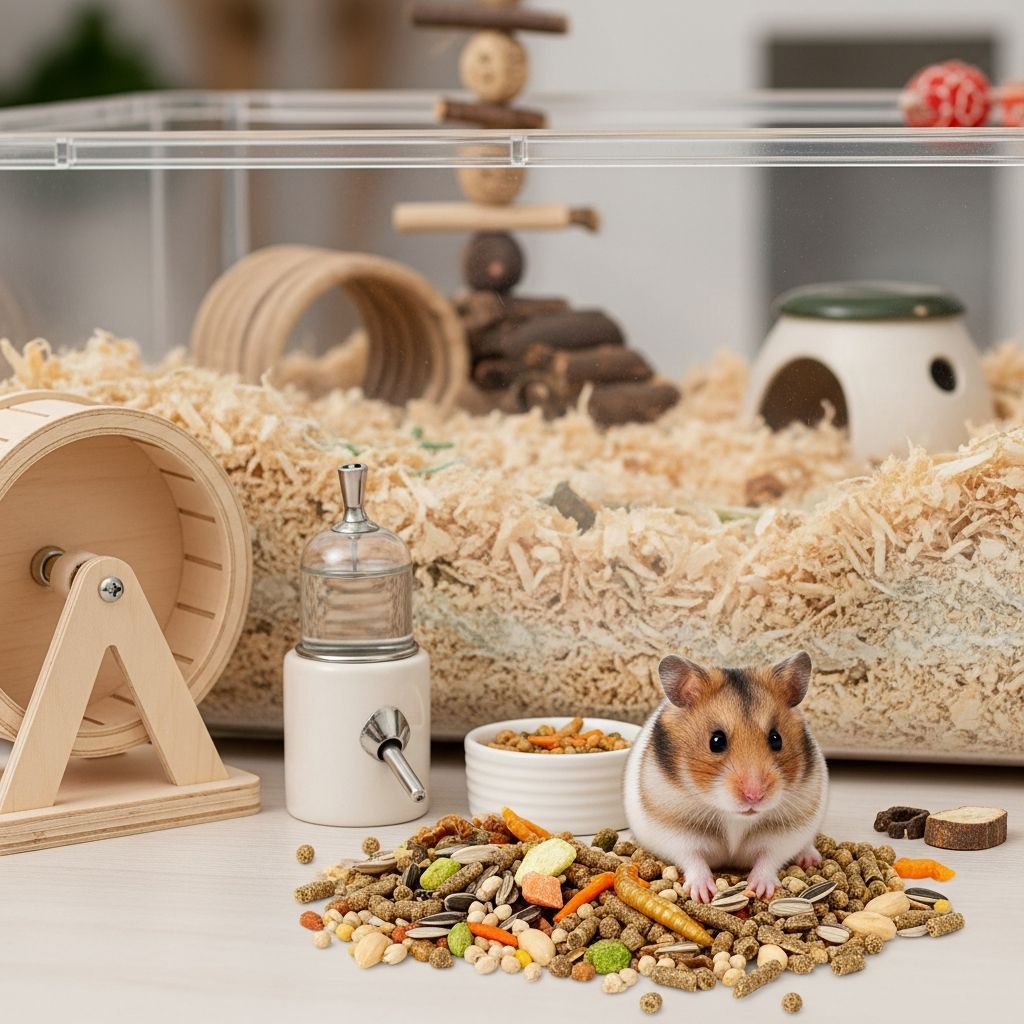
Responsible hamster breeding requires precise knowledge of their reproductive biology, careful mate selection, and dedicated care throughout the process. Hamsters, particularly Syrian varieties, exhibit rapid reproduction cycles that demand vigilant oversight to ensure healthy outcomes for parents and offspring.
Understanding Hamster Reproductive Biology
Hamsters possess remarkably efficient reproductive systems adapted for quick population growth. Females enter estrus every four days, creating brief windows for successful mating typically lasting 4 to 23 hours, with an average of 20 hours. This cycle repeats consistently under stable environmental conditions mimicking spring and summer, such as 12 hours of daily light exposure.
Gestation periods are among the shortest in mammals, spanning 16 days for Syrian hamsters, though some types extend to 22 days. Litters average 6 to 8 pups, ranging from 4 to 12, with newborns born hairless, eyes and ears sealed, but equipped with functional incisors. Weaning occurs around 21 to 28 days, when pups reach 35 to 40 grams and transition to solid foods starting at 7 to 9 days.
| Reproductive Trait | Syrian Hamster Details |
|---|---|
| Estrous Cycle | 4 days |
| Breeding Age (Female) | 56 days or 90-110g |
| Breeding Age (Male) | 63 days or 100-120g |
| Gestation | 16 days |
| Average Litter Size | 7-8 pups |
| Weaning Age | 21 days |
This table summarizes key metrics, highlighting why timing is critical for viability. Postpartum, females can return to estrus within 5 to 10 minutes, enabling rapid successive litters if not managed.
Selecting Ideal Breeding Candidates
Choose hamsters at peak reproductive health: females between 10 weeks (about 4 months) and 15 months old produce the strongest litters, avoiding complications from very young (under 13 weeks) or older (over 8 months for first litters) mothers. Males mature slightly later, reaching readiness at 63 days or 100-120 grams, with fertility less age-sensitive but favoring adults over juveniles.
- Assess physical condition: Healthy weight, active demeanor, no signs of illness.
- Verify genetics: Avoid inbreeding; track lineage to prevent defects common in pet lines.
- Prioritize temperament: Docile animals reduce mating aggression risks.
Novices should refrain from breeding, as females’ territorial nature can lead to severe fights, often with the larger female dominating.
Recognizing the Perfect Mating Window
Females cycle through four distinct phases marked by vaginal discharges, best observed nocturnally since hamsters are crepuscular. Day 1 mornings show dormancy; evenings signal receptivity. Day 2 brings thick white discharge with strong odor by evening, transitioning to waxy on day 3, then clear mucus by day 4 before repeating.
In domestic settings, year-round cycles persist without seasonal cold or short days, unlike wild hamsters limited to spring-summer. Introduce pairs only during receptive phases to prevent injury; mismatched timing triggers aggression.
Supervised Mating Protocols
House hamsters solitarily pre-mating, as Syrian types are aggressively territorial. Never place males in females’ cages; opt for neutral arenas or males’ territories with fresh bedding. Acclimate via adjacent cages for scent familiarization days prior.
Evening introductions align with peak activity. Receptive females exhibit lordosis: freezing after brief running, tail elevated. Males groom rear, mount briefly (seconds), repeating over 20-30 minutes. Light neck nips are normal; excessive force or mis-mounts (front/side) warrant intervention.
- Monitor closely for 20-30 minutes or until interest wanes.
- Separate immediately post-mating or at aggression onset.
- Return female to a spacious, solid-bottom enclosure (e.g., 10-gallon tank) for gestation prep.
Repeat attempts nightly if unsuccessful, targeting the 6-10 hour receptive window every fourth evening.
Gestation Monitoring and Preparation
Pregnancy signs emerge days pre-birth: abdominal swelling, restlessness, vaginal spotting. Provide ample nesting materials like paper shreds or aspen for security, reducing cannibalism risks in first-time mothers.
Maintain quiet; limit disturbances for 7+ days post-birth. Position food/water low for easy pup access once mobile. Gestation uniformity aids prediction: count 16 days from final mating.
Birth and Early Newborn Care
Births occur actively; mothers transport scattered pups to nests via cheek pouches post-delivery. Litters up to 16 possible, averaging 7. Pups develop fur by week 1, explore solids at 10 days, fully wean by 3 weeks.
- Days 1-7: No handling; observe feeding only.
- Day 7+: Gentle handling begins; fur emerges, eyes open soon after.
- Day 10: Introduce moistened solids near nest.
- Week 3: Separate sexes to prevent incest; house singly by 6 weeks.
Fostering fails often; prioritize stable maternal bonds.
Post-Weaning Management and Growth
Separate pups at 21-28 days into single-sex groups until 6 weeks, then individuals to curb aggression. Females resume estrus post-weaning, so space litters promptly. Monitor for dry food transition at 7-9 days, ensuring nutritional balance with high-protein starters.
Common Challenges and Health Risks
Breeding pitfalls include maternal cannibalism (stress-related), genetic issues from poor lineage, and obesity in overfed breeders. Aggression peaks in short-day conditions; maintain long-day lighting. Overbreeding exhausts females; limit to 3-4 litters lifetime.
Consult vets for anomalies like prolonged bleeding or runt rejection. Quarantine new pairs to prevent diseases transmissible via scents.
Ethical Breeding Practices
Only experienced owners breed, prioritizing welfare over quantity. Overpopulation burdens shelters; rehome responsibly. Track pedigrees for color/morph health, avoiding defect-prone lines.
Frequently Asked Questions
How often can hamsters breed?
Females cycle every 4 days postpartum, but limit to avoid health decline; 3-4 litters max recommended.
Can I breed different hamster species?
Syrians are solitary; dwarfs may colony-breed, but hybrids fail. Stick to same-type pairs.
What if mating fails repeatedly?
Check cycle via discharges; try neutral space. Older males may lack vigor.
Signs of pregnancy complications?
Excessive bleeding, lethargy, or non-nesting; seek vet aid immediately.
Best diet for breeding hamsters?
Protein-rich pellets, fresh veggies; supplement calcium for lactation.
References
- Syrian hamster breeding – Wikipedia — Wikipedia. 2023-10-15. https://en.wikipedia.org/wiki/Syrian_hamster_breeding
- Breeding and Reproduction of Hamsters – All Other Pets — Merck Veterinary Manual. 2023-05-01. https://www.merckvetmanual.com/all-other-pets/hamsters/breeding-and-reproduction-of-hamsters
- What You Should Know Before Breeding Your Hamster — PetPlace.com. 2022-08-12. https://www.petplace.com/article/small-mammals/general/what-you-should-know-before-breeding-your-hamster
- Housing and husbandry: Hamster — NC3Rs. 2024-01-20. https://nc3rs.org.uk/3rs-resources/housing-and-husbandry-hamster
Similar Articles








Read full bio of Sneha Tete