

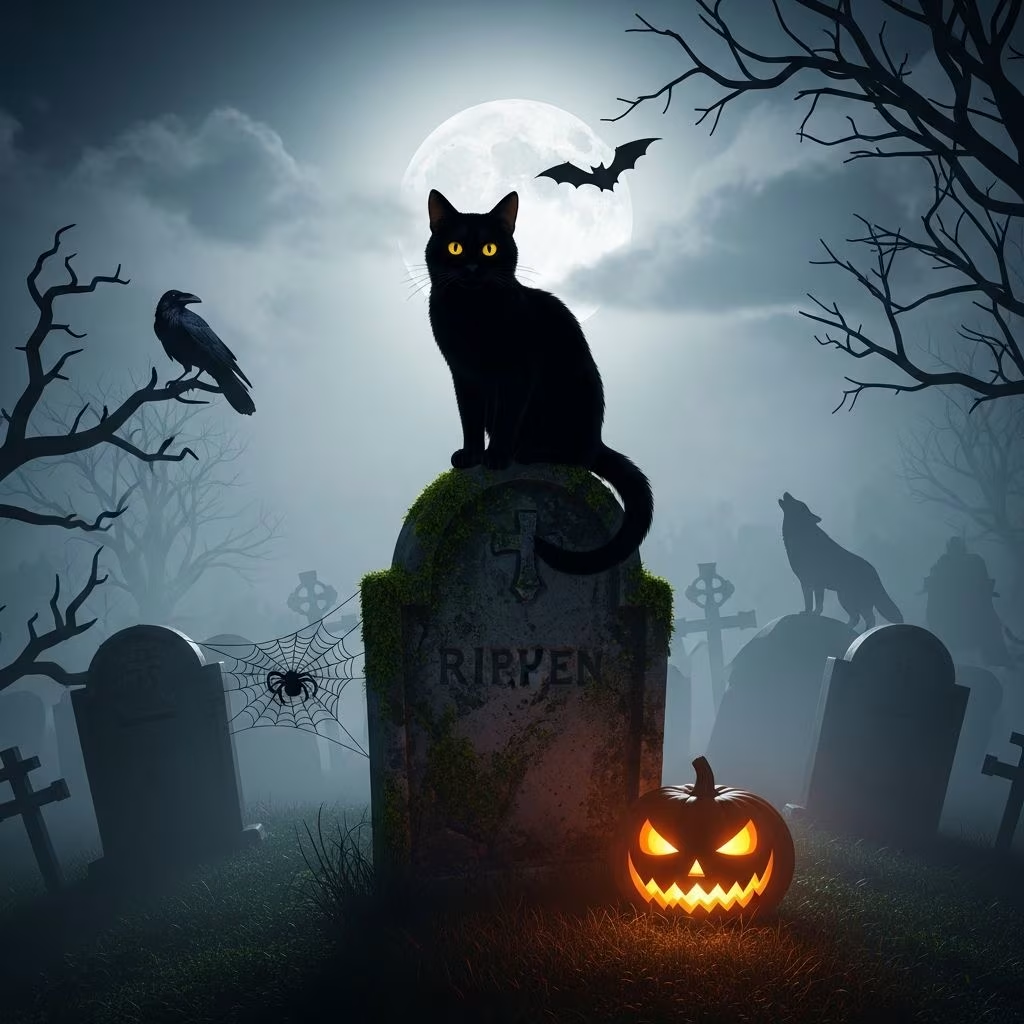
As October approaches and jack-o’-lanterns begin to appear on doorsteps, certain animals become synonymous with Halloween festivities. Black cats prowl through decoration aisles, bat silhouettes adorn store windows, and spider webs stretch across porches and entryways. Yet these creatures weren’t randomly selected as Halloween symbols. Rather, centuries of cultural evolution, religious interpretation, and folklore have woven these animals into the very fabric of our spooky season traditions. Understanding why we fear and celebrate these particular creatures reveals much about human history, belief systems, and how superstitions persist across generations.
The Transformation of Black Cats Through History
Among all Halloween symbols, the black cat holds perhaps the most prominent position in our collective imagination. However, the journey of black cats from revered beings to creatures of ill omen tells a compelling story of cultural transformation. In ancient Egypt, cats were worshipped as divine entities, particularly the goddess Bastet, who embodied protection, fertility, and motherhood. Harming a cat could result in severe punishment, even death, as these animals were considered living embodiments of sacred power. Cats occupied a place of such high esteem that they were mummified and buried in grand tombs alongside pharaohs.
This reverence stood in stark contrast to how medieval European societies would later perceive these same creatures. During the Middle Ages, a dramatic shift occurred in attitudes toward black cats, particularly in Christian-dominated Europe. A 13th-century church decree labeled black cats as demonic incarnations of the devil, fundamentally altering their reputation. This ecclesiastical pronouncement coincided with growing fears of witchcraft and sorcery, creating a dangerous association between black felines and supernatural malevolence.
The connection between black cats and witchcraft became deeply embedded in European culture, particularly between the 15th century onward. Witches were believed to possess familiars—supernatural creatures assigned to them by the devil to assist in their magical work. Black cats, with their nocturnal nature and striking appearance, became the archetypal familiar in popular imagination. This association was so powerful that during periods of witch hunts, cats—especially black ones—became targets of persecution themselves. An erroneous belief that killing cats could curb the spread of the Bubonic plague further contributed to their suffering.
Interestingly, the superstition surrounding black cats took different forms across cultures. While many European and American traditions view a black cat crossing one’s path as an omen of misfortune, other cultures maintained more positive interpretations. These cultural variations demonstrate how superstitions are not universal truths but rather products of specific historical and social contexts.
Nocturnal Creatures and the Veil Between Worlds
The prominence of nocturnal animals in Halloween folklore is not coincidental. Many creatures associated with the spooky season share a common trait: they are most active during darkness. This characteristic connects them to ancient beliefs about nighttime as a liminal space—a threshold between the world of the living and the realm of the dead.
Bats, for instance, became connected to Halloween through their nocturnal habits and the Celtic festival of Samhain. The ancient Celts celebrated Samhain as a time when the boundary between living and dead grew thin. Large bonfires lit during these celebrations attracted insects, which in turn drew bats. These flying creatures, emerging mysteriously from darkness toward the firelight, seemed to embody something otherworldly and were interpreted as spirits disturbed by the ritualistic flames. This interpretation persisted through centuries, eventually becoming embedded in our modern Halloween traditions.
Similarly, owls possess multiple characteristics that contributed to their spooky reputation. Their large, forward-facing eyes, haunting vocalizations, and nocturnal predatory behavior make them appear distinctly otherworldly. In Greek mythology, owls served as symbols of Athena, the goddess of wisdom, yet ancient Romans held the opposite view, believing owls could predict imminent death. This conflicting interpretation reflects how the same animal could carry vastly different symbolic meanings depending on cultural context.
Ancient Romans also developed the belief that witches could transform themselves into owls to travel under the cover of darkness. The screech of an owl became regarded as an omen of doom, further cementing these birds’ association with misfortune and the supernatural. Many Native American cultures similarly connected owls to death and the afterlife, demonstrating how multiple cultures independently developed comparable interpretations of these nocturnal hunters.
Witches’ Companions and Magical Associations
Several creatures became permanently linked to witchcraft through both folkloric tradition and literary representation. These associations were not merely superstitious whimsy but reflected genuine historical anxieties and literary reinforcement of certain beliefs.
Toads exemplify how literary works influenced and reinforced animal superstitions. These warty amphibians were long associated with witches in various European cultures, depicted as companions that assisted in magical practices. This association was significantly amplified by William Shakespeare’s *Macbeth*, where a toad appears in the context of a witch’s brewing ceremony. The playwright’s inclusion of toads in witchcraft scenes introduced millions of readers to the idea that these creatures were essential ingredients in dark magic and potions. Additionally, many toad species contain toxic substances in their skin that can prove poisonous to humans, lending a grain of truth to fears about their potential danger.
The concept of witches’ familiars extended beyond cats to include various animals. Historical witch trial records reveal that women accused of witchcraft often kept pets that seemed unusual for the time—perhaps a crow, a cat, or even a small dog. Prosecutors interpreted these relationships as proof of supernatural connections, using animals as evidence against accused witches. This practice demonstrates how superstitions became embedded in legal and social systems, with real consequences for both humans and animals.
Scavengers, Disease, and Cultural Symbolism
Some creatures became associated with Halloween and darker themes not through mythological connection but through their ecological roles and historical associations with disease and death.
Crows and ravens, often confused with one another, carry particularly dark symbolism rooted in observable behavior. The collective noun for crows—a “murder”—perfectly captures public perception. When crows congregate around the carcass of a dead animal, they fulfill their ecological role as scavengers, yet this behavior reinforces their connection to death and decay. While crows are among the most intelligent animals on the planet and deserve more respect than folklore typically grants them, their intelligence is often overlooked in favor of their sinister appearance and habits.
Rats similarly became entrenched in the cultural imagination as creatures of disease and darkness. This association stems largely from their historical role in spreading the Bubonic plague during the 14th century. Although technically the fleas parasitizing rats carried the disease—not the rats themselves—the rodents became scapegoats for this devastating pandemic. The association stuck: even today, despite rats’ capacity to be excellent and intelligent pets, many people consider them too repulsive to cohabit with.
How Ancient Beliefs Evolved into Modern Halloween Traditions
The transformation of animal superstitions from ancient religious beliefs to modern Halloween symbols represents a fascinating process of cultural evolution. Several factors contributed to this evolution:
- Colonial transmission: Puritan colonists brought European superstitions, including those about black cats, to the New World, embedding these beliefs into American culture.
- Literary influence: Writers and playwrights, from Shakespeare to Edgar Allan Poe, reinforced and popularized animal superstitions through their works.
- Commercialization: In the 19th century, black cats gained prominence in American popular culture as commercial interests recognized their appeal as symbols.
- Secularization: As modern societies became less religiously strict, former demonic associations transformed into entertainment value, making formerly feared creatures into playful Halloween mascots.
The Duality of Modern Animal Symbolism
Interestingly, today’s relationship with Halloween animals reflects a fundamental shift in how we interpret these superstitions. Black cats, once feared as harbingers of doom, are now often viewed as lucky charms or beloved Halloween mascots. This rebranding demonstrates how cultural beliefs are not static but constantly evolving. Modern Halloween enthusiasts celebrate these creatures with affection, even as we maintain the aesthetic of spookiness through costumes and decorations.
Some contemporary interpretations attempt to reclaim these animals from historical superstition. Animal welfare organizations emphasize that black cats face adoption challenges during Halloween, not because of the superstitions themselves, but because people sometimes use them as props for pranks. Efforts to educate the public about these animals’ actual behavior and nature represent a modern counter-narrative to centuries-old folklore.
Why Superstitions Persist in the Modern Era
Despite scientific advancement and rational thinking, superstitions about Halloween animals persist. Several psychological and cultural factors explain this phenomenon:
- Pattern recognition: Humans are hardwired to find patterns and meaning, even in random occurrences. This cognitive tendency makes superstitions psychologically appealing.
- Tradition and continuity: Superstitions provide connection to our past and cultural heritage, making them valuable beyond their literal truth.
- Aesthetic appeal: Halloween animals possess visual qualities that naturally evoke unease or fascination, making them suitable for entertainment and celebration.
- Narrative power: Good stories persist. The tales surrounding these creatures are compelling and memorable, ensuring their transmission across generations.
Understanding Animal Symbolism Across Cultures
The divergent interpretations of similar animals across cultures reveal important truths about superstitions. Black cats, for instance, carry different associations depending on geographic and cultural location. In some Asian cultures, certain colors of cats carry entirely different meanings. This variation indicates that superstitions are culturally constructed rather than inherent to the animals themselves.
Owls present another instructive example. In some traditions they represent wisdom, in others death, and in still others the supernatural. These varying interpretations developed independently, suggesting that humans tend to project their fears and values onto animals based on their observed characteristics and behavioral patterns.
The Educational Value of Halloween Superstitions
Examining the origins of Halloween superstitions offers more than mere historical interest. These beliefs reveal how previous generations understood their world, what they feared, and how they attributed meaning to natural phenomena. The study of superstitions teaches us about the prevalence of misinformation, the power of narrative, and how unfounded beliefs can have real consequences—as demonstrated by the persecution of both women and animals throughout history.
For educators, these superstitions provide accessible entry points into discussions about critical thinking, cultural history, and animal biology. A lesson about black cat superstitions can become a gateway to understanding medieval religion, witchcraft trials, and plague history.
Moving Forward: Honoring Tradition While Embracing Truth
The future relationship with Halloween animal superstitions need not involve abandoning tradition. Rather, we can appreciate the cultural richness and historical depth of these beliefs while simultaneously educating ourselves and others about the animals’ actual nature and ecological importance. Black cats remain striking and beautiful creatures whether we view them through the lens of superstition or biology. Bats continue their vital ecological function as insect controllers, a role far more important than any supernatural association. Owls remain magnificent predators, deserving of respect and wonder rather than fear.
Halloween provides an excellent opportunity to celebrate our relationship with the natural world while acknowledging the historical beliefs and superstitions that shaped our culture. By understanding why we associate certain animals with spooky season, we gain insight into human psychology, history, and the enduring power of storytelling.
References
- Why 7 Animals Became Associated With Halloween — Mental Floss. 2024. https://www.mentalfloss.com/holidays/halloween/halloween-animals
- Wings, Whiskers, and Webs — U.S. Fish & Wildlife Service. 2025. https://www.fws.gov/story/2025-09/wings-whiskers-and-webs
- The History of Black Cats, Superstitions and Halloween — Pepper Projectz. 2024. https://www.youtube.com/watch?v=u7SWgkx7oGo
- History of Halloween: Superstitions — Only In My Dreams Events. 2022. https://www.onlyinmydreamsevents.com/blog-1/2022/10/26/history-of-halloween-superstitions



