
Hairy Caterpillars: Silent Threat to Horse Reproduction
Discover how tiny hairs from processionary caterpillars trigger devastating pregnancy losses in mares and learn vital prevention strategies for horse owners.
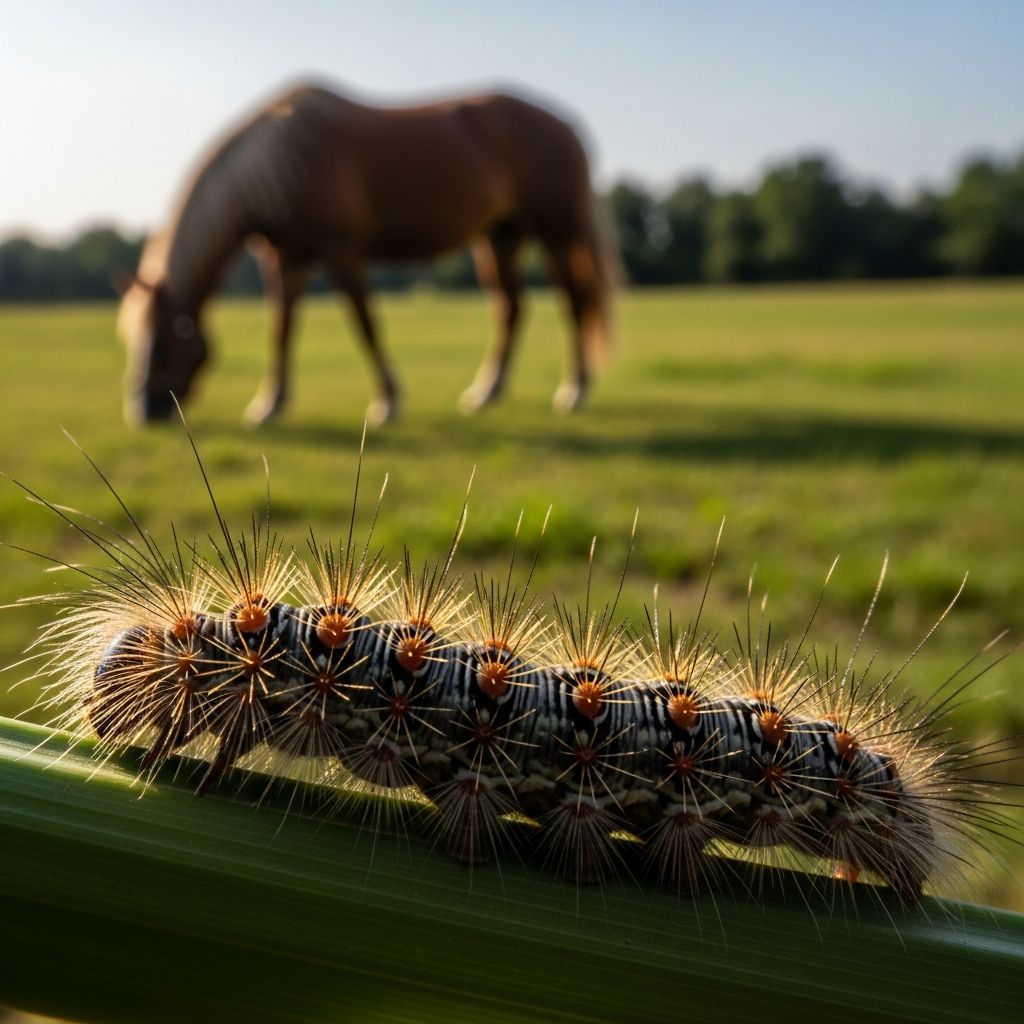
In the world of equine care, overlooking small environmental hazards can lead to catastrophic outcomes. Among these, hairy caterpillars emerge as unexpected adversaries, particularly for breeding operations. These seemingly innocuous larvae, armed with microscopic irritants, infiltrate pastures and hay, wreaking havoc on pregnant mares. This article delves into the biology behind this threat, the devastating health impacts, diagnostic approaches, and actionable prevention tactics to safeguard your herd.
The Biology of the Culprit: Processionary Caterpillar Life Cycle
The processionary caterpillar, scientifically known as Ochrogaster lunifer or bag-shelter moth larvae, thrives in regions like Australia, constructing communal silk tents on tree trunks or branches. These nests serve as fortresses where hundreds of caterpillars huddle, venturing out in single-file lines—hence their processionary name—to feed on eucalyptus leaves.
From egg to moth, every phase bristles with up to 2.5 million fine, needle-like hairs per individual. These urticating hairs act as a defense mechanism, deterring birds and lizards by embedding into skin and triggering inflammation. Mature in May after multiple molts, they burrow underground, pupating until emerging as moths in spring. Wind disperses shed exoskeletons and hairs across landscapes, contaminating grazing areas year-round.
- Nest construction: Silken bags at tree bases or branches.
- Foraging behavior: Head-to-tail marches at night.
- Molt cycles: Up to eight sheds, releasing hair-laden remnants.
- Dispersal: Hairs travel via wind, persisting in pastures.
How Ingested Hairs Trigger Equine Reproductive Crisis
Horses encounter these hazards while grazing or consuming hay, mistaking nests or larvae for forage. Upon ingestion, the barbed hairs pierce the gastrointestinal tract lining, migrating deeper into tissues. This breach allows gut bacteria to enter the bloodstream, sparking systemic inflammation without overt illness in the mare initially.
| Ingestion Dose | Mare Symptoms | Fetal Impact |
|---|---|---|
| Low | Mild colic, urticaria, weight loss | Subtle placentitis |
| Moderate | Endotoxemia, udder engorgement | Premature birth, meconium staining |
| High | Severe colic, fever | Abortion, fetal mummification |
In pregnant mares, hairs reach the allantoic fluid, embedding in the amnion, umbilical cord, or placenta. This induces equine amnionitis and fetal loss (EAFL), a condition rampant from April to July, aligning with peak caterpillar activity. Bacteria colonize these sites, causing placentitis and fetal demise. Research links processionary caterpillars to one-third of Thoroughbred abortions.
Recognizing EAFL: Symptoms and Early Warning Signs
EAFL manifests subtly at first, escalating rapidly. Mares may show udder development weeks prematurely, milk leakage, or ventral edema—hallmarks of impending loss. Late-term signs include colic, lethargy, and fever as endotoxins surge.
Foals born alive often arrive prematurely, stained with meconium, underweight, and weak, with high mortality if untreated. A related milder form, focal mucoid placentitis, prompts early delivery but viable offspring with intervention.
- Monitor late-gestation mares closely from April-July.
- Check for precocious mammary changes.
- Perform ultrasound for placental thickness.
Veterinary Diagnosis and Treatment Protocols
Diagnosis hinges on history, clinical signs, and pathology. Necropsy reveals hair fragments in fetal membranes, bacterial overgrowth, and inflammation. Ultrasound detects thickened placentas (>10mm), guiding therapy.
Treatment demands urgency: broad-spectrum antibiotics (e.g., penicillin, gentamicin) combat infection, while anti-inflammatories curb damage. Supportive care includes fluids and monitoring. One case saw a mare deliver a viable, albeit premature, filly after week-long therapy. Success rates soar with early detection by reproductive specialists.
Prevention Strategies: Proactive Pasture and Nest Management
Foremost, scout and destroy nests. Remove egg masses and tents from trees using protective gear—gloves, masks, goggles—to avoid personal irritation. Burn or bury remnants securely; avoid composting.
Rotate pastures, inspect hay for debris, and delay turnout during peak seasons. Biological controls, like parasitic wasps targeting eggs, show promise in trials. University of Queensland guidelines emphasize risk assessments for studs.
- Daily visual inspections of paddocks and trees.
- Hay screening and sourcing from low-risk areas.
- Veterinary partnerships for seasonal monitoring.
Economic and Industry-Wide Ramifications
EAFL inflicts millions in losses annually, disrupting breeding schedules and Thoroughbred viability. Beyond abortions, premature foals strain resources, with survival demanding intensive care. Australian studies underscore caterpillar control as pivotal to curbing reproductive failures.
Impacts Beyond Horses: Risks to Other Animals and Humans
Urticating hairs irritate human skin, eyes, and airways, causing dermatitis or respiratory distress. Dogs ingesting them suffer tongue necrosis; cats face similar woes. Pet owners must vigilance around infested areas.
FAQs: Common Questions on Caterpillar Threats
What months pose the highest risk for EAFL?
April to July, coinciding with active feeding and dispersal.
Can non-pregnant horses be affected?
Yes, via colic or dermatitis, though less severely.
Is there a vaccine or test for exposure?
No vaccine; ultrasound and history diagnose. Research explores hair detection.
How do I safely remove nests?
Wear PPE, cut nests at night, incinerate promptly.
Are all hairy caterpillars dangerous?
No, primarily processionary and tent types like Ochrogaster lunifer.
Future Research Directions
Ongoing studies probe dispersal patterns, alternative vectors, and biocontrols. Enhanced forecasting models could predict outbreaks, bolstering prevention.
References
- Hairy caterpillars harm horses — Vet Voice. 2023-05-15. https://www.vetvoice.com.au/articles/hairy-caterpillars-harm-horses/
- Hairy Caterpillars: A Foal’s Life Saved — Horses and People. 2023-01-01. https://horsesandpeople.com.au/caterpillars-and-abortions-protecting-your-mare-and-foal/
- Why are caterpillar hairs itchy? Why do caterpillar hairs cause abortions in horses? — Ask an Entomologist. 2015-04-30. https://askentomologists.com/2015/04/30/why-are-caterpillar-hairs-itchy-why-do-caterpillar-hairs-cause-abortions-in-horses-can-they-hurt-other-pets/
- Saving horses from scary hairy caterpillars — University of Queensland News. 2018-02-02. https://news.uq.edu.au/2018-02-02-saving-horses-scary-hairy-caterpillars
- Caterpillars & Horse Abortions — Scone Equine Hospital. 2021-08-10. https://www.sconeequinehospital.com.au/blog/2021/08/10/caterpillars-and-abortions/
- The role of caterpillars in mare reproductive loss syndrome: a model — PubMed. 2010-01-01. https://pubmed.ncbi.nlm.nih.gov/20081071/
- Caterpillar control – the key to reducing equine amnionitis and fetal loss syndrome — AgriFutures Australia. 2023-01-01. https://agrifutures.com.au/product/caterpillar-control-the-key-to-reducing-equine-amnionitis-and-fetal-loss-syndrome/
Similar Articles








Read full bio of Sneha Tete


