

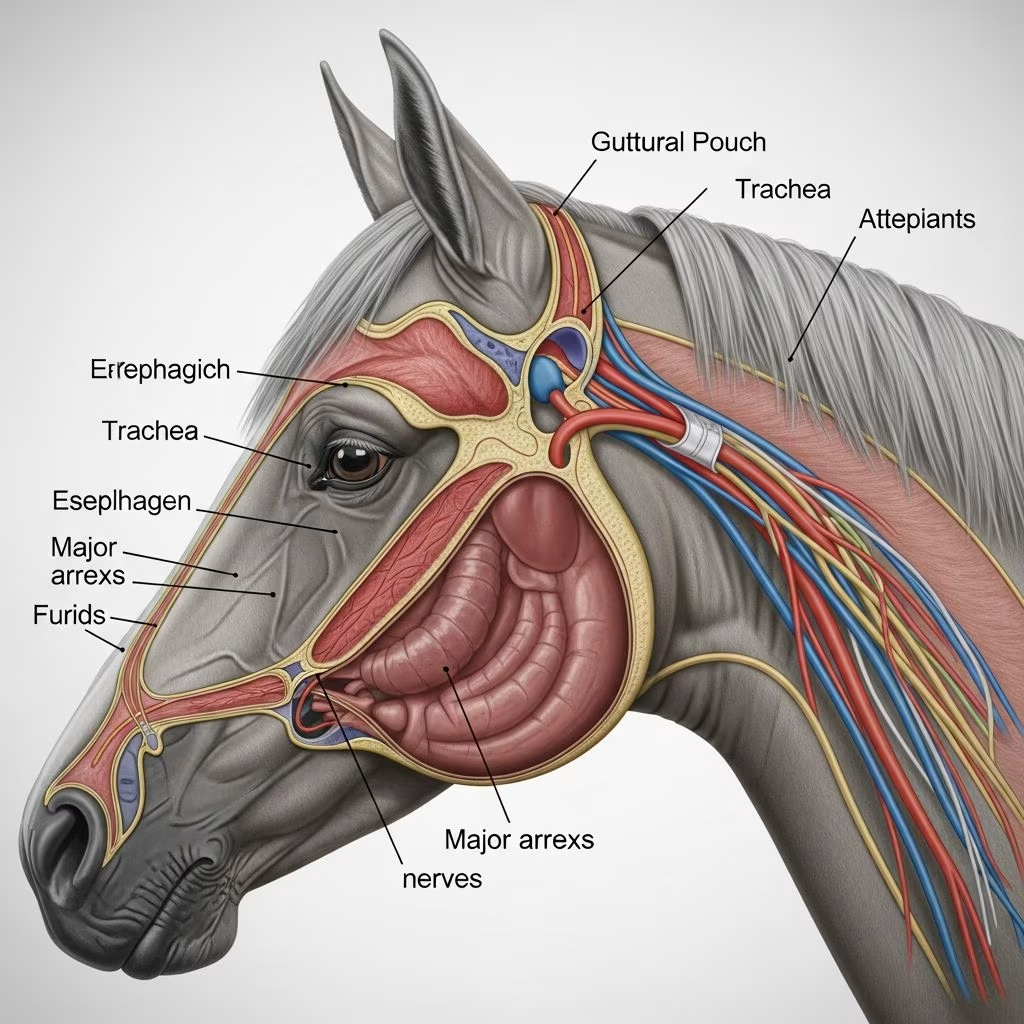
Horses possess unique anatomical features known as guttural pouches, which are expansive, air-filled sacs connected to the Eustachian tubes behind the throat. These structures, absent in many other mammals, play roles in cooling arterial blood and equalizing pressure in the skull. However, they are prone to several disorders that can severely impact a horse’s health, performance, and even survival. This article delves into the primary conditions affecting these pouches—empyema, mycosis, and tympany—covering their origins, clinical manifestations, diagnostic approaches, therapeutic options, and preventive measures.
Understanding the Anatomy and Function of Guttural Pouches
The guttural pouches are bilateral extensions of the auditory tubes, located in the throatlatch area ventral to the ear. Each pouch holds approximately 300-500 ml of air and is lined with a mucous membrane rich in blood vessels and nerves. They communicate with the nasopharynx via narrow openings called pharyngeal ostia, regulated by mucosal flaps. Primary functions include thermoregulation of blood flowing to the brain via carotid arteries and aiding in middle ear ventilation.
Disruptions in this delicate system, often from infections or structural anomalies, lead to pathology. Young horses, performance athletes, and stabled adults are particularly susceptible due to environmental exposures and physiological demands.
Primary Types of Guttural Pouch Conditions
Bacterial Empyema: Pus Accumulation Challenges
Guttural pouch empyema occurs when purulent material builds up within the pouches, typically secondary to upper respiratory infections like strangles caused by Streptococcus equi. Pus from ruptured lymph node abscesses drains into the pouches, where it stagnates due to poor drainage. In roughly 20% of cases, the pus mineralizes into chondroids—hard, stone-like concretions that perpetuate infection and bacterial shedding.
This condition is highly contagious, posing herd health risks. Affected horses may appear outwardly healthy while harboring pathogens.
Fungal Mycosis: A Deadly Invasive Threat
Mycosis involves fungal colonization, predominantly by Aspergillus species, forming plaques on pouch walls. Spores inhaled from bedding or feed germinate in the moist environment, eroding tissues and invading critical structures like the internal carotid artery.
Unlike empyema, mycosis strikes mature, stabled horses more frequently and carries high mortality due to catastrophic hemorrhage.
Tympany: The Air Trapping Dilemma
Guttural pouch tympany features excessive air entrapment, causing unilateral or bilateral distension. Predominantly affecting foals under one year, especially fillies, it stems from a dysfunctional pharyngeal flap acting as a one-way valve. Secondary cases arise post-respiratory inflammation.
While less life-threatening, untreated tympany impairs swallowing and respiration, risking secondary pneumonia.
Recognizing Clinical Signs Across Conditions
Symptoms vary by disorder but often overlap, necessitating veterinary expertise. Common indicators include:
- Unilateral nasal discharge: Pus-laden in empyema, blood-tinged or clear in others.
- Throatlatch swelling: Painful in infections, non-painful in tympany.
- Respiratory noise: ‘Roaring’ during exercise from nerve dysfunction.
- Dysphagia: Difficulty eating, leading to weight loss or aspiration.
Mycosis uniquely presents with epistaxis—sudden, profuse nosebleeds from arterial erosion, fatal in nearly half of cases without intervention. Neurological deficits like facial paralysis, head tilt, or Horner’s syndrome signal nerve involvement. Foals with tympany show jaw distension, dyspnea, and feeding issues.
| Condition | Key Symptoms | Severity |
|---|---|---|
| Empyema | Purulent discharge, fever, painful swelling | Moderate (contagious) |
| Mycosis | Nosebleeds, dysphagia, nerve deficits | High (potentially fatal) |
| Tympany | Non-painful swelling, noisy breathing | Low-moderate |
Diagnostic Approaches for Accurate Identification
Veterinarians rely on history, clinical exam, and advanced imaging. Endoscopy via the nostril visualizes pouch contents, confirming pus, plaques, or air distension. Ultrasound detects swelling, chondroids, or vascular changes.
For mycosis, angiography maps arterial involvement pre-surgery. Culture and cytology of discharge identify pathogens, guiding therapy. Radiography or CT scans assess bone erosion or tympanic flap anomalies in complex cases. Early diagnosis is critical, as delays exacerbate damage.
Treatment Strategies Tailored to Each Disorder
Managing Empyema
Initial treatment involves pouch lavage with saline or antiseptics via indwelling catheter, repeated daily for weeks to flush debris. Chondroids demand surgical removal—laser fenestration, basket retrieval, or full pouchectomy in recalcitrant cases. Antimicrobials target S. equi, with systemic antibiotics and topical solutions.
Addressing Mycosis
Fungal plaques require topical imidazoles or amphotericin B infusions post-debridement. Arterial ligation or balloon catheterization prevents hemorrhage, often prophylactically. Severe dysphagia carries guarded prognosis.
Resolving Tympany
Foal tympany responds to temporary tube insertion for air release, followed by flap correction via laser or surgery. Permanent fixes include ostium enlargement.
Supportive care—anti-inflammatories, fluids, nutrition—accelerates recovery across conditions.
Prognosis and Long-Term Outcomes
Most horses recover fully with prompt care: empyema >90% success, tympany nearly 100% post-surgery. Mycosis prognosis hinges on bleed control—survival drops below 50% with rupture. Recurrence risks persist without source control, especially chondroids. Performance horses may retain subtle deficits like roaring.
Prevention: Safeguarding Herd Health
Vaccination and biosecurity mitigate strangles. Stabling hygiene reduces fungal spores—use low-dust bedding. Routine endoscopy screens high-risk horses. Foal monitoring prevents tympany progression. Quarantine isolates cases.
Frequently Asked Questions (FAQs)
What causes guttural pouch infections in horses?
Primarily strangles for empyema, inhaled fungal spores for mycosis, and flap dysfunction for tympany.
Is guttural pouch disease contagious?
Empyema yes, via bacterial shedding; mycosis and tympany no.
How is guttural pouch empyema treated?
Lavage, antibiotics, and chondroid removal if needed.
Can mycosis be fatal?
Yes, due to arterial rupture causing massive hemorrhage.
When should I call the vet for throat swelling?
Immediately—could indicate infection or tympany requiring urgent care.
Recent Advances and Research Insights
Studies emphasize minimally invasive endoscopy and laser therapies, improving outcomes. PMC research highlights imaging’s role in early detection. Ongoing trials explore antifungal prophylaxis for at-risk horses.
References
- Guttural Pouch Disease in Horses: Causes, Treatment, & Prognosis — Mad Barn. 2023. https://madbarn.com/guttural-pouch-disease-in-horses/
- Guttural Pouch Disease in Horses — Merck Veterinary Manual. 2023-10-17. https://www.merckvetmanual.com/horse-owners/lung-and-airway-disorders-of-horses/guttural-pouch-disease-in-horses
- Guttural Pouch Disease in Horses – Respiratory System — MSD Veterinary Manual. 2023. https://www.msdvetmanual.com/respiratory-system/respiratory-diseases-of-horses/guttural-pouch-disease-in-horses
- Equine Guttural Pouch Infections — The Horse. 2020-01-28. https://thehorse.com/194583/equine-guttural-pouch-infections/
- Guttural Pouch Disease in Horses – Causes, Treatment — Vetster. 2023. https://vetster.com/en/conditions/horse/guttural-pouch-disease
- Guttural pouch disorders — University of Minnesota Large Animal Surgery. 2023. https://open.lib.umn.edu/largeanimalsurgery/chapter/guttural-pouch-disorders/
- Diagnostic Imaging of Diseases Affecting the Guttural Pouch — PMC (NCBI). 2023-08-29. https://pmc.ncbi.nlm.nih.gov/articles/PMC10458280/



