

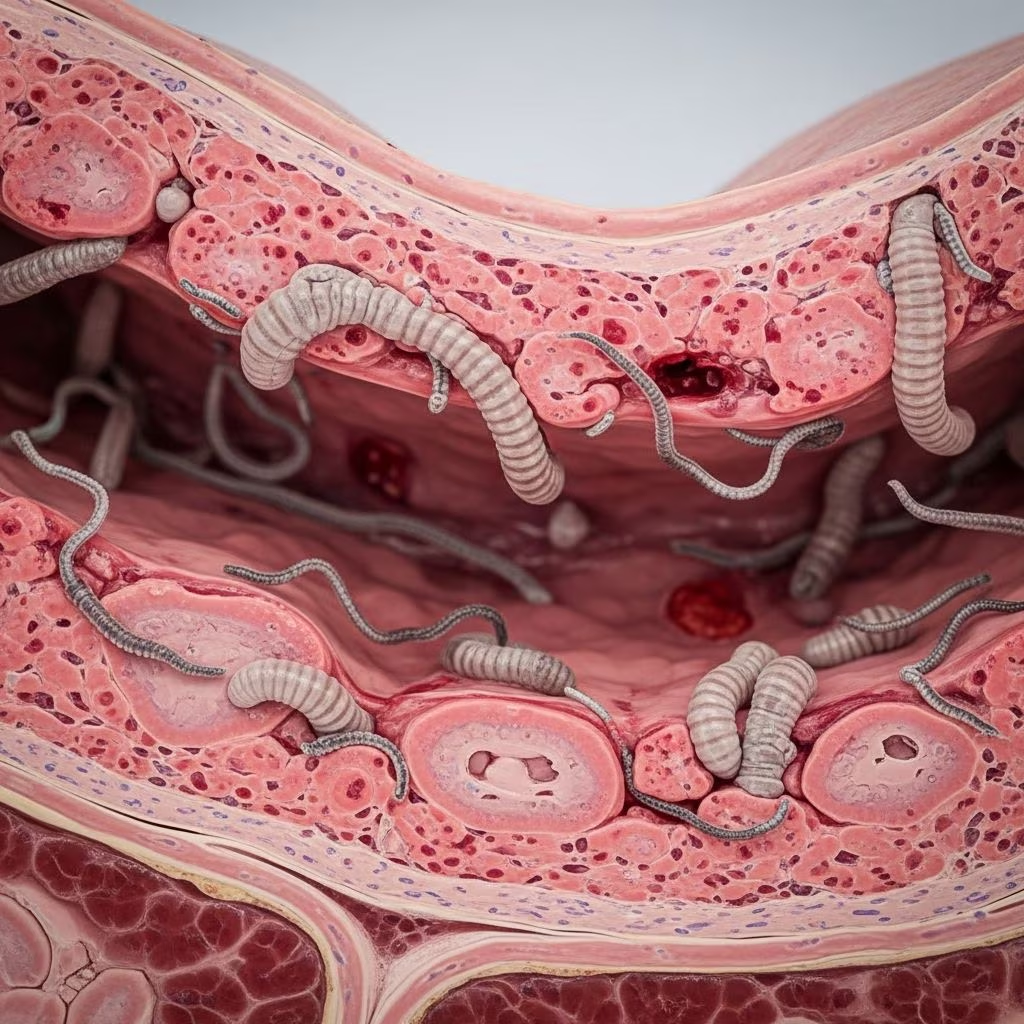
Gastrointestinal parasites represent a significant challenge in swine production, compromising animal health, growth rates, and overall farm economics. These organisms, including nematodes and protozoans, thrive in the digestive tracts of pigs, leading to nutrient malabsorption, organ damage, and heightened disease susceptibility. Effective management requires understanding their biology, recognizing clinical signs, and implementing targeted interventions.
Why Gastrointestinal Parasites Matter in Swine Herds
Parasitic infections disrupt normal digestion and nutrient uptake, directly reducing feed efficiency and weight gain, particularly in young pigs. Heavy burdens can cause emaciation, diarrhea, and secondary bacterial infections, escalating mortality rates up to 25% in vulnerable litters. Beyond animal welfare, these parasites inflict financial losses through condemned organs—like livers with white spots—and diminished meat quality. Studies indicate infection rates exceeding 90% in some regions, underscoring the need for vigilant herd monitoring.
In organic or outdoor systems, exposure to contaminated soil and feces amplifies risks, with polyparasitism—multiple species co-inhabiting—common in over 50% of cases. Younger pigs under two years face higher prevalence, often due to immature immunity and shared environments with sows.
Primary Nematode Parasites Affecting Pigs
Nematodes, or roundworms, dominate swine parasitism. Their eggs embryonate in the environment before ingestion reinfects hosts.
Ascaris suum: The Ubiquitous Roundworm
Ascaris suum stands as the predominant intestinal nematode worldwide, residing in the small intestine as white, elongated adults up to 40 cm long. Pigs ingest infective eggs from contaminated feed, water, or soil. Larvae hatch, penetrate the gut wall, migrate via bloodstream to liver and lungs—causing inflammation and ‘milk spots’ on livers—then return to the intestine. This lifecycle impairs vitamin A absorption, triggers respiratory issues like ‘thumps,’ and competes for nutrients, stunting growth even at low burdens.
- Liver damage: Larval migration produces white spots, leading to organ condemnation.
- Lung effects: Thickened tissues hinder breathing, mimicking pneumonia.
- Growth impact: Reduced feed intake and efficiency, visible as unthrifty pigs.
Oesophagostomum Species: Nodular Worms
Oesophagostomum dentatum and related species inhabit the large intestine. Larvae encyst in the gut wall, forming nodules that provoke inflammation and emaciation in severe cases. Adults cause minimal direct harm but exacerbate nutrient loss. Common in sows and outdoor pigs, they contribute to co-infections.
Other Key Helminths: Trichuris suis and Strongyloides ransomi
Trichuris suis, the pig whipworm, burrows into the large intestine’s mucosa, drawing blood and fostering anemia. It prevails in outdoor settings. Strongyloides ransomi, a threadworm, spreads via colostrum or skin contact, striking piglets at 10-14 days with profuse diarrhea and high mortality. Diagnosis involves mucosal scrapings.
Protozoan Threats: Coccidia and Cryptosporidium
Protozoans target intestinal epithelium, often hitting neonates hardest.
Cystoisospora suis: Neonatal Coccidiosis Culprit
This apicomplexan devastates suckling piglets aged 6 days to 3 weeks, necrotizing the jejunum and ileum. Villous atrophy and secondary bacteria yield yellow, frothy diarrhea, stunting, and 20-25% mortality. Oocysts sporulate rapidly in warm, moist farrowing pens.
Eimeria and Cryptosporidium Species
Eimeria spp. provoke enterocolitis in growers but rarely severe disease. Cryptosporidium attaches to small intestinal villi in pigs over 10 days, inducing malabsorption and diarrhea. Inapparent infections predominate, yet outbreaks impair weaning performance. Transmission occurs fecal-orally via contaminated environments.
Recognizing Clinical Signs and Pathological Changes
Symptoms vary by parasite, age, and burden. Common indicators include:
- Diarrhea: Watery or mucoid, especially in coccidiosis.
- Weight loss: Poor condition scores and potbelly appearance.
- Respiratory distress: Coughing from Ascaris migration.
- Rectal prolapse or tail twitching in heavy infestations.
Post-mortem findings reveal worms in intestines, liver lesions, and gut wall thickenings. Fecal exams via flotation or sedimentation detect eggs/oocysts, with prevalence hitting 91% in poorly managed herds.
| Parasite | Key Signs | Affected Age Group |
|---|---|---|
| Ascaris suum | Milk spots, thumps, poor gain | Growers/finishers |
| Cystoisospora suis | Yellow diarrhea, mortality | Neonates (6-21 days) |
| Strongyloides ransomi | Severe diarrhea | Piglets (10-14 days) |
| Oesophagostomum spp. | Emaciation, nodules | Sows/adults |
Economic and Zoonotic Implications
Parasites erode profitability via retarded growth, veterinary costs, and carcass downgrades. Ascaris alone slashes daily gains and feed conversion. Zoonotically, Ascaris suum crosses to humans via contaminated produce, while others like Cryptosporidium pose public health risks.
In Ghanaian studies, 94% of young pigs harbored multiple parasites, linked to subpar husbandry.
Diagnostic Approaches for Swine Parasites
Routine fecal analysis using flotation (80% sensitivity) or sedimentation (68%) identifies eggs. Direct smears suit threadworms. Larval cultures differentiate species. Post-mortem histology confirms tissue damage. Pooling samples from pens aids herd-level screening.
Prevention and Control Strategies
Integrated approaches outperform standalone deworming.
Biosecurity and Management
- All-in/all-out systems with thorough cleaning/disinfection.
- Outdoor rotations to break egg cycles.
- Sanitation: Remove manure promptly; avoid overcrowding.
Anthelmintic Treatments
Deworm sows pre-farrowing and piglets at weaning. Rotate classes to curb resistance: benzimidazoles (fenbendazole), levamisole, ivermectin. Strategic dosing targets life stages.
Breeding for Resistance
Select genetics with natural resilience, combined with nutrition boosting immunity.
Emerging Challenges in Parasite Management
Climate change extends transmission seasons; anthelmintic resistance emerges. Organic farms face heightened risks sans chemoprophylaxis, demanding pasture management.
Frequently Asked Questions (FAQs)
What is the most common pig parasite?
Ascaris suum, affecting the small intestine and causing liver/lung damage.
How do pigs get coccidiosis?
By ingesting sporulated oocysts in contaminated farrowing areas.
Can pig parasites infect humans?
Yes, Ascaris suum and Cryptosporidium are zoonotic via fecal-oral route.
How often should I deworm my pigs?
Sows before farrowing, piglets at 6-8 weeks, and growers quarterly, based on fecal checks.
What causes milk spots on pig livers?
Larval migration of Ascaris suum during its tissue phase.
References
- Parasitism (Gastrointestinal) in Pigs — MSD Veterinary Manual. 2023. https://www.msdvetmanual.com/digestive-system/intestinal-diseases-in-pigs/parasitism-gastrointestinal-in-pigs
- Prevalence of Gastrointestinal Parasites in Pigs: A Preliminary Study — PMC (NCBI). 2023-11-01. https://pmc.ncbi.nlm.nih.gov/articles/PMC10696473/
- Occurrence of Intestinal Parasites and Its Impact on Growth — Frontiers in Veterinary Science. 2022-06-14. https://www.frontiersin.org/journals/veterinary-science/articles/10.3389/fvets.2022.911561/full
- Swine Gastrointestinal Parasites — Ohio State University Animal Sciences. 2025. https://ansci.osu.edu/sites/ansci/files/imce/files/Factsheets/Swine%20Gastrointestinal%20Parasites%20AS-SW-14-25.pdf
- About Ascaris in Pigs — Centers for Disease Control and Prevention (CDC). 2023. https://www.cdc.gov/sth/about/about-ascaris-in-pigs.html
- Swine Parasites — Morris Veterinary Center. 2024. https://morrisvetcenter.com/livestock/swine/swine-parasites.html
- Common Internal Parasites of Swine — University of Missouri Extension. 2023. https://extension.missouri.edu/publications/g2430



