

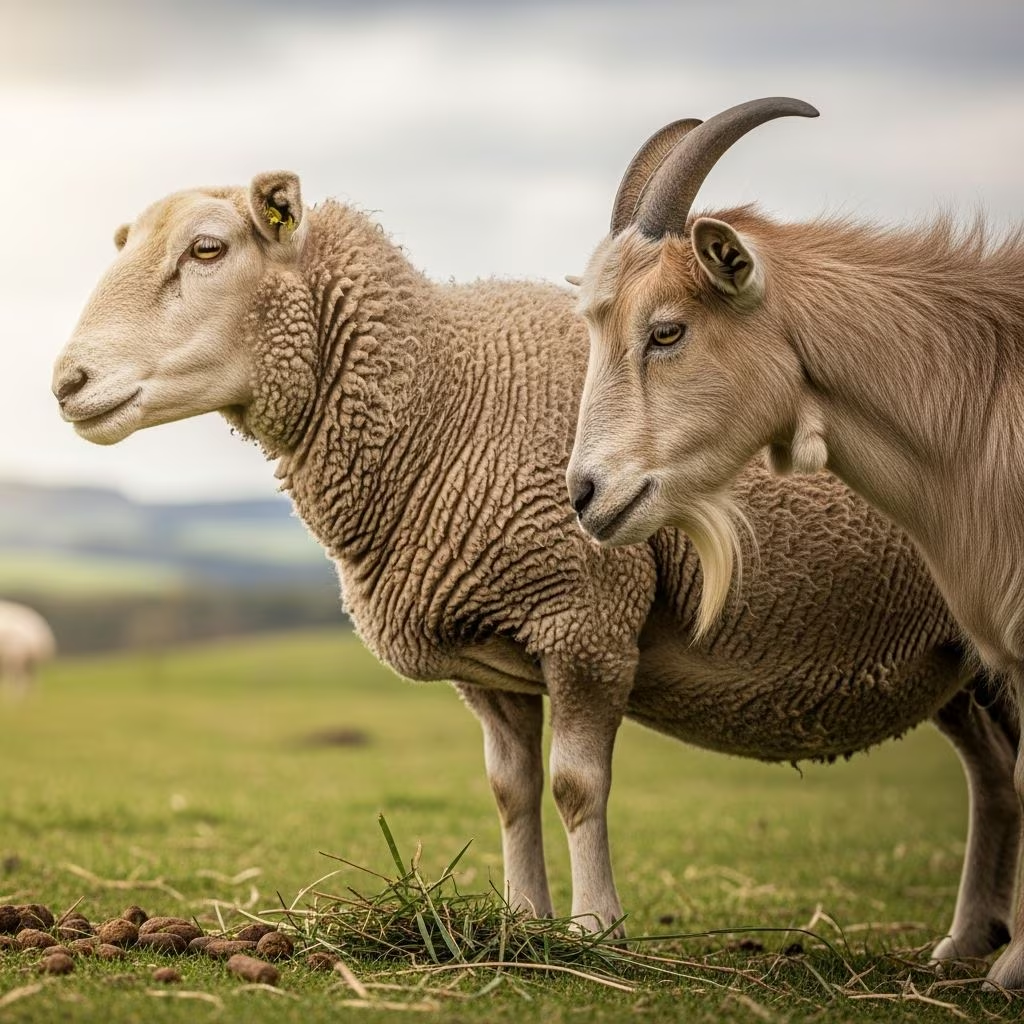
Sheep and goats, as small ruminants, rely heavily on their digestive systems for survival and productivity. Intestinal health directly impacts growth rates, milk production, and overall herd vitality. Common gut disorders range from bacterial overgrowths to parasitic burdens, often striking young animals hardest. Understanding these conditions enables farmers to implement timely interventions, reducing mortality and economic losses.
Understanding the Ruminant Digestive System
Ruminants like sheep and goats possess a unique four-chambered stomach: rumen, reticulum, omasum, and abomasum. The rumen ferments fibrous feeds via microbial action, while the abomasum and intestines handle nutrient absorption. Disruptions here, from toxins or invaders, lead to severe illness. Factors like sudden feed changes, stress, or overcrowding exacerbate vulnerabilities, particularly in lambs and kids under one year old.
Bacterial Threats: Enterotoxemia and Beyond
Enterotoxemia stands out as a leading killer, dubbed ‘overeating disease’ despite not stemming from literal overconsumption. Caused by Clostridium perfringens types C and D, these soil-dwelling bacteria proliferate in thriving animals on lush pastures or high-grain diets, releasing potent epsilon or beta toxins that damage intestines and kidneys.
Forms and Risk Factors
- Type C: Hits neonates under 3 weeks, mimicking ‘milk colic’ with rapid diarrhea and death.
- Type D: Affects older, fast-growing stock, causing pulpy kidney via toxin absorption.
Outbreaks surge with excessive milk, carbs, low roughage, parasites, or stress compromising immunity. Goats often show diarrhea first, while sheep exhibit neurologic collapse and sudden death.
Diagnosis and Clinical Presentation
Symptoms erupt abruptly: lethargy, belly pain, fever, staggering, bloody stools, or instant fatality within hours. Necropsy reveals enterocolitis, mucosal ulcers, clostridial overgrowth, though postmortem changes complicate confirmation. Labs culture feces or tissues anaerobically, typing the bacterium.
| Sign | Sheep | Goats |
|---|---|---|
| Onset | Neurologic then death | Diarrhea prominent |
| Age | Feedlot lambs | Kids post-weaning |
| Fatal Outcome | Hours | Days if untreated |
Management and Prevention
Treatment rarely succeeds due to toxin speed; antitoxins, penicillin, and fluids offer slim chances. Prevention reigns: vaccinate at 6-8 weeks with boosters at 3-4 weeks, annually for ewes/does pre-lambing. Combine with tetanus toxoid. Gradually introduce concentrates, ensure roughage, deworm routinely, and avoid sudden lush grazing.
Parasitic Invaders of the Intestines
Gastrointestinal nematodes plague small ruminants worldwide, targeting abomasum and small intestines. Key culprits include Haemonchus contortus (barberpole worm), blood-sucker causing anemia; Trichostrongylus spp., damaging mucosa; Teladorsagia circumcincta; and Nematodirus spp., devastating lambs with up to 20% mortality in untreated UK/Australia/New Zealand flocks.
Cycle of Infection and Impact
These roundworms shed eggs in feces, hatching on pasture into infective larvae ingested while grazing. Larvae mature in 2-3 weeks, females laying thousands daily. Heavy burdens cause weight loss, diarrhea, edema, and death, worsened by concurrent coccidia or bacteria.
Nematodirus uniquely hatches en masse in spring, syncing with naive lambs for explosive outbreaks.
Control Measures
- Strategic deworming: FAMACHA scoring for anemia-targeted treatments.
- Pasture rotation: 3-4 week rests break cycles.
- Multi-species grazing: Cattle host different worms.
- Resistant breeds and copper oxide boluses for Haemonchus.
Resistance to anthelmintics like ivermectin demands fecal egg counts guiding selective therapy.
Coccidiosis: Protozoan Scourge
Coccidia (Eimeria spp.) are host-specific protozoa invading intestinal cells, causing inflammation and bloody diarrhea in weaned lambs/kids under stress like transport or overcrowding. Oocysts sporulate in warm, moist feces, ingested via contaminated feed/water.
Signs: Dehydration, tenesmus, mucoid/bloody feces, rapid emaciation. Diagnosis via fecal flotation revealing high oocyst counts. Treat with sulfa drugs (e.g., sulfadimethoxine); prevent with amprolium in water, clean housing, and non-crowded pens.
Chronic Wasting: Paratuberculosis
Paratuberculosis (Johne’s disease), driven by Mycobacterium avium subsp. paratuberculosis, incites incurable small intestine thickening, malabsorption. Calves/kids contract via infected colostrum/milk or fecal-oral from manure-laden environments.
Incubation spans 2+ years; culled adults show progressive thinness, dropping milk, occasional diarrhea. Test via ELISA, PCR on feces; manage by culling positives, calf isolation, vaccination where available. No therapy exists.
Other Notable Intestinal Challenges
Abomasal Ulcers and Acidosis
Rumen acidosis from grain overload erodes abomasum, fostering ulcers and secondary infections. Signs: Colic, dark feces, anemia. Correct feeds slowly.
Bloat Complications
Though rumen-centric, frothy/legume bloat stresses intestines via pressure, demanding antifoams or trocars.
Caseous Lymphadenitis Spillover
Corynebacterium pseudotuberculosis abscesses rarely gut-invade but contaminate via pus ingestion.
Diagnostic Approaches
Holistic assessment merges history (feed changes, deaths), signs, fecal exams (ova, coccidia), bloodwork (anemia, proteins), and necropsies. Labs confirm pathogens via culture, PCR, histopathology.
Veterinary and Husbandry Best Practices
- Nutrition Balance: High fiber, phased grains.
- Biosecurity: Quarantine newcomers, sanitize.
- Vaccination Calendar: Clostridials, CDT combos.
- Monitoring: Body condition scores, FAMACHA weekly.
- Herd Testing: Annual Paratuberculosis screens.
FAQs on Sheep and Goat Gut Health
What causes sudden death in thriving lambs?
Enterotoxemia from C. perfringens toxins during rapid growth on rich feeds.
How to prevent worm resistance?
Use targeted selective treatment based on fecal egg counts and FAMACHA.
Is coccidiosis vaccine available?
No; rely on hygiene, amprolium prophylaxis in high-risk groups.
Can Paratuberculosis be cured?
No, focus on prevention and culling.
When to vaccinate against enterotoxemia?
At 6-8 weeks, booster 3-4 weeks later; dams pre-partum.
Conclusion
Proactive gut health management transforms sheep and goat operations. Integrating vaccination, parasite control, and vigilant monitoring minimizes losses, boosting sustainable farming.
References
- Enterotoxemia in sheep and goats — Texas A&M Veterinary Medical Diagnostic Laboratory. 2023. https://tvmdl.tamu.edu/case-studies/enterotoxemia-in-sheep-and-goats/
- Enterotoxemia in Sheep and Goats — University of Georgia College of Veterinary Medicine. 2022. https://vet.uga.edu/enterotoxemia-in-sheep-and-goats/
- Common Diseases In Goats And Sheep — Horizon Veterinary. 2022-06-30. https://www.horizonvetbrighton.com/site/blog/2022/06/30/common-diseases-goats-sheep
- Test for para-tbc outdoors in sheep and goats — GBA Group. 2024. https://www.gba-group.com/en/veterinary-diagnostics/animal-diseases/small-ruminants-para-tbc/
- Common Gastrointestinal Parasites of Small Ruminants — Merck Veterinary Manual. 2023. https://www.merckvetmanual.com/digestive-system/gastrointestinal-parasites-of-ruminants/common-gastrointestinal-parasites-of-small-ruminants
- Diseases of the Gastrointestinal System — PMC/NIH. 2020-04-15. https://pmc.ncbi.nlm.nih.gov/articles/PMC7167521/
- Common Diseases and Health Problems in Sheep and Goats — Purdue University Extension. 2008. https://www.extension.purdue.edu/extmedia/as/as-595-commondiseases.pdf



