
Undefined Gut Disorders In Pigs: Causes And Care Guide
Comprehensive guide to identifying, preventing, and managing intestinal issues in swine for optimal herd health and productivity.
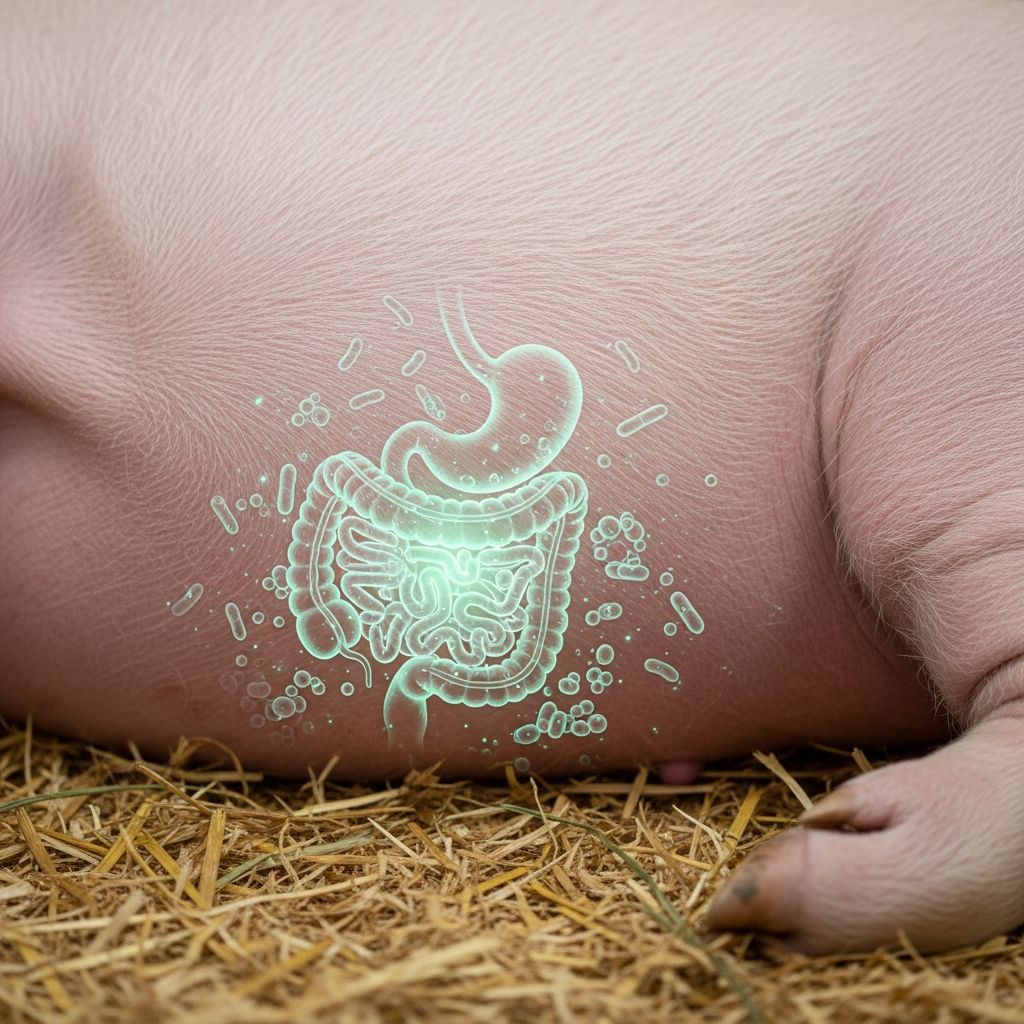
Intestinal problems represent a major challenge in swine production, often manifesting as diarrhea that impacts growth, feed efficiency, and overall herd profitability. These disorders arise from diverse pathogens including bacteria, viruses, and parasites, affecting pigs from neonates to adults. Early recognition and targeted interventions are crucial for minimizing losses.
Understanding the Scope of Swine Enteric Issues
Pigs at every life stage face risks from enteric pathogens, primarily spread through fecal-oral transmission. Over 20 agents can trigger primary gut inflammation, with diarrhea as the hallmark symptom. Secondary factors like poor hygiene or stress exacerbate outbreaks, leading to dehydration, weight loss, and high mortality in vulnerable groups such as suckling piglets.
Neonatal pigs suffer most acutely due to immature immunity, while weaners and growers contend with mixed infections. Adults may carry subclinical pathogens, serving as reservoirs. Economic impacts include reduced daily gains, increased veterinary costs, and culling.
Bacterial Culprits Behind Pig Diarrhea
Bacteria dominate porcine gut diseases, often causing segmental necrosis and hemorrhagic lesions in the small intestine, particularly the jejunum.
Clostridium perfringens Type A
This Gram-positive rod thrives in high numbers (108–109 CFU/g), producing CPA and sometimes CPB2 toxins. It leads to non-hemorrhagic, mucoid diarrhea in suckling piglets, with peracute cases showing emphysema and fibrino-necrotic exudate. Kidneys often deposit urate crystals, and histology reveals villi covered in rods amid thrombosis.
Clostridioides difficile Infections
Affecting piglets 1–7 days old, this pathogen causes early diarrhea, abdominal distension, scrotal edema, or sudden death. Mild cases involve poor growth and appetite loss; some pigs remain subclinical. Transmission occurs via spores in contaminated environments.
Salmonella Challenges
Salmonellosis presents with fever, yellow watery diarrhea (sometimes bloody/mucoid), dehydration, and hypokalemia. It strikes stressed or naive pigs, persisting in tonsils, lymph nodes, and intestines for months. Chronic cases lead to rectal strictures, obstipation, and emaciation.
| Bacterial Agent | Age Group | Key Signs | Lesions |
|---|---|---|---|
| Clostridium perfringens Type A | Suckling piglets | Mucoid diarrhea | Mucosal necrosis, emphysema |
| Clostridioides difficile | 1-7 days | Distension, edema | Pseudomembranous colitis |
| Salmonella spp. | All ages | Watery/bloody diarrhea | Ulcerative proctitis |
Viral Threats to Porcine Digestion
Porcine enteric coronaviruses (PECs) like TGEV, PEDV, PDCoV, and SADS-CoV wreak havoc via vomiting, severe diarrhea, and dehydration. Piglets are highly susceptible, with PDCoV milder than PEDV but still causing notable losses.
- TGEV: Near-100% mortality in neonates; vomiting and yellow diarrhea.
- PEDV: Watery diarrhea, high morbidity in all ages.
- PDCoV: Variable vomiting, milder field impact.
These viruses target enterocytes, leading to villous atrophy and malabsorption. Control relies on biosecurity, as vaccines vary by region.
Parasitic Invaders of the Swine Gut
Parasites cause chronic issues, impairing nutrient uptake and growth. Common nematodes like Ascaris suum migrate through liver and lungs, reducing vitamin A absorption and feed efficiency.
Coccidiosis from Cystoisospora suis
Striking piglets 6 days to 3 weeks old, this apicomplexan protozoan induces ileal/jejunal necrosis and villous atrophy. Mortality hits 20–25%, with survivors stunted. Secondary bacteria invade damaged mucosa. Diagnosis via mucosal smears or histology; prevention through farrowing hygiene and disinfectants like 50% bleach.
Other Key Parasites
- Cryptosporidium spp.: Attaches to lower small intestine epithelium in pigs ≥10 days, causing villous atrophy and occasional diarrhea.
- Oesophagostomum spp.: Larvae encyst in large intestine walls, leading to emaciation in heavy burdens; adults cause minimal harm.
- Strongyloides ransomi: Transmitted via colostrum or skin, triggers severe diarrhea at 10–14 days with high mortality.
- Trichuris suis: Whipworms inflame cecum/colon mucosa, mimicking dysentery with hemorrhagic feces.
- Eimeria spp.: Rarely pathogenic but can cause enterocolitis in growers.
Heavy ascarid loads emaciate pigs; nodular worms and threadworms compound losses. Fecal flotation, mucosal exams, or necropsy confirm infections.
Diagnostic Strategies for Enteric Disorders
Effective diagnosis starts with history, clinical signs, and targeted sampling. Necropsy reveals segmental lesions: mucosal hemorrhages, fibrin tags, or pseudomembranes. Histopathology identifies pathogens—Gram-positive rods for Clostridium, inclusions for viruses.
- Gross Pathology: Note distribution (jejunum common), exudate type.
- Microbiology: Culture for bacteria; PCR for viruses/parasites.
- Parasitology: Fecal floats, scrapings for oocysts/larvae.
- Monitoring: Blood counts track anemia from blood-feeding worms.
Differentiate via age, lesion patterns, and ancillary tests like toxin assays.
Prevention and Management Tactics
Biosecurity forms the cornerstone: all-in-all-out systems, thorough cleaning, and disinfection. For coccidiosis, medicate sows pre-farrowing and piglets early.
- Vaccination: Available for some coronaviruses and erysipelas.
- Antibiotics: Targeted for bacterial overgrowth; avoid overuse.
- Nutrition: Support immunity with balanced feeds, electrolytes for dehydration.
- Parasite Control: Routine deworming, pasture rotation.
Monitor for subclinical carriers to break transmission cycles.
Impact on Production and Economics
Enteropathies slash profitability via stunting, culls, and vet bills. Nursery pigs lose most potential gain; adults show poor feed conversion. Proactive health programs yield returns through fewer outbreaks.
FAQs on Pig Gut Health
What causes sudden diarrhea in newborn piglets?
Commonly Cystoisospora suis, Clostridioides difficile, or coronaviruses; check for distension or edema.
How to differentiate parasitic from bacterial diarrhea?
Parasites cause chronic wasting/emaciation; bacteria yield acute, hemorrhagic signs. Use fecal exams and histopathology.
Can adult pigs get coccidiosis?
Rarely clinical; they act as oocyst shedders, infecting young.
Best prevention for PEDV outbreaks?
Strict biosecurity, feedback vaccination where approved.
Role of hygiene in controlling Salmonella?
Critical; reduces exposure in naive pigs, prevents carrier states.
Emerging Concerns and Research Directions
New coronaviruses like SADS-CoV highlight ongoing threats. Integrated approaches combining diagnostics, genomics, and farm management evolve with science. Focus on gut microbiome supports resilience against pathogens.
References
- Diagnostic Approach to Enteric Disorders in Pigs — PMC – NIH. 2023. https://pmc.ncbi.nlm.nih.gov/articles/PMC9913336/
- Parasitism (Gastrointestinal) in Pigs — MSD Veterinary Manual. 2023. https://www.msdvetmanual.com/digestive-system/intestinal-diseases-in-pigs/parasitism-gastrointestinal-in-pigs
- Overview of Intestinal Diseases in Pigs — Merck Veterinary Manual. 2023. https://www.merckvetmanual.com/digestive-system/intestinal-diseases-in-pigs/overview-of-intestinal-diseases-in-pigs
- Swine Gastrointestinal Parasites — Ohio State University Animal Sciences. 2025. https://ansci.osu.edu/sites/ansci/files/imce/files/Factsheets/Swine%20Gastrointestinal%20Parasites%20AS-SW-14-25.pdf
- Overview of Gastrointestinal Parasites of Pigs — Merck Veterinary Manual. 2023. https://www.merckvetmanual.com/digestive-system/gastrointestinal-parasites-of-pigs/overview-of-gastrointestinal-parasites-of-pigs
Similar Articles








Read full bio of medha deb


