

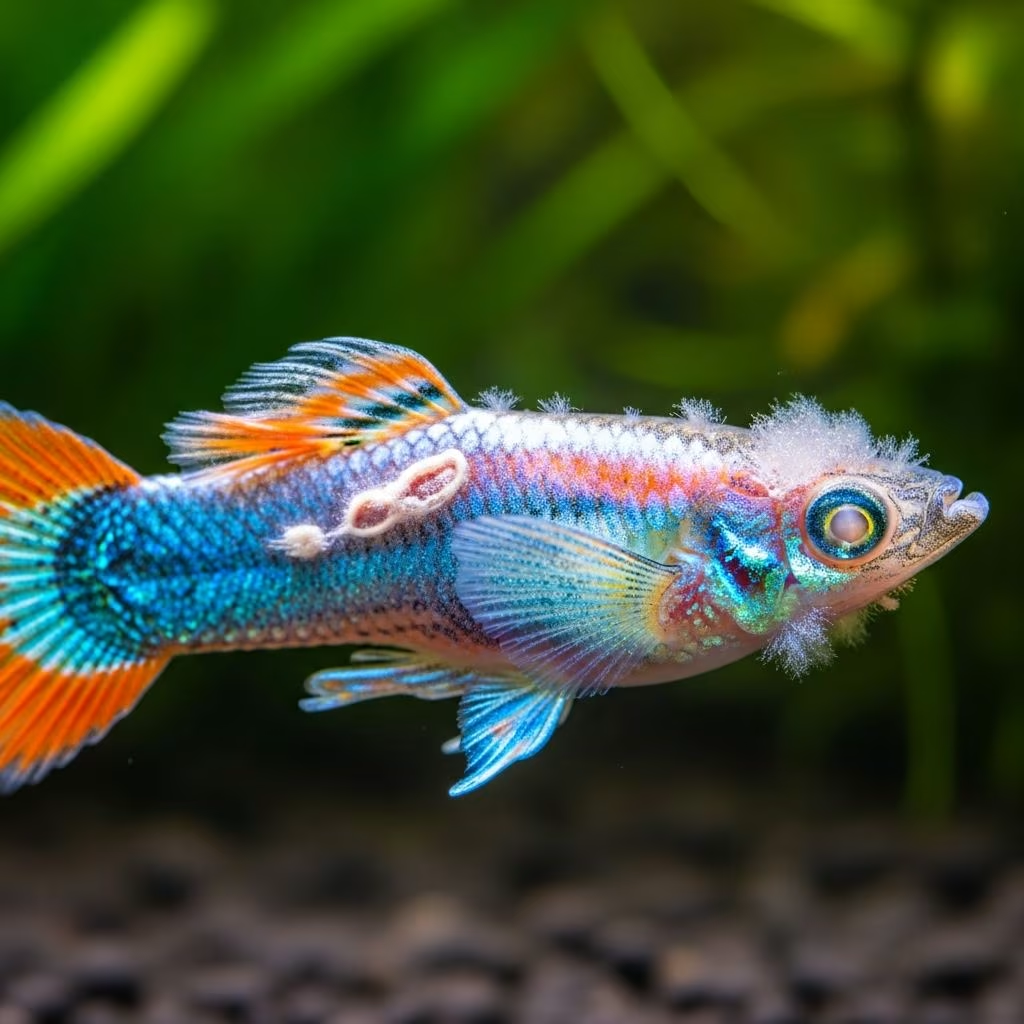
Understanding Guppy Disease (Tetrahymena)
Guppy disease, caused by the protozoan parasite Tetrahymena, represents one of the most challenging health threats facing aquarium hobbyists today. Despite its name, this systemic infection is not limited to guppies alone—it affects a wide variety of freshwater fish species, including cichlids, catfish, tetras, mollies, and livebearers. The disease has become a significant global concern, affecting the commercial aquarium trade so severely that some fish retailers have changed suppliers or discontinued selling guppies altogether due to the prevalence and difficulty of treatment. Understanding the nature of this disease, its symptoms, and available management strategies is essential for any aquarist keeping these popular tropical fish.
Tetrahymena is a ciliated protozoan that operates as a systemic parasite, meaning it can infiltrate deep into the fish’s tissues, making treatment extraordinarily difficult once the infection becomes established internally. The organism feeds on bacteria and gains virulence when water quality deteriorates, creating a dual attack on the fish’s immune system that proves particularly devastating.
Identification and Symptoms
Identifying guppy disease accurately can be challenging since it resembles several other aquatic conditions. The most reliable positive identification requires microscopic analysis, as guppy disease shares many characteristics with ich (whitespot disease, Ichthyophthirius multifiliis). However, several distinguishing features can help aquarists recognize the condition:
Visual Signs and Physical Manifestations
Affected fish typically display one or more of the following symptoms:
- White spot-like cysts on flanks and fins resembling ich
- Patchy gray or whitish areas that look like peeling skin, commonly appearing on the head or just in front of the dorsal fin
- Gray patches of mucous coating, particularly noticeable on dark-colored fish such as black mollies
- Translucent white patches indicating necrosis of the epidermis
- Fuzzy patches as white areas coalesce
- Pop-eye condition or white eye (a distinguishing feature from ich, which typically does not attack eyes)
- Muscle swellings and visible blood spots resembling blisters
- Scales removed, exposing the flesh underneath
Behavioral Changes
Beyond physical symptoms, infected fish exhibit behavioral alterations that indicate distress:
- Heavy breathing or rapid gill movement
- Lethargy and reduced activity
- Clamped fins held close to the body
- Loss of tail movement and drooping tails
- Loss of appetite and general malaise
It’s important to note that tetrahymena often presents similarly to saddleback disease, a bacterial infection caused by columnaris. Complicating diagnosis further, fish frequently suffer from both tetrahymena and bacterial infections simultaneously, and either condition alone can prove fatal. When white patches appear high on the head or in front of the dorsal fin, the possibility of concurrent bacterial infection should be considered.
Disease Progression and Danger
The progression of tetrahymena infection follows a particularly aggressive timeline. The parasite initially attacks the skin and outer tissues of the fish, creating lesions and cloudy patches. Once established on the surface, tetrahymena burrows into the interior tissues of the fish, at which point the infection becomes nearly impossible to treat. The prognosis becomes extremely poor once internal invasion occurs, and death typically follows rapidly after this stage.
This rapid progression makes early detection and intervention critical. In aquarium settings, the disease typically manifests in cycles, with one to four fish at a time showing symptoms before dying within one to four weeks of initial symptom appearance. The timeframe between symptom onset and death underscores the urgency of responding to suspected infections.
Root Causes and Risk Factors
Understanding what triggers tetrahymena infections is essential for prevention. Several environmental and husbandry factors create conditions favorable for this parasitic disease:
Environmental Conditions
Poor water quality serves as the primary catalyst for tetrahymena virulence. When mulm and detritus accumulate on the tank floor or bacterial counts in the water column increase excessively, tetrahymena becomes actively dangerous. The high bacterial concentration in poor-quality water feeds the tetrahymena organism while simultaneously taxing the fish’s immune system, creating a two-pronged attack difficult for the fish to combat.
Temperature also plays a significant role, with elevated water temperatures above 24-26°C increasing susceptibility to infection. Conversely, maintaining slightly cooler temperatures and brackish water conditions can help reduce tetrahymena virulence, particularly for guppies and mollies. pH levels that are too low also create conditions favoring parasitic infection.
Physical Injury and Aggression
Male guppies are notoriously aggressive, and any physical damage they inflict during territorial disputes or mating can create wounds through which Tetrahymena can establish infections. Any fish species that damages guppies through aggression or fin-nipping creates similar vulnerability, providing entry points for parasitic colonization. This makes proper stocking ratios and tank mate selection crucial preventive measures.
Treatment Options
Unfortunately, treating established guppy disease remains extraordinarily difficult. No reliably effective treatments have been developed for home aquarists, though laboratory research has identified promising compounds. Understanding available options and their limitations is important for managing infections:
Research-Identified Chemical Treatments
Laboratory studies have tested various chemicals with varying degrees of success against tetrahymena parasites. When chemicals were added directly to water, niclosamide proved most effective, reducing parasite survival to 23% after two hours at 100ppm exposure, followed by albendazole (35% survival) and chloroquine (60% survival). When administered through feed, niclosamide showed particularly promising results, reducing mortality rates in treated fish from 59% in controls to 30-33% in low-dose groups, and achieving mortality rates as low as 10% in higher-dose treatment groups.
Research has also explored cysteine protease inhibitors like E64, which showed potential in reducing the parasite’s tissue-destroying activity. Fish pretreated with this compound before infection showed 35% mortality compared to 60% in untreated fish, suggesting promise for future therapeutic approaches.
Available Commercial Treatments
The multipurpose anti-protozoan medication Clout has shown some success in treating guppy disease, though several treatment applications are typically necessary, and success is inconsistent. These treatments work best when combined with significant improvements in diet and environmental conditions.
Some research indicates that nitrofural, an antibacterial medication, shows effectiveness against tetrahymena, particularly when the infection is complicated by concurrent bacterial infection. Additionally, certain antibiotic medications administered in food (rather than in water) have shown promise, particularly for white patches located high on the head or in front of the dorsal fin where bacterial involvement is suspected.
Salt Bath Treatment
Research suggests that a 3% salt bath (equivalent to ocean saltwater concentration) repeated every 24 hours may be effective for some fish. The treatment involves placing affected fish in a 3% salt solution for 30 seconds to ten minutes, then quickly returning them to fresh water when they lose equilibrium and roll over. While this method has shown promise, results remain inconsistent.
Limitations of Treatment
Once tetrahymena penetrates the fish’s tissues, creating translucent white patches and patchy slime disease, the organism becomes too deeply embedded for ich medications to reach. Additionally, no internal medication currently exists that proves effective against deeply established infections. This is why death typically occurs once internal invasion is complete.
Prevention and Management Strategies
Given the difficulty of treating established infections, prevention represents the most practical approach to guppy disease management:
Maintaining Optimal Water Quality
The foundation of preventing tetrahymena infection is maintaining excellent water quality. Regular water changes, proper filtration, and conscientious removal of uneaten food and detritus all reduce bacterial loads that fuel tetrahymena virulence. Good aeration always proves beneficial and helps maintain oxygen levels that support the fish’s immune function.
Temperature and pH Management
Maintaining appropriate water temperatures below 24-26°C reduces conditions favoring infection. For guppies specifically, keeping water at slightly lower temperatures within their preferred range helps reduce disease susceptibility. Maintaining adequate pH levels and slightly brackish conditions (while not essential) appear beneficial, particularly for guppies and mollies.
Stocking and Tank Design
Preventing physical injuries that create infection entry points is critical. Maintaining groups of at least two females per male guppy reduces aggressive interactions and associated injuries. Providing adequate hiding places using floating plants like Indian fern creates refuges where guppies can escape aggression, particularly at the water surface. Careful selection of tank mates that won’t damage or harass guppies through fin-nipping is essential.
Dietary Support
Nutritional support bolsters fish immune function. High-quality, varied diets containing immune-supporting ingredients and probiotics help fish better resist parasitic invasion. Feeding practices should emphasize quality nutrition rather than quantity to prevent water pollution from excess food.
Distinguishing Guppy Disease from Similar Conditions
Accurate diagnosis is complicated by similarities with other fish diseases. Understanding key differences helps aquarists differentiate guppy disease from similar conditions:
| Condition | Key Differences from Guppy Disease |
|---|---|
| Ich (Whitespot Disease) | Ich rarely attacks eyes; tetrahymena commonly causes pop-eye and white eye. Ich responds to ich medications that cannot reach deeply embedded tetrahymena. |
| Saddleback (Columnaris) | Saddleback is bacterial rather than parasitic. Tetrahymena frequently occurs alongside saddleback, requiring different treatment approaches. |
| Bacterial Infections | Pure bacterial infections affect water column and respond to antibiotics. Concurrent tetrahymena infections complicate treatment and worsen prognosis. |
| General Stress Symptoms | Guppy disease produces visible white patches and tissue damage; stress alone causes clamped fins and lethargy without tissue lesions. |
Frequently Asked Questions
Q: Can guppy disease spread to other fish in my aquarium?
A: Yes, guppy disease affects many fish species beyond guppies, including mollies, platies, cichlids, catfish, and tetras. However, guppies and livebearers remain the most susceptible. Isolating affected fish reduces transmission risk to tank mates.
Q: How long does guppy disease take to kill a fish?
A: Once symptoms appear, affected fish typically die within one to four weeks. Death occurs more rapidly once the parasite penetrates internal tissues, making early intervention critical.
Q: Is guppy disease contagious to humans?
A: No, tetrahymena parasites that affect fish do not infect humans. Standard aquarium hygiene practices are sufficient for safe handling.
Q: Can I treat guppy disease with salt alone?
A: Salt baths at 3% concentration show promise, but results remain inconsistent and unpredictable. Salt treatment should be combined with improved water quality and environmental management rather than used as a standalone solution.
Q: Why is guppy disease so difficult to treat?
A: Once tetrahymena penetrates internal tissues, medications cannot reach the parasite effectively. The protozoan burrows deep into the fish’s body where it remains inaccessible to surface treatments, making internal infections nearly impossible to cure.
Q: Should I remove affected fish from my main tank?
A: Yes, isolating affected fish in a separate quarantine tank helps prevent transmission to healthy fish and allows you to treat the infection without affecting the main aquarium’s established bacteria and beneficial organisms.
References
- Guppy Disease (Tetrahymena) — Chewy. 2024. https://www.chewy.com/education/fish/general/guppy-disease-tetrahymena
- 10.2.6. Tetrahymena — Aquarium Science. 2024. https://aquariumscience.org/index.php/10-2-6-tetrahymena/
- Treatment Breakthrough for Guppy Disease — Practical Fishkeeping. 2024. https://www.practicalfishkeeping.co.uk/fishkeeping-news/treatment-breakthrough-for-guppy-disease/
- Study nr. 21 Tetrahymena Infection in Relation to Bacteria, Temperature and pH — Gerald Bassleer. March 2025. https://www.youtube.com/watch?v=3_NuFb2UnMs



