

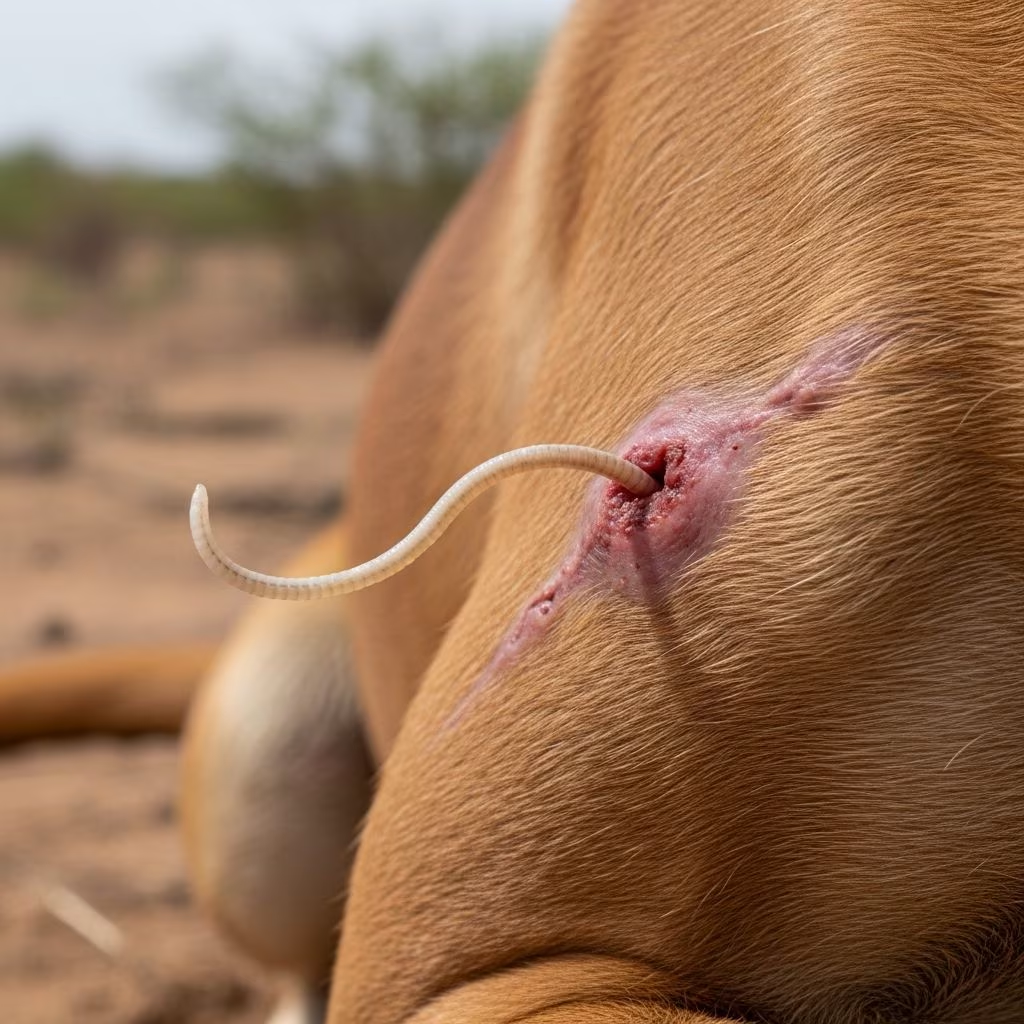
Dracunculus infections, commonly associated with the notorious Guinea worm, pose a significant yet underrecognized health risk to various animals, particularly in North America. Primarily caused by Dracunculus insignis, these nematodes embed in subcutaneous tissues, leading to debilitating lesions and systemic effects. While wildlife like raccoons serve as primary reservoirs, domestic pets such as dogs and cats increasingly encounter this parasite through environmental exposure.
Biological Profile of the Parasite
The Guinea worm belongs to the family Dracunculidae, characterized by long, thread-like adult females that can measure 30 to 120 cm in length. Males are smaller and rarely observed, as they perish post-mating within the host. Larvae, known as L1 stage, are released into water from gravid females, where they are ingested by copepod crustaceans—tiny water fleas acting as intermediate hosts.
Animals acquire the infection by consuming infected copepods in unfiltered water or via paratenic hosts like frogs, fish, snails, or snakes. Once ingested, larvae penetrate the intestinal wall, migrate to subcutaneous sites, and mature over 10-14 months. This extended prepatent period delays clinical detection, complicating timely intervention.
- Key Life Cycle Stages:
- Larvae ingested by copepods develop into L3 infective stage.
- Definitive hosts (mammals) consume copepods or paratenic hosts.
- Adult worms form blisters in skin, typically extremities, for larval release.
Primary Hosts and Geographic Spread
In North America, D. insignis predominantly affects wildlife, with raccoons (Procyon lotor) as the main reservoir. Other carnivores like mink, river otters (infected by the related D. lutrae), and ferrets also harbor the parasite. Domestic dogs represent the most common pet cases, with infections reported across eastern US and Canada.
Cats experience rarer infestations, with only a handful of documented instances, such as cases in Texas, Alabama, North Carolina, Massachusetts, and New York. A review of 62 new and 18 prior cases highlighted dogs aged 7 months to 19 years (median 4 years), spanning multiple breeds excluding toy groups.
| Host Type | Prevalence | Common Regions |
|---|---|---|
| Wildlife (Raccoons, Mink) | High | Eastern North America |
| Dogs | Moderate | US (TX, AL, NC), Canada |
| Cats | Rare | Sporadic (TX, NY, MA) |
| Otters | Species-specific | North America |
Infections peak from late winter to early spring (72% of cases December-May), linked to seasonal water stagnation and amphibian activity.
Clinical Manifestations and Pathophysiology
Infected animals develop serpentine inflammatory tracks under the skin, culminating in non-healing, crater-like ulcers with edema. Lesions favor distal limbs but can appear on the head, thorax, abdomen, or flanks. Blisters form as gravid females prepare to emerge, often stimulated by water contact.
Dogs may exhibit subcutaneous swellings (3-5 cm), dehydration, vomiting, diarrhea, and asthma-like symptoms. Cats present similarly, with worms emerging from hip or axillary lesions. Multiple worms occur occasionally, exacerbating tissue damage. Secondary bacterial infections are common, necessitating antimicrobials.
- Localized Signs: Blisters, ulcers, serpentine tracts.
- Systemic Signs: Lethargy, gastrointestinal upset, respiratory distress.
- Diagnostic Clue: False-positive heartworm antigen tests due to antigenic cross-reactivity.
Diagnostic Approaches
Veterinarians suspect Dracunculus based on lesion morphology and history of exposure to stagnant water or hunting. Confirmation involves:
- Visual Extraction: Shaving lesions to reveal emerging worms.
- Larval Stimulation: Applying water to blisters; centrifuge sediment for microscopic L1 identification.
- Molecular Testing: Preserve worms in ethanol/formalin; PCR amplify COI gene for species ID (all sequenced cases confirmed D. insignis).
Histopathology or submission to labs like TVMDL or Cornell’s Animal Health Diagnostic Center aids definitive diagnosis.
Treatment Protocols
No specific anthelmintics reliably kill adult worms; primary treatment is slow, manual extraction to avoid breakage and secondary complications. Immerse lesion in water to provoke emergence, then gently wind onto a stick over days.
Supportive care includes:
- Benzimidazoles (e.g., thiabendazole) to reduce inflammation.
- Antibiotics for bacterial superinfections.
- Anti-inflammatories and antihistamines to manage hypersensitivity.
Surgical removal is essential for inaccessible worms. Post-extraction, monitor for relapse, as larval migration may persist.
Prevention and Control Measures
Preventing exposure is paramount, as no vaccine exists. Key strategies:
- Provide filtered or boiled water to pets.
- Restrict access to stagnant ponds, lakes, and hunting (keep cats indoors).
- Avoid raw amphibians or fish in diets.
- Environmental management: Filter water sources for wildlife in endemic areas.
Public health parallels exist with human D. medinensis (African Guinea worm), nearly eradicated via water filtration, though animal reservoirs like dogs complicate efforts.
Epidemiological Insights and Research Gaps
Recent studies reveal underreporting; convenience sampling shows widespread distribution, urging surveillance. Factors like climate change may expand copepod habitats, increasing risk. Future research needs:
- Transmission dynamics in paratenic hosts.
- Efficacy of anthelmintics.
- Prevalence surveys in understudied regions.
Collaboration between vets, wildlife experts, and labs is crucial for monitoring.
Frequently Asked Questions (FAQs)
Can Guinea worm infect humans in North America?
No, D. insignis does not affect humans; human cases involve D. medinensis from Africa/Asia.
How long does it take for symptoms to appear after exposure?
Approximately 10-14 months (prepatent period), making early prevention vital.
Is surgical removal always necessary?
Yes, for complete extraction; partial removal risks severe inflammation.
Can heartworm tests detect Dracunculus?
They may yield false positives due to cross-reactivity; confirm with direct methods.
How can I protect my dog from this parasite?
Use clean water sources, supervise outdoor time, and prevent amphibian hunting.
Dracunculus infections underscore the interplay between wildlife, pets, and aquatic ecosystems. Vigilant prevention and prompt veterinary care mitigate this archaic yet persistent parasitic challenge.
References
- Dracunculus insignis | Animal Diversity Web — University of Michigan. Accessed 2026. https://animaldiversity.org/accounts/Dracunculus_insignis/
- Dracunculus Infections in Animals – Merck Veterinary Manual — Merck & Co. 2023. https://www.merckvetmanual.com/integumentary-system/helminths-of-the-skin/dracunculus-infections-in-animals
- Dracunculus insignis in a Texas cat – TVMDL — Texas A&M Veterinary Medical Diagnostic Lab. 2023. https://tvmdl.tamu.edu/case-studies/dracunculus-insignis-in-a-texas-cat/
- Dracunculus infections in domestic dogs and cats in North America — PubMed/Elsevier. 2019-05-01. https://pubmed.ncbi.nlm.nih.gov/31014864/
- Cornellians find new worm infecting US cats — Cornell University College of Veterinary Medicine. 2014-02-14. https://www.vet.cornell.edu/about-us/news/20140214/cornellians-find-new-worm-infecting-us-cats
- Eradicating dracunculiasis: human cases and animal infections decline — World Health Organization. 2020-09-23. https://www.who.int/news/item/23-09-2020-eradicating-dracunculiasis-human-cases-and-animal-infections-decline-as-angola-becomes-endemic



