Guinea Pig Nutrition Guide: 2025 Feeding Essentials
Master the art of feeding guinea pigs with expert tips on hay, pellets, veggies, and vitamin C for optimal health and longevity.
Guinea pigs thrive on a carefully balanced diet that mimics their natural foraging habits in the wild. Proper nutrition supports their digestive health, prevents deficiencies like scurvy due to their inability to produce vitamin C, and promotes a lifespan of 5-8 years or more. This guide outlines daily feeding requirements, food types, portion controls, and common pitfalls to avoid for vibrant pet cavies.
Core Principles of Guinea Pig Feeding
The foundation of any guinea pig diet is fiber-rich hay, which should constitute the bulk of their intake. Unlike many rodents, guinea pigs have continuously growing teeth and a hindgut fermentation system that demands constant chewing and roughage. Neglecting this leads to dental overgrowth, obesity, or gastrointestinal stasis.
- Fiber priority: Hay provides essential abrasion for teeth and supports gut motility.
- Vitamin C necessity: These animals cannot synthesize ascorbic acid, requiring 10-30 mg daily from diet or supplements.
- Portion control: Overfeeding pellets or treats disrupts the hay-centric balance.
- Freshness matters: Spoiled produce or dusty hay invites bacterial issues.
Adult guinea pigs weigh 700-1200 grams, influencing portion sizes. Juveniles under 6 months need higher calcium from legume hays, transitioning to grass hays post-weaning.
Hay: The Dietary Staple
Hay must be available ad libitum—unlimited access around the clock. It forms 80-90% of their calories, aiding digestion and preventing selective feeding. Offer a mix of varieties to encourage broad intake and reduce pickiness.
| Hay Type | Best For | Daily Amount | Benefits |
|---|---|---|---|
| Timothy | Adults | Unlimited | High fiber, low calcium; prevents bladder stones. |
| Meadow/Orchard | All ages | Unlimited | Variety, palatability; botanical diversity. |
| Alfalfa | Juveniles/Pregnant | Limited for adults | Calcium, protein boost for growth. |
Store hay in a cool, dry place to preserve nutrients. Discard soiled portions daily, providing a fresh pile morning and evening. Guinea pigs burrow and nibble hay constantly, using it for nesting too. Oxbow recommends multiple hay types daily for enrichment.
Pellets: Fortified Essentials
High-quality, Timothy-based pellets supply stabilized vitamin C, minerals, and protein absent in hay alone. Limit to 1/8 cup (about 1-2 tablespoons) per adult pig daily—overfeeding causes obesity and reduced hay consumption.
- Choose wisely: Oxbow, Small Pet Select; avoid seeds, colored bits, or alfalfa-heavy for adults.
- Age-specific: Juveniles get alfalfa blends until 6 months.
- Storage: Airtight container; use within 3 months of opening.
Divide into two meals with hay. Pellets ensure consistent vitamin C (50-100 mg/kg feed).
Fresh Vegetables and Greens
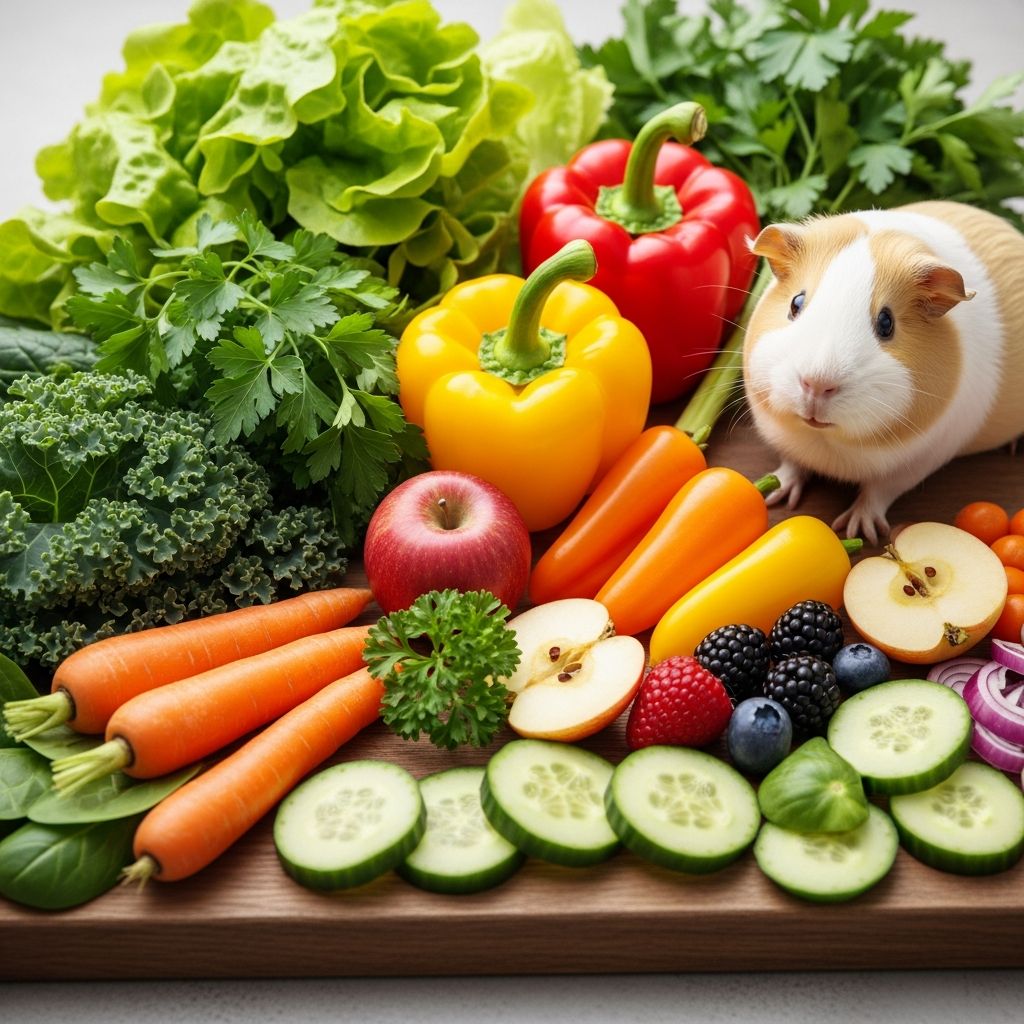
Vegetables deliver hydration, vitamin C, and variety—1/2 to 1 cup per pound of body weight daily (e.g., 1 cup for 2-lb pig). Introduce gradually to avoid diarrhea.
Safe staples (daily):
- Romaine lettuce, green leaf lettuce (not iceberg—low nutrition).
- Bell peppers (red/yellow highest vitamin C).
- Cilantro, parsley, dill.
Occasional (2-3x/week):
- Kale, mustard greens, broccoli (go easy—gassy).
- Cucumber, zucchini, celery (no leaves).
Wash thoroughly, chop into bite-sizes. Rotate to balance oxalates/calcium. Purdue Vet guidelines stress vitamin C veggies to combat deficiency.
Fruits and Treats: Sparingly
Fruits are sugary temptations—limit to 1-2 teaspoons weekly. High sugar risks diabetes-like symptoms.
| Fruit | Portion | Frequency |
|---|---|---|
| Strawberries | 1 small | Weekly |
| Blueberries | 4-5 | Weekly |
| Apple (no seed) | Thin slice | 2x/week |
Commercial treats like Oxbow should be <5% diet. Hand-feed for bonding, but prioritize hay.
Vitamin C Supplementation
Guinea pigs require 10-30 mg/kg body weight daily. Pellets provide baseline; boost with veggies. For illness/stress, use supplements: liquid drops in water (daily change to avoid bacteria), tablets, or Natural Science chews. RSPCA notes short storage capacity demands steady supply.
- Sources ranked: Red bell pepper (128 mg/100g), kale (93 mg), pellets (250 mg/kg).
- Deficiency signs: Lethargy, swollen joints, poor coat—vet ASAP.
Water Requirements
Fresh water via sipper bottle (check twice daily). 100-200 ml daily intake. Clean weekly with vinegar; avoid bowls if pigs tip them. Purdue advises monitoring for contamination.
Feeding Schedules and Routines
Consistency builds trust. Sample adult routine:
- Morning: Hay pile refresh, 1 tbsp pellets, water check.
- Evening: 1/2-1 cup veggies/greens, pellets repeat, hay top-up.
- Weekly: Weigh pig (800-1000g ideal), log intake.
Hand-feeding greens encourages handling. Penny & Wild suggests bonding via treats.
Special Considerations by Life Stage
Juveniles (Birth-6 Months)
Higher protein/calcium: Alfalfa hay dominant, unlimited pellets. Wean at 3 weeks.
Adults (6+ Months)
Grass hay focus, measured pellets to maintain weight.
Seniors/Pregnant
Monitor weight; extra vitamin C, softer veggies if dental issues arise.
Breeds
Long-haired (e.g., Texel) may need calorie adjustments for grooming energy; all benefit from hay abrasion.
Common Nutritional Mistakes
- Seed mixes: Promote obesity, selective feeding.
- Milk products: Lactose intolerant.
- Iceberg lettuce: Watery, nutrient-poor.
- Overfruiting: Diarrhea, weight gain.
Spot-clean daily; deep clean enclosures weekly to prevent moldy hay ingestion. Small Pet Select emphasizes hygiene for health.
Monitoring Health Through Diet
Weekly weighs detect issues early. Droppings should be uniform, abundant. Reduced appetite signals dental or gut problems—vet consult. Enrichment via hay foraging toys boosts intake.
Frequently Asked Questions
Can guinea pigs eat carrots daily?
No—sugary; limit to small pieces 2x/week. Prioritize greens.
How much hay is enough?
As much as they eat daily (roughly body weight equivalent).
What if my pig ignores pellets?
Gradually mix with hay; ensure freshness. Consult vet for deficiencies.
Are supplements always needed?
Not if diet is balanced; test veggie intake first.
Group feeding tips?
Separate bowls prevent bullying; monitor hierarchy.
Shopping List Essentials
- Timothy hay (bales).
- Oxbow Adult pellets.
- Bell peppers, romaine.
- Sipper bottles (2 per cage).
- Vitamin C drops (backup).
References
- Guinea Pig Care Guide — Penny & Wild. 2024. https://pennyandwild.org/resources/guinea-pig-care-guide/
- Caring for your Guinea Pig — Oxbow Animal Health. 2024-03. https://oxbowanimalhealth.com/wp-content/uploads/2024/03/Guinea-Pig-Care-Guide-Feb-2024.pdf
- Care of Guinea Pigs — Purdue University Veterinary Hospital. N/A. https://vet.purdue.edu/hospital/small-animal/primary-care/documents/CareofGuineaPigs.pdf
- Guinea Pigs 101: Care Resource Guide — Small Pet Select. N/A. https://shop.smallpetselect.com/blogs/care-resources/guinea-pigs-101-care-resource-guide
- Keeping Guinea Pigs As Pets — RSPCA. N/A. https://www.rspca.org.uk/adviceandwelfare/pets/rodents/guineapigs
Similar Articles








Read full bio of Sneha Tete