

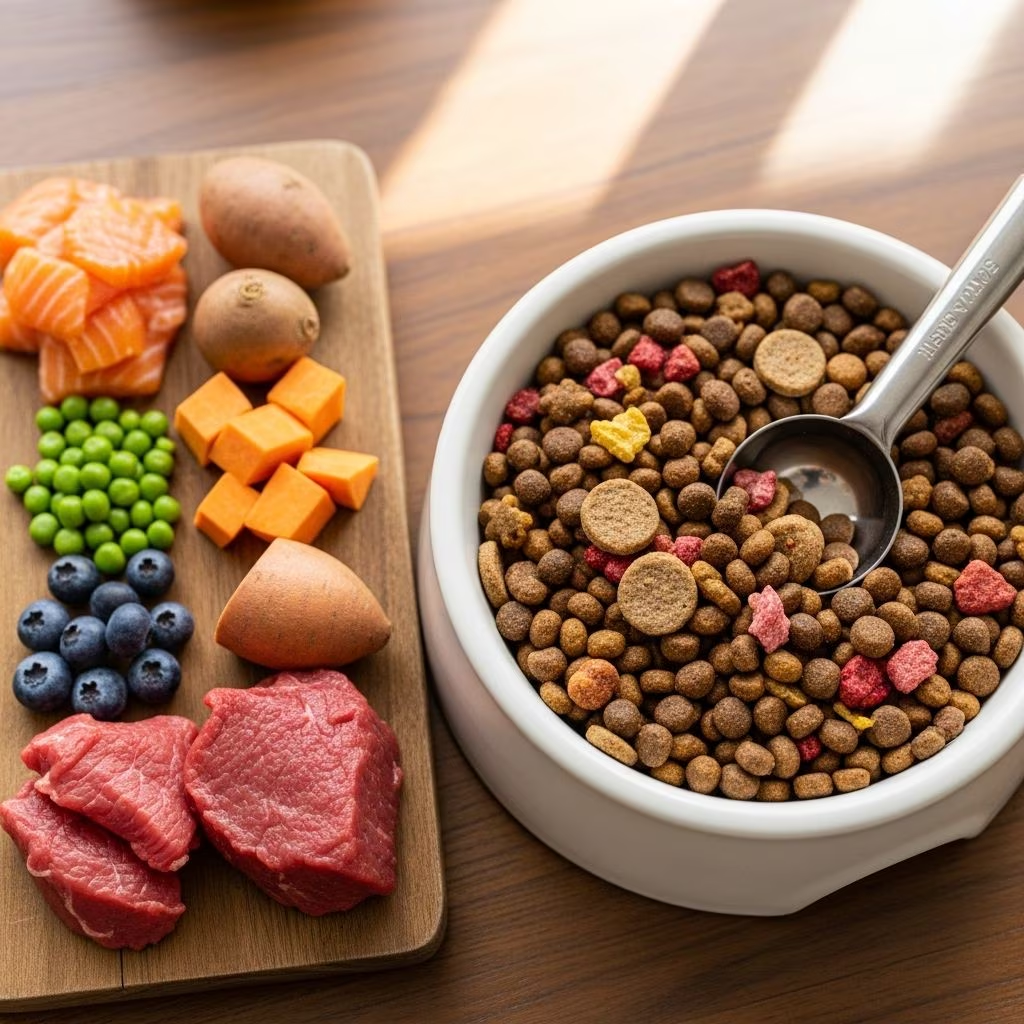
Dry dog food remains a popular choice for pet owners due to its convenience, affordability, and dental health benefits. Selecting the right formula requires careful evaluation of ingredients, processing methods, nutritional guarantees, and alignment with your dog’s specific needs. This guide outlines key factors to consider for making informed decisions that support your pet’s long-term well-being.
Understanding Nutritional Adequacy Statements
The foundation of any quality dry dog food is its nutritional completeness and balance. Look for products labeled as \”complete and balanced\” by the Association of American Feed Control Officials (AAFCO). This designation ensures the food provides all essential nutrients in appropriate proportions for specific life stages, such as growth, maintenance, gestation, or lactation.
AAFCO standards define minimum and maximum levels for proteins, fats, vitamins, and minerals based on extensive research. Foods meeting these profiles undergo testing to verify compliance, preventing deficiencies that could lead to health issues like poor coat quality or weakened immunity. Always check the small print on the package for the exact statement, such as \”formulated to meet the nutritional levels established by AAFCO Dog Food Nutrient Profiles for adult maintenance.\”
Prioritizing High-Quality Protein Sources
Protein forms the cornerstone of a dog’s diet, fueling muscle maintenance, energy production, and immune function. Opt for kibbles listing named, fresh meats as the first ingredient, such as \”chicken,\” \”beef,\” or \”salmon,\” rather than vague terms like \”meat meal\” or \”animal by-products.\” These specifics indicate whole, identifiable sources without fillers like feathers or horns.
Aim for at least 18-26% crude protein depending on your dog’s activity level and life stage, as recommended by veterinary guidelines. High-quality proteins from real meats preserve amino acids essential for taurine synthesis, which supports heart health. Avoid formulas heavy on plant-based proteins, as dogs are primarily carnivores requiring animal-derived nutrients for optimal digestion.
- Fresh meats: Chicken, turkey, beef – provide bioavailable proteins and natural fats.
- Organ meats: Liver, heart – rich in vitamins A, B, and iron.
- Avoid: \”Meals\” unless specified as human-grade, as they may include low-quality renders.
Evaluating Carbohydrates and Grains
While grains aren’t essential, well-chosen whole grains like oats, quinoa, brown rice, or barley offer digestible energy, fiber for gut health, and B vitamins. Steer clear of corn, wheat, or soy fillers, which provide empty calories and may trigger allergies. Grain-free diets, once trendy, have been linked to dilated cardiomyopathy in some breeds due to potential taurine deficiencies; recent studies advise balanced inclusion unless medically necessary.
Fruits and vegetables such as blueberries, pumpkin, spinach, and sweet potatoes add antioxidants, fiber, and phytonutrients. These should appear mid-to-high on the ingredient list by weight, ensuring meaningful contributions rather than trace amounts.
Assessing Fat Content and Essential Fatty Acids
Fats supply concentrated energy (twice that of proteins or carbs) and aid absorption of fat-soluble vitamins. Look for 10-20% crude fat from sources like chicken fat, fish oil, or flaxseed, which deliver omega-3 and omega-6 fatty acids for skin, coat, and anti-inflammatory benefits.
Preservatives matter here: prefer natural options like mixed tocopherols (vitamin E) or rosemary extract over synthetic BHA/BHT, which have raised safety concerns in long-term studies. Balanced omega ratios (ideally 5:1 to 10:1 omega-6 to omega-3) prevent dry skin or excessive shedding.
Deciphering Processing Methods
Extrusion, the standard for most kibble, uses high heat and pressure, potentially degrading heat-sensitive nutrients like vitamins and enzymes. Gentler alternatives like air-drying preserve more moisture, flavor, and nutrition by cooking in small batches at low temperatures. Check manufacturer details for processing transparency; premium brands often highlight minimal processing to retain wholesomeness.
Shelf stability is key for dry food – ensure proper packaging with antioxidants to prevent rancidity, especially in high-fat formulas.
Matching Food to Life Stages and Special Needs
Puppies require higher protein (22-32%) and calories for growth, while seniors benefit from joint-supporting glucosamine and controlled calories to manage weight. Large breeds need controlled calcium/phosphorus ratios to prevent skeletal issues.
| Life Stage | Key Needs | Protein % | Fat % |
|---|---|---|---|
| Puppy | Growth, DHA for brain | 22-32 | 8-20 |
| Adult | Maintenance, energy | 18-25 | 10-15 |
| Senior | Joint health, digestibility | 18-25 | 7-15 |
| Active/Working | High energy, endurance | 25-30 | 15-20 |
Consult a veterinarian for breeds prone to allergies, obesity, or conditions like diabetes, where prescription diets may be advised. Monitor your dog’s response: firm stools, shiny coat, sustained energy indicate suitability.
Reading Labels: Ingredient Lists and Guarantees
Ingredients are listed by pre-cooking weight; split listings (e.g., \”chicken, chicken meal\”) can inflate meat appearance. Guaranteed analysis provides minimum protein/fat and maximum fiber/moisture percentages – calculate dry matter basis for fair comparisons (e.g., Protein % / (100 – Moisture %) ).
Calorie content (kcal/kg) helps portion control; active dogs may need 20-30% more than sedentary ones. Probiotics like Lactobacillus acidophilus enhance gut flora, while chelated minerals improve absorption.
Brand Selection: Credentials and Transparency
Choose companies with board-certified veterinary nutritionists (PhD or ACVN Diplomate) overseeing formulations. WSAVA recommends verifying quality control, including ingredient sourcing, nutrient analysis, and pathogen testing. Reputable brands like Purina, Hill’s, and Royal Canin consistently meet these benchmarks across life stages.
Human-grade claims signal rigorous standards akin to USDA regulations, minimizing contaminants. Third-party testing (e.g., for salmonella) adds assurance.
Practical Tips for Transitioning and Storage
Switch foods gradually over 7-10 days to avoid digestive upset: 25% new food day 1-2, 50% day 3-4, etc. Store in cool, dry places using airtight containers to maintain freshness up to 12 months post-opening.
Observe for allergies (itching, ear infections) or intolerances (loose stools). Annual vet check-ups refine choices based on bloodwork.
Frequently Asked Questions
What does AAFCO complete and balanced mean?
It confirms the food supplies all nutrients in proper ratios for designated life stages, backed by feeding trials or formulation to profiles.
Are grain-free dry foods better?
Not necessarily; they may lack taurine precursors and increase heart disease risk in predisposed dogs.
How much dry food per day?
Follow label guidelines adjusted for weight, activity, and spay/neuter status – typically 2-3% of body weight split into meals.
Can I mix dry with wet food?
Yes, for variety and hydration, ensuring total nutrition remains balanced.
What if my dog won’t eat the new food?
Enhance palatability with warm water or toppers; persistence ensures adaptation in 1-2 weeks.
Conclusion
Empowering yourself with label literacy, ingredient savvy, and vet input ensures your dog receives tailored nutrition from superior dry foods. Prioritize transparency and science-backed standards for a happier, healthier companion.
References
- Selecting a pet food for your pet – updated 2021 — WSAVA. 2021-04. https://wsava.org/wp-content/uploads/2021/04/Selecting-a-pet-food-for-your-pet-updated-2021_WSAVA-Global-Nutrition-Toolkit.pdf
- Selecting the Right Pet Food — AAFCO. 2023. https://www.aafco.org/consumers/understanding-pet-food/selecting-the-right-pet-food/
- Dry Dog Food Buyer’s Guide — Sundays for Dogs. 2024. https://sundaysfordogs.com/blog/how-to-choose-a-dry-dog-food
- Which Dog Food is the Best? How to Pick the Best Dog Food — Purina. 2024. https://www.purina.com/articles/dog/feeding/guides/how-to-choose-best-dog-food
- Pet Food Ingredient and Label Guide — PetMD. 2023. https://www.petmd.com/dog/nutrition/pet-food-ingredient-and-label-guide
- Every Dog is Different: Factors that Could Affect Your Choice in Dog Food — American Kennel Club. 2023. https://www.akc.org/expert-advice/nutrition/every-dog-is-different-factors-that-could-affect-your-choice-in-dog-food/



