
Guide To Horse Foaling: 3 Phases, Signs, And Postpartum Care
Comprehensive insights into preparing for and managing the foaling process in mares for healthy outcomes.
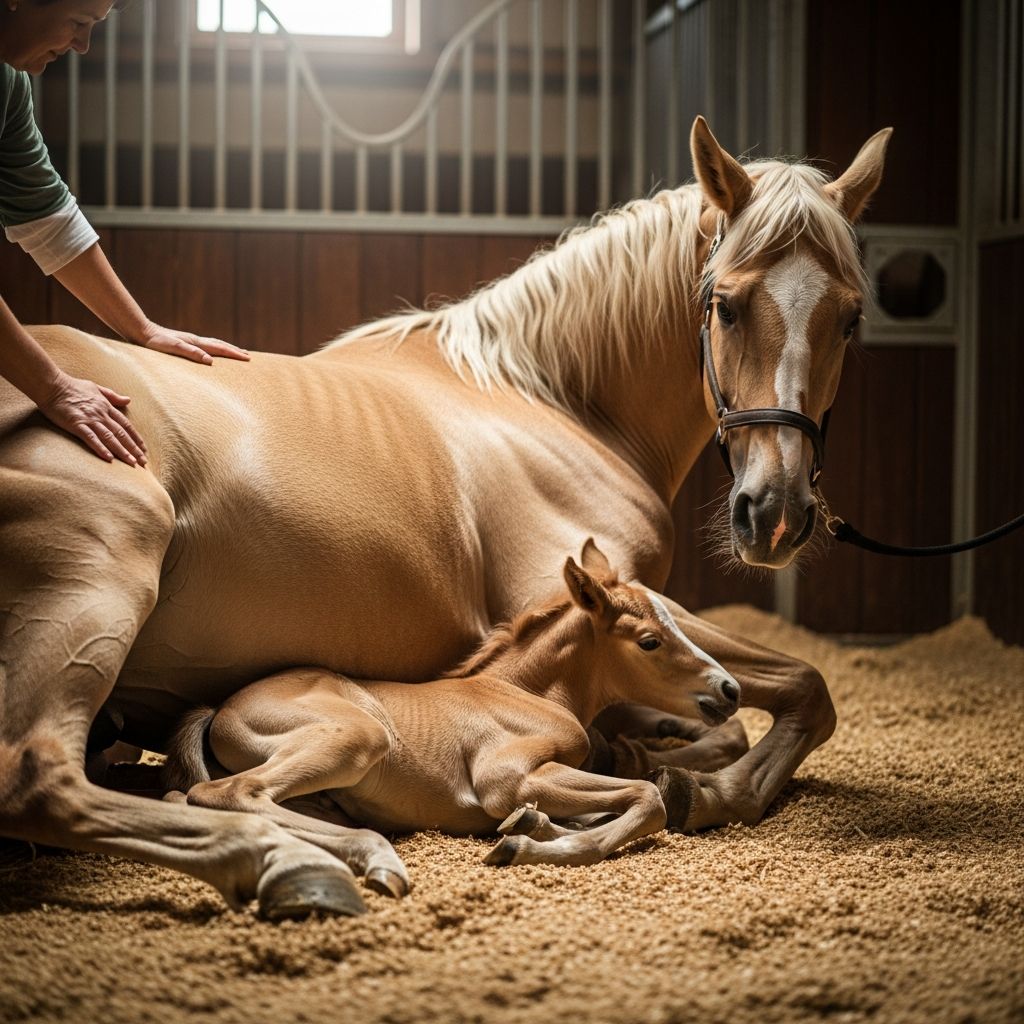
The birth of a foal marks a pivotal moment in equine breeding, demanding vigilance and knowledge from horse owners. This guide details the physiological changes signaling impending foaling, the distinct phases of labor, immediate postpartum care, and critical interventions to safeguard both mare and foal.
Physical Indicators of Imminent Foaling
As gestation nears term, typically around 11 months, mares exhibit reliable physical transformations that alert caregivers to prepare. Udder enlargement often begins 3-6 weeks before delivery, with teats filling and occasionally developing a waxy secretion known as ”waxing.” This colostrum leakage prepares the foundation for the foal’s first nourishment.
Additional signs include relaxation of the vulva, tailhead, and flank muscles, creating a softer, more pliable appearance. These changes facilitate passage during birth. Mares may also show increased tail lifting and frequent urination. Monitoring via cameras proves invaluable, as over 80% of foalings occur nocturnally.
- Udder development: Progressive filling over weeks.
- Teat waxing: Visible 1-4 days prior, signaling near-term.
- Muscle relaxation: Softening around pelvis and hindquarters.
- Behavioral shifts: Nesting, pacing, or isolation-seeking.
Understanding the Three Phases of Labor
Equine parturition divides into three stages, each with defined durations and observable behaviors. Recognizing these aids in distinguishing normal progression from complications.
Phase 1: Preparatory Contractions
This initial stage spans 20 minutes to 4 hours, involving uterine contractions that reposition the foal from a supine to a ventral orientation, head and forelegs extended toward the cervix. Mares display colic-like symptoms: restlessness, frequent rising and lying, flank gazing, sweating, pawing, and tail swishing. Urination increases as the cervix dilates.
Disturbances can pause this phase; thus, minimize interference. It concludes with rupture of the chorioallantois, releasing clear or slightly cloudy allantoic fluid—the ”water breaking.” Prolonged beyond 4 hours warrants veterinary consultation.
Phase 2: Active Delivery
Commencing post-membrane rupture, this explosive phase should complete within 5-30 minutes. Powerful abdominal contractions propel the foal through the birth canal. The amnion appears as a white sac at the vulva, followed by hooves (one slightly advanced), nose, head, shoulders, then torso and hind limbs.
Normal presentation: forelegs extended, head atop them in a ”diving” posture. The mare may stand, lie, or alternate. Ensure the foal’s nostrils clear for breathing; gently remove membrane if intact. Exceeding 30 minutes, malposition (e.g., backward foal), heavy bleeding, or exhaustion signals dystocia—an emergency requiring immediate vet aid.
| Normal Presentation | Problematic Signs |
|---|---|
| Hooves first (one ahead), nose between | Single hoof, bent legs, tail first |
| Delivery <30 min | Prolonged straining, bleeding |
| Clear fluid initially | Thick/meconium-stained fluid |
Phase 3: Placental Expulsion
Post-foaling, the placenta detaches within 1-4 hours via uterine contractions. The mare may strain mildly. Avoid manual pulling to prevent retained fragments, risking infection like metritis. If trailing, tie in a bag for gentle traction without stepping. Retained beyond 4 hours necessitates vet intervention for oxytocin administration or manual removal.
Examine the expelled placenta for completeness—compare to a ”pizza” (two horns, body, separate umbilical cord). Missing sections indicate retention.
Post-Delivery Care for Mare and Foal
Immediate attention ensures bonding and vitality. The foal should stand within 1 hour, nurse by 2 hours—milestones for viability.
Newborn Foal Essentials
Wipe the foal gently with clean towels, clearing nostrils and mouth. Dip the navel stump in antiseptic (e.g., 50:50 iodine or chlorhexidine solution) repeatedly in the first day to avert septicemia. Encourage mare-foal bonding in a quiet, clean stall bedded deeply with straw.
The foal passes meconium (first feces) soon after birth; mild lubrication aids if needed. Monitor respiration, heart rate (60-80 bpm initially, rising to 80-120), and gum color (pink, capillary refill <2 seconds).
- Standing: 30-60 minutes.
- Nursing: Colostrum within 2-3 hours for immunity.
- Defecation/Urination: Within hours.
- Vitals: Temperature 99-102°F, steady improvement.
Mare Monitoring
Check for uterine tone recovery, minimal lochia (dark red discharge initially, tapering). Offer water and damp hay; grain later to avoid digestive upset. Express some milk to verify flow. Vulvar swelling or foul odor signals metritis.
Recognizing and Handling Complications
While most foalings proceed uneventfully, vigilance prevents tragedies. Dystocia affects 5-10% of births, demanding rapid intervention—foals survive only 20-30 minutes without oxygen.
- Prolapsed Uterus: Rare post-delivery; cover with sheet, call vet urgently.
- Red Bag Delivery: Premature placental separation; tear manually, extract foal swiftly.
- Twin Foals: High-risk; usually one viable.
- Foal Weakness: Non-standing by 2 hours, hypothermia—warm, stimulate.
Maintain a foaling kit: towels, antiseptics, obstetrical lube, cord clamps, phone with vet on speed dial.
Frequently Asked Questions (FAQs)
How long is a mare’s pregnancy?
Average 340 days (range 320-360); track breeding dates for predictions.
Should I assist during foaling?
Only if trained and complications arise; otherwise, observe quietly.
What if the placenta doesn’t pass?
Contact vet after 3 hours; retention risks laminitis, colic.
How soon can the mare be bred again?
Foal heat at 7-14 days, but optimal 60+ days postpartum.
Is nighttime foaling normal?
Yes, evolutionary adaptation; use cameras for monitoring.
Long-Term Health Considerations
Post-foaling, schedule vet exams at 12-24 hours for IgG testing (colostrum adequacy), deworming, vaccines. Monitor foal growth, mare lactation. Nutrition: high-quality forage, balanced minerals for milk production.
Breeding facilities emphasize biosecurity, quarantine new arrivals to protect neonates.
References
- Foaling 101 | Total Equine Veterinary Associates’ TEVApedia — Total Equine Veterinary Associates. 2023. https://www.totalequinevets.com/client-center/resources/TEVApedia/equine-foaling-101
- Stages of Foaling in Horses — Kentucky Equine Research. 2022-05-12. https://ker.com/equinews/stages-foaling-horses/
- Foaling Mare — Veterinary Associates Equine. 2024. https://www.vetassociates.co.nz/foaling/
- Foaling Season: Tips for Delivery — Penn State Extension. 2023-01-15. https://extension.psu.edu/foaling-season-tips-for-delivery/
- Foaling — Equine-Vets.com. 2024. https://equine-vets.com/health/f/foaling/
- Foaling Management and Care of the Nursing Foal — Oklahoma State University Extension. 2022. https://extension.okstate.edu/fact-sheets/foaling-management-and-care-of-the-nursing-foal.html
Similar Articles








Read full bio of Sneha Tete


