

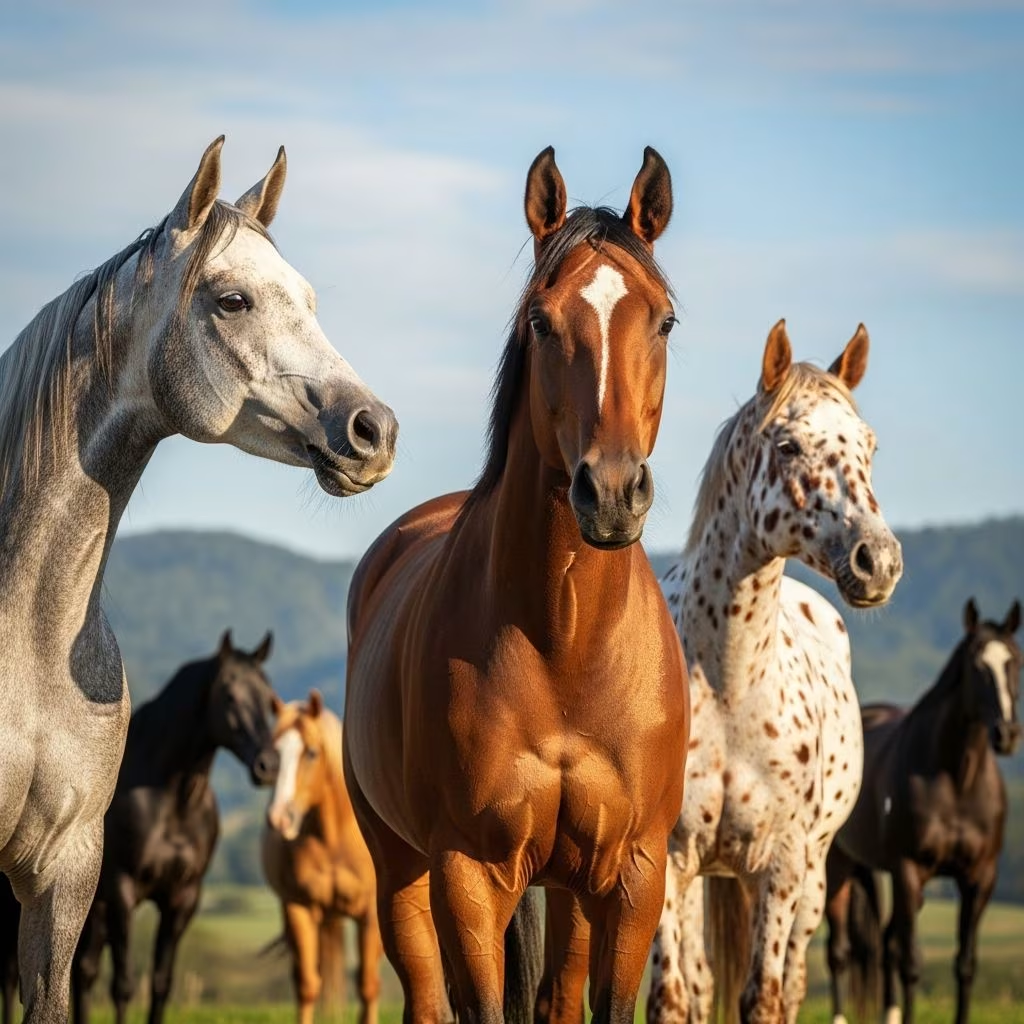
Guide to Horse Colors: Understanding Equine Coat Genetics and Patterns
Horse coat colors represent one of the most visually striking and genetically fascinating aspects of equine biology. From the deep black of an ebony coat to the rich copper tones of a chestnut, the diversity of horse colors has captivated humans for centuries. Understanding these colors goes beyond mere aesthetics—it involves comprehending complex genetic inheritance patterns, recognizing distinct color patterns, and appreciating the science behind what makes each horse unique. Whether you’re a horse breeder, owner, or simply an equine enthusiast, knowledge of horse colors and their genetic basis provides valuable insight into equine biology and heritage.
The Genetics of Horse Coat Color
Horse coat color genetics is a fascinating study in heredity and genetic expression. Horses possess 64 chromosomes organized into 32 pairs, with genetic material inherited from both parents that determines all inherited traits, including coat color. Most horse colors follow a Mendelian inheritance pattern, meaning that specific genes at particular locations control the expression of coat color. Understanding the basics of horse color genetics requires familiarity with several key genetic concepts.
Base Color Genetics
All horse coat colors begin with one of three base colors: chestnut, bay, or black. These foundational colors are determined by the interaction of two critical genes: the Extension gene (also called the Red Factor locus or MC1R) and the Agouti gene (ASIP). These genes work together to control the production and distribution of two types of pigment in a horse’s coat.
The Extension gene controls whether a horse can produce eumelanin, the black pigment that creates dark hair coloring. A horse must have at least one dominant Extension allele (E) to produce black pigment. Horses with the genotype EE or Ee can manufacture black pigment, while horses with the recessive genotype ee cannot produce black pigment and will display a chestnut coat regardless of other genetic factors.
The Agouti gene controls the distribution of black pigment across the horse’s body. The dominant Agouti allele (A) restricts black pigmentation to specific points on the horse—the mane, tail, lower legs, and ear rims. The recessive allele (a) distributes black pigment uniformly throughout the entire coat.
Mendelian Inheritance Patterns
Understanding how coat colors are inherited from parent to foal involves grasping basic Mendelian inheritance principles. Each horse has two gene sites for each color trait, one inherited from each parent. During reproduction, only one chromosome from each pair passes to the developing sperm or egg, meaning each foal has a 50% chance of receiving either parent’s allele at each genetic locus. This random assortment explains why foals can display coat colors that neither parent visibly expresses.
In Mendelian inheritance, dominant alleles are represented by capital letters and will always produce their associated color when present. Recessive alleles, represented by lowercase letters, only express their phenotype when inherited in duplicate (homozygous condition). This fundamental principle allows breeders to predict potential foal colors using tools like Punnett squares, though the actual outcome involves multiple genetic loci and their complex interactions.
Understanding Base Coat Colors
The three base coat colors form the foundation of all equine coloring. Recognizing and understanding these colors is essential for proper horse identification and genetic prediction.
Chestnut
Chestnut horses display a reddish-brown coat with a mane and tail that may be darker, lighter, or similar in color to the body. Genetically, chestnuts have the homozygous recessive Extension genotype (ee), meaning they lack the ability to produce black pigment altogether. Because chestnuts cannot produce eumelanin (black pigment), their coat color results entirely from pheomelanin (red pigment). This makes chestnut horses relatively predictable from a breeding standpoint—two chestnut parents will always produce chestnut foals.
Black
Black horses display a dark coat, mane, and tail throughout their entire body. To be genetically black, a horse must have the Extension allele (E_ meaning at least one E allele) and the homozygous recessive Agouti genotype (aa). The recessive Agouti alleles cause black pigment to distribute uniformly across the entire body rather than being restricted to points. Black horses have a distinctive appearance and represent one of the most dramatic coat colors in equine populations.
Bay
Bay horses display a brown body with black points—black mane, tail, and lower legs. Genetically, bays possess the dominant Agouti allele (A_) along with at least one Extension allele (E_). The dominant Agouti allele restricts the black pigment to these characteristic points, while the body displays the reddish-brown base color. Bays represent one of the most common and recognizable coat colors in horses.
Coat Color Dilutions
Beyond the three base colors, numerous dilution genes modify the appearance of a horse’s coat by lightening or altering the base color. Dilution genes act upon the base color genetics, creating a rainbow of additional coat colors through gene interaction.
Dun
The Dun gene (D) is a dominant dilution gene that produces a distinctive lighter coat color along with characteristic primitive markings. Horses with one or two D alleles display both dun features to varying degrees. Dun horses typically show a diluted base color along with a dark stripe running down the spine, zebra-like leg stripes, and darker coloring on the face and ears. The Dun gene has two additional variant alleles: non-dun 1 (nd1) and non-dun 2 (nd2), which are recessive alternatives that do not produce the dun phenotype.
Cream
The Cream dilution gene is one of the most common modifying genes in horse populations. This dominant dilution gene lightens the coat by reducing pigment intensity. Horses heterozygous for cream (one copy of the gene) display a noticeably lighter coat than their base color would suggest. Horses homozygous for cream (two copies) may appear nearly white, though they retain pigmentation in the skin and eyes unlike true white horses.
Silver
Silver is a dominant dilution trait that primarily affects the black pigment on a horse’s points. Silver dilutes the mane and tail dramatically while leaving the body color relatively unaffected. Interestingly, silver does not dilute red pigment, so chestnut horses carrying the silver mutation display no visible color difference. However, horses with the silver mutation, regardless of base coat color, often develop an ocular condition called multiple congenital ocular anomaly (MCOA), with homozygous horses displaying more severe manifestations than heterozygous individuals.
Champagne
Champagne is another dominant dilution gene that creates a distinctive warm, golden appearance in the coat. Champagne horses display lighter coloring with a characteristic pink muzzle and lighter eyes compared to their base color genetics would predict. This dilution produces a warm, metallic sheen that distinguishes champagne horses from other diluted colors.
White Coat Patterns and Markings
White patterns in horses create striking visual effects through the addition of white hair and pigmentation loss in specific areas. Many white pattern genes occur at or near the KIT locus, a genetic location critical for coat pigmentation. Different white pattern alleles at this location interact to produce highly variable white patterning.
Tobiano
Tobiano is a dominant white pattern gene that produces large, irregular white patches typically crossing the back and affecting all four legs. Tobiano horses usually display white on the face, legs, and body in a distinctive pattern. The tobiano gene occurs upstream of the KIT locus and has a regulatory effect on KIT expression, producing the characteristic white patches. Interestingly, horses can carry both tobiano patterning and dominant white or sabino patterns simultaneously since tobiano is located on a separate locus.
Overo
Overo patterns produce white coloring that typically does not cross the back and usually does not affect all four legs equally. Frame overo, splashed white, and sabino are different types of overo patterns with distinct genetic bases and visual characteristics. These patterns create unique white markings that vary depending on the specific overo type and genetic combination.
Appaloosa
Appaloosa patterns are controlled by the leopard complex, which produces spotted patterns characteristic of Appaloosa horses. These distinctive spots can appear in various configurations, from blanket patterns (white coloring over the hips and back) to leopard spots (individual spots distributed across the body) to snowflake patterns (small white spots on a colored background).
Roan
Classic roan patterns, caused by a dominant mutation, distribute white hairs throughout the coat while typically maintaining fully or nearly fully pigmented faces. Roan horses display a mixture of colored and white hair that creates a distinctive appearance. Unlike grey horses, which progressively lose pigmentation with age, roan horses maintain relatively consistent coloring throughout their lives.
Grey
Grey is a dominant trait that causes progressive pigmentation loss as horses age. Foals are often born with a darker coat and gradually develop white hairs interspersed throughout their coat over time. The genetic mutation causing grey may increase the number of melanocytes in skin tissue, and importantly, grey horses face a significantly higher risk of developing melanomas. Horses homozygous for the grey gene (G/G) are particularly susceptible to melanoma development.
Identifying Horse Coat Colors
Proper visual identification of a horse’s coat color provides an initial step toward determining potential genetic makeup. Learning to recognize the characteristics of different colors helps with breed identification, pedigree documentation, and breeding predictions.
Observing Key Characteristics
When identifying a horse’s coat color, observe several key features: the overall body color, the color of the mane and tail, the presence and extent of white markings, any primitive markings (dorsal stripe, leg barring), and distinctive features like face or eye color. These observations together form a complete color description that reflects the horse’s genetic makeup.
Documentation and Registration
Accurate color identification becomes particularly important for breed registration, competition documentation, and genetic studies. Most breed registries require precise color description along with white marking diagrams to ensure proper identification of individual horses. Learning standardized terminology for describing colors and markings facilitates clear communication among equine professionals.
Predicting Foal Colors
Understanding horse color genetics enables breeders to make informed predictions about potential foal colors. By analyzing the base color genotypes and dilution genes of both parents, breeders can calculate probability percentages for various color outcomes.
Using Punnett squares to combine one allele from each parent at the Extension and Agouti loci allows breeders to estimate potential chestnut, bay, or black outcomes. Additional dilution genes and white pattern genes further modify these predictions. Modern genetic testing services can determine the exact genotypes of breeding horses, making color prediction increasingly accurate and removing much of the guesswork from breeding programs.
Advanced Color Genetics
Beyond the basic base colors and common dilutions, numerous other genetic modifiers create the full spectrum of equine coat colors. Modifiers interact with base colors and dilution genes to produce combinations that create the remarkable diversity of colors seen in modern horse populations.
Gene Interactions and Modifiers
The difference between base colors and color patterns lies in their genetic control. Base colors—chestnut, bay, and black—are set by the Extension and Agouti genes, whereas patterns and modifiers change how these base colors appear. Grey progressively adds white hairs over time, dilution genes like cream and dun lighten the coat, and white-pattern loci such as tobiano, sabino, roan, and frame overo produce distinctive white areas and spotting.
Frequently Asked Questions About Horse Coat Colors
Q: Can two chestnut horses produce a non-chestnut foal?
A: No. Since chestnut horses have the genotype ee (lacking the ability to produce black pigment), they can only pass the recessive e allele to offspring. Two chestnut parents will always produce chestnut foals, regardless of other genetic factors.
Q: What causes the progressive whitening in grey horses?
A: The dominant grey gene causes a progressive loss of pigmentation throughout a horse’s life. Foals may be born with darker coats that gradually develop white hairs as they age, eventually becoming predominantly white while retaining pigmented skin and eyes.
Q: Are there health concerns associated with specific coat colors?
A: Yes. Grey horses have significantly increased risk of melanoma development. Horses with the silver dilution gene may develop multiple congenital ocular anomalies (MCOA). Understanding these associations helps owners provide appropriate health monitoring and veterinary care.
Q: How do dilution genes differ from base color genes?
A: Base color genes (Extension and Agouti) determine whether a horse produces black or red pigment and how it distributes. Dilution genes modify these base colors by lightening them, creating variations like dun, cream, champagne, and silver.
Q: Can genetic testing predict a horse’s coat color accurately?
A: Yes. Modern genetic testing can determine the exact genotypes of horses at multiple color loci, enabling highly accurate predictions of foal colors. This technology has revolutionized equine breeding by allowing precise color expectations.
Q: What are primitive markings and why do they appear on dun horses?
A: Primitive markings include dorsal stripes, leg barring, and facial striping. The Dun gene controls production of both diluted coat color and these distinctive primitive markings. Any horse with one or two D alleles displays these features to some extent.
Q: How many chromosomes do horses have and why does this matter for color genetics?
A: Horses have 64 chromosomes organized into 32 pairs. This chromosome structure means horses inherit two copies of each gene—one from each parent. This pairing system is fundamental to how coat color traits are inherited and expressed.
References
- Horse Coat Color Genetics — Mad Barn. 2024. https://madbarn.com/horse-coat-color-genetics/
- Equine Coat Color Genetics — UC Davis Veterinary Genetics Laboratory. 2024. https://vgl.ucdavis.edu/resources/horse-coat-color
- Horse Coat Colors and Genetics: A Complete Guide with Charts and Calculator — Horse Education Online. 2024. https://www.horseeducationonline.com/post/horse-coat-colors-and-genetics-a-complete-guide-with-charts-and-calculator
- Equine Genetics: Basic Coat Color Inheritance — University of Tennessee Institute of Agriculture. 2023-10. https://utia.tennessee.edu/publications/wp-content/uploads/sites/269/2023/10/W891.pdf
- Your Essential Guide to Equine Coat Color and Color Genetics — Practical Horseman Magazine. 2024. https://practicalhorsemanmag.com/health/your-essential-guide-to-equine-coat-color-and-color-genetics/



