

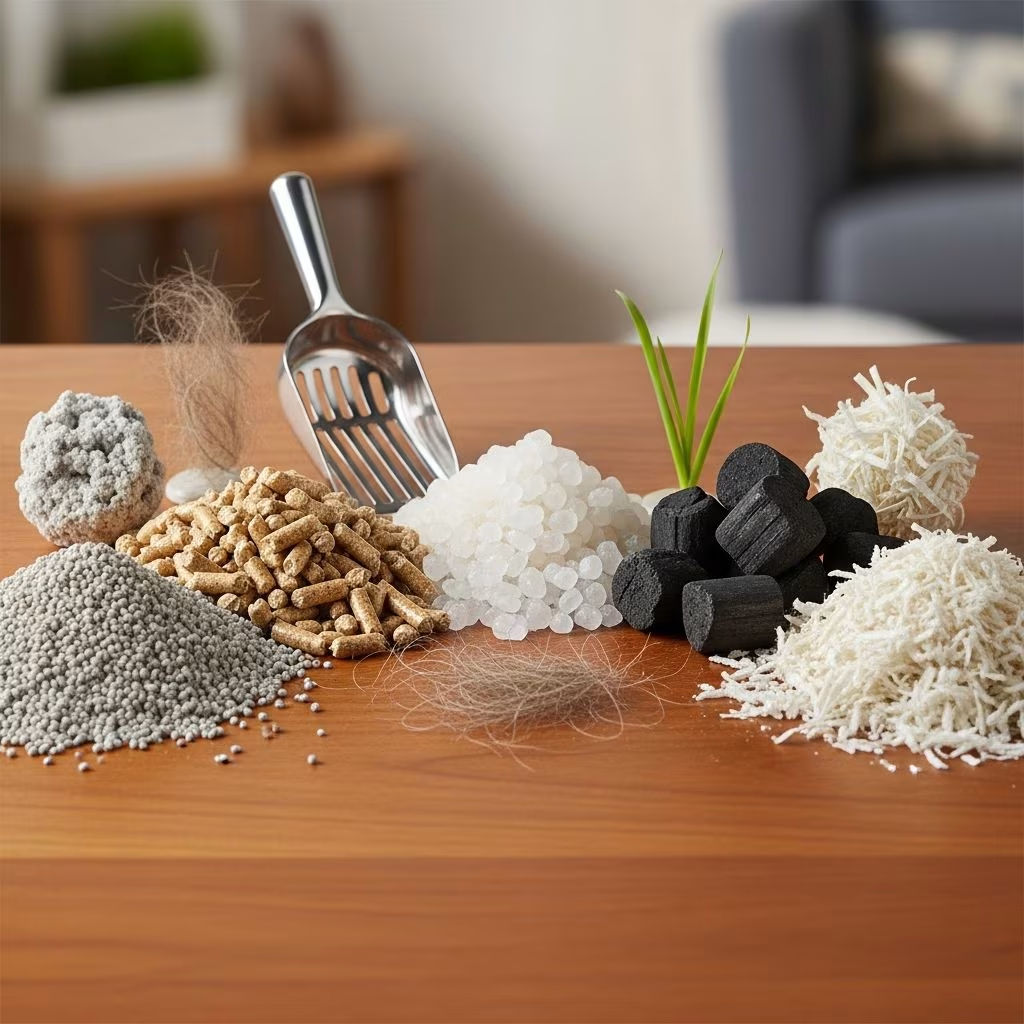
Selecting the appropriate cat litter involves balancing factors such as odor management, ease of cleaning, environmental impact, and your cat’s comfort. With numerous options ranging from traditional clay to innovative natural alternatives, understanding each type empowers pet owners to make informed choices that enhance litter box habits and home hygiene.
Understanding Cat Litter Basics
Cat litter serves critical functions: absorbing moisture, neutralizing odors, and providing a comfortable substrate for elimination. Most cats instinctively prefer fine-textured litters resembling soil or sand. Key performance metrics include clumping ability, dust levels, tracking tendencies, and longevity between full changes. Recent trends emphasize low-dust formulas for respiratory health and biodegradable materials for sustainability.
Traditional Clay Litters: Reliable and Widely Used
Clay litters, derived from bentonite or montmorillonite, dominate the market due to their proven efficacy. These mineral-based products excel in moisture absorption and availability.
Clumping Clay Varieties
Clumping clay hardens into solid masses upon liquid contact, enabling precise scooping of waste. This feature minimizes odor buildup and simplifies daily maintenance. Popular for multi-cat households, these litters often incorporate odor-neutralizing agents like baking soda.
- Superior clumping for efficient waste removal
- Strong odor control through sealed clumps
- Cost-effective for everyday use
Drawbacks include high dust production, which may irritate sensitive noses, and significant weight when soiled, complicating disposal.
Non-Clumping Clay Options
Non-clumping clay absorbs liquids without forming clusters, requiring complete box changes more frequently. It suits budget-conscious owners or single-cat homes where full refreshes are manageable.
- Affordable entry-level choice
- Effective basic absorption
- Less prone to sticking in paws
However, odor control diminishes over time without scooping clumps, potentially leading to bacterial growth.
Silica Gel and Crystal Litters: High-Tech Absorption
Silica gel litters consist of porous beads that trap vast amounts of liquid internally, offering extended use periods. Ideal for low-maintenance routines, these dust-free options shine in odor locking.
- Exceptional absorption capacity, lasting weeks
- Nearly dust-free for allergy-prone cats
- Lightweight and low-tracking
Challenges involve higher upfront costs and a hard texture some cats reject. Ingestion risks exist if beads break.
Natural and Biodegradable Litters: Eco-Conscious Choices
Plant-derived litters appeal to environmentally aware owners, often featuring renewability and flushability. They provide softer feels underfoot compared to minerals.
Wood-Based Litters like Pine
Pine pellets, compressed from sawdust, release natural enzymes to combat smells. Their firmness reduces tracking, though some cats avoid the coarse texture.
- Biodegradable with pine scent
- Low dust for cleaner air
- Effective natural deodorizing
Cons include bulky clumps that resist scooping and potential allergies to wood resins.
Corn and Wheat Litters
Corn-based litters form tight clumps from renewable grains, often flushable in small quantities. Wheat variants offer similar softness with biodegradability.
- Lightweight and paw-friendly
- Clumping for easy hygiene
- Plant-sourced sustainability
Mold risk in humid environments and moderate dust levels are noted concerns.
Walnut, Grass, and Other Innovations
Walnut shells provide ultra-absorbent shells with fine texture. Grass litters mimic soil closely, ranking high in clumping tests. These excel in eco-profiles without synthetic additives.
Paper and Pellet Litters: Specialized Solutions
Recycled paper forms dustless pellets or shreds, perfect for kittens or respiratory-sensitive cats. Zeolite pellets in systems like Breeze enhance urine separation.
- Ultra-low dust for health safety
- Soft on tender paws
- Recycled material benefits
Limited odor control necessitates frequent changes, and they underperform in absorption versus clay.
Comparing Cat Litter Features
Use this table to evaluate options based on key attributes:
| Litter Type | Odor Control | Dust Level | Clumping | Cost | Best For |
|---|---|---|---|---|---|
| Clumping Clay | Excellent | Medium-High | Yes | Low | Daily scooping, multi-cats |
| Non-Clumping Clay | Good | Medium | No | Low | Budget single-cat |
| Silica Gel/Crystal | Excellent | Very Low | No | Medium-High | Low maintenance |
| Pine/Wood | Good | Low | Partial | Medium | Eco-friendly |
| Corn/Wheat | Good | Low | Yes | Medium | Flushable needs |
| Paper/Pellet | Fair | Very Low | No | Medium | Kittens, allergies |
Data synthesized from comparative analyses.
Factors to Consider When Choosing Litter
Match litter to your cat’s profile: age, health, and preferences. Kittens favor paper; seniors soft naturals. Monitor for acceptance—rejection signals include box avoidance. Household priorities like allergies dictate dust-free picks. Weigh sustainability against performance; biodegradables reduce landfill waste but may cost more. Test small quantities to avoid waste.
Implementation Tips for Success
- Transition gradually: Mix 75% old with 25% new, increasing over a week.
- Scoop daily: Prevents bacterial proliferation regardless of type.
- Box placement: Quiet, accessible spots encourage use.
- Depth matters: 2-3 inches for burying instincts.
For multi-cat setups, larger boxes and high-capacity litters prevent conflicts.
Frequently Asked Questions
What is the best cat litter for odor control?
Silica gel and clumping clay lead, with crystals absorbing up to 40% of their weight in liquid.
Are natural litters safe to flush?
Some corn or wheat types are, but verify local plumbing codes and septic compatibility. Avoid clay entirely.
How often should I fully change the litter?
Clumping: weekly; non-clumping or crystal: every 1-4 weeks based on usage.
Why does my cat reject new litter?
Scent, texture, or dust may deter. Revert temporarily and retry slowly.
Which litter is most eco-friendly?
Biodegradable options like pine, corn, or walnut minimize environmental footprint.
Advanced Litter Systems and Trends
Emerging systems pair pellets with absorbent pads for mess-free changes. Automatic boxes integrate with app-monitored litters. Future directions prioritize hypoallergenic, zero-waste formulas.
By aligning litter choice with needs, owners foster positive litter habits, reducing accidents and stress. Experimentation refines the perfect match.
References
- Best Cat Litter Guide for 2025 — Boxiecat. 2025. https://boxiecat.com/blogs/litter-learning-center/what-are-the-different-types-of-cat-litter
- The Ultimate Guide to Types of Cat Litter — Purina US. 2025. https://www.purina.com/articles/cat/behavior/litter/types-of-cat-litter
- 8 Different types of cat litter – PetSafe — PetSafe. 2025. https://www.petsafe.com/blog/cat-litter-types-complete-guide/
- Cat Litter Types: Which is Right for Your Cat (and You) — Zoetis Petcare. 2025. https://www.zoetispetcare.com/blog/article/cat-litter-types
- Types of Cat Litter: Which One Is Best for Your Cat? — OKC Vet Campus. 2025. https://okcvetcampus.com/types-of-cat-litter-which-one-is-best-for-your-cat/
- Choosing Litter: Part Two – Comparison of Different Types of Cat Litter — Pet Professional Guild. 2025. https://www.petprofessionalguild.com/pet-owners/pets-and-their-people/pets-and-their-people-blog/choosing-litter-part-two-comparison-of-different-types-of-cat-litter/



