

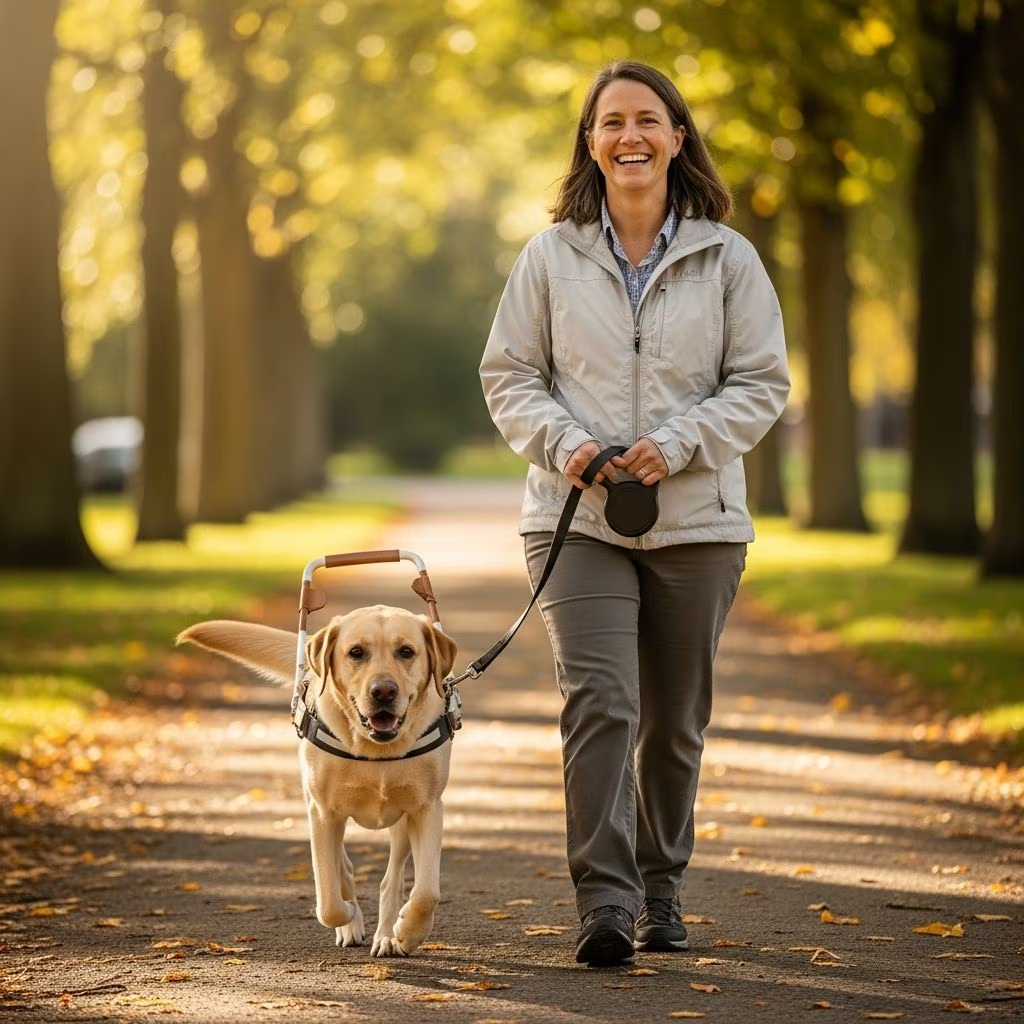
The Remarkable Journey of Danelle Umstead and Her Guide Dogs
Danelle Umstead’s story is one of resilience, determination, and the transformative power of guide dogs. As a blind Paralympic skier and competitive athlete, Umstead has overcome extraordinary challenges to achieve remarkable success in her athletic career. Her guide dogs have played an instrumental role in this journey, serving not only as navigational aids but as loyal companions who have fundamentally changed how she approaches her professional pursuits and personal life. The bond between Umstead and her guide dogs extends far beyond the typical service animal relationship, showcasing the profound impact these remarkable animals can have on an individual’s quality of life and aspirations.
Who is Danelle Umstead?
Danelle Umstead has emerged as one of the most inspiring figures in the Paralympic community. Born without sight, she refused to allow her blindness to limit her ambitions. Instead, Umstead has carved out an impressive career as a Para-Alpine skier, competing at the highest levels of international competition. Her achievements in competitive skiing have earned her recognition and respect within the athletic world, demonstrating that visual impairment need not be a barrier to elite athletic performance.
Beyond her accomplishments on the slopes, Umstead has also ventured into the entertainment world. Her appearance on “Dancing with the Stars” introduced her to a broader audience and showcased her versatility and determination in a completely different athletic arena. This multifaceted approach to life exemplifies her unwillingness to be confined by conventional limitations or societal expectations. Throughout all these endeavors, her guide dogs have been steadfast companions, providing the support and confidence she needs to pursue her passions at the highest levels.
The Role of Guide Dogs in Athletic Performance
Guide dogs serve multiple critical functions in Danelle Umstead’s life, particularly in her athletic pursuits. While most people associate guide dogs primarily with helping individuals navigate urban environments and everyday spaces, their role in supporting an elite athlete like Umstead is far more specialized and nuanced. These highly trained animals have been instrumental in helping Umstead develop her athletic capabilities and maintain her competitive edge.
Training Support and Gym Assistance
One of the most significant contributions Umstead’s guide dogs make to her athletic career is their assistance during training sessions. In the gym, where Umstead works to build strength, endurance, and technical skills, her guide dogs help navigate her through the space, alert her to obstacles, and provide stability and confidence. The presence of a trained guide dog transforms what could be a daunting experience into a manageable and even enjoyable training session. These dogs have learned to work seamlessly with Umstead’s training regimen, understanding when she needs guidance and when she needs space to focus on specific exercises.
Competition and Travel Companions
Danelle Umstead’s guide dogs have traveled with her to major competitive events, including opportunities to compete as an Olympic Para-Alpine skier. This is no small feat, as international competition requires meticulous planning, extensive travel, and adaptation to new environments. Her guide dogs have proven themselves to be reliable partners throughout these demanding journeys. Whether navigating airport terminals, unfamiliar hotel rooms, or the pressure-filled environment of elite athletic competition, these dogs have remained steadfast in their support, providing both practical assistance and emotional comfort during high-stakes moments.
BettyLynn: The First Guide Dog
Among Danelle Umstead’s guide dogs, BettyLynn holds a special place in her heart and history. As her first guide dog, BettyLynn played a foundational role in demonstrating the potential for guide dogs to enhance Umstead’s life and independence. The relationship between Umstead and BettyLynn exemplifies the deep bonds that can form between handlers and their service animals. Through countless shared experiences, training sessions, and everyday moments, BettyLynn became more than just a working animal—she became a true family member.
BettyLynn’s presence in Umstead’s life marked a turning point, opening doors to possibilities that had previously seemed unreachable. The success of this partnership laid the groundwork for subsequent guide dog relationships and demonstrated Umstead’s capacity to work effectively with these highly trained animals. BettyLynn’s contributions to Umstead’s life served as a testament to the potential impact that well-trained guide dogs can have on the independence, confidence, and quality of life of individuals who are blind or have significant visual impairments.
The Guide Dog Retirement Celebration
Recognition of the invaluable contributions made by guide dogs is essential, and Danelle Umstead has been instrumental in championing these remarkable animals. In a celebration of their service and dedication, guide dogs are often honored with retirement parties that acknowledge their years of faithful work. Umstead has actively participated in and co-hosted celebrations for guide dogs reaching retirement age, including events sponsored by organizations dedicated to supporting service animals. These celebrations serve multiple purposes: they honor the dogs’ contributions, raise awareness about the importance of guide dog programs, and recognize the financial and emotional investment required to train and maintain these exceptional animals.
These retirement events highlight the lifecycle of guide dogs and the importance of providing them with comfortable, dignified retirements after years of dedicated service. Guide dogs typically work for approximately 8-10 years before retiring, after which they often transition into loving family homes where they can enjoy their well-deserved rest. Umstead’s involvement in these celebrations demonstrates her deep appreciation for the animals that have so profoundly impacted her life and her commitment to giving back to the guide dog community.
Empowerment Through Service Animals
The relationship between Danelle Umstead and her guide dogs illustrates a broader and more profound truth about service animals: they do more than perform specific tasks or provide physical assistance. These dogs are catalysts for independence, confidence, and empowerment. For individuals who are blind or have significant visual impairments, a well-trained guide dog can be the difference between a limited, restricted life and one filled with possibility, adventure, and achievement.
Umstead’s achievements as an athlete, competitor, entertainer, and public figure would be significantly more difficult—if not impossible—without the support of her guide dogs. These animals have enabled her to pursue elite athletic training, compete internationally, navigate unfamiliar environments with confidence, and maintain the active, dynamic lifestyle that defines her. Beyond the practical assistance, guide dogs provide emotional support, companionship, and a tangible connection to independence that can profoundly affect an individual’s sense of self and possibility.
The Training Behind Guide Dogs
Guide dogs like those that work with Danelle Umstead undergo extensive, specialized training to prepare them for their demanding roles. The process of training a guide dog is lengthy, expensive, and requires tremendous skill and dedication from trainers. Dogs selected for guide dog programs typically come from specific breeding lines that have been developed to prioritize traits such as intelligence, temperament, trainability, and physical suitability.
Selection and Early Development
The journey to becoming a guide dog begins before formal training even starts. Puppies are carefully selected based on genetic factors and early behavioral assessments. They are typically socialized extensively during their early months, being exposed to various environments, sounds, and situations to build confidence and adaptability. This foundation is crucial for their future success as working animals.
Formal Training Program
Once dogs reach appropriate maturity, they enter formal guide dog training, which typically lasts four to six months. During this phase, they learn specific skills including obstacle detection, curb awareness, safe route planning, and response to directional commands. They are trained to stop at intersections, navigate around hazards, and maintain a consistent pace and direction. Importantly, they also learn to refuse unsafe commands—a critical skill that can prevent accidents or dangerous situations.
Handler Matching and Partnership Training
After individual training, guide dogs are matched with handlers based on factors such as walking pace, lifestyle, living environment, and personality compatibility. Danelle Umstead and her guide dogs underwent this matching process, ensuring optimal partnership. The final phase of training involves the handler and dog learning to work together, developing the communication and trust necessary for a successful long-term partnership.
Beyond Guide Work: Guide Dogs as Family Members
While guide dogs perform critical work-related functions, they also become beloved family members. In Danelle Umstead’s case, her guide dogs have been integrated into her family life, sharing in both everyday moments and extraordinary adventures. This dual role—simultaneously working animal and cherished companion—is one of the defining characteristics of the guide dog-handler relationship.
The emotional bond that develops between a handler and their guide dog is profound and multifaceted. These animals provide not only practical assistance but also companionship, comfort, and unconditional love. For someone like Umstead who lives with blindness, a guide dog represents more than a tool—it represents freedom, possibility, and partnership. The dog is present during moments of triumph and challenge, serving as both a practical aid and an emotional anchor.
Advocacy and Raising Awareness
Through her public profile and activism, Danelle Umstead has become an important advocate for guide dogs and individuals who are blind or visually impaired. By sharing her story and celebrating her guide dogs publicly, she raises awareness about the capabilities of both service animals and the people they serve. She challenges misconceptions about blindness and disability, demonstrating through her athletic achievements and active lifestyle that visual impairment need not limit ambition or potential.
Umstead’s participation in events celebrating guide dogs, her involvement with service dog organizations, and her willingness to discuss her experiences openly all contribute to a broader cultural shift in how society views disability, service animals, and human potential. By being visible and vocal about her reliance on and appreciation for her guide dogs, she helps normalize service animal use and increases understanding of the critical role these animals play in their handlers’ lives.
The Impact of Guide Dogs on Quality of Life
Research and anecdotal evidence consistently demonstrate that guide dogs have a transformative impact on the quality of life of individuals who are blind or have significant visual impairments. These impacts extend across multiple dimensions of life, from physical independence to mental health and social engagement.
Physical Independence
Guide dogs enable individuals to navigate independently through environments that might otherwise require sighted assistance. This independence extends to work environments, recreational activities, travel, and everyday errands. For Danelle Umstead, this independence has been crucial to her ability to pursue elite athletic training and competition.
Confidence and Self-Efficacy
The presence of a trained guide dog often increases an individual’s confidence in their ability to navigate safely and successfully through the world. This psychological benefit can be as significant as the practical assistance the dog provides. Umstead’s willingness to engage in challenging athletic pursuits and entertainment opportunities may be directly related to the confidence instilled by her guide dogs’ presence and support.
Social Connection and Integration
Guide dogs often serve as social bridges, facilitating connections and conversations with others. The presence of a dog can make individuals more approachable and can lead to increased social engagement and community integration. For public figures like Umstead, this aspect of guide dog ownership has amplified her ability to connect with audiences and advocates.
Frequently Asked Questions
Q: How are guide dogs selected and trained?
A: Guide dogs undergo rigorous selection and training processes. They are typically selected from breeds and breeding lines known for intelligence and temperament, such as Labrador Retrievers and German Shepherds. After early socialization, dogs enter formal training lasting four to six months, learning navigation skills, obstacle detection, and safety responses. They are then matched with individual handlers for partnership training.
Q: What is the lifespan of a working guide dog?
A: Guide dogs typically work for approximately 8-10 years before retiring. After retirement, they often transition into family homes where they can enjoy a comfortable life as beloved pets, free from working responsibilities.
Q: How much does it cost to train a guide dog?
A: Training a guide dog typically costs $15,000-$30,000 or more. Most guide dog organizations provide dogs at no cost to qualified handlers, covering training expenses through donations, grants, and government funding.
Q: Can guide dogs accompany their handlers anywhere?
A: Guide dogs are service animals protected under laws such as the Americans with Disabilities Act (ADA). They are permitted in public spaces, including restaurants, stores, and transportation, where pets are typically not allowed. However, certain restrictions may apply in specific contexts like operating rooms or sterile medical environments.
Q: How do guide dogs know where to go?
A: Guide dogs don’t know specific destinations; rather, they respond to directional commands from their handlers (such as “forward” or “left”) and navigate safely through obstacles. The handler maintains decision-making authority while the dog ensures safe passage and alerts to hazards.
Q: What breeds make the best guide dogs?
A: Labrador Retrievers, Golden Retrievers, and German Shepherds are the most commonly used breeds for guide dog work. These breeds are chosen for their intelligence, trainability, appropriate size, and even temperament. Some organizations also use Standard Poodles and crosses of these breeds.
References
- “Blind Paralympic Skier Danelle Umstead Talks Life with Guide Dogs” — Chewy Education. 2024. https://www.chewy.com/education/dog/pet-parenting/dwts-contestant-and-blind-paralympic-skier-danelle-umstead-talks-life-with-guide-dogs
- “Natural Balance Honors Guide Dogs with One-of-A-Kind Retirement Party” — PRNewswire. 2023. https://www.prnewswire.com/news-releases/natural-balance-honors-guide-dogs-with-one-of-a-kind-retirement-party-300716893.html
- “The Secret Force Behind Paralympic Skier Danelle Umstead: Her Incredible Guide Dogs” — ESPN. 2021. https://www.espn.com/espnw/life-style/article/22695244/the-secret-force-paralympic-skier-danelle-umstead-incredible-guide-dogs
- “Guide Dog Information and Support” — Guide Dog Foundation for the Blind, Inc. 2024. https://www.guidedog.org/
- “Americans with Disabilities Act (ADA) Service Animal Requirements” — U.S. Department of Justice Civil Rights Division. 2020. https://www.ada.gov/service_animals_2010.htm



