

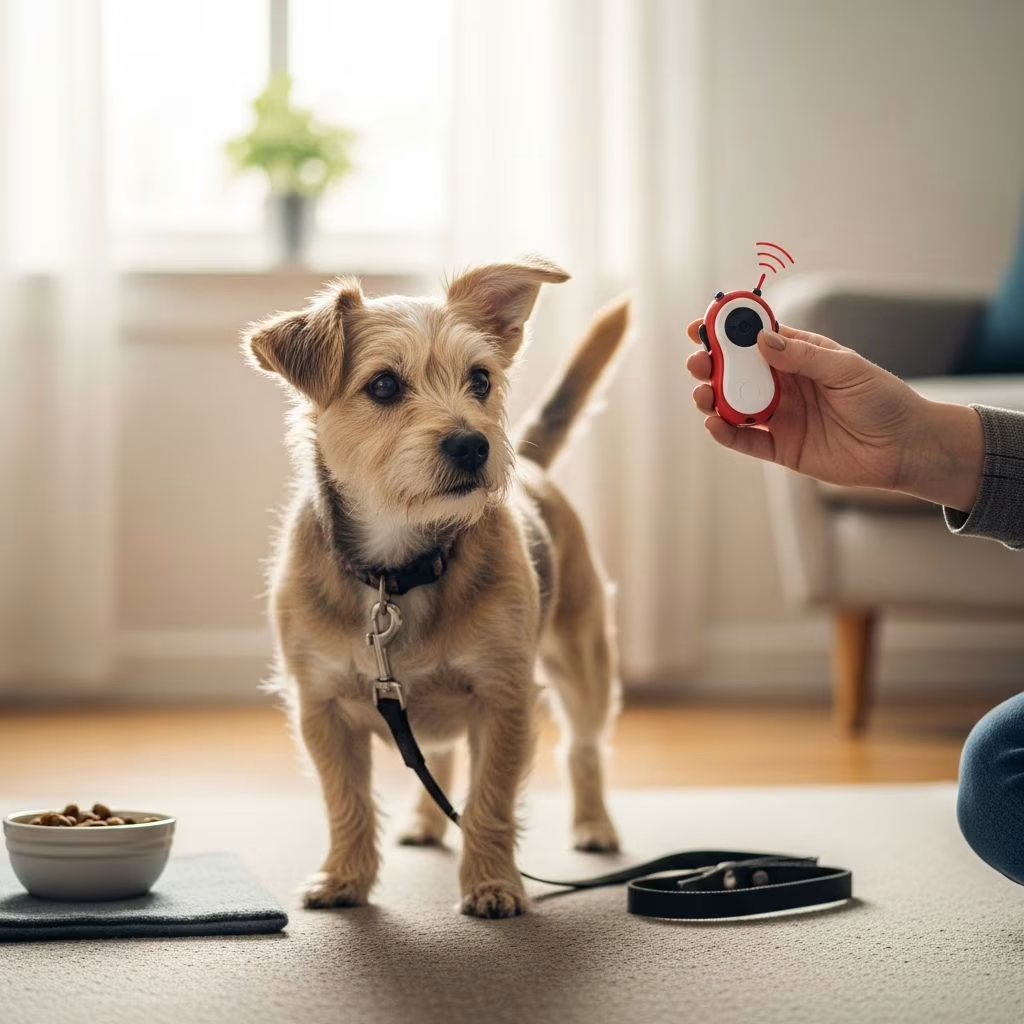
A Guide to Clicker Training Pets
Clicker training is a fun and effective way to communicate with your pets and teach them new behaviors. Whether you have a dog, cat, bird, rabbit, rat, or horse, clicker training can help you build a stronger relationship with your animal companion while teaching them commands and tricks. The beauty of this training method is its simplicity – all you need is a clicker, some treats, and patience. This comprehensive guide will walk you through everything you need to know about clicker training your pets.
What Is Clicker Training?
Clicker training is a positive reinforcement training method that uses a small handheld device to mark desired behaviors. When you press the clicker, it produces a distinctive clicking sound that signals to your pet that they’ve done something right and a reward is coming. The clicker serves as a bridge between the moment your pet performs the correct behavior and the delivery of a treat or praise.
This training approach is based on operant conditioning principles, where your pet learns to associate their actions with positive consequences. Unlike traditional training methods that may involve corrections or punishment, clicker training focuses entirely on rewarding good behavior, making it a humane and effective approach that many professional trainers recommend.
How Does Clicker Training Work?
Clicker training operates on a simple but powerful principle: your pet learns to expect something enjoyable (like a treat) in return for doing something you ask. The clicker becomes a communication tool that lets your pet know exactly when they’ve earned a reward.
The Basic Mechanism
When you click the clicker and immediately follow it with a treat, your pet begins to form an association between the sound and the reward. Over time, the click itself becomes rewarding because your pet knows it predicts something they want. This is often called “charging” the clicker – essentially programming your pet to respond positively to the sound.
The key to successful clicker training is timing. The click must occur at the exact moment your pet performs the desired behavior, or within a fraction of a second afterward. This precision helps your pet understand which specific action earned the reward, making learning faster and more efficient.
Getting Started With Clicker Training
Before you begin clicker training your pet, gather the essential supplies and set up an appropriate training environment.
Supplies You’ll Need
- A clicker device (a small plastic device that makes a distinct clicking sound when pressed)
- Soft, small treats cut into tiny pieces for easy consumption
- A quiet training space free from distractions
- Optional: a target stick or pointer for advanced training
Preparing Your Training Space
Choose a quiet location where you can focus on training without external distractions. This could be a spare room, a fenced yard, or any space where your pet can concentrate on the training session. Remove toys, other pets, and anything else that might divert your pet’s attention. Start in this controlled environment until your pet fully understands the clicker-treat association, then you can gradually introduce training in busier environments.
Step-by-Step Clicker Training Process
Step 1: Charging Your Clicker
Before you can use the clicker to mark behaviors, you need to teach your pet that the click sound means a reward is coming. This process is called “charging” the clicker.
To charge your clicker:
- Press the clicker once
- Immediately present a treat to your pet
- Repeat this sequence 20-30 times in your first session
- Continue until your pet begins to look for the treat after hearing the click
Your clicker is successfully charged when your pet’s eyes light up or they start searching for the treat immediately after hearing the click. This typically takes just a few repetitions, as pets are quick to make these associations.
Step 2: Capturing Behavior
Capturing involves clicking and rewarding behaviors your pet naturally performs without any prompting from you. This teaches your pet the basics of how clicker training works while building their understanding that their actions have consequences.
Choose a simple, naturally occurring behavior to start with, such as:
- Making eye contact with you
- Sitting down
- Stretching
- Grooming themselves
- Looking in your direction
When you observe your pet performing one of these behaviors, immediately click the clicker and offer a treat. Work on capturing for at least 24 hours before moving to the next step. This practice helps you develop good timing and helps your pet understand the connection between behavior and reward.
Step 3: Targeting
Targeting introduces a more specific behavior that you’re actively shaping. You guide your pet to touch or follow a target object, typically a stick or your hand.
To teach targeting:
- Hold a target stick or your hand 2-3 inches away from your pet’s nose
- Most pets will naturally investigate the object
- Click the moment your pet touches or bumps the target with their nose
- Immediately offer a treat
- Repeat until your pet actively seeks out the target
Practice targeting for 3-4 days to ensure your pet fully understands. Once mastered, you can move the target in different directions to teach your pet to follow it, which serves as the foundation for many other behaviors.
Step 4: Luring
Luring uses a treat or target object to guide your pet into the desired position or behavior. This is particularly useful for teaching specific commands like “sit,” “down,” or “come.”
For example, to teach “sit”:
- Hold a treat close to your pet’s nose
- Slowly move it upward and slightly backward over their head
- Most pets will naturally sit as they follow the treat
- Click the moment their bottom touches the ground
- Give the treat as the reward
Luring works well for teaching positional behaviors, but it’s important to transition to other methods once your pet learns the behavior.
Step 5: Shaping
Shaping is one of the most powerful clicker training techniques. It involves rewarding small steps or approximations toward the final desired behavior, gradually requiring closer approximations before clicking.
For example, if teaching your dog to come:
- Click when they look in your direction
- Advance to clicking only when they take one step toward you
- Progress to clicking for two steps, then three steps
- Eventually require them to come all the way to you before clicking
Shaping allows you to teach complex behaviors by breaking them into manageable pieces. This technique builds confidence in your pet and makes learning enjoyable.
Step 6: Adding a Cue
Once your pet reliably performs a behavior, you can add a verbal cue or hand signal to trigger it on command. The order of operations is important:
Give the verbal cue (like “sit”) → Your pet performs the behavior → Click → Deliver treat
Always give the cue before the behavior occurs. Initially, your pet may not immediately respond to the cue alone, so you might need to use luring or other prompts alongside the cue. As your pet’s understanding grows, gradually reduce the prompts until they respond to the cue alone.
Essential Clicker Training Tips
Timing Is Everything
The most critical aspect of successful clicker training is precise timing. Click the clicker at the exact moment your pet performs the desired behavior, or within a split second afterward. If you click too late, your pet may associate the click with a different behavior that occurred after the one you intended.
Remember the Rules
- Click while or immediately after the behavior happens – Not before, not several seconds later
- Always click first, then offer the treat – The sequence matters; the click predicts the treat
- Only click once – One click marks one correct behavior; multiple clicks will confuse your pet
Keep Sessions Short and Fun
Training sessions should be brief, typically 5-15 minutes depending on your pet’s age and attention span. Multiple short sessions throughout the day are more effective than one long session. Your goal is for your pet to enjoy clicker training and look forward to practice time, not see it as a chore.
Choose the Right Treats
Select small, soft treats that your pet loves and can consume quickly. Hard or large treats cause unnecessary delays between the click and reward, weakening the association. Cut treats into tiny pieces so your pet can eat them rapidly and refocus on training.
Be Consistent
Always use the same clicker and the same verbal cues. Consistency helps your pet form stronger associations and reduces confusion. If you’re training with family members, ensure everyone uses the same cues and training methods.
Which Pets Can Be Clicker Trained?
One of the wonderful aspects of clicker training is its versatility. While most people associate it with dog training, clicker training works effectively with many species:
Dogs and Cats
Both dogs and cats respond exceptionally well to clicker training. Dogs can learn commands like sit, down, come, and stay. Cats can learn to touch a target, come when called, use the toilet, or perform tricks. The fundamental principles are the same regardless of species.
Birds
Clicker training is particularly popular for training birds to step onto a perch, return to their cage, or perform specific behaviors. The distinct click sound carries well and birds pick up the association quickly.
Small Mammals
Rabbits, rats, guinea pigs, and other small mammals can all be clicker trained. These intelligent animals enjoy the mental stimulation and quickly learn that certain behaviors result in rewards.
Horses
Equine training has increasingly incorporated clicker methods. Horses respond well to the technique and can learn ground manners, tricks, and behavioral modifications through positive reinforcement.
Transitioning Away From the Clicker
As your pet progresses, you’ll eventually want to phase out the clicker and rely solely on verbal cues and other markers. This transition should be gradual to avoid confusing your pet.
Begin by occasionally using a marker word like “yes!” alongside or instead of the clicker. Gradually increase the frequency of using the marker word until the clicker is needed less often. Remember, the goal is for your pet to respond to your verbal commands, not depend on the clicker indefinitely.
You can also incorporate hand signals alongside verbal cues, which is especially helpful for dogs who are deaf or hard of hearing, and provides additional clarity in various environments.
Common Mistakes to Avoid
- Clicking too late: Wait even a second and you may have missed the exact behavior
- Clicking multiple times: One click marks one behavior; extra clicks create confusion
- Inconsistent timing: Inconsistency makes learning take longer
- Using the clicker for punishment: Never click for undesired behaviors – keep it positive
- Sessions that are too long: Your pet gets tired and loses focus
- Distracting training environments: Start in quiet spaces; add distractions gradually
- Forgetting to deliver the treat: Always follow the click with a reward without delay
Benefits of Clicker Training
Clicker training offers numerous advantages over traditional training methods. It’s scientifically proven that pets learn faster with clicker training compared to other techniques. The consistent, distinct sound of the clicker is more reliable than verbal markers, which can vary in tone and inflection depending on human emotion or context.
The method strengthens the bond between you and your pet by creating positive associations and clear communication. Your pet learns that good behavior leads to good things, building confidence and enthusiasm for training. Additionally, clicker training can address behavioral problems by teaching alternative, desirable behaviors instead of focusing on punishment.
Frequently Asked Questions
Q: How quickly will my pet learn with clicker training?
A: Most pets begin to understand the clicker-treat association within the first few sessions. Simple behaviors can be learned in days, while more complex behaviors may take weeks of consistent practice. The timeline depends on your pet’s age, previous training experience, and how frequently you practice.
Q: Can I use clicker training for problem behaviors?
A: Yes. Clicker training is excellent for addressing problem behaviors by teaching alternative, desired behaviors. For example, instead of jumping on guests, teach your dog to go to a mat. Click and reward the new behavior until it replaces the old one.
Q: Do I have to use food treats?
A: While food treats are most common and effective, some pets respond well to other rewards like verbal praise, petting, or access to toys or play. However, food treats are typically the most motivating reward, especially during initial training.
Q: Can older pets learn with clicker training?
A: Absolutely. Clicker training works for pets of all ages. Senior pets may learn at a slightly slower pace, but the method remains effective and can provide mental enrichment and strengthen your relationship.
Q: What if my pet doesn’t seem interested in treats?
A: Find a reward your pet truly values. This might be a different type of treat, a favorite toy, or a specific type of physical affection. Training works best when the reward is something your pet genuinely desires.
Q: How long should training sessions be?
A: Keep sessions short – typically 5-15 minutes depending on your pet’s age and attention span. Multiple short sessions throughout the day are more effective than one long session.
References
- A Guide to Clicker Training Pets — Best Friends Animal Society. https://bestfriends.org/pet-care-resources/guide-clicker-training-pets
- A Step-By-Step Guide to Cat Clicker Training — Pasadena Humane. https://pasadenahumane.org/cat-clicker-training/
- Click, Treat, Repeat!: Easy Clicker Training For Your Dog — Austin Dog Alliance. https://adltexas.org/resources/click-treat-repeat-easy-clicker-training-for-your-dog/
- Dog Clicker Training 101: A Comprehensive Guide — Sniffspot. https://www.sniffspot.com/blog/dog-training/how-to-clicker-train-a-dog
- Clicker Training — Animal Welfare League of Arlington. https://www.awla.org/services/for-pets/resources-guides/clicker-training/
- Clicker Techniques, Part One: The Power of the Click — Guide Dogs. https://www.guidedogs.com/resources/client-resources/guide-dog-class-lecture-materials/clicker-techniques-part-one
- A Step-by-Step Guide to Using the Pro-Training Clicker — Starmark Academy. https://www.starmarkacademy.com/wp-content/uploads/2011/03/Pro-Training-Clicker-Guide-2011.pdf



