
Guardian Dogs: Breeds, Traits & Farm Protection
Explore the world's premier livestock protection breeds and their essential roles
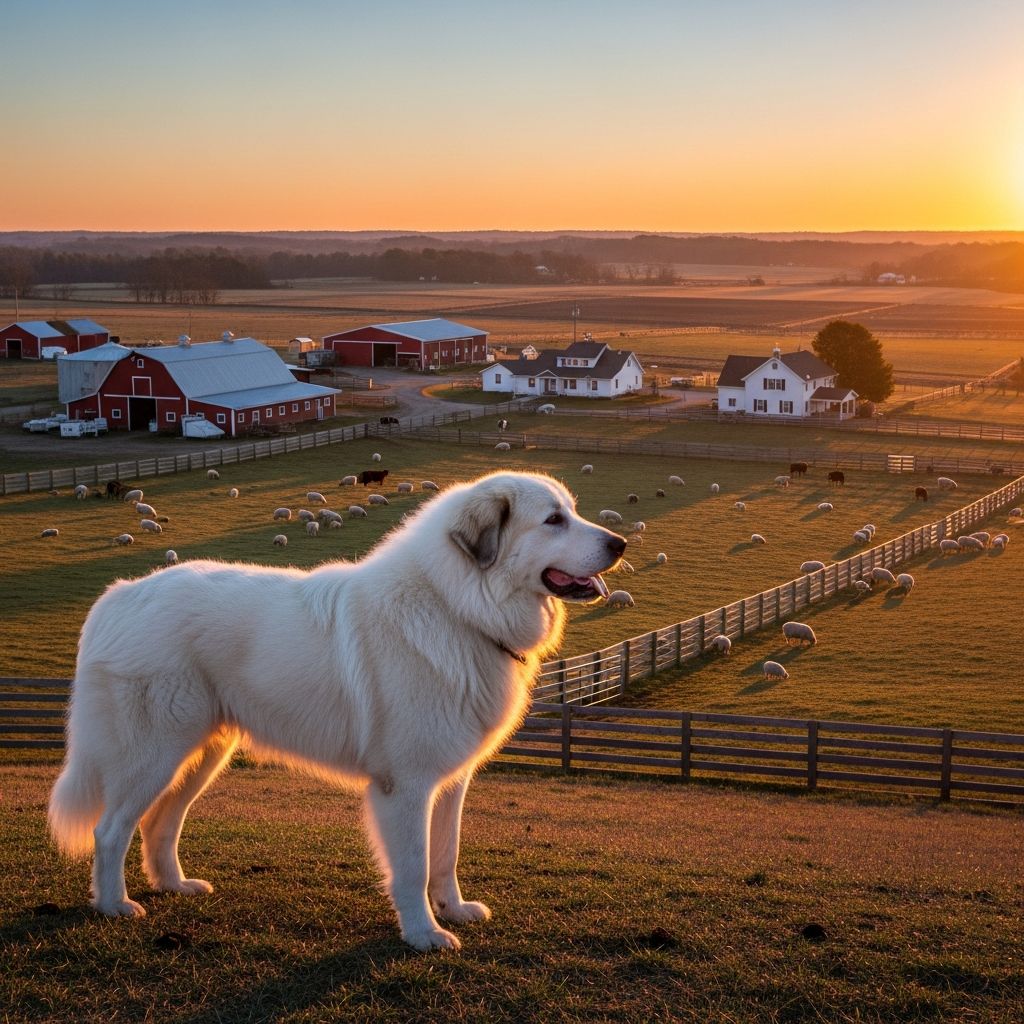
Livestock Guardian Dogs: Essential Protectors of Farm Animals
Throughout agricultural history, specialized dog breeds have served as the primary defense against predators threatening valuable livestock. These remarkable canines, known as livestock guardian dogs (LGDs), represent a distinct category of working breeds developed over centuries to independently assess threats and protect flocks without constant human direction. Unlike herding dogs that move and control animals, LGDs remain stationary guardians, living alongside their charges to provide round-the-clock protection. Today, farmers worldwide continue to rely on these devoted animals to safeguard sheep, goats, cattle, and other livestock from wolves, coyotes, bears, and various predators.
What Defines a Livestock Guardian Dog?
Livestock guardian dogs possess a constellation of carefully selected traits that distinguish them from other working canines. These dogs were deliberately bred for specific behavioral and physical characteristics that enable them to fulfill guardian roles effectively. Understanding these defining qualities helps explain why certain breeds excel at livestock protection while others do not.
Primary Guardian Characteristics
Three fundamental attributes separate true livestock guardians from other dog types. Trustworthiness ensures these dogs will not wander from their assigned territory and will not display aggression toward the livestock they protect. This trait developed through generations of selective breeding, creating animals naturally inclined to remain near their charges rather than roam. Attentiveness describes the dog’s ability to maintain situational awareness, constantly monitoring surroundings for potential predators and unusual activities. Finally, protectiveness refers to the dog’s capacity and willingness to confront and drive away threats, using their considerable size and courage when necessary to defend the herd.
Physical Characteristics
LGDs typically display consistent physical features that contribute to their guardian effectiveness. Most livestock guardian dogs stand in excess of two feet tall and weigh over 100 pounds, with some breeds reaching significantly greater sizes. Their imposing stature alone serves as a deterrent to many potential predators. These dogs typically feature large, blocky heads, floppy ears, and water-resistant coats adapted to living outdoors in various climates. Interestingly, coat color often reflects the animals they protect—white dogs commonly guard white sheep, while brown or grey-coated dogs protect darker-colored livestock. This color matching provides additional camouflage, allowing guardians to blend seamlessly with their flocks.
The Global Diversity of Livestock Guardian Breeds
While many people assume livestock guardian dogs represent a single breed type, reality reflects far greater diversity. Over 30 distinct LGD breeds exist throughout the world, each developed in specific geographic regions to address local environmental and predator challenges. These breeds represent distinct lineages adapted to their native landscapes, climates, and particular livestock management practices.
Dominant Breeds in North America
Five primary livestock guardian breeds dominate agricultural practices in the United States, each bringing unique qualities to farm protection. The Great Pyrenees stands as the most widely recognized and popular choice among American farmers. These large, white, fluffy dogs impress through their combination of impressive size and remarkably calm temperament. Described as smart, patient, and composed, Great Pyrenees were deliberately bred as independent thinkers capable of making protective decisions without human supervision or guidance. This independence allows them to respond appropriately to threats in real-time.
The Akbash represents an ancient Turkish breed that gained prominence in American agricultural settings following its introduction in the 1980s. The U.S. Department of Agriculture subsequently adopted Akbash dogs for livestock protection purposes. These gentle giants make affectionate family companions despite their substantial size, though they maintain natural suspicion toward strangers and will display aggression if unfamiliar dogs approach their territory.
The Maremma, formally known as the Maremmano-Abruzzese Sheepdog, originates from central Italy where it has protected livestock for centuries. Today this breed continues serving farmers throughout Italy, the United States, and Canada. The Maremma’s thick white coat, large head, and floppy ears closely resemble the Great Pyrenees and Kuvasz, leading historians to speculate these breeds may share common ancestry. Maremmasto require consistent activity and mental stimulation, as they become bored and unhappy without meaningful work.
The Anatolian Shepherd ranks among the largest livestock guardian dogs, with males frequently weighing up to 150 pounds. This Turkish breed traces its ancestry to ancient times and arrived in the United States during the 1950s. Their exceptional size and fierce protective abilities have made them highly valued for livestock defense. Unlike other major LGD breeds featuring predominantly white coats, Anatolians typically display light brown coloring with distinctive black face-masks.
The Komondor stands out immediately due to its extraordinary appearance—a white coat composed of long, felt-like cords that grow increasingly longer with age. This unique coat structure helps the dog blend in with the sheep it guards while providing protection from harsh weather and predator bites. Originating from Hungary, where historians believe Asian shepherd dogs arrived around the tenth century, Komondors represent the largest Hungarian breed. Despite their imposing appearance, these dogs typically display loving, lap-dog behavior with their families, though they maintain characteristic LGD wariness toward strangers and unfamiliar dogs.
Additional Guardian Breeds Worldwide
Beyond the five dominant North American breeds, numerous other livestock guardian breeds operate effectively in different regions. The Kuvasz from Hungary combines intelligence with remarkable versatility, excelling at both livestock protection and family companionship roles. Hungarian breed standards describe Kuvaszok as loyal, fearless, and courageous natural guardians who unhesitatingly protect family, house, and property. Their coats require regular grooming maintenance, yet their unwavering dedication to guardian duties compensates for this additional care requirement.
The Karakachan, an ancient Bulgarian breed, demonstrates exceptional adaptability to various climates while displaying tenacity when confronting predators. These dogs form deep bonds with the livestock they protect and possess intuitive abilities for identifying potential threats. Their protective nature and versatility make them suitable for guarding diverse livestock types across different environments.
The Central Asian Shepherd draws from the vast landscapes of Central Asia, where these dogs earned reputation for fierce loyalty and environmental adaptability. These powerful guardians excel at protecting large livestock such as cattle and sheep, with independence and courage forming central aspects of their temperament. Their protective instincts remain exceptionally strong, making them formidable opponents to any predator.
The Pyrenean Mastiff shares ancestry with the Great Pyrenees and represents a powerful, imposing guardian breed. These dogs combine gentle, affectionate behavior toward their livestock charges with a formidable physical presence that deters potential threats. Their protective instincts and livestock devotion establish them as exceptional guardians in their own right.
Temperament and Behavioral Traits
Livestock guardian dogs possess distinctive temperament characteristics that reflect their breeding history and working purpose. Understanding these behavioral patterns proves essential for anyone considering LGD ownership or working with these remarkable animals.
Independence and Decision-Making
LGDs were deliberately selected for independent thinking ability, enabling them to assess threats and respond appropriately without constant human direction. This independence represents a defining characteristic that separates livestock guardians from other working dog categories. Rather than looking to humans for guidance in every situation, these dogs evaluate circumstances and make protective decisions autonomously. This quality proves invaluable in remote farming locations where human supervision remains impossible during nighttime hours or extensive work periods.
Loyalty and Bonding
Livestock guardian dogs form remarkably strong bonds with both the livestock they protect and the humans in their family units. These bonds develop through consistent proximity and shared purpose, creating loyal, dedicated companions. The dogs’ guardian nature generates fierce loyalty coupled with dependability, making them trustworthy animals within their established family and flock groups.
Protectiveness and Territory
LGDs characteristically display strong territorial instincts and will not wander from their assigned area. This natural inclination to remain near their charges and family members makes them ideal for stationary guardian roles. They tend to be suspicious of strangers and unknown dogs, displaying appropriate wariness that reflects their breeding for protective purposes. Some LGD breeds will display aggression if unfamiliar dogs approach their territory, requiring owners to understand and respect these territorial inclinations.
Practical Considerations for LGD Selection
| Breed | Origin | Average Weight | Primary Traits | Best For |
|---|---|---|---|---|
| Great Pyrenees | France/Pyrenees | 100-160 lbs | Calm, patient, independent | Sheep, general livestock |
| Anatolian Shepherd | Turkey | 110-150 lbs | Fierce, protective, alert | Large predators, cattle |
| Komondor | Hungary | 100-130 lbs | Unique coat, loving, loyal | Sheep flocks |
| Akbash | Turkey | 90-140 lbs | Gentle, calm, intelligent | Open spaces, multiple livestock |
| Maremma | Italy | 65-100 lbs | Devoted, active, vigilant | Livestock requiring active guardians |
Environmental Adaptability and Climate Considerations
Livestock guardian dogs were developed in diverse geographic locations, resulting in breeds specifically adapted to particular environmental conditions. Great Pyrenees originated in the mountainous Pyrenees region, developing thick double coats suited to cold alpine environments. Anatolian Shepherds evolved in the diverse Turkish landscape, demonstrating adaptability across various climate types. Central Asian Shepherds adapted to challenging Central Asian environments, maintaining effectiveness across extreme temperature variations. When selecting a livestock guardian breed, matching the dog’s climatic adaptation to the farm’s geographic location ensures optimal comfort and performance. Dogs adapted to cold climates may struggle in warm regions, while warm-climate breeds might experience heat stress in northern locations.
The Role of LGDs in Modern Agriculture
Contemporary farming operations across Montana, Wyoming, Colorado, and numerous other rural American locations continue relying on livestock guardian dogs as essential protective elements. These dedicated animals provide round-the-clock surveillance and defense, reducing predator-related livestock losses significantly. Modern farmers recognize that well-trained, properly socialized LGDs offer cost-effective predator protection compared to alternative security measures. The dogs’ ability to live independently with livestock while requiring minimal human intervention makes them particularly valuable for extensive farming operations covering large land areas.
Training and Socialization Essentials
Successful livestock guardian dog integration requires careful attention to early socialization and training processes. Puppies must be introduced to their livestock charges during critical developmental periods, establishing bonds that will persist throughout their working lives. Early exposure to the animals they will protect creates natural affinity and reduces prey drive, allowing the dogs to view livestock as family rather than targets. Many LGD breeds require socialization regarding human strangers and other dogs, helping them distinguish between acceptable visitors and genuine threats. Their natural wariness toward unfamiliar individuals means deliberate, consistent positive exposure proves necessary for dogs working on farms where humans regularly visit.
Common Questions About Livestock Guardian Dogs
How do LGDs differ from herding dogs?
Livestock guardian dogs remain stationary with their charges, providing protection through presence and threat response. Herding dogs, conversely, actively move and control livestock movement, requiring constant human direction. These represent fundamentally different working approaches suited to different agricultural management styles.
Can LGDs serve as family pets?
Many livestock guardian breeds can transition into family companion roles when properly socialized and raised in home environments. However, their large size, territorial instincts, and wariness toward strangers require knowledgeable, experienced owners who understand their guardian nature and needs.
What predators do LGDs protect against?
Depending on the breed’s size and capabilities, livestock guardian dogs defend against coyotes, wolves, bears, wild dogs, and various other predators. Larger breeds handle apex predators more effectively, while smaller LGD varieties focus on protecting against medium-sized threats.
How much exercise do LGDs require?
Livestock guardian dogs living with their charges naturally receive substantial activity through patrolling and monitoring duties. Dogs in non-working family settings require regular exercise and mental stimulation to prevent boredom-related behavioral problems.
Do all LGD breeds require extensive grooming?
Grooming needs vary significantly by breed. Komondors require specialized cord maintenance, while Great Pyrenees need regular brushing to manage their thick coats. Some breeds require less intensive grooming, though all benefit from routine care.
Conclusion: Enduring Guardian Heritage
Livestock guardian dogs represent a remarkable achievement in selective breeding, combining impressive physical presence with gentle disposition and fierce protective instincts. These dogs demonstrate that animals bred for serious working purposes can simultaneously serve as devoted family members when properly understood and respected. Whether protecting sheep in rural American farms, guarding herds across European landscapes, or defending livestock in Asian environments, these breeds continue fulfilling the roles their ancestors perfected over centuries. As agricultural practices evolve, the fundamental value of these guardian animals remains unchanged—providing reliable, independent protection that modern technology has yet to replicate effectively.
References
- Get to Know the Livestock Guardian Dog Breeds — American Kennel Club. 2024. https://www.akc.org/expert-advice/dog-breeds/get-to-know-the-livestock-guardian-dog-breeds/
- Livestock Guardian Dogs: Characteristics, Breeds, and Roles — Whole Dog Journal. 2024. https://www.whole-dog-journal.com/lifestyle/livestock-guardian-dogs-characteristics-breeds-and-roles/
- 9 Livestock Guardian Dog Breeds: Why These Pups Need Jobs — Rover. 2024. https://www.rover.com/blog/livestock-guardian-breeds/
- How to Choose the Perfect Livestock Guardian Dog Breed — Homestead Living. 2024. https://homesteadliving.com/how-to-choose-the-perfect-livestock-guardian-dog-breed/
- Selecting a Livestock Guardian Dog Puppy — University of California Agriculture and Natural Resources. 2020. https://ucanr.edu/sites/default/files/2020-05/326059.pdf
Similar Articles








Read full bio of medha deb




