

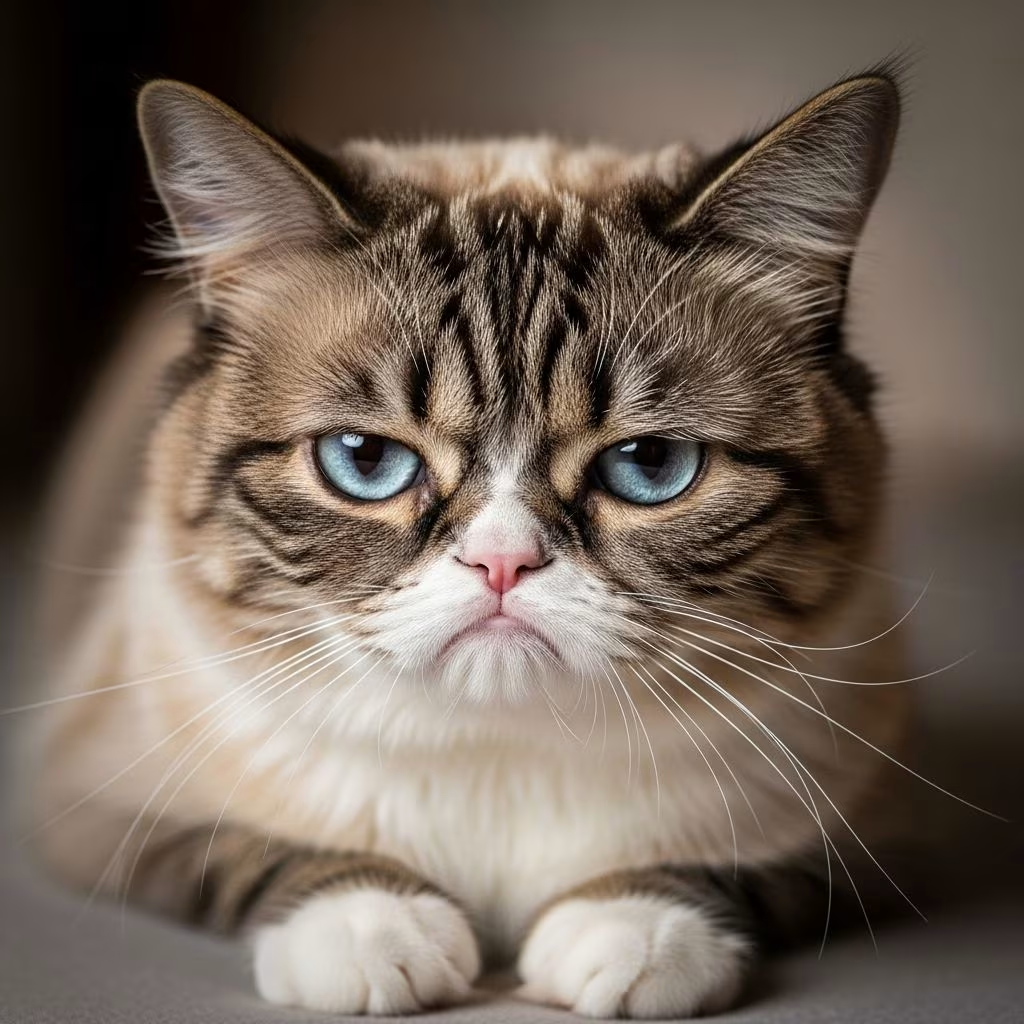
The internet-famous feline known as Grumpy Cat, whose real name was Tardar Sauce, was not a purebred cat from any recognized breed. She was a mixed domestic shorthair with distinctive physical traits stemming from genetic anomalies like an underbite and feline dwarfism. This combination gave her the perpetually displeased expression that propelled her to viral stardom starting in 2012.
Origins of an Internet Icon
Born on April 4, 2012, in Morristown, Arizona, Tardar Sauce entered the world as one of four kittens in a litter from a calico mother and a blue-and-white tabby father—both described as normal-sized domestic shorthairs. From the start, she stood out due to her undersized body, hind legs that differed from her siblings’, a flat face, bubble eyes, and a short tail. Her brother Pokey shared some of these features, indicating a familial genetic quirk rather than a deliberate breeding trait.
Tabatha Bundesen, her owner, and her brother Bryan shared a photo of Tardar Sauce on Reddit on September 22, 2012, capturing her signature scowl. The image exploded in popularity, amassing millions of views and spawning memes, merchandise, and media appearances. Despite her grumpy visage, the Bundesen family emphasized that she behaved like a typical cat most of the time, enjoying play and affection. Tardar Sauce passed away on May 14, 2019, from complications related to her condition, leaving behind a legacy that reshaped perceptions of feline fame.
Understanding Feline Dwarfism in Grumpy Cat
Grumpy Cat’s small stature and unique proportions were primarily due to feline dwarfism, a rare condition likely caused by a mutation affecting cartilage and bone growth. This genetic anomaly resulted in her shorter legs, compact body, and altered facial structure, making her appear smaller and more compact than average cats. Dwarfism in cats is exceptionally uncommon, and when it occurs, it often links to broader health issues, including potential reductions in lifespan.
Unlike purpose-bred dwarf cats like the Munchkin, which have selectively bred short legs from a dominant mutation, Grumpy Cat’s form was an unplanned occurrence in a mixed litter. The Munchkin breed, originating in the USA, exemplifies how dwarfism can be standardized, but it raises ethical questions about breeding for such traits due to associated skeletal problems. In Tardar Sauce’s case, her dwarfism was spontaneous, highlighting how genetic variations can appear naturally in domestic populations.
| Breed | Origin | Key Mutation |
|---|---|---|
| Munchkin | USA | Dwarfism (short legs) |
| Scottish Fold | UK | Ear curl (cartilage defect) |
| Manx | UK/Isle of Man | Tailless (spinal issues) |
| Persian | Historical Persia | Brachycephalic (flat face) |
This table illustrates select breeds with single-gene mutations similar to those speculated in Grumpy Cat’s makeup, drawing from veterinary insights on genetic anomalies. Such traits, while visually striking, can carry welfare concerns.
Decoding Her Distinctive Facial Features
The hallmark of Grumpy Cat’s appeal was her severe underbite, which exaggerated her frowning expression. This malocclusion, combined with her flat face and wide-set eyes, created an illusion of perpetual dissatisfaction. Domestic shorthairs, the most common cat type in the U.S., exhibit vast coat and pattern diversity, often including tabby markings like those inferred from her parents. Tardar Sauce displayed a dilute calico or tabby influence, with grayish tones and subtle patterns typical of mixed heritage cats.
Coat identification resources from veterinary medicine programs detail how tabby patterns—mackerel, classic, or spotted—dominate in mixed breeds, often featuring an ‘M’ on the forehead. Her mother’s calico genetics (patches of red, black, and white) and father’s tabby traits likely blended to produce her unique look, without the purity of pedigreed lines. This mixed background underscores that Grumpy Cat represented everyday felines elevated to celebrity status.
Myths and Misconceptions About Grumpy Cat’s Breed
Fans often speculated Grumpy Cat belonged to breeds like Persian or Exotic Shorthair due to her flat-faced, grumpy aesthetic. Persians, with their brachycephalic (short-nosed) skulls, round heads, and large eyes, epitomize the ‘disgruntled’ archetype. Similarly, Exotic Shorthairs inherit these features but with shorter coats and more playful demeanors. However, Tardar Sauce lacked the pedigreed lineage and consistent typecasting of these breeds; her dwarfism and underbite were not breed standards but anomalies.
- Persian Cat: Flat face, luxurious long coat, calm temperament—often misattributed due to scowling expression.
- Exotic Shorthair: Persian-like face with shorthair, playful despite ‘frowning’ features.
- Scottish Fold: Folded ears and round face give owl-like grumpiness, but sweet-natured.
- British Shorthair: Plush coat, downturned mouth enhances serious look.
- Himalayan: Colorpoint pattern with flat face, gentle lap cats.
These breeds share superficial resemblances but differ fundamentally from Grumpy Cat’s mixed, non-standard traits. Selective breeding for extreme features in brachycephalic cats may impair facial muscle expressiveness, potentially masking true emotions. Studies using geometric morphometrics on cat faces suggest flat-faced breeds struggle to convey feelings clearly, adding irony to Grumpy Cat’s meme fame.
Health Implications of Her Genetic Traits
Feline dwarfism, as seen in Tardar Sauce, stems from mutations disrupting growth plates in bones, leading to disproportionate limbs and potential joint issues. Her underbite likely caused dental misalignment, common in cats with facial dwarfism. While she lived to age 7, such conditions can predispose cats to mobility problems, respiratory challenges (if brachycephalic), and shortened lifespans.
Breeds with analogous ‘lethal’ genes, like Manx (tailless but prone to spinal defects), illustrate risks: kittens with two copies often don’t survive gestation, and heterozygotes face health compromises. Ethical breeding prioritizes welfare, avoiding exaggeration of harmful traits. Grumpy Cat’s story spotlights natural genetic diversity versus human-selected anomalies.
Grumpy Cat’s Cultural Impact and Legacy
Beyond her breed mystery, Tardar Sauce influenced cat culture profoundly. She starred in commercials, a Lifetime movie, and inspired merchandise generating millions. Her fame democratized pet celebrity, proving mixed-breed cats could rival purebred stars. Posthumously, she advocates for shelters, with proceeds from her image supporting animal welfare.
Her story encourages appreciating all cats’ uniqueness, regardless of breed. Domestic shorthairs comprise 95% of U.S. cats, embodying resilience and adaptability. Grumpy Cat reminded us that personality trumps pedigree.
Similar Grumpy-Looking Cats in Popular Breeds
While not Grumpy Cat’s breed, certain types mimic her vibe:
- Russian Blue: Serious green eyes, aloof demeanor hides playfulness.
- Burmese: Flattened faces, golden eyes project sternness over affection.
- Selkirk Rex: Curly coat, prominent brows enhance teddy-bear grump.
These breeds offer ‘grumpy’ aesthetics with breed-specific perks, but mixed cats like Tardar Sauce remain unpredictable charms.
Frequently Asked Questions (FAQs)
Was Grumpy Cat a purebred?
No, she was a mixed domestic shorthair with genetic mutations causing her appearance.
What caused Grumpy Cat’s grumpy face?
An underbite and feline dwarfism created her flat face and frown.
Did Grumpy Cat have brothers or sisters with similar looks?
Yes, her brother Pokey shared flat face, bubble eyes, and short tail.
Are there cat breeds bred for dwarfism?
Yes, like Munchkin, but with health controversies.
How did Grumpy Cat become famous?
A Reddit photo in 2012 went viral, leading to global stardom.
Choosing a Cat: Breed vs. Mixed Heritage
When adopting, prioritize health and temperament over looks. Mixed breeds like Grumpy Cat’s lineage often enjoy hybrid vigor, fewer genetic diseases. Shelters brim with diverse domestics mirroring her spirit.
References
- Grumpy Cat – Wikipedia — Wikipedia Contributors. 2023-05-14. https://en.wikipedia.org/wiki/Grumpy_Cat
- The Death Of Grumpy Cat — Walkerville Vet. 2019-05-20. https://www.walkervillevet.com.au/blog/the-death-of-grumpy-cat/
- Cat Identification and Coat Colors Patterns — University of Florida College of Veterinary Medicine (Shelter Medicine). 2011-11. https://sheltermedicine.vetmed.ufl.edu/files/2011/11/identification-and-coat-colors-patterns.pdf
- 10 Cat Breeds That Perfect the Art of Permanent Grumpiness — PetHub. 2023. https://pethubusa.com/cats/grumpy-looking-cat-breeds/
- Are grumpy cats really so grumpy? Study suggests selective breeding may have impacted cats’ ability to clearly express themselves — Nottingham Trent University. 2021-01-20. https://www.ntu.ac.uk/about-us/news/news-articles/2021/01/are-grumpy-cats-really-so-grumpy-study-suggests-selective-breeding-may-have-impacted-cats-ability-to-clearly-express-themselves



