

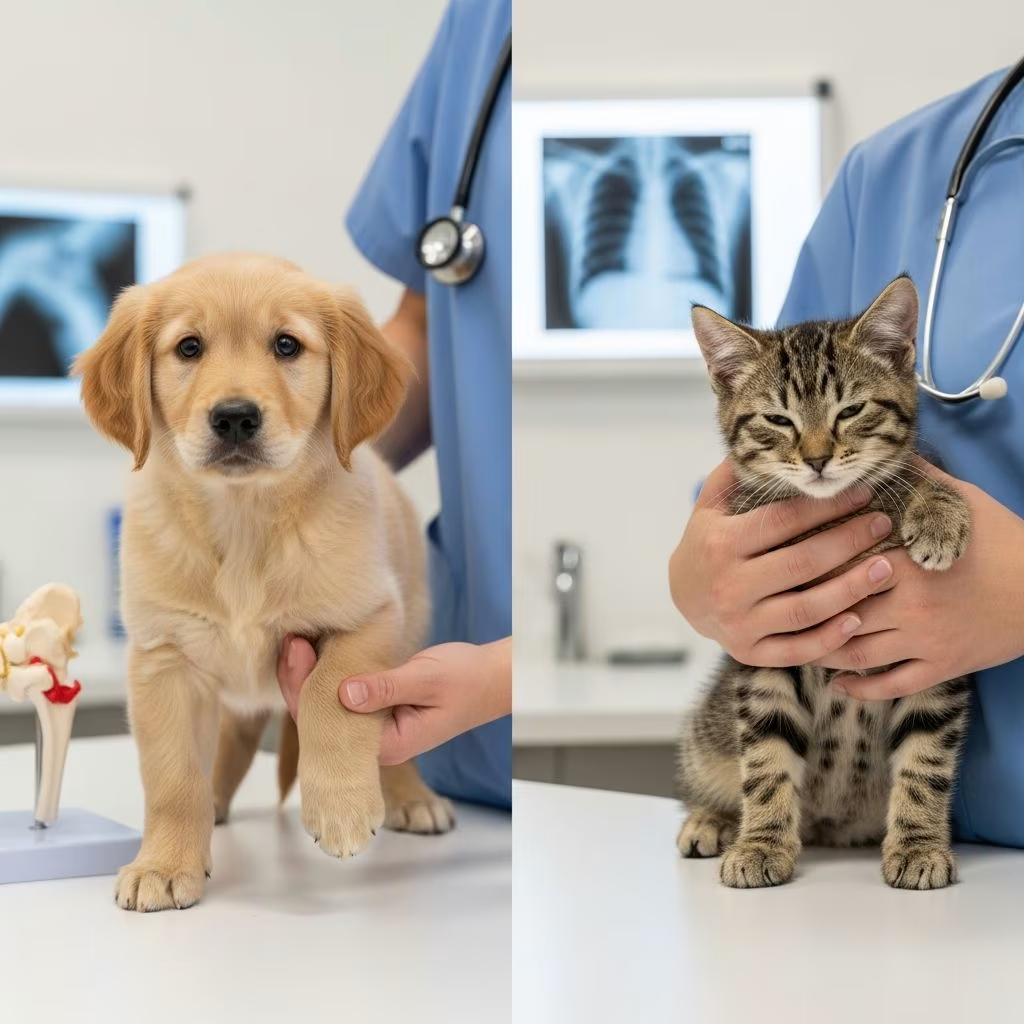
Young dogs and cats undergo rapid skeletal development, making them susceptible to various growth-related bone conditions. These disorders, often termed developmental osteopathies, arise from genetic, nutritional, or environmental factors disrupting normal bone formation and maturation. Understanding these issues is crucial for early intervention to prevent long-term mobility problems.
The Foundations of Skeletal Growth in Puppies and Kittens
Skeletal development begins in the embryonic stage when mesenchymal cells differentiate into cartilage models that later ossify into bone through endochondral and intramembranous processes. Postnatally, long bones grow via primary and secondary ossification centers at the physes and epiphyses, contributing 75-80% and 20-25% to final length, respectively. Growth plates close at breed-specific times, with large breeds maturing slower than small ones.
Disruptions during this phase—such as improper nutrition, trauma, or infections—can lead to deformities, pain, and lameness. Large and giant breeds face higher risks due to faster growth rates, emphasizing balanced diets and veterinary monitoring.
Key Developmental Bone Conditions in Young Canines
Metaphyseal Osteopathy: A Painful Growth Phase Disorder
Metaphyseal osteopathy, commonly called hypertrophic osteodystrophy (HOD), strikes young large-breed dogs aged 2-8 months. It involves metaphyseal vascular failure, causing necrosis, inflammation, and swelling in bones like the radius, ulna, and tibia.
- Symptoms: Sudden lameness, fever, lethargy, and painful swelling over affected metaphyses. Severe cases show anorexia and depression.
- Diagnosis: Radiographs reveal characteristic metaphyseal lucencies parallel to the physis, with periosteal reactions. Bloodwork may indicate elevated white cells.
- Treatment: Supportive care with NSAIDs, rest, and pain management. Most recover fully, though recurrences occur.
Potential triggers include vaccines, infections, or excess dietary minerals, though genetics play a role in predisposed breeds like Great Danes.
Jaw Bone Proliferation in Terrier Breeds
Craniomandibular osteopathy (CMO) features abnormal bone growth on the mandible and tympanic bullae, primarily in West Highland White Terriers, Scottish Terriers, and similar breeds aged 3-12 months. Cyclical bone resorption and immature bone deposition cause painful swelling.
| Breed | Prevalence | Age of Onset |
|---|---|---|
| Scottish Terrier | High (65% of cases) | 3-8 months |
| Cairn Terrier | Moderate | 4-12 months |
| Jack Russell Terrier | Occasional | 3-12 months |
Genetic factors, confirmed by genome studies, show breed-specific variants. Radiographs confirm diagnosis, showing bilateral mandibular exostoses. Pain eases post-skeletal maturity; treatment focuses on analgesics during flares.
Shifting Leg Pain: Panosteitis Explained
Panosteitis causes intermittent lameness in young, large-breed dogs (5-18 months), with intramedullary fat necrosis and osteoid overproduction in long bones. German Shepherds and other fast-growing breeds are prone.
- Clinical signs: Acute, shifting lameness; pain on deep palpation.
- Imaging: Increased medullary opacity on radiographs.
- Management: Pain relief and restricted activity; self-limiting by 2 years.
Skeletal Challenges Unique to Felines
Exostotic Growths: Multiple Osteochondromas
Multiple cartilaginous exostoses produce benign bone-cartilage tumors on long bones, ribs, and vertebrae in young cats and dogs. In felines, feline leukemia virus links to post-maturity onset; dogs show autosomal dominant inheritance.
Symptoms include lameness if limbs affected; most are asymptomatic. Radiographs show cauliflower-like metaphyseal protrusions. Surgical excision for painful or malignant-transforming lesions (rare).
Genetic Dwarfism in Fold-Eared Cats
Scottish Fold osteochondrodysplasia stems from a TRPV4 mutation causing ear folding and severe skeletal defects like tail stiffness, short limbs, and arthritis. Affected cats suffer progressive pain and mobility loss.
- Avoid breeding carriers to prevent welfare issues.
- Supportive care: Joint supplements, pain meds.
Unar Physis Retention in Growing Pets
Retained ulnar cartilage core (UCC) halts distal ulna ossification in large-breed puppies and some cats, causing valgus deformity and elbow incongruity. Nutritional imbalances suspected.
Diagnosis via radiographs showing a lucent core; treatment options include core excision or ulnar osteotomy for severe cases.
Diagnostic Strategies for Growth Anomalies
Evaluating lameness in juveniles requires history (diet, growth rate, vaccines), physical exams, and imaging. Orthogonal views highlight physeal irregularities or exostoses. Advanced tools like CT aid complex cases.
| Condition | Key Radiographic Sign | Common Breeds |
|---|---|---|
| HOD | Metaphyseal lucency | Large/giant breeds |
| CMO | Mandibular thickening | Terriers |
| Panosteitis | Medullary sclerosis | German Shepherds |
| Osteochondromas | Cauliflower lesions | Any, esp. post-FLV |
Preventive Measures and Nutritional Guidance
Balanced large-breed puppy food prevents rapid growth issues; avoid excess calcium/vitamin D. Regular vet checks catch early signs. Genetic screening for breeds like Scottish Folds is advised.
Therapeutic Approaches and Prognoses
Most conditions respond to conservative management: rest, NSAIDs, and monitoring. Surgical interventions reserved for deformities or malignancies. Prognoses are favorable with early detection.
Frequently Asked Questions (FAQs)
What causes bone growth problems in puppies?
Genetics, nutrition, infections, or trauma disrupt endochondral ossification.
Can HOD be fatal?
Rarely; severe cases with hyperthermia may require intensive care, but most recover.
Is CMO painful for dogs?
Yes, during active phases; symptoms often remit after growth plate closure.
How to prevent osteochondromas in cats?
FeLV vaccination and spaying/neutering reduce risks.
When should I see a vet for limping puppy?
Immediately if with swelling, fever, or persistent.
References
- Juvenile Orthopedic Disease in Dogs & Cats, Part 1: Musculoskeletal Development & Pediatric Bone Diseases — Today’s Veterinary Practice. 2023. https://todaysveterinarypractice.com/orthopedics/juvenile-orthopedic-disease-in-dogs-cats-part-1-musculoskeletal-development-pediatric-bone-diseases/
- Developmental Osteopathies in Dogs and Cats — Merck Veterinary Manual. 2024-02-01. https://www.merckvetmanual.com/musculoskeletal-system/osteopathies-in-small-animals/developmental-osteopathies-in-dogs-and-cats
- Radiographic Signs of Joint Disease in Dogs and Cats — PMC (NCBI). 2020-04-01. https://pmc.ncbi.nlm.nih.gov/articles/PMC7152260/
- Developmental Orthopedic Disease: A Clinical Approach — dvm360. 2022. https://www.dvm360.com/view/developmental-orthopedic-disease-a-clinical-approach
- Developmental Orthopedic Diseases — Wiley Online Library. 2019. https://onlinelibrary.wiley.com/doi/abs/10.1002/9781119501237.ch174
- Hypertrophic Osteodystrophy in Dogs (HOD) — PetMD. 2024. https://www.petmd.com/dog/conditions/musculoskeletal/c_dg_osteodystrophy



