

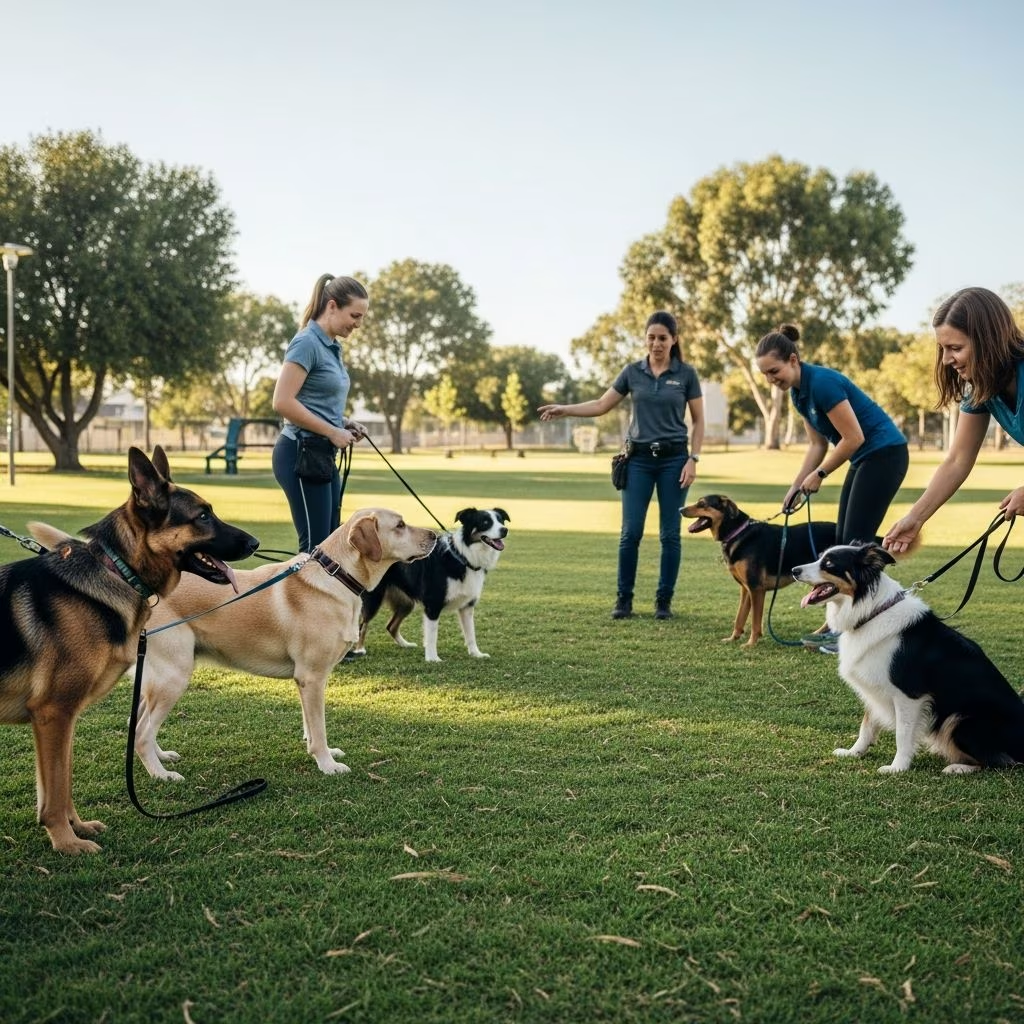
Enrolling a dog with aggression or reactivity in standard group obedience classes often poses significant risks, as these environments can exacerbate behaviors rather than resolve them. Experts recommend individualized approaches like private lessons or virtual consultations to build skills safely before any group exposure.
Understanding Reactivity in Dogs
Reactivity in dogs manifests as growling, barking, lunging, or snapping toward triggers like other dogs, strangers, or novel stimuli. This stems from underlying emotions such as fear, frustration, or pain rather than inherent ‘badness.’ Unlike true aggression, which may involve bites, reactivity signals a dog’s attempt to create distance from perceived threats.
Common triggers include crowded spaces, unpredictable movements, or high-arousal settings—precisely what group classes feature. Owners frequently misinterpret these signals, leading to escalation if not addressed properly.
Risks of Group Training Environments
Group classes typically involve multiple dogs in close proximity, leashed interactions, and handler distractions, creating a perfect storm for reactive outbursts. A dog already on edge may view approaching leashes or play bows as invasions, prompting defensive responses.
- Proximity issues: Leashed dogs feel trapped, intensifying frustration (leash reactivity).
- Handler overload: Owners struggle to focus solely on their dog amid group dynamics.
- Escalation potential: One reactive dog can chain-react others, turning a session chaotic.
- Safety hazards: Bites or injuries risk legal and emotional fallout.
Studies show confrontational elements common in some classes—like staring contests or physical corrections—worsen aggression in 20-43% of cases, depending on the method. Positive reinforcement fares better but still requires controlled settings.
Why Experts Advise Against Group Starts
Behavior professionals, including those aligned with the American Veterinary Society of Animal Behavior, caution against punishment-heavy group methods due to links with heightened fear and aggression. Even reward-based groups demand a baseline of calm, which reactive dogs lack.
Behavior change begins with guardians learning management in low-stress contexts, not high-risk group trials.
One-on-one formats allow tailoring to the dog’s thresholds, preventing setbacks that could entrench fear.
Viable Alternatives to Group Classes
Several proven paths bypass group pitfalls while fostering reliable change. These prioritize safety, consistency, and handler skill-building.
Private In-Home Sessions
Trainers visit your space, minimizing novel stressors. Focus shifts to you: reading cues, preempting triggers, and rewarding calm. Sessions dissect real-life videos of incidents for precise intervention.
- Custom protocols for your dog’s specific triggers.
- Gradual desensitization without direct exposure risks.
- Multiple visits build habits progressively.
Virtual Training Programs
Online coaching shines for aggression, as dogs remain in familiar surroundings sans stranger intrusion. Trainers guide via video reviews, live demos, and homework plans.
| Format | Pros | Cons |
|---|---|---|
| Virtual | Low stress; flexible; guardian-focused | Requires tech; no hands-on |
| Private In-Person | Direct observation; customized | Costly; travel for trainer |
| Group (Advanced) | Socialization practice | High risk initially |
Virtual suits busy schedules and remote areas, with sessions including trigger simulations and feedback loops.
Board-and-Train for Severe Cases
For dogs with bite history, immersive programs under pro supervision provide intensive work. Handlers learn maintenance upon reunion, though not ideal for mild reactivity.
Core Principles for Effective Rehabilitation
Success hinges on science-backed strategies over quick fixes. Punishment suppresses symptoms temporarily but risks fallout.
Positive Reinforcement Foundations
Reward desired states like focus or relaxation. ‘Sit for everything’ yields 85% efficacy with minimal negatives. Increase exercise to drain arousal energy (69% effective).
Obedience as Emotional Anchor
Tool-free heel training engages dogs fully, redirecting from triggers. Correct for attention lapses, not reactions—faster clarity than counter-conditioning.
Consistency across contexts (walks, home) prevents fragmented learning.
Management Until Ready
Prevent rehearsals: muzzle train, avoid triggers, use barriers. This buys time for proactive skills.
Progression to Controlled Socialization
Once proficient in private/virtual work, graduate cautiously.
- Private playdates: With calm, vaccinated dogs in neutral turf.
- Low-dog groups: Reactive-specific classes with distance protocols.
- Full integration: Standard obedience after proven reliability.
Monitor thresholds; regress if needed. Patience yields durable calm.
Choosing the Right Professional
Vet credentials: Certification (CPDT-KA, IAABC), force-free philosophy, case history.
- Ask: Success rates with reactivity? Methods? Guarantees?
- Observe: Do they prioritize welfare over compliance?
- Commit: Expect 6-12+ sessions; no miracles.
Real Owner Outcomes
Guardians report transformations: from daily lunges to park strolls via online protocols. Obedience drills resolved heel-breaking reactivity swiftly. Key: Handler buy-in trumps trainer magic.
FAQs
Can any aggressive dog join group classes?
No—start private if bite risks or poor thresholds exist. Groups suit post-rehab polish.
How long until group readiness?
3-6 months typical, varying by case severity and consistency.
Is online training legit for bites?
Yes, when guardian executes plans; escalates to in-person if needed.
What if my dog bit once?
Board/train or intensive private; assess via pro eval.
Force methods in groups?
Avoid—linked to aggression spikes. Opt positive pros.
Final Thoughts
Reactive dogs thrive sans group pressure initially. Invest in tailored training for safety and bonds. Progress demands time, but rewards are profound.
References
- Do confrontational dog training methods work? Is that really the point? — Dog Star Daily. Accessed 2026. https://www.dogstardaily.com/blogs/do-confrontational-dog-training-methods-work-really-point
- Is Online Aggressive Dog Training Better Than In-Person? — Michaels Dogs. 2025-09-03. https://www.michaelsdogs.com/2025/09/03/is-online-aggressive-dog-training-better-than-in-person/
- The Truth About Dog Training: What Works and What Doesn’t — The Trusted Companion. Accessed 2026. https://www.thetrustedcompanion.com/the-truth-about-dog-training
- Dog Behaviorist Or Obedience Training: Expectations Vs. Reality — Ancillary K9. Accessed 2026. https://www.ancillaryk9.com/blog/dog-behaviorist-or-obedience-training-expectations-vs-reality
- Solving Aggression and Anxiety with Obedience Training — Nitro Canine. Accessed 2026. https://nitrocanine.com/solving-aggression-anxiety-obedience-training/
- Board And Train Vs Private Lessons For Aggressive Dogs — K9 Mania Dog Training. Accessed 2026. https://k9maniadogtraining.com/board-and-train-vs-private-lessons-for-aggressive-dogs/



