

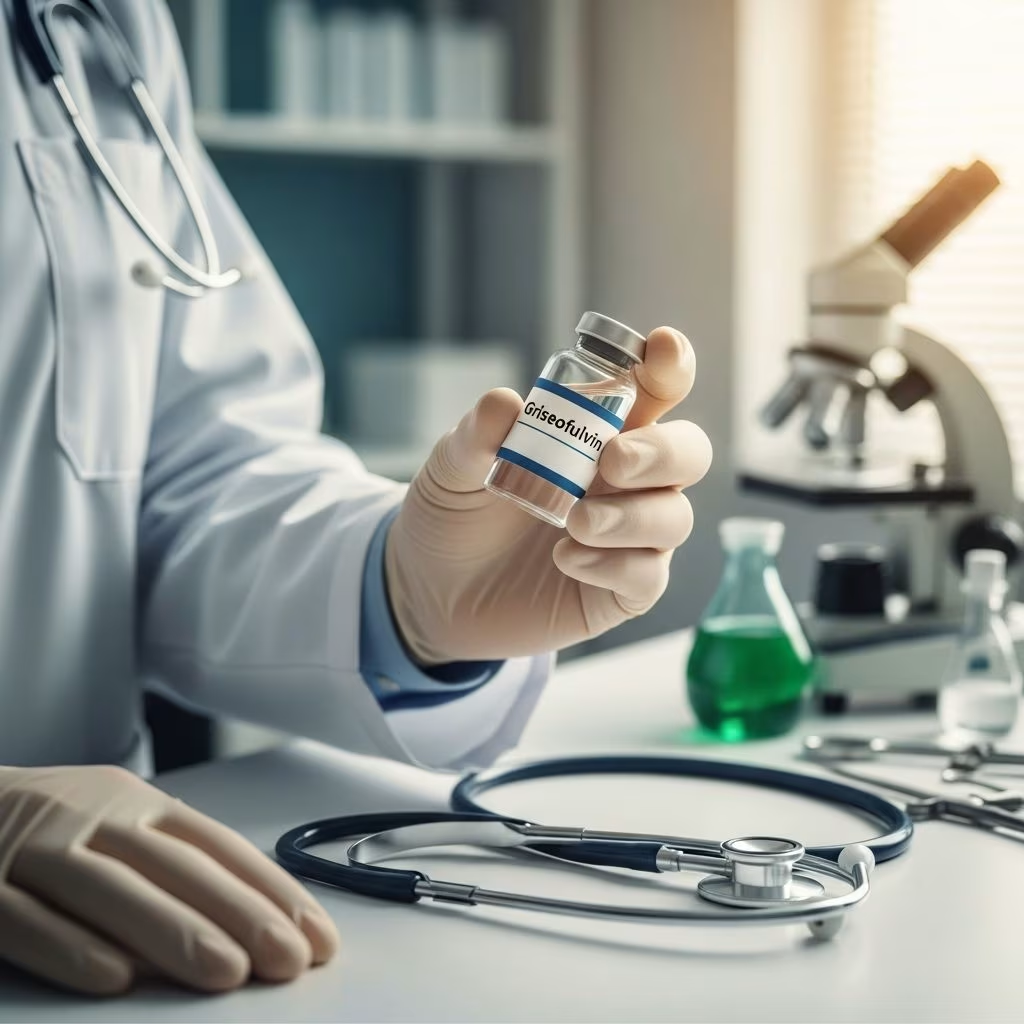
Griseofulvin stands as a cornerstone systemic antifungal medication specifically formulated for veterinary applications, targeting dermatophyte infections across a range of domestic and exotic animals. Approved by the FDA for animal use, it offers a reliable option for combating superficial fungal issues like ringworm that affect skin, hair, and nails.
Understanding the Pharmacology of Griseofulvin
This medication operates through a unique mechanism that selectively impacts fungal cells. It binds to keratin in newly forming tissues, concentrating within hair shafts and skin layers where dermatophytes thrive. This targeted delivery disrupts fungal mitosis by interfering with microtubule assembly, halting cell division and leading to abnormal hyphal growth patterns such as curling and swelling.
Unlike broad-spectrum antifungals, griseofulvin exhibits fungistatic properties, meaning it inhibits growth rather than killing fungi outright, particularly effective against actively dividing cells. Its specificity limits activity to certain dermatophytes, making it unsuitable for bacterial or deep-seated yeast infections.
Spectrum of Activity Against Fungal Pathogens
Griseofulvin demonstrates strong efficacy against key dermatophyte genera responsible for most animal ringworm cases. These include:
- Microsporum spp.: Common in cats and dogs, causing widespread alopecia and scaling.
- Trichophyton spp.: Frequently seen in horses and livestock, leading to crusty lesions.
- Epidermophyton spp.: Less common but responsive in affected species.
It shows no impact on yeasts like Candida or Malassezia, nor on bacteria, ensuring its use is reserved for confirmed dermatophytosis.
Pharmacokinetics: Absorption, Distribution, and Elimination
Oral administration is the primary route, with bioavailability enhanced by fatty meals due to its poor water solubility. Ultramicrosized formulations (smaller particles ~2.7 microns) absorb better than microsized ones (~10 microns), allowing lower doses for equivalent efficacy.
Once absorbed, griseofulvin distributes preferentially to keratin-rich tissues like skin, hair, and claws, persisting there for weeks post-treatment. It undergoes hepatic metabolism to inactive metabolites, primarily excreted via bile and urine. Peak plasma levels occur within 4 hours, with a half-life of 9-24 hours in dogs.
| Parameter | Dogs | Horses | Cats |
|---|---|---|---|
| Bioavailability | 70-90% (with fat) | Variable | Good |
| Half-life | 9-24 hrs | ~10 hrs | Similar to dogs |
| Primary Distribution | Skin, hair | Skin, mane | Skin, claws |
This table summarizes key pharmacokinetic differences, highlighting the need for species-specific dosing.
Dosing Guidelines Across Animal Species
Treatment duration typically spans 4-8 weeks or until cultures confirm clearance, often combined with topical shampoos for faster resolution. Dosages vary by formulation and species:
- Dogs and Cats: Ultramicrosized: 5-20 mg/kg/day PO; microsized: 10-50 mg/kg/day divided q8-12h. Higher ends for severe cases.
- Horses: 5-10 mg/kg/day PO for 3-6 weeks; foals may require 15 mg/kg/day for 2-4 weeks.
- Ruminants (Calves): 5-10 mg/kg/day PO.
- Small Mammals (Rodents, Rabbits): 25-50 mg/kg/day PO for 30 days.
Always administer with food to maximize absorption, and monitor progress with fungal cultures every 2-4 weeks.
Clinical Applications in Common Fungal Infections
Ringworm in Companion Animals
In dogs and cats, griseofulvin addresses persistent ringworm outbreaks, especially in multi-pet households or shelters. It excels where topical treatments fail due to extensive involvement or owner compliance issues. Recent trends show declining use with alternatives like itraconazole, but it remains viable for Microsporum canis infections.
Equine Dermatophytosis Management
Horses benefit during barn-wide ringworm epidemics, where oral therapy reduces shedding and contagion via contaminated tack. It’s particularly useful for foals and performance animals with mane/tail involvement.
Use in Livestock and Exotics
Calves and exotic species like fur-bearing animals respond well, preventing economic losses from hide damage. In zoos, it’s adapted for primates and reptiles under veterinary supervision.
Potential Side Effects and Safety Profile
While generally well-tolerated, adverse reactions include:
- Gastrointestinal upset: vomiting, diarrhea, anorexia (most common, dose-dependent).
- Hematologic: leukopenia, anemia (rare, monitor CBC).
- Neurologic: ataxia, depression in high doses.
- Hepatotoxicity: elevated enzymes, idiosyncratic in cats.
Contraindicated in pregnancy due to teratogenic risks, and caution in liver disease. Cats may develop salivary discoloration (harmless).
Drug Interactions and Monitoring
Griseofulvin induces hepatic enzymes (CYP450), potentially reducing efficacy of warfarin, phenobarbital, or other drugs. Avoid concurrent barbiturates which impair absorption. Baseline and biweekly bloodwork (CBC, chemistry) recommended for prolonged therapy.
No significant impact on standard lab tests beyond possible false elevations in urine urobilinogen.
Resistance Concerns and Treatment Challenges
Laboratory-induced resistance occurs via altered uptake or spindle proteins, though clinical resistance remains rare in veterinary dermatophytes. Combination with topicals mitigates this risk.
Modern Alternatives and When to Choose Griseofulvin
Though effective, newer azoles (fluconazole, itraconazole) offer broader spectra and shorter durations, often preferred today. Griseofulvin shines in cost-sensitive scenarios or confirmed sensitive strains, especially where FDA approval provides regulatory comfort.
Frequently Asked Questions (FAQs)
Is griseofulvin safe for pregnant animals?
No, it poses teratogenic risks; use alternatives like topical therapies.
How long does treatment last?
Typically 4-8 weeks, guided by negative cultures.
Can it treat yeast infections?
No, limited to dermatophytes only.
What if my pet vomits after dosing?
Give with high-fat food; consult vet if persistent.
Is it available over-the-counter?
No, prescription only.
Best Practices for Successful Therapy
- Confirm diagnosis via Wood’s lamp, microscopy, or culture.
- Disinfect environment to prevent reinfection.
- Combine with lime-sulfur dips or enilconazole foggers.
- Follow-up testing essential for cure confirmation.
Griseofulvin’s legacy in veterinary mycology underscores its value, bridging traditional and contemporary antifungal strategies for optimal outcomes.
References
- Griseofulvin for Use in Animals — Merck Veterinary Manual. 2023. https://www.merckvetmanual.com/pharmacology/antifungal-agents/griseofulvin-for-use-in-animals
- Griseofulvin Powder for Equine Use — Wedgewood Pharmacy. 2023. https://www.wedgewood.com/professional-monographs/griseofulvin-powder-for-equine-use/
- Griseofulvin for Horses: Uses, Benefits, and Considerations — First Choice Equine. 2023. https://www.firstchoiceequine.com/post/griseofulvin-for-horses-uses-benefits-and-considerations
- Griseofulvin Antifungal Treatment For Dogs With Ringworm — GoodRx. 2023. https://www.goodrx.com/pet-health/dog/griseofulvin-for-dogs
- Griseofulvin — StatPearls, NCBI Bookshelf (used for mechanistic background). 2023-10-01. https://www.ncbi.nlm.nih.gov/books/NBK537323/
- Griseofulvin – Dog, Horse, Pet Medication — PetMD. 2023. https://www.petmd.com/pet-medication/griseofulvin



