

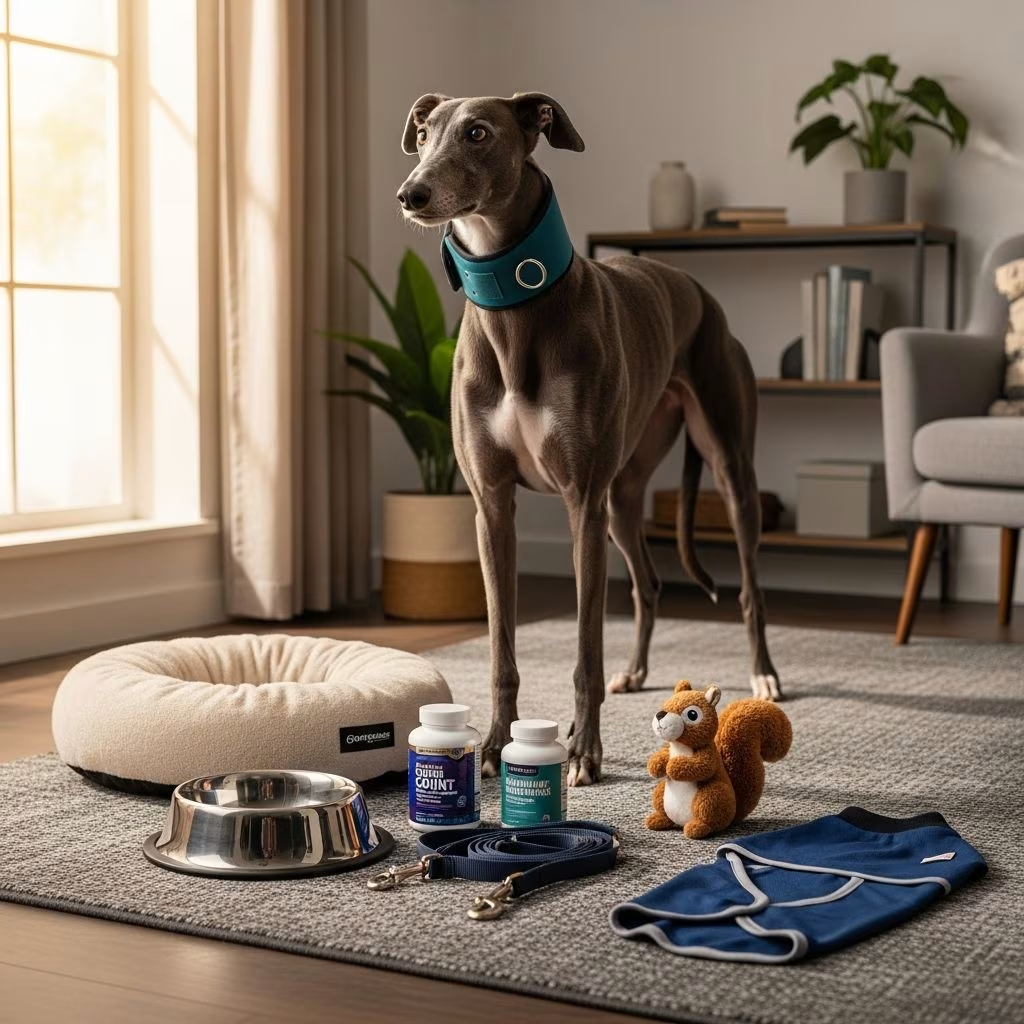
The Greyhound stands as one of the world’s most iconic dog breeds, blending remarkable speed with a surprisingly calm demeanor. Renowned for their historical role in hunting and racing, these elegant sighthounds have evolved into devoted family pets prized for their loyalty and low-maintenance lifestyle.
Ancient Roots of a Timeless Breed
Greyhounds trace their lineage to some of the earliest domesticated dogs, with evidence suggesting their existence over 6,000 years ago. Archaeological finds, including artifacts from Turkey around 6000 BC and a funeral vase from Iran dated 4200 BC, depict dogs resembling modern Greyhounds in form and function. These early sighthounds were not mere animals but symbols of status, particularly in ancient Egypt where pharaohs were often buried alongside them or had their tombs adorned with their images, signifying divine reverence.
By the 4th century BCE, Egyptian tombs featured detailed drawings of sleek, long-legged dogs akin to Greyhounds and Salukis, highlighting their esteemed position in society. As trade routes expanded, these dogs spread across the Near East and into Europe, where they were refined in Great Britain. There, royalty and nobility cherished them as hunting companions and emblems of prestige. Figures like Cleopatra and Queen Elizabeth I reportedly owned Greyhounds, underscoring their appeal among the elite.
The breed’s development continued through selective breeding for speed and sight-hunting prowess. In medieval Europe, stringent forest laws under rulers like William the Conqueror in 1066 restricted commoners from using them, favoring stealthy coat colors like black, red, fawn, and brindle among poachers, while nobles preferred visible white and spotted varieties. Texts from the era, such as those by Vincent of Beauvais in the 13th century, praised Greyhounds as the “noblest, most elegant, swiftest, and best at hunting” dogs.
Physical Marvels: Built for Velocity
Greyhounds possess a physique optimized for explosive speed and endurance. Their tall, muscular frames feature a deep chest for expanded lung capacity, sloping ribs, a flexible spine, long legs for extended strides, and webbed feet with long toes for superior grip and propulsion. This aerodynamic design allows them to reach speeds up to 40-45 mph in short bursts, making them the fastest dog breed.
Despite their athletic build, Greyhounds are surprisingly slender, with a long, narrow head, flat skull, and powerful jaws. Their smooth, short coat comes in various colors, challenging the myth that they were always grey—early theories linked the name to predominant grey hues, but genetic diversity introduced brindle, fawn, black, and white variations. Adults typically stand 27-30 inches at the shoulder and weigh 60-70 pounds, with males slightly larger.
| Physical Feature | Description |
|---|---|
| Height | 27-30 inches (males taller) |
| Weight | 60-70 pounds |
| Coat | Smooth, short; various colors |
| Build | Deep chest, long legs, flexible spine |
| Speed | Up to 45 mph |
This table summarizes key traits that define the Greyhound’s elite athleticism.
Affectionate Nature Beneath the Speedster Exterior
Far from the fierce hunter stereotype, Greyhounds are gentle giants with a laid-back personality. They form deep bonds with owners, displaying quiet loyalty and affectionate tendencies. Often described as “40 mph couch potatoes,” they sprint with intensity but prefer lounging post-exercise. Their calm, even-tempered disposition makes them ideal for apartments, as they are not excessive barkers.
- Gentle and Loving: Thrive on human interaction, often leaning against family members for comfort.
- Intelligent and Trainable: Respond well to positive reinforcement, though independent thinkers.
- Social Butterflies: Get along with children and other dogs; modern breeding has reduced high prey drive, improving cat compatibility.
- Quiet Demeanor: Minimal vocalization, perfect for serene households.
Historical shifts in breeding, especially incorporating Australian lines over the last 30 years, have mellowed their temperament. Earlier coursing-bred dogs had stronger predatory instincts, but today’s racers and retirees are more adaptable pets.
Health and Wellness for Longevity
Greyhounds enjoy a lifespan of 10-14 years but are prone to breed-specific issues. Their thin skin and short coat offer little padding, increasing injury risk from rough play. Common concerns include:
- Bloat (Gastric Dilatation-Volvulus): Deep chests predispose them; feed smaller, frequent meals.
- Dental Problems: Provide chews to combat tartar buildup.
- Osteosarcoma: Higher cancer risk, especially in older dogs.
- Corneal Ulcers: Fragile eyes require protection.
Regular vet check-ups, balanced nutrition, and moderate exercise mitigate these. Their low body fat means sensitivity to certain anesthetics—inform vets of breed specifics. According to the Greyhound Racing UK health overview, proactive care ensures robust health.
Everyday Care: Simplicity Meets Joy
Greyhound ownership is straightforward. Their short coat needs weekly brushing and occasional baths. Exercise requires short, intense bursts rather than long hikes—fenced areas prevent bolting due to sight-hunting instincts. Training focuses on recall and leash manners.
Nutrition: High-quality food supporting lean muscle; 2-3 cups daily, split meals. Many ex-racers arrive tattooed (ear IDs) and microchipped, easing adoption. They adapt well from track life to home, loving soft bedding for their bony frames.
From Track to Home: Adoption Surge
Modern Greyhounds shine beyond racing. Post-retirement adoptions have boomed, with groups rehabilitating these dogs into pets. Their racing history, peaking in popularity for entertainment, now shifts to advocacy for welfare. Ancient depictions in the Bible and cave art affirm their enduring legacy.
Adopting a retired racer offers a ready-trained, housebroken companion. Organizations emphasize their transition ease, countering myths of high energy.
Training Tips for Success
Leverage their intelligence with patience. Use treats for commands; avoid harsh corrections. Socialization early prevents shyness. Agility or lure coursing channels instincts safely.
Fun Facts Spotlighting Greyhound Charm
- Oldest purebred dog, over 8,000 years.
- Mentioned in the Bible as noble hunters.
- Coat colors influenced medieval hunting laws.
- Aerodynamic build rivals cheetahs proportionally.
- Pharaohs’ divine companions.
Frequently Asked Questions
Are Greyhounds good family pets?
Yes, their gentle, affectionate nature suits families, including apartments, provided they get sprint time.
Do Greyhounds get along with cats?
Modern ones often do, thanks to breeding changes; supervised intros recommended.
How much exercise do they need?
20-30 minutes daily, plus play; they love to relax afterward.
What’s the origin of the name ‘Greyhound’?
Likely from early grey coats, though colors diversified; Old English roots.
Are they high-maintenance?
No—short coat, minimal grooming, easy training.
References
- History of Greyhounds — FastFriends. Accessed 2026. https://www.fastfriends.org/history-of-greyhounds
- Greyhound Dog Breed | Origin, History, Personality & Care Needs — Nylabone. Accessed 2026. https://www.nylabone.com/dog101/greyhound
- Lean, Loyal and Laid-Back: The Greyhound — Los Angeles Times. Accessed 2026. https://www.latimes.com/companion-animals/dogs/breeds/story/greyhound-dog-breed-info
- The Greyhound Breed and its History — Oxford Stadium. Accessed 2026. https://oxford-stadium.co.uk/blog/the-greyhound-breed-and-its-history/
- Greyhound Dogs – Breed Traits, Personality & Health — Greyhound Racing UK. Accessed 2026. https://greyhoundracinguk.com/article/the-greyhound-breed-history-heart-and-health
- The History of the Greyhound: Then to Now — GAPSA. Accessed 2026. https://gapsa.org.au/blog/the-history-of-the-greyhound-then-to-now/



