

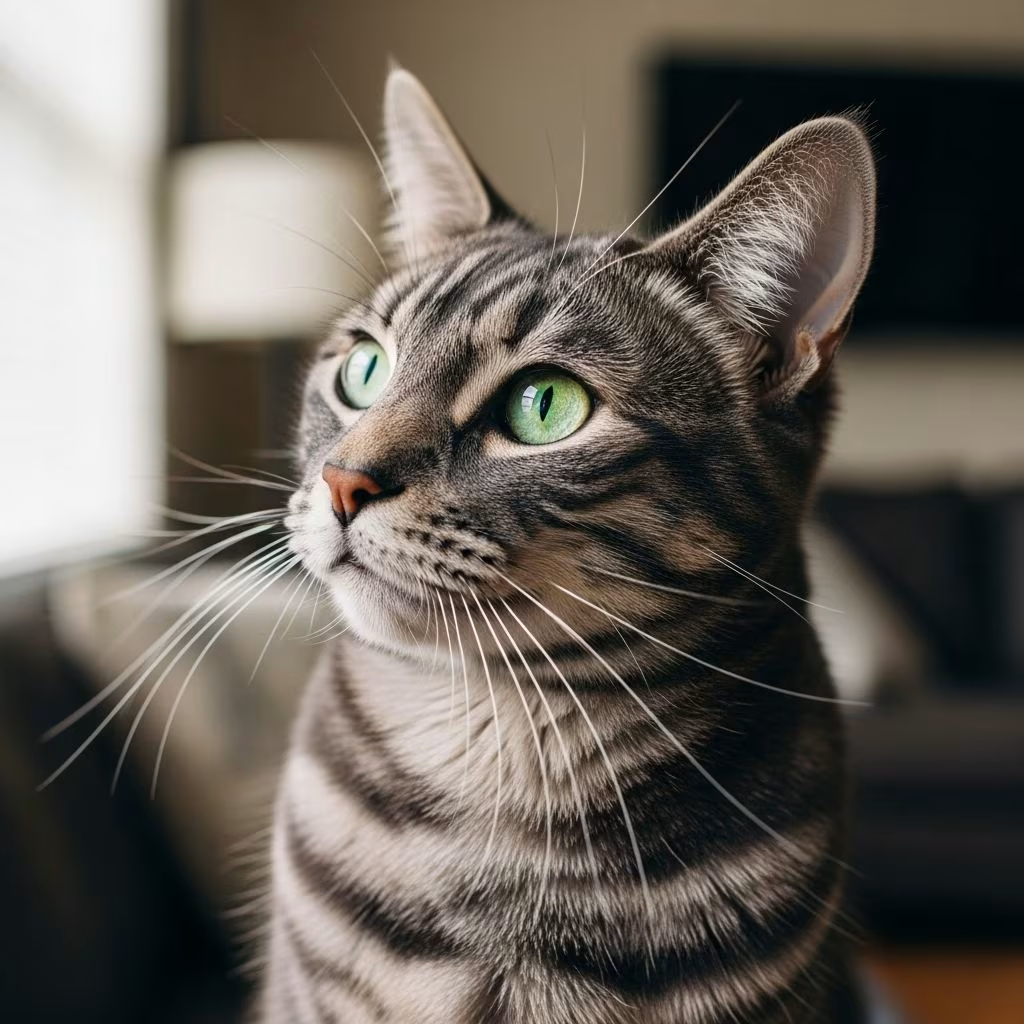
Grey tabby cats are among the most recognizable and beloved felines, distinguished by their striking striped or swirled coat patterns in shades of grey. Not a specific breed but a coat pattern found across many breeds, these cats feature the iconic “M” on their forehead and elegant markings that make them stand out. This comprehensive guide covers their history, appearance, personality, care needs, health considerations, and more, drawing from genetic insights and feline behavior studies.
What Is a Grey Tabby Cat?
A **grey tabby cat** refers to any domestic cat (*Felis catus*) exhibiting the tabby coat pattern in grey tones, characterized by an M-shaped marking on the forehead, stripes along the eyes, cheeks, back, legs, and tail, plus additional striped, dotted, lined, flecked, banded, or swirled body patterns. The tabby pattern is genetic, controlled by the agouti gene (*A* allele for pattern expression) and tabby locus genes, resulting in four main variants: mackerel, classic (blotched), ticked, and spotted.
Unlike solid-colored cats, which carry the recessive non-agouti allele (*aa*) hiding the pattern, grey tabbies express their markings vividly due to banded agouti hairs. Grey tabbies often have dark grey or black stripes contrasting against a lighter grey base, sometimes with silver or blue undertones. This pattern provides natural camouflage, mimicking wild felines like tigers.
Types of Tabby Patterns in Grey Cats
Grey tabby cats display diverse patterns, each genetically distinct:
- Mackerel Tabby: The most common, featuring narrow, parallel stripes along the body, broken bars on the stomach, and an unbroken dorsal line. Grey mackerel tabbies resemble fish skeletons, hence the name.
- Classic (Blotched) Tabby: Characterized by thick, swirling bands forming bullseye shapes on the sides, a butterfly on the shoulders, and bold spinal stripes. About 80% of cats carry the recessive allele for this pattern.
- Ticked Tabby: Appears solid grey with subtle banding on each hair, creating a salt-and-pepper effect; ghost stripes may show on legs, face, and tail.
- Spotted Tabby: Round spots instead of stripes, often on a mackerel base; less common in greys but striking.
Patched tabbies combine patterns with color variations, though pure greys stick to monochromatic schemes. These patterns are visible from kittenhood under bright light and persist subtly on tails in adults.
History and Origin of Grey Tabby Cats
The tabby pattern traces back to the African wildcat (*Felis lybica*), domesticated around 9,000 years ago in the Near East. Genetic studies confirm the mackerel pattern as ancestral, aiding survival through camouflage in grass. Grey tabbies likely emerged as mutations spread across breeds during selective breeding in Europe and America.
Legends abound about the forehead “M”: in Islamic tradition, it honors the cat that comforted Muhammad; Egyptians saw it as a symbol of protection. Scientifically, it’s part of the taM gene expression. By the 19th century, grey tabbies appeared in breeds like American Shorthairs, symbolizing the quintessential domestic cat.
Physical Characteristics of Grey Tabby Cats
Beyond patterns, grey tabbies vary by breed but share traits:
- Coat: Short to long, dense undercoat with contrasting stripes; silver greys shimmer, blue greys appear softer.
- Eyes: Often green or gold, outlined by dark lines enhancing expressiveness.
- Size: Medium to large, 8-15 lbs, muscular build for hunting.
- Distinct Marks: Oyster-shaped cheek spots, necklace bands on chest, leg bars.
| Pattern | Key Features | Prevalence in Greys |
|---|---|---|
| Mackerel | Narrow stripes, fishbone sides | Most common |
| Classic | Swirls, bullseyes | High (80% allele) |
| Ticked | Banded hairs, minimal stripes | Moderate |
| Spotted | Defined spots | Less common |
Grey Tabby Cat Personality and Temperament
Grey tabby cats are renowned for their **friendly, affectionate, and intelligent** nature. They thrive on human interaction, often following owners room-to-room, craving cuddles and play. Vocal with high-pitched meows and hearty purrs signaling happiness, they express emotions clearly—chirps for greeting, growls when cranky.
Highly adaptable, they suit families, apartments, or farms. Social butterflies, they befriend dogs and kids if socialized early. Their smarts shine in puzzle toys and training; however, boredom leads to mischief like counter-surfing. Studies note female grey tabbies may show more aggression at vets, but overall, they’re even-tempered.
Popular Breeds with Grey Tabby Coats
Several breeds commonly sport grey tabby patterns:
- American Shorthair: Robust hunters with classic greys; originated from European working cats.
- Abyssinian: Ticked tabbies in ruddy or blue-grey; ancient Egyptian lineage.
- Siberian: Longhaired classic tabbies; hypoallergenic, water-loving.
- British Shorthair: Plush blue-grey; stoic yet loving.
- Maine Coon: Giant gentles with swirling patterns; excellent mousers.
Mixed-breed domestics make up most grey tabbies, blending these traits.
Grooming and Care for Grey Tabby Cats
**Grooming:** Short coats need weekly brushing to reduce shedding and distribute oils; longhaired variants require daily sessions. Bathe rarely, trim nails biweekly, clean ears monthly.
**Diet:** Obligate carnivores demand high-protein, meat-based food (30-40% protein). Kittens need frequent meals; adults twice daily. Fresh water essential; obesity risks from overfeeding.
**Exercise:** 30-60 minutes daily via toys, scratching posts, laser pointers. Indoor living prevents dangers; window perches satisfy curiosity.
Health and Wellness for Grey Tabby Cats
Grey tabbies enjoy average lifespans of 12-18 years with proper care. Common issues include dental disease (hygiene key), obesity, and breed-specific woes like hypertrophic cardiomyopathy in Maine Coons. Annual vet checks, vaccinations, and parasite control vital. Spay/neuter reduces cancers.
Monitor for urinary issues in males; provide wet food. Mental stimulation prevents stress-related behaviors.
Fun Facts About Grey Tabby Cats
- Elite hunters; stripes evolved for stalking prey.
- “M” lore: Blessed by saints or prophets in folklore.
- All gingers are tabby genetically; greys hide solids.
- Camouflage kings: Blend into urban or wild settings.
- Vocal communicators with 16+ meow types.
Frequently Asked Questions (FAQs)
Are grey tabby cats a specific breed?
No, grey tabby is a coat pattern appearing in many breeds and mixes.
Do grey tabby cats make good pets for families?
Yes, their affectionate, playful temperament suits kids and homes.
How do you care for a grey tabby cat’s coat?
Brush weekly, provide balanced diet, ensure playtime.
Are grey tabbies hypoallergenic?
No, but breeds like Siberian may produce fewer allergens.
Why do tabby cats have an “M” on their forehead?
Genetic tabby gene expression; folklore attributes spiritual meanings.
References
- Tabby cat – Wikipedia — Wikipedia Contributors. 2024-01-10. https://en.wikipedia.org/wiki/Tabby_cat
- Your Tabby Cat Personality Guide — PetScreening. 2023-05-15. https://www.petscreening.com/blog/tabby-cat-personality-guide
- 10 Fascinating Facts about the Tabby Cat — We Are All About Cats. 2020-04-03. https://weareallaboutcats.com/2020/04/03/10-fascinating-facts-about-the-tabby-cat/
- 5 Facts About Tabby Cats — Cat Town Oakland. 2018-04-29. https://www.cattownoakland.org/cat-town-blog/2018/4/29/5-interesting-tabby-cat-facts
- 8 Facts You Didn’t Know About Tabby Cats — YouTube (Fun4AllPets). 2022-06-12. https://www.youtube.com/watch?v=4VuyARNT4CY
- Tabby Cats: Colors, Patterns, Breeds, and Fun Facts — Cats.com. 2024-08-20. https://cats.com/tabby-cats



