

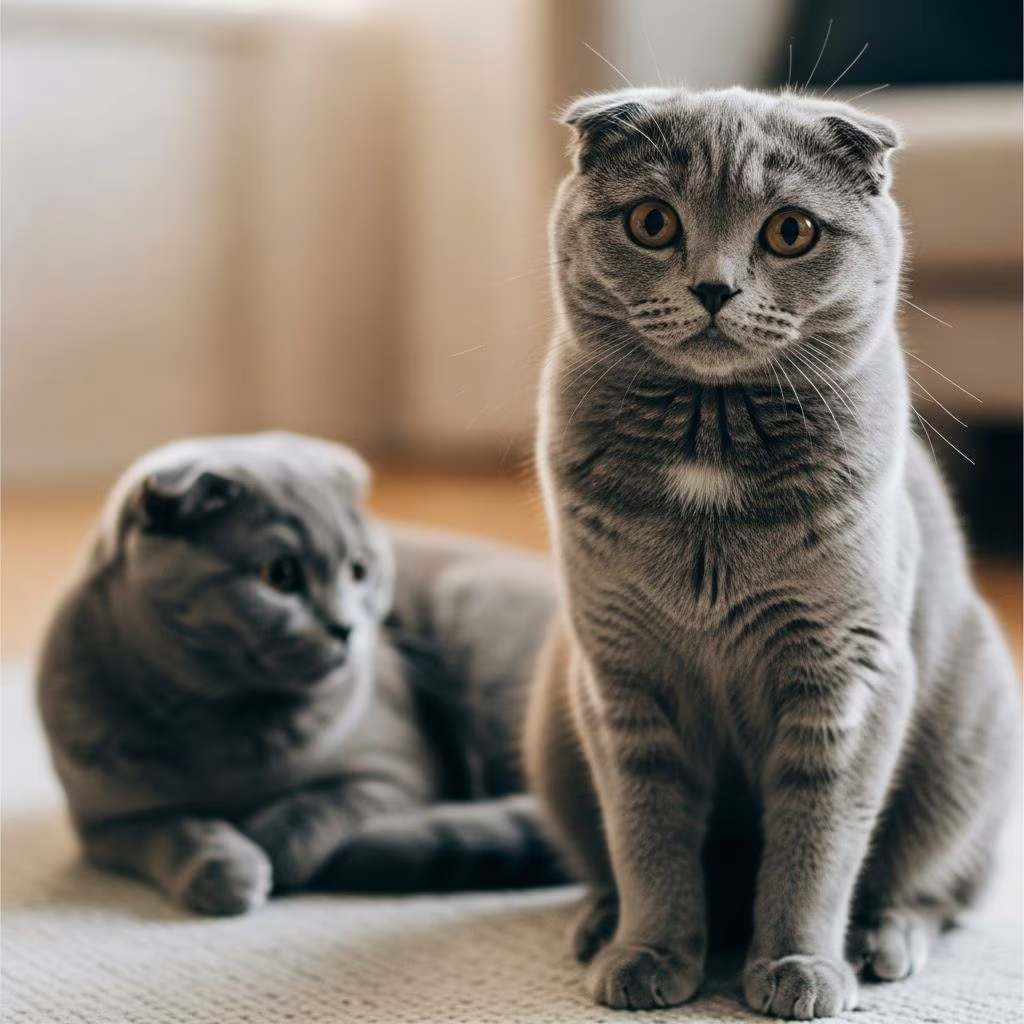
The Grey Scottish Fold stands out as one of the most distinctive and endearing cat breeds, captivating hearts with its unique folded ears, plush bluish-gray coat, and owl-like appearance. Originating from a spontaneous genetic mutation, these medium-sized felines combine a rounded physique with an affectionate personality that makes them ideal family companions.
The Fascinating Origins and Genetic Heritage
The story of the Scottish Fold begins in 1961 on a farm in Perthshire, Scotland, where a kitten named Susie was born with unusually folded ears due to a natural dominant gene mutation known as Fd. This trait affects cartilage formation, causing the ears to bend forward and downward, creating the breed’s signature look. Breeders quickly recognized the appeal and began selective programs, crossing early Folds with British Shorthairs and American Shorthairs to establish the breed standard.
While all Scottish Folds trace back to this mutation, not every kitten inherits the folded ears—only those receiving the gene from one parent exhibit it. Straight-eared kittens, often called ‘Straights,’ serve as vital carriers in breeding to maintain genetic diversity. The grey variant, referred to as ‘blue’ in cat fancy terms, results from a dilution gene interacting with black pigmentation, producing the soft, striking silvery-blue fur that enhances their expressive faces.
Recognition came gradually: The Governing Council of the Cat Fancy (GCCF) initially approved the breed in the 1970s, followed by The International Cat Association (TICA) and The Cat Fanciers’ Association (CFA). Today, Grey Scottish Folds thrive worldwide, celebrated for their blend of novelty and companionship.
Physical Traits That Define the Breed
Grey Scottish Folds embody roundness in nearly every feature. Their heads are broad and dome-shaped with prominent cheeks—especially pronounced in males—framing large, round eyes that convey perpetual curiosity. Eye colors typically match the coat, ranging from copper or gold in solids to blues in pointed patterns.
The body is compact and muscular, supported by short, sturdy legs that give them a grounded stance. Tails are medium-length, thick at the base, and taper to rounded tips, proportionate to their 8-12 pound frames. The coat, whether short or longhaired, is dense and plush; the grey shade gleams with a subtle sheen, feeling soft to the touch.
| Feature | Description |
|---|---|
| Head | Round with full cheeks and large eyes |
| Ears | Folded forward, small to medium, set wide apart |
| Body | Medium, rounded chest, firm musculature |
| Coat (Grey) | Bluish-gray, dense, short or long |
| Weight | 8-12 pounds (males larger) |
Folded ears don’t impair hearing; they swivel expressively to track sounds, lie flat in irritation, or perk for treats. Longhaired versions, sometimes called Highland Folds, emerged from Persian crosses, adding flowing fur to the grey palette.
Temperament and Daily Behaviors
Owners describe Grey Scottish Folds as sweet, loyal, and people-oriented without being demanding. They form deep bonds, often following family members room-to-room while engaging in soft chirps or trills rather than loud meows. Intelligent and trainable, they excel at fetch, responding to clicker training or simple commands.
Playful yet not hyperactive, they enjoy interactive toys, climbing perches, and puzzle feeders. Their ‘kittenish’ demeanor persists lifelong, marked by quirky habits like the ‘Buddha sit’—paws tucked on belly, legs extended—or sleeping in odd contortions. Calm around children and tolerant of dogs, they thrive in households but dislike prolonged solitude, potentially showing stress through reduced appetite.
- Affectionate: Loves laps and gentle petting sessions.
- Curious: Investigates novelties, sitting upright like prairie dogs.
- Quiet: Vocalizes softly, rarely yowls.
- Social: Bonds with all family members, wary of strangers initially.
Health Considerations and Responsible Care
The Fd gene responsible for folded ears links to osteochondrodysplasia (OCD), a condition causing abnormal cartilage and bone development. This can lead to stiff tails, lameness, or painful joint issues, especially if two Fold parents are bred—double Folds are banned by ethical registries to prevent severe crippling. Responsible breeders screen via X-rays and pair Folds only with Straights.
Common concerns include hypertrophic cardiomyopathy (HCM), polycystic kidney disease (PKD) from Persian lineage, and obesity due to sedentary tendencies. Annual vet checks, including heart ultrasounds, are essential. Lifespan averages 12-15 years with proper care.
- Handle tails gently to avoid pain.
- Maintain ideal weight through portion control.
- Provide joint supplements if mobility declines.
Grooming Routines for Lustrous Coats
Short-haired Greys require weekly brushing to manage medium shedding and distribute oils. Longhairs need daily sessions with slicker brushes to prevent mats. Bathe monthly if needed, using cat-safe shampoos. Clean ear folds weekly to prevent wax buildup; trim nails biweekly and brush teeth regularly.
Environmental enrichment—scratching posts, window perches, and toys—supports mental health. High-quality diet with taurine, omega-3s aids coat and joint health.
Choosing and Welcoming Your Grey Scottish Fold
Select breeders registered with CFA or TICA, who health-test parents and provide guarantees. Shelters occasionally have mixes or retired breeders. Prepare with litter boxes (covered for privacy), tall trees, and soft beds. Kittens adapt quickly; socialize early for confidence.
Cost: $800-$3000 for pedigreed kittens. Avoid unverified sources to prevent health risks.
Variations in Grey Scottish Folds
Beyond solid blue, Greys appear in tabby, bi-color, or pointed patterns (e.g., blue point). Shaded silvers blend blue tipping over white undercoats. Each variation retains the Fold charm.
Frequently Asked Questions (FAQs)
Are Grey Scottish Folds good with kids?
Yes, their patient nature suits gentle children; supervise young ones.
Do folded ears affect hearing?
No, hearing remains normal; ears function expressively.
Can I breed two Grey Folds together?
No, ethical breeding avoids double Fd to prevent OCD.
How often should I groom a Grey Scottish Fold?
Weekly for shorts, daily for longs.
What’s the average lifespan?
12-15 years with vigilant care.
Why Grey Scottish Folds Capture Hearts Worldwide
With their plush grey coats, folded ears, and loving quirks, Grey Scottish Folds offer unmatched companionship. Their history of mutation-turned-treasure underscores resilient breeding, while care awareness ensures thriving lives. Whether curling on laps or plotting playful ambushes, these owl-eyed wonders enrich homes profoundly.
References
- Scottish Fold Cat Breed – Characteristics & Personality — Litter-Robot. 2023. https://www.litter-robot.com/blog/scottish-fold-cat/
- Scottish Fold – TICA — The International Cat Association. 2024-01-15. https://tica.org/breed/scottish-fold/
- Scottish Fold – The Cat Fanciers’ Association — CFA. 2023-05-20. https://cfa.org/breed/scottish-fold/
- Scottish Fold Cat: Temperament, Characteristics — Highland Titles. 2022-11-10. https://www.highlandtitles.com/blog/scottish-fold-cat/
- Grey Scottish Fold Cats and Their Enchanting Origins — Purebred Kitties. 2024. https://purebredkitties.com/blogs/scottish-fold/grey-scottish-fold-cats-and-their-enchanting-origins
- Scottish Fold – Wikipedia — Wikipedia. 2026-01-20. https://en.wikipedia.org/wiki/Scottish_Fold



