

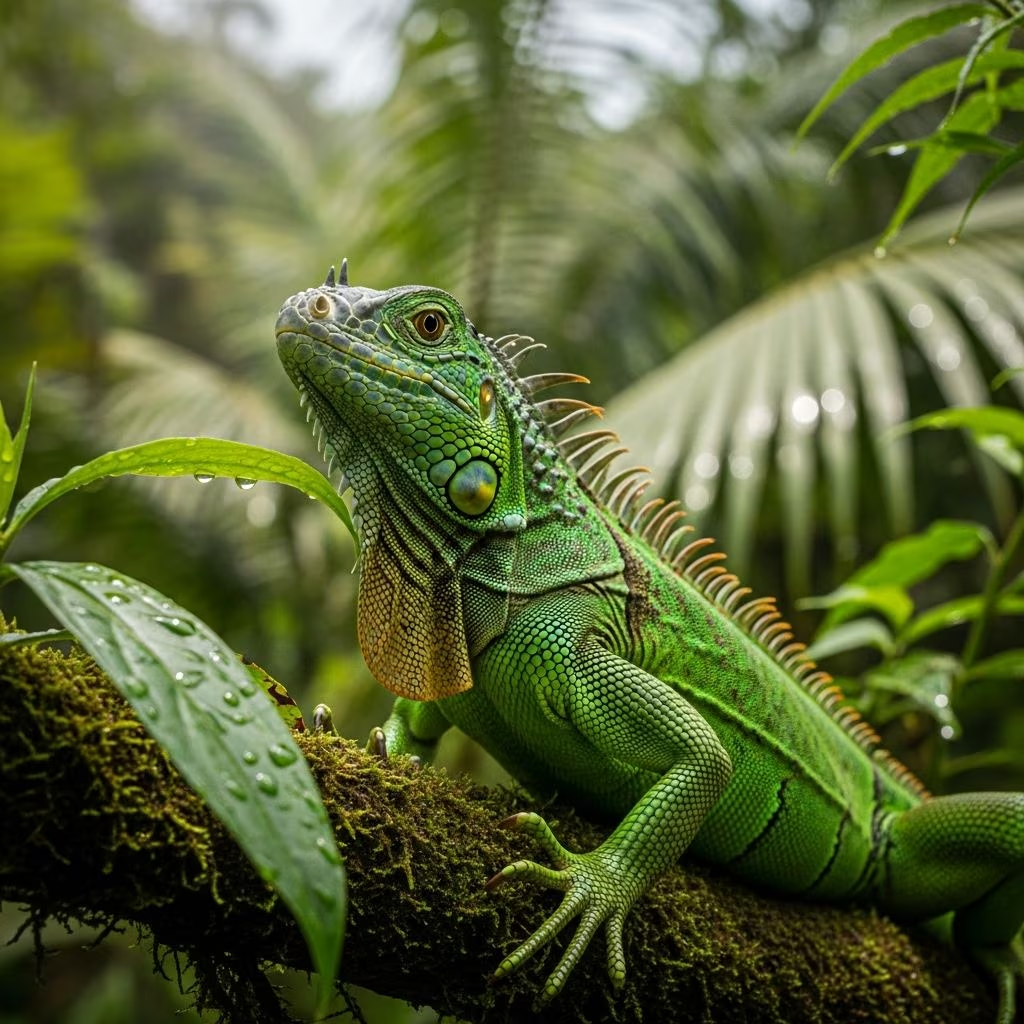
Green iguanas, scientifically known as Iguana iguana, exhibit a rich array of behaviors shaped by their tropical origins and arboreal lifestyle. These large lizards, often kept as pets, communicate through physical displays, adapt to environments via thermoregulation, and defend themselves with powerful physical traits. Understanding these patterns helps pet owners foster healthier relationships and mimics wild conditions for better welfare.
Daily Routines and Environmental Adaptations
Green iguanas are primarily diurnal and arboreal, spending much of their day in trees or elevated spots. They bask in sunlight during morning hours to regulate body temperature, a critical behavior for their cold-blooded physiology. This sunning activity, often seen on branches overlooking water, allows them to absorb heat efficiently before becoming active.
In cooler or wet weather, they descend to the ground for warmth, demonstrating flexibility in habitat use. Their agility as climbers enables falls from heights up to 15 meters without injury, using claws to grip foliage during descent. Swimming prowess complements this; they propel through water with strong tail strokes while keeping limbs tucked, ideal for escaping threats near rivers or ponds.
- Basking: Essential for thermoregulation, typically mornings.
- Climbing: Agile navigation of trees and structures.
- Swimming: Powerful, submerged propulsion for evasion.
Communication Through Body Language
Body language forms the cornerstone of green iguana interactions. Head bobbing serves multiple purposes: slow bobs signal greetings or courtship, while rapid ones assert dominance, especially in males. The dewlap, a throat flap, extends during displays to regulate temperature or emphasize social signals.
Males often develop pronounced jowls and taller dorsal crests, amplifying their presence. Tail movements convey messages too; subtle whips warn intruders, while full lashes deliver painful strikes. Stillness or freezing mimics surroundings to evade predators, showcasing their keen vision and photosensory parietal eye on the head, which detects light changes and overhead threats.
| Behavior | Meaning | Context |
|---|---|---|
| Head Bobbing (Slow) | Greeting or interest | Social encounters |
| Head Bobbing (Rapid) | Dominance | Territorial disputes |
| Dewlap Extension | Display or cooling | Courtship, threats |
| Tail Whip | Warning or attack | Defense |
Territoriality and Social Hierarchies
Territorial instincts peak in males during breeding seasons, leading to aggressive posturing. They puff up bodies, hiss, and stand tall to intimidate rivals. Chemical signals from femoral glands may mark areas, reinforcing claims. Females show less aggression but defend nesting sites fiercely.
Social structures involve dominance hierarchies, where larger males control prime basking spots. Intruders face escalating responses: from visual displays to physical confrontations. In captivity, providing ample space prevents stress-induced conflicts.
Defensive Mechanisms and Survival Strategies
When threatened, green iguanas prioritize flight, diving into water if available. Cornered individuals escalate: extending dewlaps, inflating bodies, hissing, head bobbing, then clawing, biting, or tail whipping. Their tails autotomize (detach) under grasp, regenerating later—a key anti-predator adaptation.
The parietal eye aids in spotting aerial predators, while spines along the back and tail deter attacks. Injured iguanas fight more vigorously, increasing survival odds. These behaviors make them formidable despite being prey for over 100 vertebrate species.
Reproductive Behaviors and Parental Care
Breeding involves synchronized nesting; females lay 20-71 eggs annually in deep burrows, sometimes communally with crocodiles or caimans. No post-laying care occurs beyond burrow defense during digging. Males court with bobs and dewlaps, establishing territories to attract mates.
Captivity Considerations for Pet Owners
In homes, green iguanas demand large enclosures mimicking wild habits: high branches, UVB lighting for basking, and water access. Recognize stress via dilated pupils, body inflation, or avoidance—these signal space needs or health issues. Positive interactions build trust; they learn to recognize owners over time.
Aggression often stems from improper setups. Watch for winter mood shifts or resource guarding, like defending food bowls. Enrich environments with climbable structures to encourage natural behaviors, reducing abandonment risks common with these growing-to-6-foot lizards.
Ecological Impact and Wild Observations
Invasive in places like Florida, green iguanas disrupt ecosystems by consuming endangered plants and using burrows of protected species. Their behaviors amplify this: territoriality leads to conflicts, foraging affects butterflies. Conservation efforts monitor these dynamics.
Health Indicators Through Behavior
Changes in patterns signal issues. Reduced basking may indicate illness; excessive hiding, poor lighting. Eating habits reflect mood—solitary feeding in low-food scenarios, social otherwise. Monitor locomotion for comfort assessment.
FAQs
What does head bobbing mean in green iguanas?
Slow bobs greet or court; rapid ones show dominance or aggression.
Are green iguanas good swimmers?
Yes, they excel, using tails for propulsion while submerged.
How can I tell if my pet iguana is stressed?
Look for body puffing, hissing, tail whipping, or dilated pupils.
Do female iguanas show territorial behavior?
Less than males, but they defend nests vigorously.
Why do iguanas bask?
To thermoregulate, absorbing UV for vitamin D and warmth.
References
- Green iguana – Wikipedia — Wikipedia contributors. 2026. https://en.wikipedia.org/wiki/Green_iguana
- Common Behaviors of Iguanas to Look Out For — Iguana Control. 2023. https://iguanacontrol.com/common-iguana-behavior/
- Green Iguana body language/behavior – YouTube — YouTube. 2023. https://www.youtube.com/watch?v=MnY6gHkKGk8
- Green Iguana Care Sheet — PetMD. 2024. https://www.petmd.com/reptile/green-iguana-care-sheet



