
Green-Cheeked Conure: Complete Care Guide
Discover everything about green-cheeked conures: personality, care, diet, and why they make perfect companion birds.
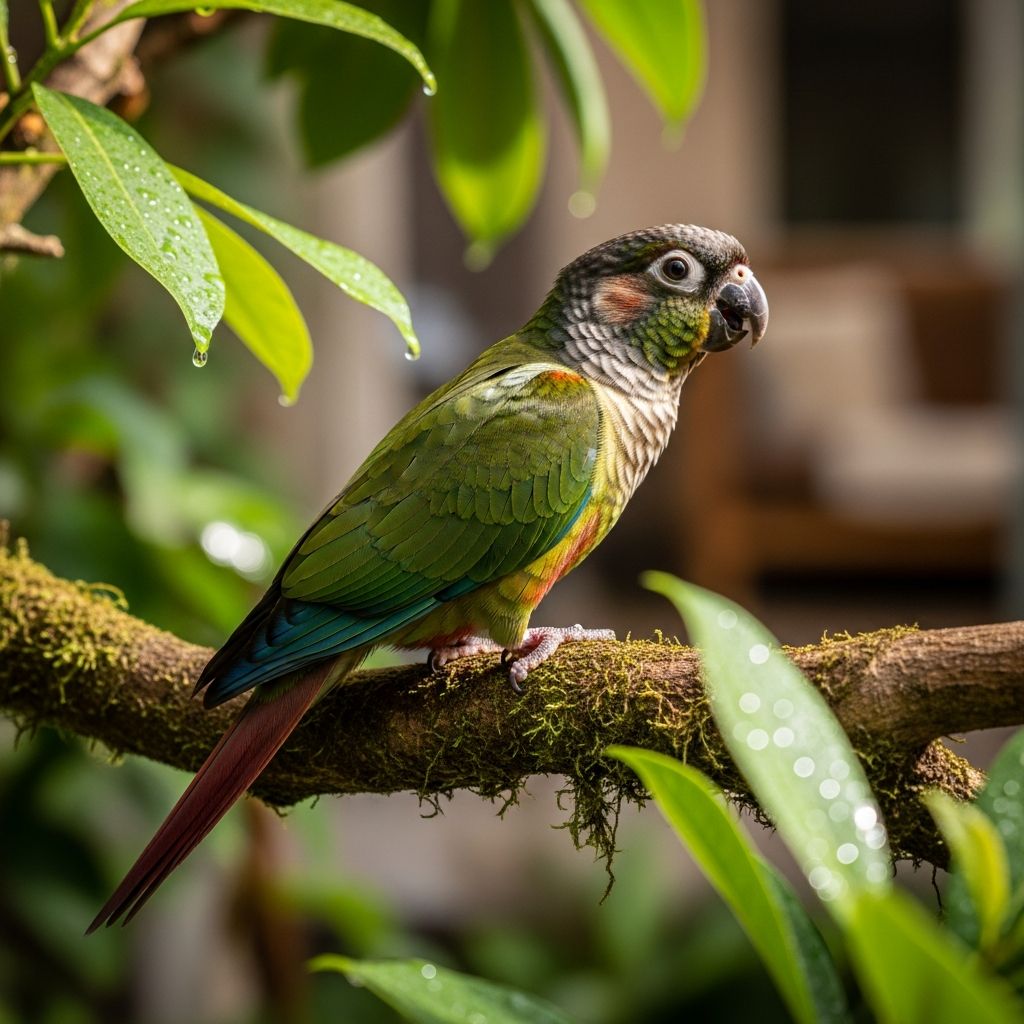
What Is A Green-Cheeked Conure?
The green-cheeked conure is one of the most popular pet birds among both novice and experienced bird owners, and for good reason. This delightful species stands out as a favorite among bird enthusiasts because of its relatively affordable price, small and manageable stature, pleasant temperament, and comparatively low noise level when compared to its larger conure cousins. The breed readily reproduces in captivity, making it widely available in the pet trade and easily accessible to those interested in welcoming one into their home.
As one of the smallest conure species, the green-cheeked conure typically measures about 10 inches in length and weighs between 60-80 grams. These birds often get confused with the maroon-bellied conure (Pyrrhura frontalis), which is a close relative. The confusion is understandable, as both species are nearly identical in size and predominantly green in coloration. However, the green-cheeked conure distinguishes itself by displaying slightly brighter colors overall, with distinctive gray barring across its chest that gradually fades into a slightly reddish belly. In contrast, the maroon-bellied conure features golden barring on its chest and displays a distinctive heart-shaped maroon patch on its belly. Both species sport dark gray beaks and feet. Young birds can be particularly difficult to differentiate, especially before their full adult plumage develops after their first molt.
Physical Characteristics & Color Mutations
Green-cheeked conures display a beautiful mix of green, blue, and red plumage, with characteristic maroon-colored tails, blue flight feathers, and olive-green chests. The scientific name for this species is Pyrrhura molinae.
Due to selective breeding efforts over the past two decades, the green-cheeked conure has developed an impressive array of color mutations. These variations have contributed significantly to the species’ popularity in the pet bird market. The most notable mutations include:
- Pineapple: Features striking yellow and cinnamon coloring that creates a warm, tropical appearance
- Turquoise: Displays blue and turquoise tones throughout the plumage
- Yellow-sided: Showcases bright-colored breasts that graduate from red to yellow with dark gray heads. Some rare individuals possess bright yellow feathers on the upper wings, a recessive trait found in approximately one hatchling per ten clutches, which significantly increases their value
- Cinnamon: Presents lime green plumage with lighter, paler coloring overall, featuring tan heads and lighter maroon tail feathers compared to normal green-cheeked conures
Native Region & Natural Habitat
In the wild, green-cheeked conures inhabit the forests and woodland areas of South America, specifically found throughout Brazil, Bolivia, Argentina, and Paraguay. These regions provide the tropical and subtropical forest environments where these birds have thrived for generations. Understanding their natural habitat helps owners create appropriate living conditions that support their physical and psychological well-being in captivity.
Personality & Behavior
Green-cheeked conures are often described as tiny comedians, always full of antics and entertaining behavior. These birds display a charming combination of playfulness and mischief that endears them to their owners. They particularly enjoy hanging upside-down from cage bars and clamoring about, eagerly awaiting their owners to engage with them in play.
Despite their small size, these birds possess big personalities. They are highly social creatures that thrive on interaction with their owners and other birds. Green cheeks crave attention and will actively seek out human interaction, often following their owners around and wanting constant companionship. These birds are intelligent and love learning tricks, making them fun and engaging companions. Their affectionate nature makes them excellent choices for households where they can receive adequate attention and interaction.
One significant advantage of green-cheeked conures is their ability to live peacefully with other conures of similar size. However, they will not readily tolerate smaller birds and might face danger from aggression by larger bird species. While they can be paired with maroon-bellied conures, breeding should not be encouraged.
Interestingly, green-cheeked conures are known for being less nippy than other bird species, and they are particularly affectionate with their owners. This temperament makes them good birds for children, as they are small enough for little hands to handle and generally good-natured. However, all birds can bite, and caution should always be exercised around children to protect both the bird and young fingers.
Speech & Sound Characteristics
One of the most appealing aspects of green-cheeked conures is their relative quietness compared to other conure species. These birds are not as loud or as frequent in their calling patterns as many larger conures, making them more suitable for apartment living or noise-sensitive environments.
While green-cheeked conures are not prized for their talking abilities like larger parrot species, they are capable of learning to mimic words and phrases. Some individuals have been known to develop quite a vocabulary with patient training. They produce a variety of vocalizations, ranging from squawks and screams to chirps and whistles, and they enjoy chatting with their owners. Their flight calls typically comprise high-pitched notes with a grating quality, often given in rapid series such as “krree krree krree” or single “kuree” notes. From a perch, they may utter high-pitched, more melodious notes like a bisyllabic “rrekeet” or “keew”, though perched birds are often quite silent.
Care & Feeding Requirements
The green-cheeked conure makes an excellent choice for both novice and experienced bird owners, though perhaps not for the very beginning beginner. Someone with prior experience properly caring for a parakeet or another small bird would be well-prepared to welcome a green-cheeked conure into their home. These easy-going birds require specific care considerations to thrive.
Because green-cheeked conures are highly affectionate and love their owners intensely, they require an owner capable of providing substantial time out of the cage on a daily basis. Even paired green cheeks will maintain their pet quality with proper daily attention and engagement. These birds thrive on interaction and become excellent companions when their social needs are consistently met.
Dietary Needs
A proper diet is fundamental to maintaining the health and longevity of a green-cheeked conure. These birds require high-quality parrot food as their primary diet. A balanced nutrition plan should include pellets, fresh fruits, vegetables, and occasionally nuts. Owners should research appropriate food options and consult with avian veterinarians to ensure their birds receive optimal nutrition. Water should be provided fresh daily, and food bowls should be cleaned regularly to prevent bacterial growth.
Housing & Environment
Green-cheeked conures love their play and will greatly appreciate a good rotation of toys and a spacious cage where they can move about freely. The cage should be large enough to accommodate flight within the space, with multiple perches at varying heights. Toys should be rotated regularly to maintain interest and provide mental stimulation. These birds are excellent climbers and will use their strong beaks and agile feet to navigate ropes, ladders, and perches, often exploring their surroundings for hours.
Physical Characteristics Overview
| Characteristic | Details |
|---|---|
| Color | Gray, Green (with various mutations) |
| Size | Small (approximately 10 inches long) |
| Weight | 60-80 grams |
| Lifespan | Up to 20+ years |
| Sound Level | Vocal communicator (relatively quiet) |
| Social Interaction | Highly social |
Unique Abilities & Behaviors
Green-cheeked conures possess several remarkable abilities that set them apart from other pet bird species. These birds are fast and agile fliers, capable of reaching speeds up to 50 miles per hour, making them among the fastest and most agile parrots available in the pet trade. Their quick, darting flight patterns demonstrate their natural athleticism and need for adequate space in captivity.
Additionally, these birds are big on physical contact and will often snuggle up to their owners, enjoying being petted, scratched, and cuddled. They frequently show their affection by nuzzling into their owner’s hands. Their strong bonds with owners are evident in their loyal and affectionate behavior, often becoming attached to one particular person in the household and following them around, wanting constant companionship.
Frequently Asked Questions
Q: Are green-cheeked conures good for beginners?
A: Green-cheeked conures are suitable for novice bird owners who have prior experience with small birds like parakeets. They are not recommended for absolute beginners but are manageable for those with foundational bird care knowledge.
Q: How long do green-cheeked conures live?
A: These birds typically live 20 or more years in captivity with proper care, nutrition, and veterinary attention. This long lifespan makes them a long-term commitment for potential owners.
Q: Can green-cheeked conures talk?
A: While green-cheeked conures are not known for exceptional talking abilities like larger parrots, they can learn to mimic words and phrases with patient training. Some individuals develop a limited vocabulary.
Q: How much attention do green-cheeked conures need?
A: These highly affectionate birds require substantial daily out-of-cage time and interaction with their owners. They thrive on companionship and become stressed without adequate attention.
Q: Can green-cheeked conures live with other birds?
A: Yes, they generally live peacefully with conures of similar size. However, they will not tolerate smaller birds and might face aggression from larger species.
Q: What is the difference between green-cheeked and maroon-bellied conures?
A: While very similar, green-cheeked conures are slightly brighter with gray chest barring fading to a reddish belly, while maroon-bellied conures have golden chest barring and distinctive heart-shaped maroon belly patches.
Q: Are green-cheeked conures noisy?
A: These birds are relatively quiet compared to other conures, making them suitable for apartment living. They are vocal communicators but not excessively loud.
Q: What should I feed my green-cheeked conure?
A: Feed high-quality parrot pellets as the primary diet, supplemented with fresh fruits, vegetables, and occasional nuts. Always provide fresh water daily.
References
- Green-Cheeked Conure Personality, Food & Care — Lafeber Company. https://lafeber.com/pet-birds/species/green-cheeked-conure/
- Green Cheek Conure – Complete Guide & Care Tips — Birdmans Parrots. https://birdmansparrots.com/green-cheek-conure/
- Green-cheeked parakeet — Wikipedia. https://en.wikipedia.org/wiki/Green-cheeked_parakeet
- Green-cheeked Conure Fact Sheet — Northern Parrots. https://www.northernparrots.com/blog/green-cheeked-conure-fact-sheet/
- Conures — Arbor View Animal Hospital. https://arborviewah.com/
- 10 Fun Facts About Green Cheeked Conures: The Playful Parrots — Kook Shop. https://www.kookshop.com/10-fun-facts-about-green-cheeked-conures-the-playful-parrots-you-ll-love-to-know
Similar Articles








Read full bio of Sneha Tete


