

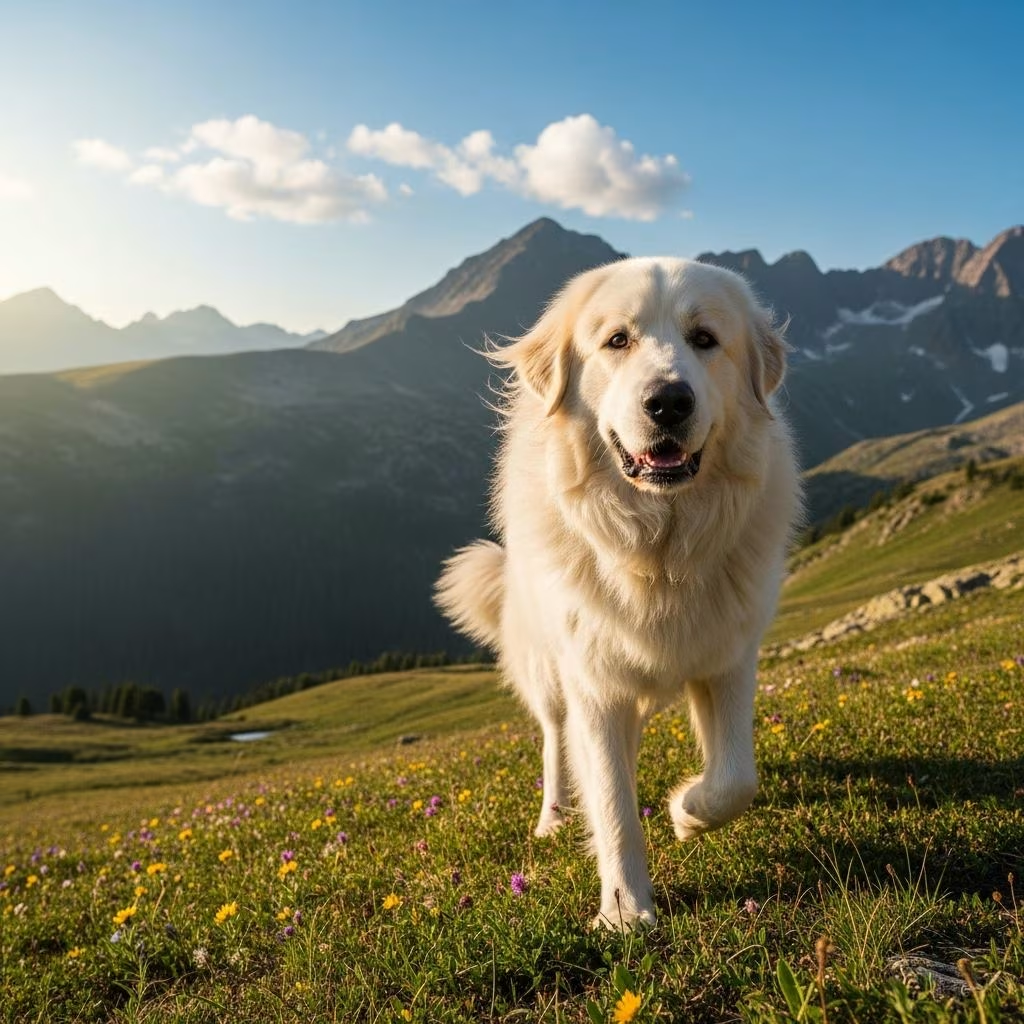
The Great Pyrenees, often called the Pyr, stands as one of the most imposing and elegant dog breeds, renowned for its role as a steadfast protector of livestock in rugged terrains. Originating from the Pyrenees Mountains between France and Spain, this breed combines immense size with a serene demeanor, making it a favorite among those seeking a loyal companion with guardian instincts.
Historical Roots and Development
Centuries ago, the Great Pyrenees was selectively bred by shepherds to safeguard flocks from predators like wolves and bears in harsh, snowy conditions. Archaeological evidence and historical records trace their presence back over 10,000 years, with mentions in ancient texts and artwork. French nobility prized these dogs for their reliability, even gifting them to European monarchs. In the 17th century, they guarded the grounds of Versailles under King Louis XIV’s favor.
Post-World War II, dedicated breeders reformed breed clubs to preserve the standard, emphasizing traits like endurance and vigilance. Today, while still used on farms, many thrive as family pets, adapting their protective nature to home life.
Physical Characteristics and Breed Standards
Great Pyrenees dogs exude power and grace, with males typically measuring 27-32 inches at the shoulder and weighing 100-160 pounds, while females are slightly smaller at 25-29 inches and 85-115 pounds. Their predominantly white double coat, which can include badger, gray, or tan markings, provides insulation against extreme weather.
- Head and Face: Rounded skull with a broad muzzle, dark brown eyes conveying intelligence, and V-shaped ears that drop close to the head.
- Body: Deep chest, strong neck, and well-muscled frame balanced for agility on steep slopes.
- Tail: Long and plumed, carried low at rest but curling over the back when alert.
- Coat: Weather-resistant outer layer over a dense undercoat; requires regular brushing to manage shedding.
According to official standards, deviations like excessive bone or insufficient substance disqualify show dogs, prioritizing functionality over mere size.
Temperament and Personality Traits
Confident yet gentle, the Great Pyrenees embodies quiet composure. They are patient, tolerant, and deeply affectionate toward family members, earning the ‘gentle giant’ moniker. Their independent thinking stems from self-reliant guarding duties, making them attentive without constant supervision.
Reserved with strangers, they bark to alert rather than aggress immediately, showcasing fearless loyalty. Well-socialized Pyrs integrate smoothly into households, displaying high tolerance for children and other pets when introduced properly.
| Trait | Description |
|---|---|
| Affectionate | Bonds strongly with family, gentle with kids. |
| Protective | Naturally vigilant, territorial when needed. |
| Independent | Thinks autonomously; requires firm leadership. |
| Calm | Patient demeanor, low energy indoors. |
Training and Socialization Essentials
Early, consistent training is vital due to their size and strong will. Positive reinforcement works best, establishing the owner as a confident leader from puppyhood. Expose them to diverse stimuli—people, animals, noises—to curb overprotectiveness.
Obedience classes help channel their intelligence. Techniques like ‘Nothing in Life is Free’ promote respect without harsh methods. Daily sessions reinforce commands, preventing dominance issues. Socialization prevents fear-based reactions toward unfamiliar dogs or visitors.
- Start at 8 weeks: Basic commands like sit, stay, come.
- Mid-stage: Leash manners, recall in distractions.
- Ongoing: Guarding impulse control via boundaries.
Exercise and Lifestyle Needs
Moderate exercise suits this breed—1-2 hours daily of walks, romps, or hikes. They prefer cooler climates, struggling in heat due to their coat; provide shade and water in summer. Ample space like a fenced yard is ideal for patrolling instincts.
Indoors, they are low-key, content lounging after activity. Mental stimulation via puzzle toys prevents boredom-induced barking.
Nutrition and Feeding Guidelines
High-quality, large-breed puppy food until 18-24 months, transitioning to adult formulas with joint support. Daily intake: 4-8 cups, split into meals to avoid bloat. Monitor weight to prevent obesity.
- Puppies: 4-6 meals/day, growth-focused kibble.
- Adults: 2 meals/day, balanced protein/fat.
- Seniors: Lower calories, glucosamine additives.
Grooming Routine for the Fluffy Coat
Weekly brushing with a pin brush removes loose fur; bathe monthly or as needed. Check nails biweekly, ears weekly, teeth daily. Shedding peaks seasonally—daily grooming then.
Common Health Considerations
Generally robust with 10-12 year lifespan, but prone to hip dysplasia, elbow issues, bloat, and heart conditions. Regular vet checks, including OFA certifications for breeding stock, mitigate risks. Spay/neuter timing affects joint health.
| Condition | Prevalence | Prevention |
|---|---|---|
| Hip Dysplasia | Moderate | Weight control, supplements. |
| Gastric Dilatation-Volvulus (Bloat) | High risk | Elevated bowls, small meals. |
| Patellar Luxation | Low-moderate | Early screening. |
Great Pyrenees as Family Companions
Ideal for experienced owners with space, they excel with older children under supervision due to size. Compatible with cats and small dogs if socialized; cautious with dominant large breeds.
Not for apartments—needs yard access. Their barking suits rural/suburban homes.
Choosing and Bringing Home a Pyr
Adopt from rescues or reputable breeders verifying health clearances. Puppies cost $1,000-$3,000; prepare for large crates, beds, fences. First-year expenses: $2,000+ including vetting.
Frequently Asked Questions (FAQs)
Are Great Pyrenees good with kids?
Yes, their gentle nature shines with respectful children, but supervise due to size.
How much do they bark?
Frequently at night to patrol; training reduces daytime noise.
Can they live in hot climates?
No, prefer cool weather; AC and shade essential in warmth.
What’s their energy level?
Moderate—steady walks suffice; bursts of play keep them fit.
Do they shed a lot?
Yes, heavily seasonally; regular grooming manages it.
References
- Great Pyrenees Official Standard — Great Pyrenees Club of America. Accessed 2026. https://greatpyrenees.club/great-pyrenees-official-standard/
- Great Pyrenees Dogs: Size, Temperament, Breed Information — Brown Veterinary Hospital. Accessed 2026. https://brownvethospital.com/blog/great-pyrenees-dogs/
- Great Pyrenees Breed: Characteristics, Care & Photos — Chewy. 2025-12-15. https://www.chewy.com/education/dog-breeds/great-pyrenees
- Great Pyrenees Breed Guide — Cascade Veterinary Clinics. Accessed 2026. https://www.cascadevetclinics.com/services/dogs/breeds/great-pyrenees
- Pyrenean Mountain Dog — Wikipedia (informed by breed standards). Accessed 2026. https://en.wikipedia.org/wiki/Pyrenean_Mountain_Dog
- Know the Breed — National Great Pyrenees Rescue. Accessed 2026. https://nationalpyr.org/know-the-breed/
- Great Pyrenees — American Kennel Club. Accessed 2026. https://www.akc.org/dog-breeds/great-pyrenees/



