

The Great Dane stands as one of the most striking dog breeds, renowned for its towering stature, elegant proportions, and surprisingly affectionate demeanor. Often called the Apollo of dogs, this breed combines raw power with refined grace, making it a favorite among those who appreciate large, loyal companions. Originating from European hunting traditions, the modern Great Dane has evolved into a devoted family pet, guard dog, and show ring star. Understanding this breed requires delving into its rich heritage, defining physical traits, behavioral tendencies, and dedicated care needs to ensure a thriving life for these majestic canines.
Origins and Evolution of the Breed
The lineage of the Great Dane traces back to ancient mastiff-like dogs used across Europe for hunting large game such as wild boars, bears, and deer during the Middle Ages. These early predecessors were robust guardians and hunters, depicted in historical carvings and writings from as far back as 3,000 years ago. In the 16th century, Danish royalty, including King Frederick II, refined these dogs by crossing local hounds with powerful English mastiffs gifted from Queen Elizabeth I, creating a specialized hunter capable of holding prey until the arrival of the human.
By the 19th century, as boar hunting declined, German breeders shifted focus toward elegance and temperament. Influential figures like Chancellor Otto von Bismarck popularized the breed, owning several as companions and protectors, which elevated its status among nobility. The Deutsche Doggen-Club established the first official standard in 1888, emphasizing balance, nobility, and harmonious proportions. English breeders further crossed Danes with Greyhounds to refine the silhouette, achieving sleeker lines and a level topline.
In America, imports from Germany began in the late 1800s, leading to the formation of the Great Dane Club of America in 1891. U.S. enthusiasts eliminated coarser mastiff traits and hound-like angularity, perfecting the breed’s muscular yet graceful frame. Today, the Great Dane excels in conformation shows like Westminster, where its majestic presence captivates audiences.
Physical Characteristics and Breed Standards
Great Danes embody a perfect blend of power, elegance, and balance, never appearing clumsy or overly heavy. Males typically stand 30-34 inches at the shoulder and weigh 140-175 pounds, while females are slightly smaller at 28-32 inches and 110-140 pounds. Their rectangular head features a deep muzzle, expressive dark eyes, and pendulous ears that may be cropped or left natural. A long, arched neck flows into a deep chest, supported by straight, muscular legs.
| Characteristic | Male | Female | Key Notes |
|---|---|---|---|
| Height | 30-34 inches | 28-32 inches | Tallest breed on average; measured to shoulder |
| Weight | 140-175 lbs | 110-140 lbs | Muscular build without excess fat |
| Coat | Short, thick | Short, thick | Smooth; colors include brindle, fawn, blue, black, harlequin |
| Life Expectancy | 7-10 years | 7-10 years | Shorter due to giant size |
Coat colors vary widely: fawn, brindle, blue, black, mantle, and harlequin (white with black patches). Sexual dimorphism is pronounced, with males displaying greater masculinity. Movement should be smooth with powerful drive, reflecting the breed’s athletic heritage. Faults include timidity, coarseness, or imbalance, as per AKC and FCI standards.
Temperament and Personality Traits
Despite their imposing size, Great Danes are quintessential gentle giants—friendly, dependable, and spirited without aggression. They possess high intelligence, loyalty, and a calm demeanor, making them excellent with children and other pets when properly socialized. Their protective instincts shine as natural watchdogs, alerting owners to strangers with a deep bark, yet they rarely show unprovoked hostility.
- Affectionate: Thrive on human companionship; often lean against owners for affection.
- Playful yet Low-Energy: Enjoy short bursts of activity but prefer lounging.
- Sensitive: Respond best to positive reinforcement; dislike harsh corrections.
- Social: Need early exposure to prevent shyness.
Historical shifts from boar-hunting ferocity to companion roles involved selective breeding for docility. Modern Danes may “forget” their size, attempting to sit on laps or cuddle, endearing them to families.
Training and Socialization Essentials
Training Great Danes demands consistency, patience, and an emphasis on leadership from puppyhood. Their intelligence facilitates quick learning, but their size amplifies the importance of obedience commands like sit, stay, and leave it. Positive methods using treats and praise yield the best results, avoiding physical force that could foster fearfulness.
Socialization is critical: expose puppies to diverse environments, people, and animals between 8-16 weeks. Enroll in obedience classes to build confidence and manners. Danes excel in agility, therapy work, and conformation but require firm boundaries to prevent jumping or counter-surfing.
- Start with basic commands using short sessions (10-15 minutes).
- Use leash training early to manage pulling.
- Practice recall in safe, enclosed areas.
- Introduce house rules like no begging.
Health Considerations and Wellness Tips
Great Danes face health challenges common to giant breeds, including bloat (gastric dilatation-volvulus), hip dysplasia, heart conditions like cardiomyopathy, and osteosarcoma. Lifespan averages 7-10 years, shorter than smaller breeds due to rapid growth.
- Bloat Prevention: Feed multiple small meals; avoid exercise post-feeding.
- Joint Health: Supplements like glucosamine; maintain ideal weight.
- Cardiac Screening: Annual vet checks with EKGs.
Regular veterinary care, including vaccinations, dental exams, and spaying/neutering, is vital. Genetic testing for parents helps mitigate hereditary issues.
Grooming, Nutrition, and Daily Care
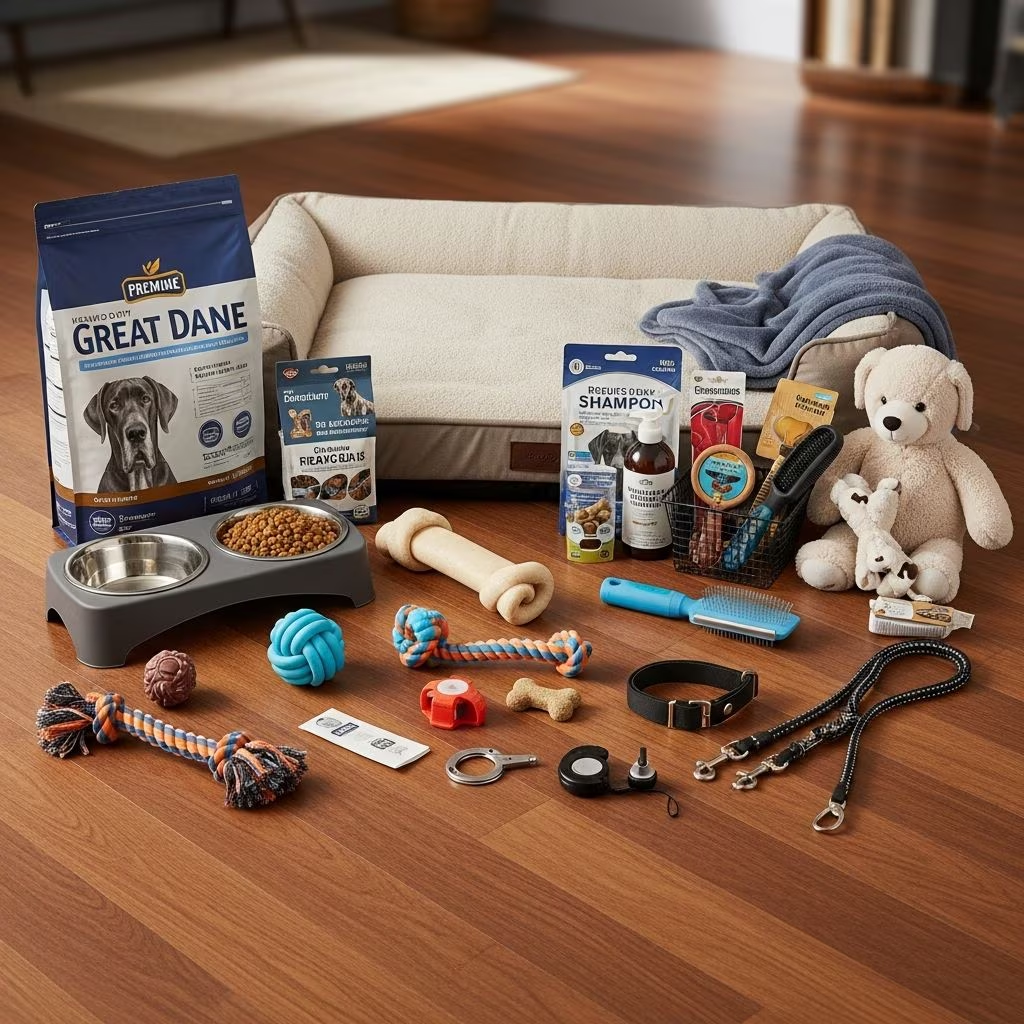
The short coat requires minimal grooming: weekly brushing with a rubber curry removes dead hair, and baths as needed with mild shampoo. Nail trims every 4-6 weeks prevent overgrowth, and ear cleaning weekly guards against infections.
Nutrition must support massive frames without promoting obesity. High-quality large-breed puppy food until 18-24 months, transitioning to adult formulas. Daily intake: 8-10 cups divided into 2-3 meals, adjusted for activity. Fresh water always available; elevate bowls for comfort.
Exercise needs are moderate: 30-60 minutes daily of walks, play, or fetch. Secure fencing is essential, as Danes can jump high when young. Provide ample space; apartments suit only active owners with outdoor access.
Living with a Great Dane: Lifestyle Fit
Ideal homes offer space, time for bonding, and commitment to training. They adapt well to families with older children but supervise interactions due to size. Not suited for very hot climates; prefer cooler environments.
Costs include premium food ($100+/month), vet bills, and supplies. Pet insurance covers breed-specific risks like bloat surgery ($5,000+).
Frequently Asked Questions
Are Great Danes good with kids?
Yes, their gentle nature makes them patient playmates, but supervise due to size.
How much exercise do they need?
Moderate: 30-60 minutes daily prevents boredom without overexertion.
Do Great Danes drool a lot?
Moderately, especially after drinking; keep towels handy.
What’s the best food for Great Danes?
Large/giant breed formulas with controlled calcium for growth.
Can they live in apartments?
Possible with ample exercise, but houses with yards are preferable.
References
- Great Dane History: The Apollo of the Dogs — American Kennel Club. 2023. https://www.akc.org/expert-advice/dog-breeds/great-dane-history-the-apollo-of-the-dogs/
- The Great Dane Breed History — Creed Danes Kennel. 2022. http://www.creeddanes.ch/en/the-breed/
- Great Dane – Full History — YouTube (Video Transcript). 2023. https://www.youtube.com/watch?v=xNYJ9xd6gu8
- The Majestic Great Dane: A Look at Their Breeding History — The Big Damn Dog Co. 2024. https://thebigdamndogco.com/blogs/the-better-years-blog/the-majestic-great-dane-a-look-at-their-breeding-history
- An Illustrated Standard and Guide for the Evaluation of the Great Dane — Great Dane Club of America. 2018. https://gdca.org/wp-content/uploads/2018/11/An-Illustrated-Standard-and-Guide-for-the-Evaluation-of-the-Great-Dane.pdf



