

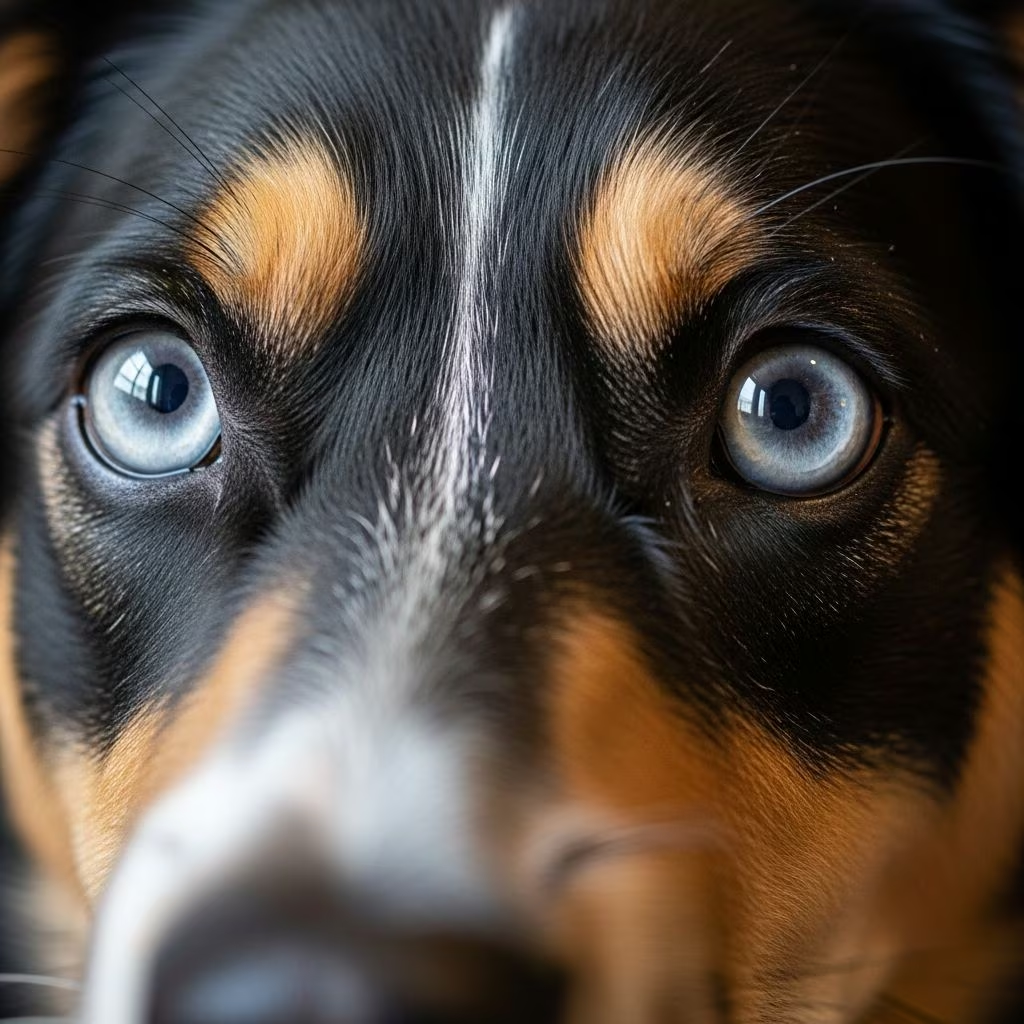
Observing a hazy or gray tint in your dog’s eyes can spark concern among pet owners. This change often signals natural aging processes or underlying health issues that require prompt attention to preserve vision. Understanding the distinction between benign and serious causes empowers you to make informed decisions for your canine companion’s well-being.
Recognizing Changes in Your Dog’s Eyes
Dogs’ eyes typically display clear, bright irises with sharp pupils. A shift to gray, blue-gray, or cloudy appearances might occur gradually or suddenly, affecting one or both eyes. Factors like age, breed, and overall health influence these transformations. Early detection through regular check-ups is crucial, as some conditions progress silently until vision loss becomes evident.
Monitor for accompanying signs such as squinting, redness, tearing, pawing at the face, or behavioral shifts like bumping into objects. These symptoms alongside graying warrant an immediate veterinary consultation to rule out painful or progressive diseases.
Common Benign Causes of Gray Eyes
Not all gray eye changes indicate disease. Some result from normal physiological developments, particularly in senior dogs.
Nuclear Sclerosis: The Age-Related Haze
Nuclear sclerosis, also known as lenticular sclerosis, involves a gradual hardening and clouding of the eye’s lens nucleus. This condition typically emerges in dogs over six years old, creating a uniform blue-gray sheen visible in bright light. Unlike more severe issues, it develops symmetrically in both eyes and causes minimal vision disruption, allowing dogs to adapt seamlessly.
The lens proteins densify over time, compressing light pathways slightly but not blocking them entirely. Vision may sharpen for near objects while distant focus blurs mildly. No treatment is necessary, but confirming diagnosis via vet exam prevents confusion with cataracts.
Heterochromia: Natural Color Variations
Heterochromia presents as differing iris colors between eyes or within one eye, sometimes appearing lighter or grayish due to melanin distribution irregularities. This genetic trait manifests at birth or early puppyhood, especially in breeds like Siberian Huskies, Australian Shepherds, Dalmatians, and Border Collies.
Merle or dappled coat patterns correlate strongly with heterochromia, stemming from the merle gene that dilutes pigmentation. Acquired heterochromia from injury or illness mimics graying but requires differentiation. Generally harmless, it poses no vision threats unless secondary complications arise.
Serious Conditions Behind Gray or Cloudy Eyes
Several pathological states demand urgent intervention to avert permanent damage. These often produce asymmetric clouding, pain, and rapid progression.
Cataracts: Clouding the Lens Core
Cataracts involve opaque protein buildup within the lens, forming white, gray, or blue clouds that scatter light and impair sight. Progression varies from peripheral specks to total obscuration, potentially blinding dogs swiftly if untreated.
Primary causes include genetics in breeds like Poodles, Labrador Retrievers, and Cocker Spaniels. Secondary triggers encompass diabetes mellitus, which accelerates cataract formation via sorbitol accumulation; trauma; inflammation; toxins; and senescence. Puppies may suffer congenital forms from nutritional deficits or infections.
| Breed | Predisposition to Cataracts |
|---|---|
| Poodles | High (hereditary) |
| Labrador Retrievers | Moderate |
| Cocker Spaniels | High |
| Miniature Schnauzers | High |
Surgical lens removal offers the gold standard treatment, restoring clarity in eligible cases. Antioxidants and blood sugar management mitigate progression in diabetics.
Glaucoma: Pressure-Induced Haze
Glaucoma arises from elevated intraocular pressure (IOP) when aqueous humor drainage fails, stretching the cornea into a steamy gray-blue haze. Acute episodes inflict severe pain, evident through widened pupils, corneal edema, and buphthalmos (enlarged globe).
Primary glaucoma is hereditary, striking middle-aged breeds like Basset Hounds, Cocker Spaniels, and Chow Chows unilaterally before bilateral involvement. Secondary forms stem from uveitis, tumors, lens luxation, or cataracts. Untreated, optic nerve atrophy ensues, causing irreversible blindness.
Emergency therapies include IOP-lowering drops (e.g., latanoprost), mannitol infusions, and pain relief. Long-term, laser procedures or enucleation prevent recurrence.
Corneal Disorders and Inflammation
Corneal dystrophy, an inherited epithelial or stromal defect, deposits lipid-like opacities yielding gray patches. Painless initially, it predisposes to ulcers in endothelial variants. Anterior uveitis inflames the iris and ciliary body, clouding via cellular debris and flare. Systemic infections, trauma, or cancers provoke it, yielding squinting, hypopyon, and miosis.
Scleritis reddens the sclera amid inflammatory graying. Treatment hinges on anti-inflammatories, antibiotics, and addressing root causes.
Breeds Prone to Eye Graying Issues
- Siberian Huskies and Australian Shepherds: Heterochromia and merle-related anomalies.
- Poodles and Terriers: Juvenile cataracts.
- Cocker Spaniels and Basset Hounds: Glaucoma susceptibility.
- Boxers and Boston Terriers: Corneal dystrophy.
Diagnostic Approaches for Gray Eyes
Veterinarians employ Schirmer tear tests, fluorescein staining, tonometry for IOP, and ophthalmoscopy. Gonioscopy assesses drainage angles, while electroretinography gauges retinal function. Ultrasonography images obscured lenses, guiding surgical candidacy.
Treatment Strategies and Management
Benign cases like nuclear sclerosis need monitoring alone. Cataract surgery (phacoemulsification) boasts 90% success in uncomplicated eyes. Glaucoma demands lifelong medications or cyclophotocoagulation. Supportive care includes:
- Eyedrops for lubrication and anti-inflammation.
- Nutraceuticals rich in lutein, zeaxanthin, and omega-3s.
- UV-protective eyewear for outdoor activities.
Preventive Measures for Optimal Eye Health
Annual ophthalmic exams from age seven detect subclinical changes. Control diabetes via diet and insulin. Avoid trauma with leashing and goggles. Antioxidant supplements bolster lens integrity. Breeds with genetic risks benefit from responsible breeding and early screening.
When to Rush to the Vet
Seek immediate care for sudden graying, pain signs, vision loss, or discharge. Delays exacerbate damage in glaucoma or uveitis.
Frequently Asked Questions (FAQs)
Is nuclear sclerosis the same as cataracts?
No. Nuclear sclerosis is a normal aging haze with preserved vision, while cataracts opacify the lens, causing blindness.
Can diet prevent gray eyes in dogs?
Balanced nutrition with antioxidants supports eye health but cannot override genetics or halt inevitable sclerosis.
How much does cataract surgery cost for dogs?
Ranges from $2,000-$4,000 per eye, varying by location and complexity.
Do all dogs with merle coats have eye issues?
No, but double merles heighten risks of microphthalmia or colobomas.
Can glaucoma be cured?
Not fully; management controls pressure to preserve remaining vision.
References
- 5 Diseases That Cause Cloudy or Blue Eyes in Dogs — Bark and Whiskers. 2023-07-30. https://www.barkandwhiskers.com/2023-07-30-nl-5-diseases-causing-dog-blue-eyes/
- Animal Update: Pets’ Eye Color Changes Explained — CBS News. N/A. https://www.cbsnews.com/sanfrancisco/news/animal-update-pets-eye-color-changes-explained/
- Why did my dog’s eyes change color? — FirstVet. N/A. https://firstvet.com/us/articles/why-did-my-dogs-eyes-change-color
- Heterochromia in Dogs: Two Different Colored Eyes — Hill’s Pet. N/A. https://www.hillspet.com/dog-care/behavior-appearance/heterochromia-in-dogs
- Why Does My Dog Have Two Different Colored Eyes — Blazin’ Trails Bottle Babies. N/A. https://blazintrailsbottlebabies.org/why-does-my-dog-have-two-different-colored-eyes-understanding-canine-heterochromia/



