

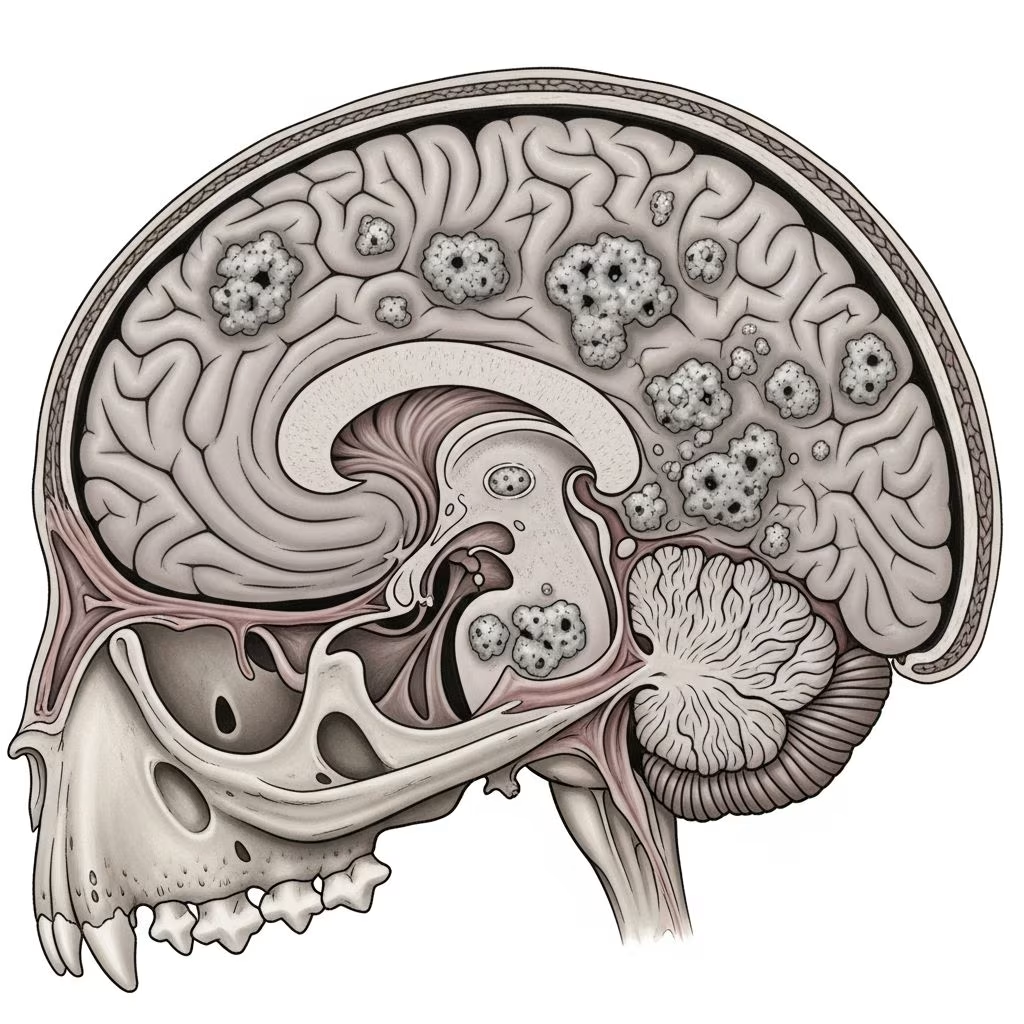
Understanding Granulomatous Meningoencephalitis (GME) in Dogs
Granulomatous Meningoencephalitis (GME) is a serious inflammatory condition affecting the brain and spinal cord in dogs. This autoimmune neurological disorder occurs when the immune system mistakenly attacks the central nervous system, causing inflammation and progressive neurological symptoms. While GME can affect dogs of any breed, small breeds and Poodles appear to be particularly predisposed to this condition. Understanding the signs, symptoms, and available treatment options is crucial for dog owners whose pets may be affected by this challenging disease.
GME is not contagious and cannot be transmitted from one dog to another. The exact cause remains unknown, though researchers believe it involves an abnormal immune response. The condition manifests in three distinct forms: focal (localized to one area), disseminated (affecting multiple areas), and ocular (affecting the eyes). Each form presents different symptoms and requires tailored treatment approaches. Early recognition and prompt veterinary intervention can significantly impact a dog’s quality of life and survival time.
Symptoms of Granulomatous Meningoencephalitis in Dogs
The clinical signs of GME depend largely on which part of the central nervous system is affected. Symptoms can vary significantly between individual dogs, ranging from mild neurological changes to severe disability. Pet owners should watch for the following indicators:
Common Symptoms in Focal and Disseminated Forms
- Neck pain and stiffness
- Wobbly gait or loss of coordination (ataxia)
- Knuckling or dragging feet when walking
- Walking in circles or disorientation
- Blindness or vision problems
- Lethargy and lack of engagement with surroundings
- Facial abnormalities, including partial facial paralysis
- General weakness or loss of motor control
- Seizures in some cases
Ocular Form Symptoms
The ocular form of GME presents differently from other types. Dogs with ocular GME typically experience sudden blindness in one or both eyes. Importantly, this form usually occurs without other neurological signs, making it distinct from focal or disseminated presentations. Some dogs may develop secondary glaucoma (elevated pressure within the eye) as a complication, which requires additional management.
Symptoms can develop rapidly or gradually, depending on the disease progression and form. Some dogs show dramatic changes within days, while others experience slower onset. If you notice any of these neurological signs in your dog, immediate veterinary evaluation is essential for proper diagnosis and timely treatment initiation.
Diagnosis of GME
Diagnosing GME requires a comprehensive approach involving multiple diagnostic tools and procedures. Because GME symptoms overlap with other neurological conditions, veterinarians must carefully evaluate each case to reach an accurate diagnosis.
Diagnostic Procedures
Neurological Examination: Your veterinarian will perform a thorough neurological evaluation to assess your dog’s mental status, cranial nerve function, motor abilities, and sensory responses. This examination helps localize where in the nervous system the problem originates.
Magnetic Resonance Imaging (MRI): MRI is the gold standard for diagnosing GME. This imaging technique provides detailed pictures of the brain and spinal cord, revealing characteristic patterns of inflammation associated with GME. MRI can help differentiate GME from other conditions such as tumors, infections, or other inflammatory diseases.
Cerebrospinal Fluid (CSF) Analysis: A spinal tap collects fluid surrounding the brain and spinal cord. Laboratory analysis of this fluid can reveal inflammation consistent with GME, including elevated protein levels and specific cell patterns. CSF analysis helps rule out infectious causes of meningoencephalitis.
Blood Tests: Complete blood counts and chemistry panels help assess overall health and rule out systemic diseases that might mimic GME symptoms.
Treatment of Granulomatous Meningoencephalitis (GME) in Dogs
GME cannot be cured, but it can be managed with appropriate treatment. Since GME is believed to have an autoimmune component, suppressing the immune system is the primary goal of treatment. The main objective is to manage symptoms, control inflammation, and preserve your dog’s quality of life through ongoing, lifelong management.
Corticosteroid Therapy
Corticosteroids, particularly prednisolone, remain the cornerstone of GME treatment. Most dogs begin treatment with high-dose corticosteroids to suppress the immune system and reduce brain inflammation. Prednisolone is typically administered at an immunosuppressive dose of 1-2 mg/kg twice daily for several weeks, then gradually tapered to the lowest effective dose over three to six months, depending on the dog’s response.
While corticosteroids are effective at reducing inflammation, they can cause significant side effects with long-term use, including increased appetite, weight gain, increased urination and thirst, and development of iatrogenic hyperadrenocorticism. For this reason, veterinarians work to taper the dose as much as possible while maintaining disease control. Many dogs show dramatic improvement within 24-48 hours of starting corticosteroid therapy, though maintaining this improvement while minimizing side effects remains a challenge.
Immunosuppressive Medications
For dogs who don’t respond adequately to corticosteroids alone or cannot tolerate their side effects, additional immunosuppressive medications provide valuable alternatives. These drugs can be used alone or in combination with lower doses of corticosteroids, offering more targeted immune system suppression.
Cytosine Arabinoside (Cytarabine): This chemotherapy agent has shown particularly promising results when combined with prednisolone. Studies report median survival times exceeding 500 days with combination therapy, compared to approximately 100 days with prednisolone alone.
Cyclosporine: An immunosuppressant that specifically targets T-cells, which are believed to play a role in GME’s inflammatory process. Cyclosporine can be used alongside corticosteroids to reduce the required steroid dose.
Leflunomide: A newer immunomodulatory drug showing promise in immune-mediated neurological conditions. While more expensive than traditional treatments, leflunomide offers an alternative for dogs that don’t tolerate corticosteroids well.
Mycophenolate Mofetil: Another immunosuppressant that may have fewer side effects than some other options, offering flexibility in treatment protocols.
Dogs receiving these medications require regular blood monitoring to check for potential side effects, including bone marrow suppression, liver damage, or kidney problems. Complete blood counts and chemistry panels are typically performed every 2-4 weeks initially.
Combination Therapy Approaches
Many veterinary specialists employ combination therapy protocols that use multiple medications targeting the disease through different mechanisms. Some specialized approaches include prednisone with cytarabine, triple therapy combining prednisone, cytarabine, and a third agent like procarbazine or cyclosporine, and pulse therapy where medications are given in intense short courses followed by rest periods.
Combination approaches have shown superior results compared to single-agent therapy. Studies demonstrate that dogs receiving well-designed combination protocols achieve remission rates of 60-80%, significantly higher than single-agent approaches. These synergistic effects provide more comprehensive disease control.
Radiation Therapy
For dogs with focal (localized) forms of GME or those not responding adequately to medical management, radiation therapy offers another treatment option. Radiation therapy works by targeting rapidly dividing inflammatory cells and reducing inflammation in affected brain tissue. A typical radiation protocol includes 10-15 treatment sessions spread over 3-4 weeks, with each session requiring brief anesthesia. Dogs undergoing radiation therapy have shown mean survival times exceeding 404 days.
However, radiation to the head carries potential risks, including seizures or cataracts. These complications must be carefully weighed against potential benefits. Radiation is most effective for dogs with clearly defined focal lesions visible on MRI.
Specialized Treatment for Ocular GME
Dogs with ocular GME typically receive oral steroids, though some veterinarians may recommend steroid eye drops applied directly to the affected eye. If a dog develops secondary glaucoma (elevated pressure within the eye), additional medications become necessary. Glaucoma management may include topical medications such as dorzolamide and timolol, which decrease fluid production and promote drainage from the eye, helping preserve remaining vision.
Seizure Management
When GME causes seizures, standard seizure medications provide control of these episodes. Anticonvulsant therapy is added to the treatment protocol as needed to manage seizure activity and improve quality of life.
Supportive Care and Management
Physical Rehabilitation
For dogs experiencing weakness or mobility issues due to GME, physical therapy interventions support recovery and maintain quality of life. These may include controlled exercise programs to maintain muscle mass, hydrotherapy for low-impact movement, balance exercises for dogs with vestibular symptoms, and massage therapy to reduce muscle tension, particularly important for dogs experiencing neck pain.
Complementary Approaches
While scientific evidence is still developing, some integrative approaches may support conventional treatment. These include acupuncture for pain management and potential immune modulation, herbal supplements with anti-inflammatory properties (always discussed with your veterinarian first), and CBD oil, which some pet owners report may help with seizure control and inflammation reduction. Any complementary therapy should be discussed with your veterinarian before implementation.
Long-term Management Considerations
Treatment cannot be stopped, or signs will recur and the disease will progress. The goal of long-term management is finding the lowest effective dose of medication required to control disease signs. Despite ongoing treatment, relapses are common in GME. Pet owners should prepare for the possibility of dose adjustments as their dog’s condition changes. Regular monitoring with neurological examinations and periodic imaging helps track disease progression and inform treatment modifications.
Prognosis for GME
The prognosis for GME varies significantly depending on the disease form and treatment response. Dogs with focal signs in the forebrain have the best prognosis, with median survival times exceeding 359 days. Dogs with focal signs in other locations have median survival times of approximately 59 days, while dogs with multifocal signs have median survival times of only 8 days. Dogs receiving radiation therapy for focal disease can achieve median survival times exceeding 404 days.
While historically carrying a poor prognosis, modern treatment approaches have significantly improved outcomes. With early diagnosis, appropriate immunosuppressive therapy, and specialized veterinary care, many dogs can enjoy extended survival times ranging from months to several years, depending on disease severity and treatment response.
Frequently Asked Questions About GME in Dogs
Q: Is GME contagious between dogs?
A: No, GME is not contagious. It is an autoimmune condition specific to individual dogs and cannot be transmitted from one dog to another.
Q: Can GME be cured?
A: GME cannot be cured, but it can be effectively managed with lifelong immunosuppressive therapy. The goal is to control symptoms and maintain quality of life.
Q: Which breeds are most susceptible to GME?
A: While any breed can develop GME, small breed dogs and Poodles are particularly predisposed. However, GME has been documented in dogs of all sizes and breeds.
Q: What happens if I stop my dog’s GME medications?
A: Stopping treatment will result in recurrence of clinical signs and progression of the disease. Continuous medication is necessary for symptom management.
Q: How much does GME treatment cost?
A: Treatment costs vary depending on medications used, frequency of monitoring, and potential hospitalization needs. Combination therapies and newer medications like leflunomide can be expensive. Discuss costs with your veterinarian to explore treatment options within your budget.
Q: Can GME be prevented?
A: Since the exact cause of GME is unknown, prevention is not currently possible. Early recognition and prompt treatment of symptoms offer the best opportunity for positive outcomes.
Q: What is the difference between focal, disseminated, and ocular GME?
A: Focal GME affects one localized area of the brain, disseminated GME affects multiple areas, and ocular GME specifically affects the eyes. Each form presents different symptoms and may require different treatment approaches.
Q: How often will my dog need veterinary visits?
A: Dogs on GME treatment typically require frequent veterinary monitoring, including regular neurological examinations and blood work every 2-4 weeks initially, with periodic MRI imaging to assess inflammation response.
References
- Granulomatous Meningoencephalitis (GME) in Dogs – PetMD — PetMD. 2024. https://www.petmd.com/dog/conditions/neurological/granulomatous-meningoencephalitis-gme-dogs
- Granulomatous Meningoencephalitis in Dogs: 5 Treatment Options — The Pet Vet. 2024. https://thepetvet.com/granulomatous-meningoencephalitis-in-dogs/
- Granulomatous meningoencephalomyelitis (GME) in dogs — Purdue Animal Disease Diagnostic Laboratory. 2006. https://www.addl.purdue.edu/newsletters/2006/winter/gme.htm
- Treatment of non-infectious meningoencephalomyelitis in dogs — Veterinary Practice. 2024. https://www.veterinary-practice.com/article/treatment-non-infectious-meningoencephalomyelitis-dogs
- Treatment of granulomatous meningoencephalomyelitis in a dog — PubMed. National Center for Biotechnology Information. https://pubmed.ncbi.nlm.nih.gov/11940245/
- Granulomatous Meningoencephalitis in Dogs and Cats — Embrace Pet Insurance. 2024. https://www.embracepetinsurance.com/health/granulomatous-meningoencephalitis



