

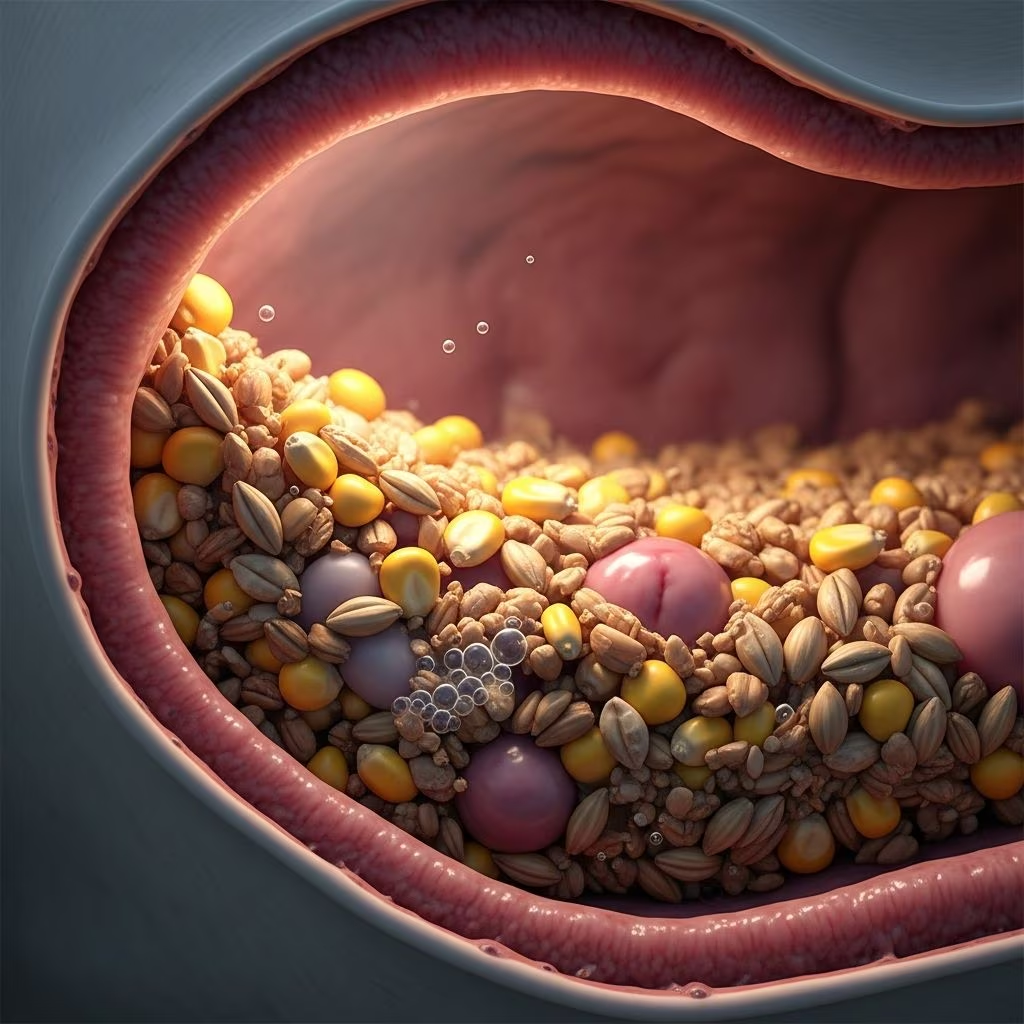
Ruminants such as cattle, sheep, and goats rely on their complex forestomach system, particularly the rumen, for digesting fibrous feeds through microbial fermentation. However, sudden access to high levels of rapidly fermentable carbohydrates from grains can disrupt this balance, triggering a condition known as grain overload or rumen acidosis. This metabolic disturbance rapidly lowers rumen pH, inhibits normal motility, and can escalate to life-threatening acidemia if untreated.
The Rumen’s Role and Vulnerability to Disruption
The rumen hosts a diverse microbial community that breaks down plant material into volatile fatty acids for energy. Normally, the rumen maintains a pH between 6 and 7, supporting protozoa, fungi, and bacteria specialized in fiber digestion. When animals ingest excessive grains like corn, barley, wheat, or even non-traditional sources such as potatoes or bread, starch overloads the system.
Within hours, gram-positive bacteria like Streptococcus bovis proliferate, producing excessive lactic acid. This drops rumen pH below 5.5, killing off lactate-utilizing microbes and protozoa, further amplifying acidity. The result is forestomach atony—complete loss of contractions—leading to fluid accumulation, gas buildup, and systemic effects like dehydration and shock.
Common Triggers in Farming and Feedlot Settings
Grain overload often strikes in feedlots where high-concentrate diets boost growth and milk production, but abrupt changes overwhelm rumen adaptation. Accidental access to grain stores, spoiled silage, or young lush pastures also poses risks. Finely ground grains ferment faster than whole kernels, hastening onset.
Species vary in susceptibility: cattle in intensive systems are most affected, followed by sheep and goats. Bison appear more resilient but are not immune. Goats, for instance, may encounter overload from household scraps like rice or grapes alongside grains.
Recognizing Early and Advanced Symptoms
- Mild cases: Reduced rumen motility, anorexia, mild abdominal discomfort shown by kicking or treading, and loose feces with undigested grain particles.
- Moderate progression: Bloating, fever, profuse foul-smelling yellow diarrhea, lethargy, and dehydration up to 6% body weight.
- Severe manifestations: Staggering, recumbency, rapid heart rate over 120 bpm, absent rumen sounds except fluid splashes, neurological signs like dullness or blindness, and collapse.
Timeline varies: signs emerge 2-6 hours post-ingestion, with ground feeds acting quicker. Severely affected animals stop drinking despite initial gorging, worsening dehydration to 10-12%. In subacute forms from repeated mild episodes, expect chronic weight loss, poor milk yield, and rumenitis.
Diagnostic Approaches for Confirmation
History of grain access plus clinical signs suffices for outbreaks. For singles, key diagnostics include:
- Rumen fluid sampling via paracentesis: pH <5.5 confirms acidosis; <5 signals severity.
- Microscopy: Sparse protozoa, bacterial shift to gram-positive dominance.
- Physical exam: Doughy or fluid-filled rumen on left flank ballottement, tachycardia, dehydration.
Use wide-range pH paper for field tests. Differentiate from bloat or enterotoxemia by rumen atony and lactic acid profile.
Symptom Comparison Table
| Severity | Key Signs | Rumen pH | Prognosis |
|---|---|---|---|
| Mild | Anorexia, reduced motility, mild diarrhea | 5.5-6.0 | Good, self-resolves |
| Moderate | Bloat, fever, profuse diarrhea, lethargy | <5.5 | Fair with treatment |
| Severe | Ataxia, recumbency, heart rate >120 bpm | <5.0 | Poor without intervention |
Emergency Treatment Protocols
Act swiftly: mild cases may recover with fasting and hydration, but severe ones demand aggressive care.
- Stabilize: IV isotonic fluids (e.g., balanced polyionic) at 100-200 mL/kg/day to correct dehydration and acidemia.
- Decompress rumen: Oral mineral oil or dioctyl sodium sulfosuccinate to lubricate; transfaunation with donor rumen fluid restores microbes.
- Surgical if needed: Rumenotomy or lavage for toxin removal in extremis.
- Supportive: Thiamine for neuro signs, antibiotics sparingly to avoid dysbiosis, anti-inflammatories for laminitis risk.
Monitor heart rate and pH serially; prognosis improves if rumen motility returns within 48 hours.
Preventive Strategies for Herd Health
Prevention hinges on gradual adaptation:
- Introduce concentrates over 2-3 weeks, max 0.5-1% body weight increase daily.
- Ensure 10-20% long fiber in diets for rumen health.
- Secure storage; ionophores like monensin buffer pH.
- Buffer feeds with bicarbonate during transitions.
For subacute risks, maintain pH >5.6 via consistent feeding and bunk management.
Long-Term Complications and Management
Survivors risk rumenitis from epithelial damage, allowing bacterial translocation to liver abscesses via Fusobacterium necrophorum. Chronic cases show laminitis, mycotic rumenitis, or persistent poor gain. Cull recurrent offenders; vaccinate against secondary infections where applicable.
FAQs
What causes grain overload in ruminants?
Excessive intake of rapidly fermentable carbs like grains, leading to lactic acid overproduction and rumen pH drop.
How quickly do symptoms appear?
2-6 hours post-ingestion, faster with ground grains.
Can grain overload be fatal?
Yes, severe cases cause death within 24 hours from acidemia and shock.
Is treatment always needed?
Mild cases often self-resolve; severe require veterinary intervention.
How to prevent it in feedlots?
Gradual diet adaptation, ionophores, and secure grain storage.
References
References
- Ruminating On Grain Overload: Avoiding Rumen Acidosis — Texas A&M University College of Veterinary Medicine. 2023. https://vetmed.tamu.edu/news/pet-talk/grain-overload/
- Grain Overload in Ruminants — Merck Veterinary Manual. 2023. https://www.merckvetmanual.com/digestive-system/diseases-of-the-ruminant-forestomach/grain-overload-in-ruminants
- Grain Overload in Goats — Oklahoma State University. 2020-10-01. https://news.okstate.edu/articles/communications/2020/grain-overload-in-goats.html
- Ruminal Acidosis in Feedlot: From Aetiology to Prevention — PMC (NCBI). 2014-06-30. https://pmc.ncbi.nlm.nih.gov/articles/PMC4247954/
- Ruminal Acidosis (Grain Overload) — Ohio State University. 2021-04-27. https://u.osu.edu/sheep/2021/04/27/ruminal-acidosis-grain-overload/



