

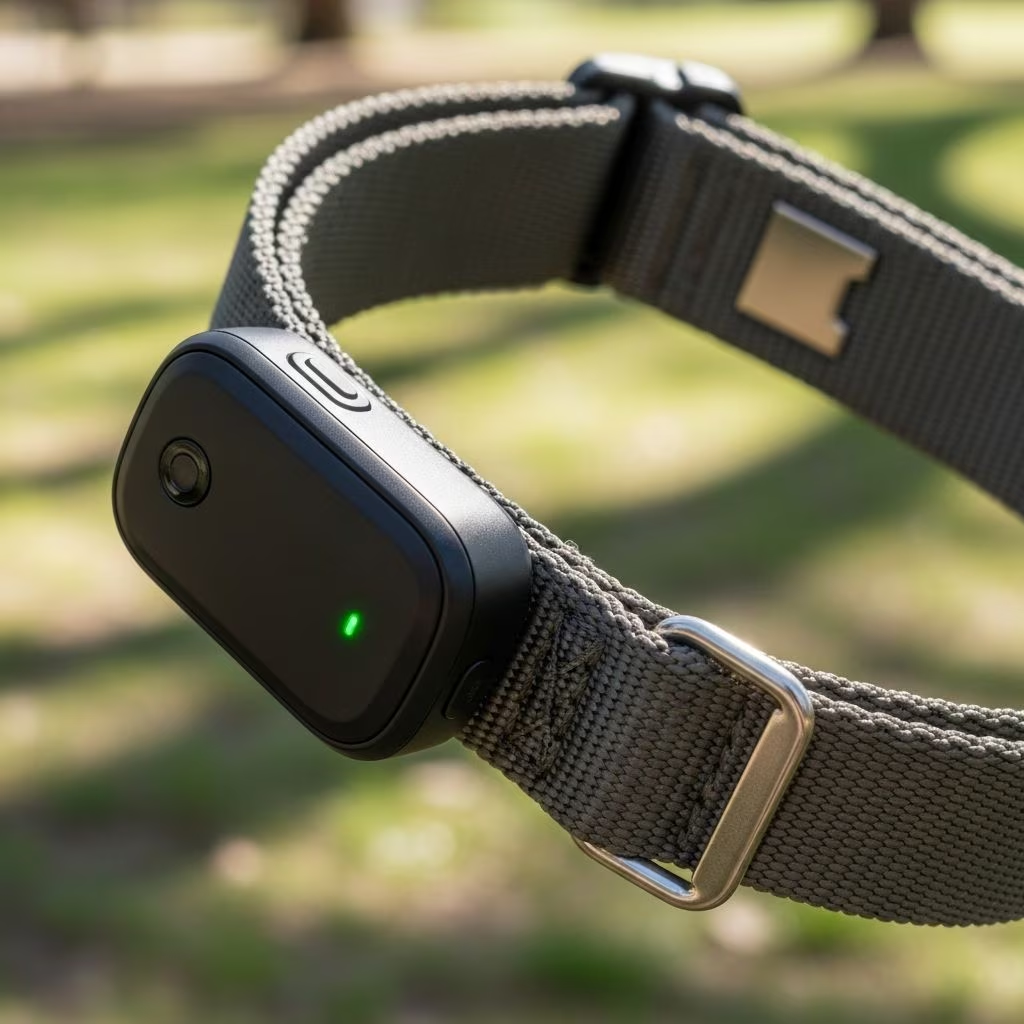
Modern GPS trackers for dogs offer peace of mind for pet owners by providing real-time location data, activity monitoring, and safety alerts. These devices, often integrated into collars, use cellular networks, GPS satellites, and apps to help locate pets that wander off or escape. For beginners, selecting the right tracker involves understanding key features like accuracy, battery life, and subscription costs, as highlighted in recent 2026 tests.
Why Every Dog Owner Needs a GPS Tracker
Dogs can bolt unexpectedly during walks, hikes, or even from fenced yards, leading to stressful searches. GPS trackers mitigate this by delivering precise location updates via smartphone apps. Tests show devices like the Tractive model excel in connection speed and battery endurance, making them reliable for daily use. Beyond location, many include geofencing to alert you if your dog leaves a set boundary, activity tracking to monitor health, and even light or stimulation features for training.
In rural or wooded areas, accuracy under tree cover is crucial. Field tests confirm that advanced models maintain signal reliability where cheaper options falter. For multi-dog households, systems supporting up to 12 or 21 collars simplify management.
Key Features to Evaluate in Dog GPS Trackers
Choosing a tracker requires focusing on performance metrics proven in hands-on reviews. Here’s what matters most:
- Location Accuracy: Top devices achieve pinpoint precision, tracking subtle movements like turns or stops. The Garmin TT15x led in nuanced path mapping during 2026 tests.
- Battery Life: Expect 7-30 days depending on usage; quick-charge models recharge in hours.
- Range and Connectivity: Cellular-based trackers work nationwide without range limits, unlike radio systems capped at 7 miles.
- App Usability: Intuitive interfaces with maps, history, and customizable alerts are standard in leading apps.
- Durability and Fit: Waterproof designs suit dogs from 8 pounds up, with adjustable collars for necks 10-23 inches.
- Extra Functions: E-collars with 99 stimulation levels, lights, and vibration enhance training and visibility.
Geofencing creates virtual boundaries, sending instant notifications for breaches, ideal for off-leash parks. Some models like SpotOn offer virtual fencing without physical wires.
Top GPS Dog Trackers Tested in 2026
Recent evaluations by outdoor experts and pet tech reviewers identify standout performers. Below is a comparison table of leading options based on accuracy, features, and value.
| Model | Accuracy | Battery Life | Key Features | Subscription | Best For |
|---|---|---|---|---|---|
| Tractive GPS | Excellent (fastest connect) | Up to 30 days | App-free basic use, multi-dog (21+), geofencing | Required | Everyday urban use |
| Garmin TT15x | Best overall | Multi-day field use | Handheld device, e-collar (99 levels), 12-dog support, 7-mile radio | Optional cellular | Hunting/outdoor |
| Fi Series 3 | High | Long-lasting | Free app, activity tracking, expandable | Required | Multi-pet homes |
| SpotOn GPS Fence Nova | Superior in trees | Extended | Virtual fence, 3-stage alerts, no-fail reliability | Required | Off-grid adventures |
Tractive shines for its balance of speed and stamina, while Garmin’s bundle with a handheld suits remote areas. Fi’s free app access appeals to budget-conscious users.
Subscription Costs and Hidden Fees
Most GPS trackers require monthly fees for cellular data and app features, ranging from $8-13. Basic plans cover unlimited tracking; premiums add health insights. No-subscription options like some radio-based systems exist but limit range. Always check for expansion fees in multi-dog setups. Initial hardware costs start at $59, with bundles including collars around $300.
Fitting and Training Your Dog with a GPS Collar
Proper fit prevents discomfort: position the device high on the neck, snug but allowing two fingers underneath. For puppies or small breeds (8+ lbs), select lightweight models. Introduce gradually with short wear sessions, pairing with treats to build positive associations. Test geofencing in safe areas first to familiarize your dog with alerts.
Waterproofing (IP67+) ensures submersion survival, vital for swimmers. Customize settings like stimulation tones for training without overwhelming your pet.
Real-World Performance: Tests and User Insights
2026 tests submerged devices, hiked through forests, and simulated escapes. SpotOn aced boundary detection under canopy, outperforming budgets in alerts. Garmin’s interface provided detailed maps and customizable displays. Users praise Tractive’s quick locates during urban bolts. Limitations include signal drop in deep canyons, mitigated by multi-GNSS chips in newer models.
Comparing Cellular vs. Radio-Based Trackers
Cellular trackers (Tractive, Fi) offer unlimited range via cell towers but need subscriptions. Radio systems (Garmin) provide 7-mile line-of-sight without fees but require a handheld. Hybrids combine both for versatility. Choose cellular for city dogs, radio for hunters.
Maintenance Tips for Longevity
Charge regularly, clean after muddy adventures, and update firmware via apps for accuracy boosts. Monitor battery via notifications to avoid dead spots. Replace collars yearly if worn.
Frequently Asked Questions (FAQs)
Do GPS dog trackers work without cell service?
Radio models like Garmin do via handheld; cellular need towers or satellite backups in premiums.
Are they safe for small dogs?
Yes, models fit 8+ lb dogs with lightweight designs.
How accurate are they?
Top ones track within meters, even in woods.
What’s the battery life?
Days to weeks; activity affects it.
Do they include training collars?
Some like Garmin add e-stimulation.
Choosing Your First GPS Tracker
Assess your needs: urban walks favor app-based cellular; trails need rugged bundles. Start with Tractive or Fi for simplicity. Test in your environment for best fit.
References
- 4 Best GPS Dog Collars of 2026 (Tested & Reviewed) — Treeline Review. 2026. https://www.treelinereview.com/gearreviews/best-gps-dog-collars
- Best GPS Dog Collars of 2026, Tested and Reviewed — Outdoor Life. 2026. https://www.outdoorlife.com/gear/best-gps-dog-collars/
- Best GPS Trackers for Dogs (Updated February 2026) — Jakobagsds. 2026-02. https://www.jakobagsds.com/blog/best-gps-trackers
- Best GPS Trackers for Dogs 2026 | Tested & Reviewed — Smart Bark. 2026. https://www.smartbark.co.uk/post/best-gps-trackers-for-dogs
- Best GPS Dog Collar (2026): We Tested Them All — Here’s the Winner — YouTube (SpotOn Review). 2026. https://www.youtube.com/watch?v=xOe3yZojaqY
- Best GPS Tracker No Monthly Fee: What Actually Works in 2026 — Aorkuler. 2026. https://aorkuler.com/blogs/blog/best-gps-tracker-no-monthly-fee-2026



