

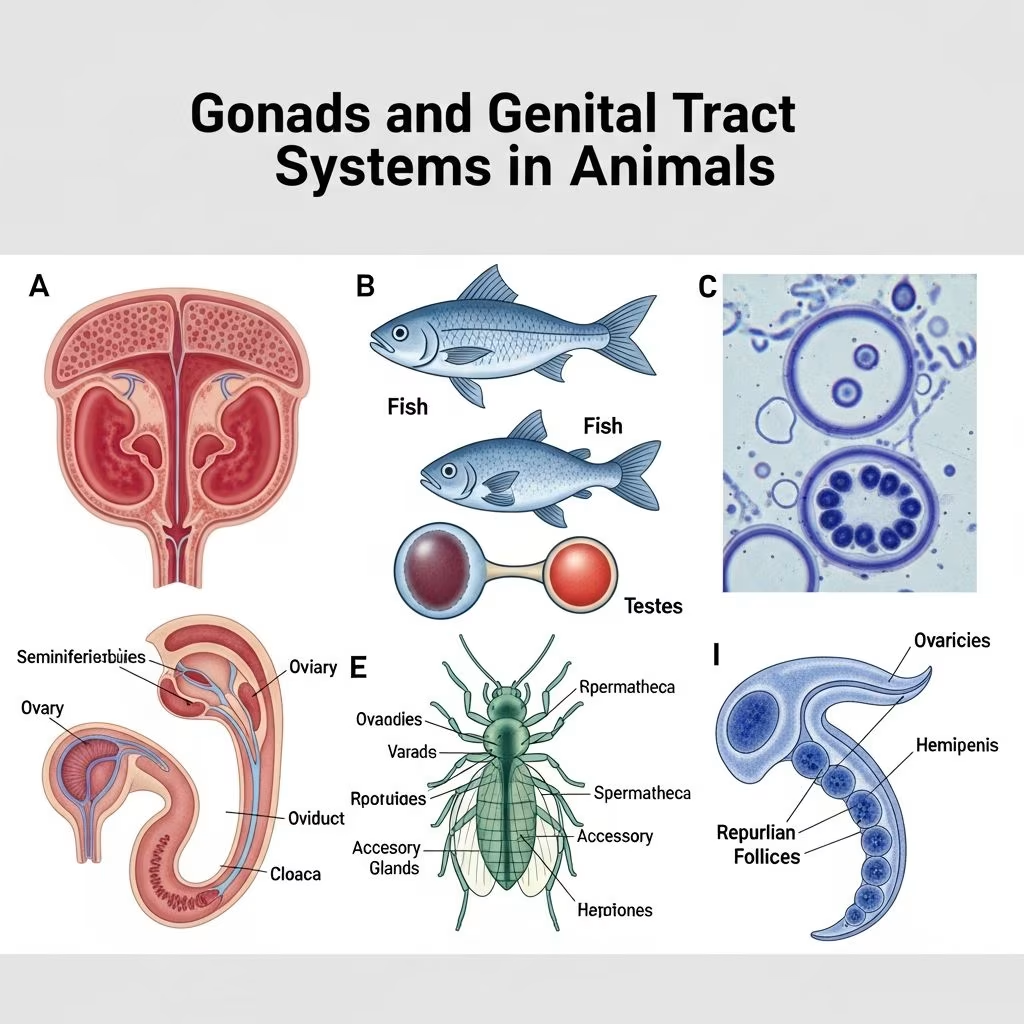
The reproductive system represents one of the most complex physiological networks in the animal kingdom, serving the critical biological imperative of perpetuating species through the production and union of gametes. At the foundation of this system lie the gonads—the primary reproductive organs—alongside an intricate network of ducts and accessory structures that facilitate reproduction across diverse animal taxa. This comprehensive examination explores the structural characteristics, functional mechanisms, and evolutionary adaptations of reproductive anatomy in various animal species, providing essential knowledge for understanding animal biology and veterinary medicine.
Core Functions of Reproductive Systems
The reproductive apparatus operates with multiple interconnected purposes that extend beyond mere gamete production. These systems serve to create viable gametes—sperm in males and eggs in females—while simultaneously providing the biological machinery necessary for gamete transport, fertilization, and in many species, fetal development and nourishment. Furthermore, the reproductive system orchestrates complex hormonal signaling that influences numerous physiological processes throughout the body, from behavioral patterns to metabolic regulation.
The reproductive system functions as an integrated unit wherein each component contributes to successful reproduction. The gonads produce not only the genetic material necessary for offspring creation but also synthesize hormones that regulate reproductive cycles, reproductive behavior, and secondary sexual characteristics. Supporting structures—including ducts, glands, and accessory organs—facilitate the transport and preparation of gametes while creating appropriate environments for fertilization and, in female mammals, for embryonic development.
Gonadal Structure and Egg Production in Females
The ovary stands as the female’s primary gonad, typically occurring as a paired structure with one ovary positioned on each side of the midline within the abdominal cavity. These organs rest adjacent to the kidneys, secured by connective tissue that permits movement and stretching in response to physiological demands, particularly during pregnancy. The ovarian tissue comprises multiple follicles—specialized structures containing immature egg cells surrounded by supportive tissues that produce reproductive hormones.
Within the ovarian environment, follicular development proceeds through distinct stages regulated by pituitary hormones. Follicle-stimulating hormone (FSH) initiates follicle activation, prompting the contained oocyte to progress through the initial meiotic division while remaining arrested in the second meiotic phase. During each reproductive cycle, although multiple follicles begin development, typically only one reaches full maturity and releases its egg—a process termed ovulation. The follicular cells surrounding the developing egg produce estrogen, which prepares the reproductive tract for potential fertilization and influences female sexual behavior.
Following ovulation, the remnant follicular tissue transforms into the corpus luteum, which produces progesterone—a hormone essential for maintaining pregnancy and preparing the uterus for embryonic implantation. This hormonal transition occurs through the luteal phase, during which progesterone levels remain elevated while simultaneously suppressing the release of additional FSH and LH, thereby preventing further ovulation until pregnancy either occurs or the cycle resets.
Transport Pathways: Oviducts and Their Critical Roles
The oviduct, also termed the Fallopian tube or uterine tube, functions as a specialized conduit connecting the ovary to the uterus. This narrow, highly specialized structure exhibits distinct anatomical regions, each performing specific reproductive functions. The infundibulum—the funnel-shaped terminus positioned adjacent to the ovary—captures the released egg and prevents it from dispersing into the abdominal cavity. In laying hens, this structure measures approximately nine centimeters and maintains the ovum for approximately fifteen minutes, during which fertilization typically occurs.
Beyond the infundibulum lies the ampulla, lined with ciliated epithelial cells whose hair-like projections rhythmically beat to propel the egg and surrounding supportive cells toward the uterus. This same ciliated lining secretes nutrient-rich fluids that sustain both the ovum and ascending sperm, creating an optimal microenvironment for early embryonic development. The oviduct’s muscular walls contract in coordinated patterns, further facilitating gamete transport and mixing.
In avian species, the oviduct comprises five functionally distinct segments beyond the infundibulum. Following egg capture and fertilization, each segment contributes sequentially to egg formation—the magnum adds albumen (egg white), the isthmus produces shell membranes, and the uterus or shell gland deposits the calcium-based shell before the egg enters the vagina for expulsion.
The Uterus: Environment for Embryonic Development
The uterus represents the specialized organ dedicated to accommodating and nourishing developing fetuses throughout gestation. In mammals, this structure typically comprises a central body from which two uterine horns extend bilaterally, increasing surface area available for placental attachment and fetal development. The uterine walls consist of three muscular layers arranged in distinct patterns that enable controlled contractions essential for sperm transport, embryonic positioning, and labor.
The interior uterine lining, or endometrium, undergoes dramatic transformation under hormonal influence. During the luteal phase, progesterone and estrogen act synergistically to thicken and vascularize this tissue, promoting the development of specialized structures—such as placentomes in ruminants—that facilitate nutrient and waste exchange between mother and fetus. The uterine musculature responds to oxytocin and estrogen by exhibiting rhythmic contractions that assist sperm in reaching the oviducts and later facilitate the expulsion of fetuses during parturition.
The broad ligament, or mesometrium, suspends the uterus within the abdominal cavity while carrying blood vessels that supply the reproductive tract. These vessels become increasingly prominent during pregnancy as metabolic demands escalate to support fetal growth and development.
Cervical Structure and Function
The cervix serves as a critical junction between the uterus and vagina, constructed of dense connective tissue and muscle that provides both structural support and functional control. This thick-walled organ features a specialized opening that protrudes into the vagina, creating a 360-degree blind-ended pocket that protects the uterine interior while permitting controlled sperm passage during breeding. The cervical tissue remains relatively firm and closed throughout most of the reproductive cycle, maintaining uterine integrity and preventing bacterial contamination.
During estrus—the period of female sexual receptivity—hormonal changes cause the cervix to relax, swell, and produce copious mucus that facilitates sperm passage upward into the uterus and oviducts. This mucus undergoes characteristic changes in consistency and quantity throughout the cycle, reflecting hormonal fluctuations and providing reproductive indicators observable in veterinary practice. Conversely, during pregnancy and luteal phases, cervical secretions become viscous and scant, effectively sealing the uterus against pathogenic invasion.
Vaginal and Vestibular Anatomy
The vagina extends from the cervix posteriorly, functioning as both a receptive organ for copulation and a birth canal during parturition. This structure exhibits distinctive longitudinal ridges or folds that enhance mechanical function during mating and labor. The vaginal walls contain smooth muscle arranged in layers that enable expansion during breeding and facilitate fetal passage during delivery.
The vestibule continues from the vaginal terminus and represents a transitional region that serves multiple functions. This structure receives the external urethral opening, creating a common passage for both reproductive and urinary functions. In females, the vestibule extends to the vulva, the external genital opening, and contains sensitive structures including the clitoris that contribute to reproductive behavior and sensory perception. The vulva’s appearance changes dramatically with reproductive status—appearing wrinkled and dry during anestrus while becoming swollen and moist as the animal approaches estrus.
Male Reproductive Anatomy: Testicular Function
The testes represent the male counterparts to ovaries, functioning as the primary organs for spermatogenesis—the production of sperm cells—and the synthesis of testosterone and related androgens. These paired organs typically reside in the scrotum, an external pouch that maintains testicular temperature at approximately 2-3 degrees Celsius below core body temperature, a condition essential for viable sperm production. The scrotal position provides thermal regulation through the adjustment of scrotal skin thickness and underlying vascular patterns.
Within testicular tissue, specialized seminiferous tubules contain germinal epithelium from which sperm continuously develop through an approximately 60-day maturation process. Supporting cells within these tubules produce nutrients and growth factors essential for sperm development, while Leydig cells interspersed throughout the testicular interstitium synthesize testosterone in response to luteinizing hormone stimulation.
Sperm Maturation and Storage Systems
Upon completion of their initial development within seminiferous tubules, sperm cells enter the epididymis—a tightly coiled tubular structure enveloping each testis. Within this organ, spanning several meters in length despite its compact appearance, sperm undergo final maturation processes including flagellar development and acquisition of motility. The epididymis also concentrates sperm and stores them in a quiescent state until ejaculation mobilizes them toward their destination.
During copulation or artificial collection, muscular contractions propel sperm from the epididymis into the vas deferens, a muscular conduit that courses behind the bladder and eventually joins with ducts from the accessory sex glands. This pathway terminates at the ejaculatory duct, which merges with the urethra—a structure serving the dual purpose of conducting both urine and semen to the external environment.
Accessory Glands and Seminal Fluid Production
The accessory sex glands—including the seminal vesicles, prostate gland, and bulbourethral glands—produce the liquid components of semen that transport and protect sperm during their journey toward fertilization. The seminal vesicles contribute fructose and other nutrients that provide energy for sperm metabolism, along with proteins that enhance sperm viability and motility. These glands constitute a substantial proportion of ejaculate volume, with their secretions comprising the majority of seminal fluid.
The prostate gland surrounds the proximal urethra and contributes slightly acidic secretions containing citric acid, zinc, and enzymes that optimize the chemical environment for sperm function. The bulbourethral glands, located at the base of the penis, release alkaline secretions that serve to neutralize urethral acidity and clear residual urine—factors important for sperm survival in the female reproductive tract.
Penis Structure and Function
The penis functions as both the male’s urinary organ and the copulatory structure through which semen is deposited into the female reproductive tract. This organ comprises erectile tissue surrounding the urethra, enabling the transitions between flaccidity and rigidity necessary for successful mating. During sexual arousal, arteries within the corpora cavernosa and corpus spongiosum dilate while venous outflow is mechanically restricted, producing engorgement and tumescence that facilitate intromission into the female genital tract.
The penis is protected by the prepuce, a retractable sheath of skin and mucous membrane that maintains the organ’s sensitive tissues in a protected, moist environment when not engaged in reproductive activity. The preputial opening permits urine passage and permits extension during urination and mating. Species-specific morphological variations exist—some animals exhibit sigmoid flexures or S-shaped bends in the penile shaft that facilitate retraction into the prepuce when not in use.
Comparative Reproductive Adaptations Across Species
While fundamental reproductive principles apply across the animal kingdom, substantial anatomical and physiological specializations characterize different taxa. Avian species possess a single functional ovary in most cases, with the reproductive tract configured to produce complete eggs incorporating yolk, albumen, membranes, and shell within sequential oviductal segments. Cattle and other livestock demonstrate reproductive tract configurations optimized for efficient artificial insemination procedures, with cervical anatomy providing distinct landmarks for breeding management.
Canine and feline reproductive systems share mammalian commonalities while exhibiting species-specific variations in reproductive cyclicity, with these species demonstrating different estrous patterns and reproductive hormonal dynamics compared to primates or ungulates. Such variations reflect evolutionary adaptations to each species’ ecological niche, mating system, and reproductive strategy.
Hormonal Regulation of Reproductive Functions
The hypothalamic-pituitary-gonadal axis coordinates reproductive function through sophisticated hormonal feedback mechanisms. Gonadotropin-releasing hormone from the hypothalamus stimulates pituitary release of FSH and LH, which reciprocally regulate gonadal hormone production. Estrogen and progesterone from the ovary provide negative feedback that modulates pituitary hormone release, establishing cyclical patterns of reproductive hormone fluctuation.
In females, rising estrogen concentrations trigger positive feedback that generates the LH surge responsible for ovulation. Following ovulation, progesterone maintains elevated concentrations that suppress FSH and LH release until declining progesterone levels permit the cycle’s reinitiation. In males, testosterone exerts negative feedback on the hypothalamus and pituitary, maintaining relatively stable hormone levels and continuous spermatogenesis.
References
- Reproductive system of the dog and cat Part 1—the female system — British Veterinary Nursing Association. 2024. https://bvna.org.uk/blog/reproductive-system-of-the-dog-and-cat-part-1-the-female-system-by-victoria-aspinall/
- Reproductive system — Poultry Hub Australia. 2024. https://www.poultryhub.org/anatomy-and-physiology/body-systems/reproductive-system
- Animal Reproductive Structures and Functions — Georgia Institute of Technology Organismal Biology. 2024. https://organismalbio.biosci.gatech.edu/growth-and-reproduction/animal-reproduction-ii-reproductive-structure-and-function/
- Reproductive Anatomy and Physiology of Cattle — Select Sires. 2020-11-05. https://www.selectsires.com/article/ss-blog/2020/11/05/reproductive-anatomy-and-physiology-of-cattle
- Reproductive Tracts and Genitalia — University of Minnesota College of Veterinary Medicine Large Animal Anatomy. 2024. https://pressbooks.umn.edu/largeanimalanatomy/chapter/pelvis-genitalia/
- Animal reproductive system — Britannica. 2024. https://www.britannica.com/science/animal-reproductive-system
- The Reproductive System in Animals — MSD Veterinary Manual. 2024. https://www.msdvetmanual.com/reproductive-system/reproductive-system-introduction/the-reproductive-system-in-animals



