

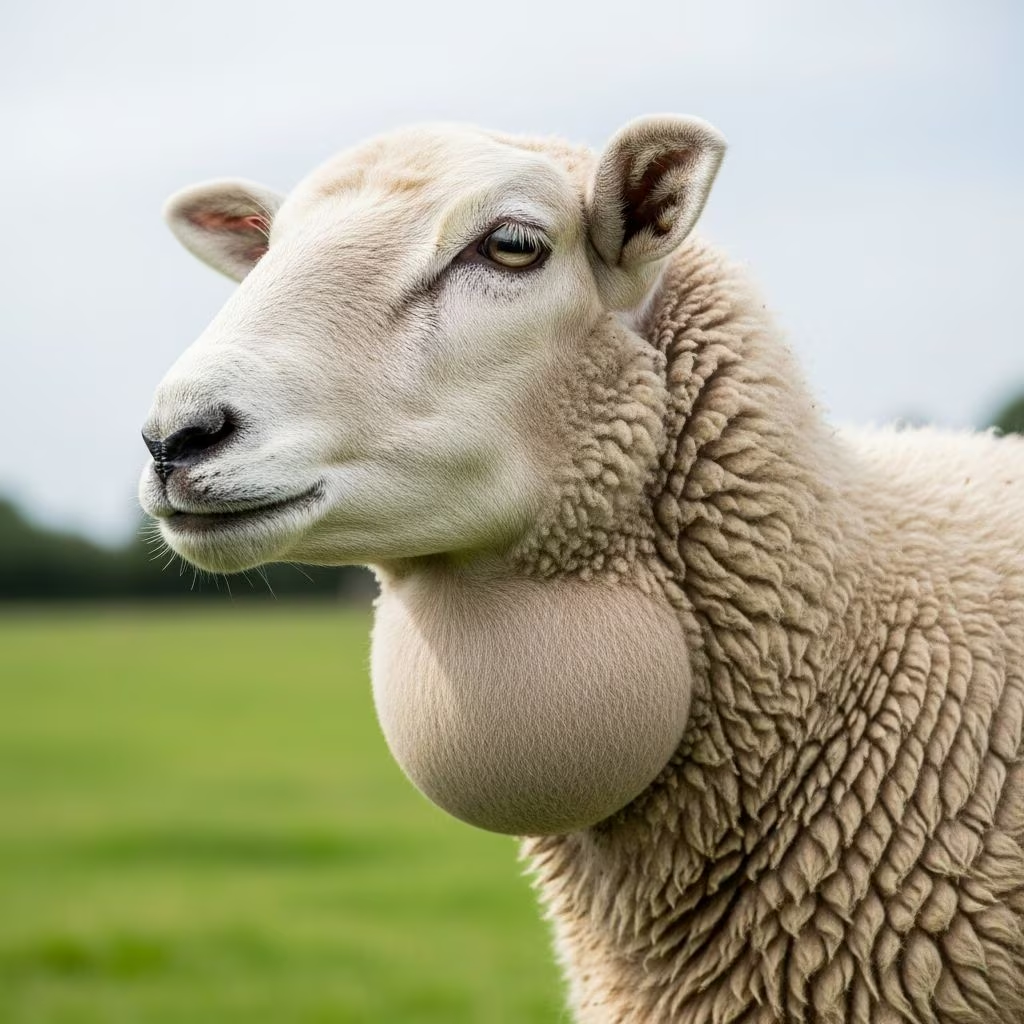
The thyroid gland plays a pivotal role in regulating metabolism, growth, and development across various animal species. When this gland enlarges abnormally, forming what is known as a goiter, it signals underlying disruptions in hormone production or gland function. This condition manifests in domestic mammals, birds, and livestock, often linked to nutritional shortfalls, genetic anomalies, or environmental influences. Early recognition and intervention are crucial to mitigate health complications and support animal vitality.
Defining Goiter and Its Basic Mechanisms
Goiter refers to the non-cancerous, non-inflammatory swelling of the thyroid gland, observable as a visible or palpable mass in the neck region. This enlargement arises when the body attempts to compensate for insufficient thyroid hormone levels by stimulating the gland through elevated thyroid-stimulating hormone (TSH) from the pituitary. Common in neonates of large animals and certain pets, goiter can impair development if unaddressed.
Unlike neoplastic growths, goiters are typically diffuse or nodular hyperplasias. Ultrasonography confirms the thyroid origin, distinguishing it from lymph nodes or salivary swellings. In horses, functional assessment via thyroid-releasing hormone (TRH) response tests guides therapy decisions.
Primary Causes of Thyroid Enlargement
Several factors trigger goiter formation, with nutritional deficiencies topping the list. Iodine shortfall remains prevalent in iodine-poor soils, affecting feed quality for herbivores and omnivores alike.
Iodine Deficiency: A Widespread Culprit
Iodine is essential for synthesizing thyroxine (T4) and triiodothyronine (T3). Without it, the thyroid hypertrophies in a futile effort to produce hormones. Neonatal pigs, lambs, and calves in deficient regions exhibit markedly enlarged, soft, dark-red thyroid lobes—often double normal size. Accompanying signs include hairlessness, thickened edematous skin, and high neonatal mortality due to fetal hypothyroidism.
Prophylaxis trumps treatment: iodized salt (over 0.007% iodine) in rations prevents outbreaks. In goats, located near the throat’s Adam’s apple, iodine-lacking diets directly cause visible swelling, disrupting metabolic control.
Goitrogenic Agents and Toxins
- Plant-based goitrogens: Cruciferous vegetables (e.g., cabbage, turnips) and others inhibit hormone synthesis, mimicking iodine deficiency.
- Chemicals: Organochlorines like DDT, lithium, and certain pesticides elevate TSH, promoting enlargement.
- Excess iodine: Paradoxically, hyperiodinism in foals from over-supplemented mare milk causes goiter, weakness, and skeletal issues.
Adults tolerate these mildly, but neonates face severe hypothyroidism.
Genetic and Congenital Factors
Familial dyshormonogenetic goiter stems from inherited enzyme defects in hormone biosynthesis, following autosomal recessive patterns in sheep, cattle, goats, and pigs. Reduced T3/T4 output spikes TSH, yielding goiter with stunted growth, sparse coats, myxedema, and weakness. Many perish perinatally.
In dogs, particularly French Bulldogs, TPO gene variants disrupt iodide processing, causing congenital hypothyroidism with goiter (CHG). Puppies show dwarfism, dullness, poor coat, macroglossia, and throat lumps.
Species-Specific Manifestations
| Species | Common Presentation | Key Triggers | Associated Risks |
|---|---|---|---|
| Dogs | Congenital goiter, dwarfism, haircoat issues | TPO mutations (recessive) | Lifelong hormone therapy needed |
| Cats | Autonomous nodules, hyperthyroidism | Multinodular toxic goiter | Weight loss, increased appetite |
| Horses/Foals | Diffuse enlargement, weakness | Iodine excess/deficiency | Musculoskeletal defects |
| Goats | Throat swelling | Iodine lack | Metabolic dysregulation |
| Calves/Lambs/Pigs | Neonatal hyperplasia, edema | Iodine deficiency | Perinatal death |
| Budgerigars/Birds | Neck masses, cysts | Iodine deficiency, diet | Fluid accumulations, respiratory issues |
Goiter in Companion Animals
In felines, hyperthyroid goiters mimic human toxic nodular goiter: TSH-independent nodules cause thyrotoxicosis. Older cats present with palpable lumps, weight loss despite polyphagia, and elevated T4/T3. Canine CHG demands genetic screening for at-risk breeds.
Livestock and Equine Cases
Goiter epidemics strike iodine-deficient herds, with calves showing ‘neonatal hypothyroidism’—colloidal goiter, alopecia, unthriftiness. Horses rarely need hormone checks unless symptomatic.
Avian Thyroid Hyperplasia
Budgerigars suffer most, with enlarged brownish glands, yellow granules, and cysts causing neck swelling. Crop/intestine fluid excesses and lung accumulations arise, not from compression.
Recognizing Clinical Signs
- Visible/palpable neck swelling.
- Growth retardation, disproportionate dwarfism.
- Coat abnormalities: alopecia, sparse wool/hair.
- Myxedematous tissues, lethargy, weakness.
- Species-specific: macroglossia (dogs), polyphagia/weight loss (cats), respiratory distress (birds).
Severity escalates in neonates, risking stillbirths or early death.
Diagnostic Approaches
Physical palpation detects masses; ultrasound verifies thyroid identity. Blood assays measure T4/T3, TSH (low in hyper-, high in hypo-). Scintigraphy reveals uptake patterns—heterogeneous in feline nodules. Genetic tests confirm CHG in dogs. Necropsy aids avian cases. Differentiate from adenomas, cysts, tumors.
Treatment and Management Strategies
Address root causes:
- Nutritional correction: Iodized salt for deficiencies; Lugol’s drops weekly for birds (1 drop/oz water).
- Hormone replacement: Levothyroxine for hypothyroid cases, lifelong in genetic forms.
- Ablative therapies (cats): Radioiodine (preferred), thyroidectomy, antithyroids.
- Remove excesses/toxins: Adjust mare diets for foals.
Early intervention in puppies/foals improves outcomes; monitor via bloodwork.
Prevention: Best Practice Guidelines
Balance rations in endemic areas: stabilized iodized salt, soil testing. Avoid goitrogenic feeds. Breed selectively against genetic carriers. Regular herd health checks catch subclinical cases.
Frequently Asked Questions (FAQs)
What causes goiter in my puppy?
Often genetic TPO defects leading to hypothyroidism; test breeds like French Bulldogs.
Can goiter resolve on its own in livestock?
Mild cases may with iodine supplementation, but prophylaxis prevents fetal losses.
Is feline goiter always cancerous?
No, typically benign toxic nodules causing hyperthyroidism.
How do I prevent avian goiter?
Iodine-enriched water weekly; balanced diets sans goitrogens.
Does excess iodine cause problems?
Yes, foal goiter and weakness from mare over-supplementation.
Key Takeaways for Animal Owners
- Monitor neck for swellings, especially neonates.
- Prioritize iodine in deficient regions.
- Seek vet diagnostics promptly.
- Genetic screening for predisposed breeds.
References
- Feline Hyperthyroidism – Animal Model for Toxic Nodular Goiter — Peterson ME. 2014-09-01. https://pubmed.ncbi.nlm.nih.gov/25297557/
- Congenital Hypothyroidism with Goiter — Embark Veterinary. Recent (2023 update inferred). https://embarkvet.com/products/dog-health/health-conditions/congenital-hypothyroidism-with-goiter/
- Goiter in Animals – Endocrine System — Merck Veterinary Manual. Recent (ongoing updates). https://www.merckvetmanual.com/endocrine-system/the-thyroid-gland/goiter-in-animals
- Avian Goiter (Thyroid Hyperplasia or Dysplasia) — University of Florida IFAS Extension. Recent. https://edis.ifas.ufl.edu/publication/VM029
- Goiter in Goats — Government of Manitoba Agriculture. Recent. https://www.gov.mb.ca/agriculture/livestock/goat/goiter-in-goats.html



