
Goffin’s Cockatoo: Personality, Food & Care
Complete guide to Goffin's Cockatoo care, personality, diet, and behavior for pet owners.
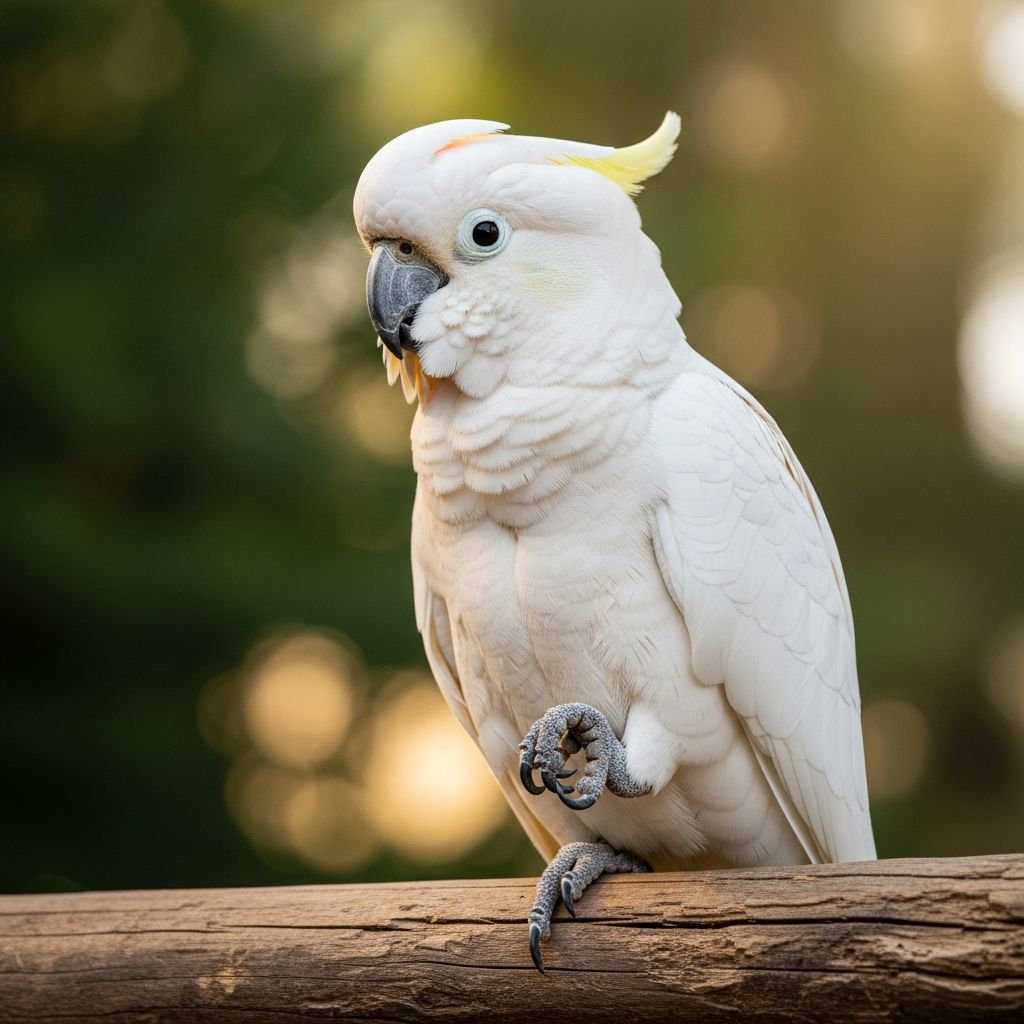
What Is A Goffin’s Cockatoo?
Goffin’s Cockatoos, scientifically known as Cacatua goffiniana, are among the smallest cockatoo species available as pets, yet they possess the same intelligence and affectionate nature as their larger relatives. These charming birds originate from the Tanimbar Islands in Indonesia and have become increasingly popular among bird enthusiasts seeking a more manageable cockatoo companion. Despite their compact size of approximately 12–13 inches in length and weight of around 250–300 grams, Goffin’s Cockatoos are not shy birds and thrive on human interaction and social engagement.
These cockatoos are characterized by their predominantly white plumage, with distinctive salmon-pink coloring near the beak and yellow hues visible under their wings and tail feathers. Like all members of the Cacatuidae family, they possess a distinctive crest of feathers on their head that they can raise or lower to express their emotions and communicate with their surroundings. With proper care and attention, Goffin’s Cockatoos can live 30–40 years, making them a long-term commitment for potential owners.
Personality & Behavior
Intelligence and Problem-Solving Abilities
Goffin’s Cockatoos are remarkably intelligent creatures, demonstrating problem-solving capabilities that rival those of larger parrot species. Scientific research has confirmed their exceptional cognitive abilities, with a notable 2013 Oxford University study demonstrating that untrained Goffin’s Cockatoos could solve complex mechanical problems by undoing a series of interlocking devices sequentially. These birds are known for their ingenuity, including the ability to craft and use their own tools—a behavior observed in captivity that showcases their advanced thinking and adaptability.
Their cleverness makes them fascinating pets, but this intelligence also means they require substantial mental stimulation. Without adequate enrichment, these birds can become bored or exhibit destructive behaviors. Their quick-learning ability is evident in their capacity to unlock cage doors, which means owners must invest in secure, well-constructed enclosures to prevent escapes.
Social Nature and Affection
Goffin’s Cockatoos are highly social birds that form strong bonds with their human companions. Like typical cockatoos, most Goffin’s enjoy being held and petted and are inherently friendly and sociable. They crave consistent daily interaction and can become lonely if neglected. This social requirement is more demanding than many other pet bird species, and potential owners should carefully consider whether they can dedicate several hours daily to their bird’s social and emotional needs.
These birds are known for being affectionate and enjoy being close to their human companions. However, this closeness comes with a caveat: they are prone to separation anxiety if left alone for extended periods. This emotional dependence, while creating wonderful companionship, necessitates careful boundary-setting to prevent the development of screaming behaviors and other destructive habits.
Playfulness and Mischief
Goffin’s Cockatoos are playful and energetic birds that love to explore and interact with toys. They are known for being a bit mischievous and can be quick learners, often discovering ways to manipulate their environment and toys. Their playful nature means they are constantly on the move, providing endless entertainment for their owners. However, this same playfulness can lead to destructive behaviors if not properly channeled through appropriate enrichment activities and training.
Vocalization and Sound
While Goffin’s Cockatoos have earned a reputation as the “quieter cockatoo” species compared to their larger relatives, they are not silent birds. Although not top talkers, they may learn a fair share of words and phrases and tend to love dancing to music. Like many cockatoos, they can be vocal when seeking attention, though their vocalizations are generally less intense than those of larger cockatoo species. Goffin’s Cockatoos can mimic sounds and produce a range of calls, particularly when they desire attention or feel ignored.
Care & Feeding
Housing Requirements
Despite their smaller size compared to other cockatoo species, Goffin’s Cockatoos require spacious, well-constructed cages that allow them to move about freely and engage in natural behaviors. A Goffin’s cockatoo needs a cage designed not only to prevent escape but also to withstand the bird’s intelligent problem-solving abilities and strong beak power. The cage should be large enough to accommodate perches, toys, and areas for climbing and exercise.
The enclosure must include multiple perches of varying diameters to promote foot health and provide comfortable resting spots. Adequate space for wing-stretching and movement is essential for maintaining the bird’s physical and mental well-being. Additionally, the cage should be positioned in a location where the bird can observe family activities while remaining in a secure environment.
Toy Requirements and Mental Stimulation
Goffin’s Cockatoos require a steady supply of toys and appropriate items to chew and destroy. These intelligent birds need toys that challenge their problem-solving abilities, such as puzzle toys and those that involve taking things apart or undoing knots. Mental stimulation through varied and rotating toys is crucial for preventing boredom, which can lead to destructive behaviors and feather plucking.
Owners should regularly introduce new toys and enrichment items to maintain the bird’s interest and engagement. Destructible toys made from safe materials, such as natural wood branches, untreated palm leaves, and paper-based products, allow the bird to engage in natural chewing behaviors that maintain beak health and provide psychological satisfaction.
Nutrition and Diet
Goffin’s Cockatoos, like all cockatoos, require a well-balanced diet that meets their nutritional needs. While specific dietary recommendations may vary, a quality pellet-based diet should form the foundation of their nutrition, supplemented with fresh fruits and vegetables. In their natural habitat, these birds feed on crops like corn, beans, and coconuts, indicating their preference for varied plant-based foods.
Fresh water should be available at all times, and the water bowl should be cleaned and refilled daily. Certain foods, such as avocado, chocolate, and salt, should be avoided as they are toxic to birds. A varied diet that includes nuts, seeds, leafy greens, and occasional fruits ensures adequate nutrition and provides mental stimulation through foraging behaviors.
Behavioral Training and Challenges
Setting Boundaries Early
Cockatoos, including Goffin’s, tend to be more needy than other pet parrot species, and owners must establish boundaries early to prevent behavioral problems. A new Goffin’s cockatoo should not be showered with non-stop attention but rather provided with toys and enrichment opportunities alongside intermittent interaction. This approach helps the bird learn to entertain itself when human companions are unavailable, reducing the likelihood of attention-seeking screaming and behavioral issues.
Establishing a consistent daily routine for feeding, playtime, and sleep helps birds thrive by providing predictability and structure. This routine should also include periods where the bird engages in independent activities, reinforcing that it can be content without constant human interaction.
Feather Plucking and Self-Destructive Behaviors
Feather plucking is a common issue in Goffin’s Cockatoos, usually resulting from boredom or emotional distress related to their highly social nature. These birds form deep bonds with their human families and require consistent daily interaction to maintain their mental and emotional health. Lack of engagement can lead to self-destructive behaviors such as feather plucking or skin picking, which become increasingly difficult to reverse once established.
Prevention through adequate mental stimulation, social interaction, and environmental enrichment is far more effective than attempting to stop feather plucking after it has begun. Monitoring behavioral changes and consulting with an avian veterinarian if signs of stress appear is essential for maintaining the bird’s physical and psychological well-being.
Excessive Chewing and Biting
Goffin’s Cockatoos, like all parrots, have a natural inclination to chew, which serves important functions including maintaining beak health and creating nesting materials. However, undisciplined cockatoos may engage in excessive and destructive chewing of household items, electric wiring, or furniture. Providing abundant “healthy” chewing opportunities through bird toys and natural wood branches redirects this instinctive behavior appropriately.
Biting can become problematic if left unaddressed. Young cockatoos may discover their beaks as a method of discipline, and without proper training and behavioral guidance, they can become dominating and aggressive. Understanding the bird’s body language and establishing clear boundaries through positive reinforcement training helps prevent these behavioral issues from developing.
Common Health Considerations
Goffin’s Cockatoos should receive regular veterinary check-ups from avian specialists to maintain optimal health. Signs of stress or illness, such as changes in appetite, lethargy, or unusual behavior, should prompt immediate veterinary consultation. Adequate nutrition, exercise, social interaction, and environmental enrichment are fundamental to preventing both physical and psychological health problems in these intelligent, social birds.
Frequently Asked Questions
Q: How long do Goffin’s Cockatoos live?
A: With proper care and attention, Goffin’s Cockatoos can live 30–40 years, making them a significant long-term commitment for pet owners.
Q: Are Goffin’s Cockatoos good for first-time bird owners?
A: While Goffin’s Cockatoos are smaller and quieter than other cockatoo species, they still require extensive daily interaction, mental stimulation, and dedicated care. They are best suited for experienced bird owners or those willing to invest significant time and resources.
Q: Can Goffin’s Cockatoos learn to talk?
A: Although not top talkers, Goffin’s Cockatoos can learn a fair share of words and phrases. They are more known for mimicking sounds and dancing to music than extensive vocalization.
Q: How much space does a Goffin’s Cockatoo need?
A: Despite their smaller size, Goffin’s Cockatoos require spacious cages with room for climbing, flying, and movement. The cage must be well-constructed to prevent the bird from escaping and withstand their strong beak.
Q: What causes feather plucking in Goffin’s Cockatoos?
A: Feather plucking usually results from boredom or emotional distress due to insufficient social interaction and mental stimulation. These highly social birds require consistent daily engagement and enrichment to maintain psychological health.
Q: How often should I interact with my Goffin’s Cockatoo?
A: Goffin’s Cockatoos require several hours of daily interaction and mental stimulation. However, owners should also establish boundaries to help the bird learn to entertain itself independently when human attention is unavailable.
Q: What toys are best for Goffin’s Cockatoos?
A: Toys that challenge problem-solving abilities, such as puzzle toys, those involving taking things apart, undoing knots, and destructible toys made from natural materials, are ideal for keeping Goffin’s Cockatoos mentally stimulated and engaged.
Conclusion: Is a Goffin’s Cockatoo Right for You?
Goffin’s Cockatoos make wonderful companions for dedicated bird owners who can provide the time, attention, and resources these intelligent, social birds require. While smaller and quieter than other cockatoo species, they are not low-maintenance pets. Their exceptional intelligence, affectionate nature, and playful personality make them rewarding companions for those willing to invest in their care and enrichment.
Owning a Goffin’s Cockatoo is a 30–40 year commitment that demands significant daily interaction, mental stimulation, proper nutrition, and veterinary care. With consistent training from a young age and appropriate behavioral guidance, these charming birds can be a source of joy and companionship for decades. If you are prepared for the responsibility and can provide the enriching environment these birds deserve, a Goffin’s Cockatoo may be the perfect addition to your family.
References
- Goffin’s Cockatoo Full Profile, History, and Care — Dial A Vet. 2024. https://www.dialavet.com/blog/goffins-cockatoo-full-profile-history-and-care
- Goffin’s Cockatoo Personality, Food & Care — Lafeber Co. https://lafeber.com/pet-birds/species/goffins-cockatoo/
- Goffin’s Cockatoo Profile & Care Guide — Parrot Essentials. 2024. https://parrotessentials.co.uk/blog/goffins-cockatoo-profile-care-guide
- The Goffin’s Cockatoo: Training and Behavioral Guidance — My Parrot Journey. 2013. https://myparrotjourney.wordpress.com/2013/04/23/the-goffins-cockatoo/
Similar Articles








Read full bio of medha deb


