

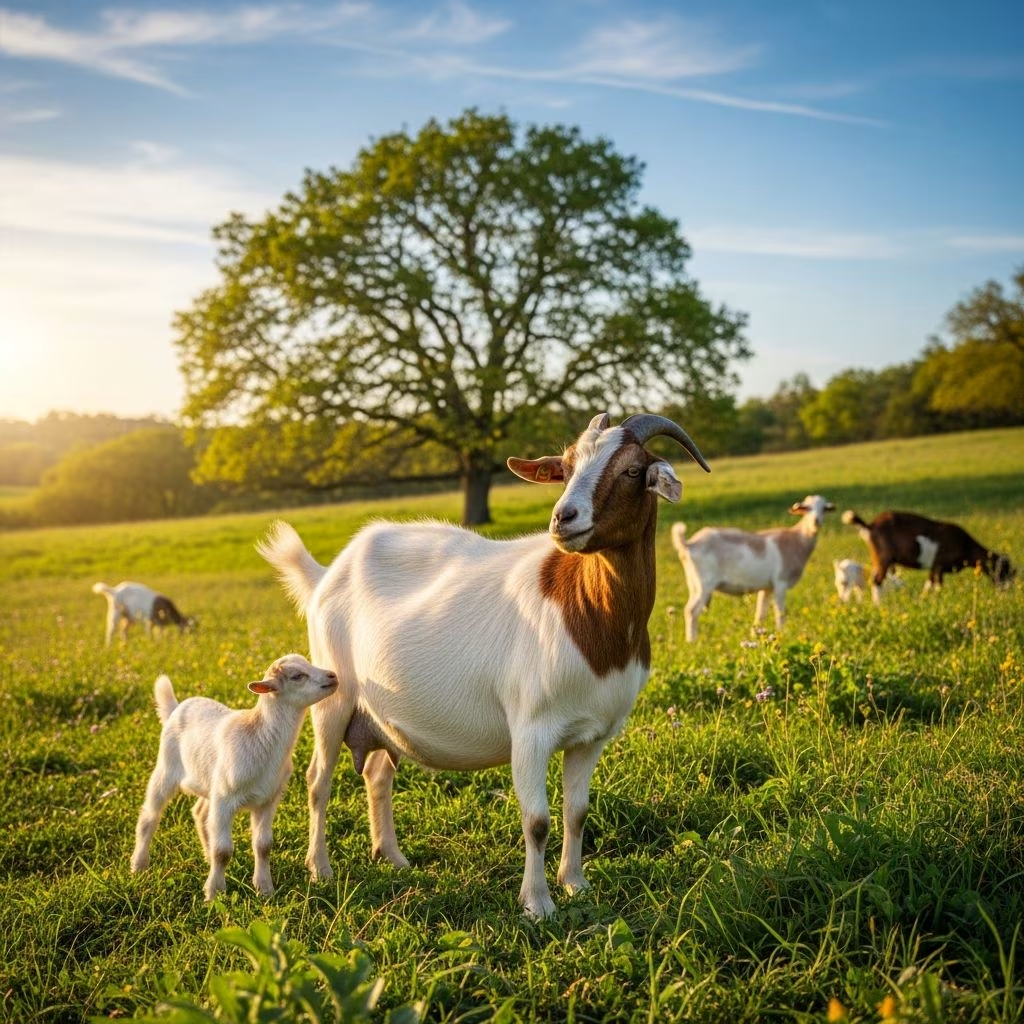
Successful goat farming hinges on effective reproductive management. This guide details strategies for breeding preparation, pregnancy oversight, birthing assistance, and postpartum care to boost herd productivity and kid survival rates.
Preparing Goats for Optimal Breeding
Before introducing bucks to does, conduct comprehensive health assessments. Evaluate body condition using a 1-5 scale, targeting 3-3.5 for does to support gestation and lactation demands. Bucks require similar checks to confirm fertility and vigor.
Nutritional flushing enhances fertility by elevating energy intake 2-4 weeks pre-breeding. Thin does on low-protein diets respond best, showing up to 25% higher ovulation rates with added grain or high-protein forage.
- Body condition assessment: Score does at 3.5/5 for breeding readiness.
- Flushing protocol: Increase dry matter by 0.5-1 kg/head/day for 2-4 weeks.
- Health screening: Deworm, vaccinate, and trim hooves 4-6 weeks prior.
Understanding Goat Estrous Cycles and Breeding Methods
Goats exhibit seasonal polyestrus, breeding under shortening days. Cycles average 18-21 days, with heat lasting 24-48 hours. Puberty occurs at 6-9 months or 60-65% adult weight.
Natural breeding uses buck:doe ratios of 1:20-40 in extensive systems. The “buck effect” synchronizes estrus upon introduction after separation. Intensive operations employ artificial insemination (AI), achieving 70-90% conception with fresh or frozen semen.
| Breeding Method | Pros | Cons | Suitability |
|---|---|---|---|
| Natural (pasture mating) | Low cost, natural synchronization | Risk of injury, disease spread | Extensive herds |
| Hand mating | Precise records, higher conception | Labor-intensive | Small herds |
| Artificial Insemination | Genetic improvement, disease control | Requires skill, equipment | Intensive/commercial |
Diagnosing and Managing Pregnancy
Confirm pregnancy 30 days post-breeding via blood tests or ultrasound, which also counts fetuses between 40-90 days for feed planning. Gestation spans 145-156 days.
Rectal palpation detects changes by stage:
- 30 days: Asymmetric uterine horns at pelvic brim.
- 60 days: Uterine distension, fluid-filled.
- 90+ days: Fetal parts and placentomes palpable.
Late gestation demands 20-50% more energy for multiples. Vaccinate does 4-6 weeks pre-kidding with CDT to boost colostral antibodies.
Recognizing Signs of Impending Parturition
Parturition signals include udder engorgement 1-2 days prior, behavioral shifts like isolation or nesting, and vulvar relaxation with mucous discharge.
Prepare a kidding area: clean, dry, 1.5m² minimum per doe, draft-free at 10-15°C. Monitor discreetly to avoid stress-induced labor delays.
Stages of the Kidding Process
Kidding divides into three stages, typically 1-12 hours total.
- Stage 1 (Preparation, 2-12 hours): Restlessness, pawing, tail wagging. Cervix dilates; doe may vocalize or separate.
- Stage 2 (Delivery, 30 min-2 hours): Strong contractions expel kids. First, amniotic sac appears, bursting to reveal hooves and nose in anterior position. Intervene if no progress in 30 minutes.
- Stage 3 (Placental expulsion, 1-8 hours): Afterbirth passes; retain for inspection to confirm complete delivery.
Normal presentation: Two front legs, nose down. Dystocia signs: membrane rupture without kid in 30 min, or single foot/nose.
Assisting with Difficult Births
Intervene gently: Wear gloves, lubricate, apply traction parallel to birth canal during contractions. Call a vet for posterior presentations, breech, or twins tangling.
Post-delivery, clear airways, rub kid dry, ensure nursing within 30-60 minutes for colostrum.
Newborn Kid Care and Management
Weigh kids at birth (target 2-4kg); track gains to spot issues. Dip navels in iodine.
- Colostrum intake: Critical first 24 hours for immunity.
- Bonding: Isolate dam-kid pair 2-3 days in jugs.
- Disbudding/Castration: Days 3-7 with hot iron; bands for castration by day 10.
Nutrition and Health Post-Kidding
Does need high-energy lactation rations: 1.5-2kg concentrate + hay. Monitor for mastitis, metritis. Kids thrive on milk to 8-12 weeks, then creep feed.
Common Challenges in Goat Reproduction
- Low conception: Address nutrition, timing, buck fertility.
- Dystocia: Overfat does, large singles; manage weight.
- Kid losses: Hypothermia, starvation; provide warmth, colostrum.
Breeding Records and Herd Improvement
Maintain logs: Breeding dates, kids born, weights, sex. Aim for 150-200% kidding rate. Select for twinning, parasite resistance.
Frequently Asked Questions (FAQs)
What is the average goat gestation length?
145-156 days, averaging 150.
How do I know when a goat is in labor?
Udder filling, nesting, discharge 24-48 hours prior; contractions follow.
Should I pull a kid during kidding?
Only if stalled 30+ minutes; gentle traction matching contractions.
When to disbud goat kids?
Days 3-7 for most breeds using hot iron.
What vaccines pre-kidding?
CDT 4-6 weeks before for colostrum protection.
References
- Breeding and Parturition of Goats — Merck Veterinary Manual. 2023. https://www.merckvetmanual.com/management-and-nutrition/preventative-health-care-and-husbandry-of-goats/breeding-and-parturition-of-goats
- Kidding In Goats — Sierra Animal Hospital. 2022. https://www.sierraanimal.com/kidding-goats
- Live Stock :: Goat :: Reproduction — Tamil Nadu Agricultural University (agritech.tnau.ac.in). 2021. https://agritech.tnau.ac.in/animal_husbandry/ani_goat_reproduction.html
- Gestation Period of a Goat: Birthing Kids Labor Timeline — Manna Pro. 2024. https://mannapro.com/blogs/news/birthing-goat-kids-labor-timeline
- Chapter 8 Kidding — Oklahoma State University Extension. 2020. https://extension.okstate.edu/programs/meat-goat-production/site-files/docs/chapter-8-kidding.pdf



