

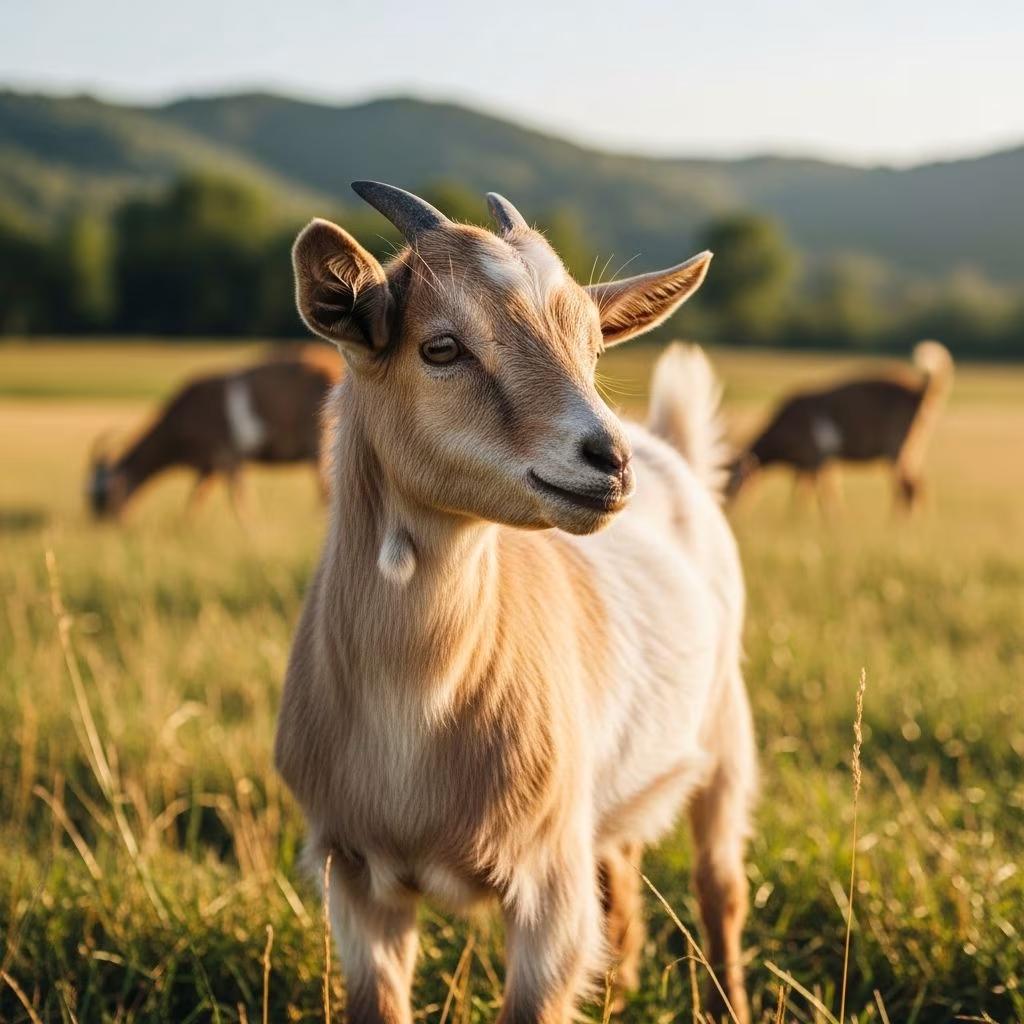
Understanding the reproductive development of goats is crucial for effective herd management. Female goats, or does, typically reach puberty between 6 and 8 months, while bucks mature slightly earlier at 4 to 6 months. These timelines can shift based on breed, nutrition, and environmental cues like daylight length. This guide delves into the physiological processes, behavioral indicators, and management strategies to support successful breeding.
Reaching Sexual Maturity in Goats
Puberty marks the transition to reproductive capability, defined in does by the first observable estrus followed by regular ovarian cycles. For bucks, it coincides with the start of sperm production. Goats generally hit this milestone around five to eight months, but factors such as birth season and feeding play pivotal roles.
Spring-born kids in temperate zones often mature faster because decreasing daylight aligns with their physiological readiness. Breeds like Pygmy goats may show signs as early as three months, whereas larger ones like Boer or Nubian require more time. Nutrition is key: kids should reach 60-75% of adult weight before breeding to ensure safe pregnancies and strong kids.
- Does: 6-8 months average, influenced by photoperiod and diet.
- Bucks: 4-6 months, with spermatogenesis onset.
- Minimum weight thresholds: 60% for small breeds, 70 lb (32 kg) for larger ones like Saanen.
Owners must monitor closely to avoid unplanned breedings, especially in mixed herds. Veterinary advice emphasizes delaying first mating until physical maturity.
The Goat Estrous Cycle Explained
Goats are seasonally polyestrous, meaning they cycle multiple times during shorter daylight periods, typically fall in northern hemispheres. The cycle averages 21 days but ranges from 18-24 days, with short cycles common in young does or early season.
Each cycle involves follicular growth, estrus, ovulation, and luteal phases. As days shorten, melatonin from the pineal gland boosts GnRH pulses, triggering FSH and LH release for follicle development.
| Phase | Duration | Key Events |
|---|---|---|
| Follicular | ~10 days | Follicle growth, rising estrogen. |
| Estrus | 24-48 hours | Receptivity, standing heat. |
| Ovulation | 9-72 hours post-estrus start | Egg release, typically late estrus. |
| Luteal | ~11 days | Corpus luteum forms, progesterone dominant. |
Short cycles (under 18 days) happen more in novices or season starts, while longer ones signal anestrous approach. Ovulation rates average 1.5-1.7 per doe, varying by breed and plane.
Recognizing Estrus: Behavioral and Physical Signs
Estrus detection relies on observing distinct behaviors amplified by a buck’s presence. Does exhibit proceptivity first—actively seeking males—followed by receptivity, standing firmly for mounting.
Standing estrus lasts about 36 hours (24-48 hours range), breed-dependent: shorter in Angora (22 hours), longer in Nubian (42 hours). Signs include:
- Vocalizing excessively (bleating).
- Tail flagging and wagging.
- Swollen, reddened vulva with mucous discharge.
- Restlessness, reduced feeding.
- Other does mounting the estrous one.
These peak with males nearby, aiding timely breeding. Ovulation follows 9-72 hours after onset, ideally 24-36 hours into heat.
Hormonal Drivers of Reproduction
Hormones orchestrate the cycle. Estrogen from maturing follicles surges during estrus, promoting receptivity. Post-ovulation, LH transforms the follicle into a corpus luteum producing progesterone, which maintains pregnancy or suppresses new cycles via feedback.
Melatonin senses photoperiod changes, initiating the hypothalamic-pituitary-gonadal axis in short-day breeders like goats. FSH supports follicle growth; LH triggers ovulation. Nutritional status modulates these, with energy deficits delaying puberty or reducing ovulation.
Seasonal Breeding Patterns
Peak activity aligns with shortening days (August-March in many regions), though some tropical breeds cycle year-round. Anestrus follows, lasting until next fall. Management can extend seasons via lighting or hormones, but natural cycles optimize fertility.
Breeding season length affects kidding rates, weaning success, and intervals. Measures like kids per doe or liveweight guide programs.
Best Practices for Breeding Management
Delay breeding until weight targets: 27 kg minimum for Angora, often 1.5-2.5 years old. Provide high-plane nutrition pre-breeding. Use buck exposure for synchronization.
For larger breeds, aim for 70 lb at first service. Monitor for short cycles in yearlings. Track behaviors daily during season starts.
- Nutrition: 60-75% mature weight minimum.
- Season timing: Fall peak for highest conception.
- Health checks: Vaccinate, deworm pre-breeding.
Common Challenges and Solutions
Young does may have irregular cycles; supplement with bucks for detection. Silent heats occur without overt signs—use vasectomized males (teasers). Nutrition gaps lower ovulation; balance energy/protein.
Overcrowding stresses herds, muting behaviors. Separate groups by status.
FAQs on Goat Reproduction
What age do goats reach puberty?
Does at 6-8 months, bucks 4-6 months, varying by breed and nutrition.
How long is a goat’s heat period?
Typically 36 hours, ranging 24-48 hours.
When do goats breed seasonally?
Fall, as days shorten, from August to March in temperate areas.
What are signs a doe is in heat?
Bleating, tail wagging, vulvar swelling, mounting others.
Can goats breed year-round?
Seasonal mostly, but some breeds in tropics do.
Optimizing Herd Productivity
Success hinges on timing matings to ovulation peaks, tracking cycles, and ensuring doe condition. High kidding rates (1.5+ kids/doe) follow proper management. Select bucks with proven fertility. Regular vet oversight prevents issues like dystocia in immature does.
By syncing puberty knowledge with practical steps, farmers boost weaning rates and kid viability. Invest in scales for weight monitoring and journals for cycle logs.
References
- Puberty in female goats is the age that estrus is first detected — A Greener World. 2023. https://agreenerworld.org/a-greener-world/kid-you-not/
- Puberty and Estrus in Goats — Merck Veterinary Manual. 2023. https://www.merckvetmanual.com/management-and-nutrition/management-of-reproduction-goats/puberty-and-estrus-in-goats
- The Estrous Cycle and Seasonality in Sheep and Goats — LSU AgCenter. 2015-07-20. https://www.lsuagcenter.com/profiles/bneely/articles/page1593707272607
- Goats in heat: How to tell when does are ready for breeding — Grazing with Leslie. 2023. https://grazingwithleslie.com/raising-goats/when-do-goats-go-into-heat/
- Goat Heat Cycle: Signs, Timing & What to Expect — Kalmbach Feeds. 2023. https://www.kalmbachfeeds.com/blogs/goats-and-sheep/understanding-the-goat-heat-cycle-signs-timing-and-what-to-expect
- Puberty and Sexual Maturity in the Buck and Doe — Wiley Online Library. 2025. https://onlinelibrary.wiley.com/doi/abs/10.1002/9781394190089.ch2



