

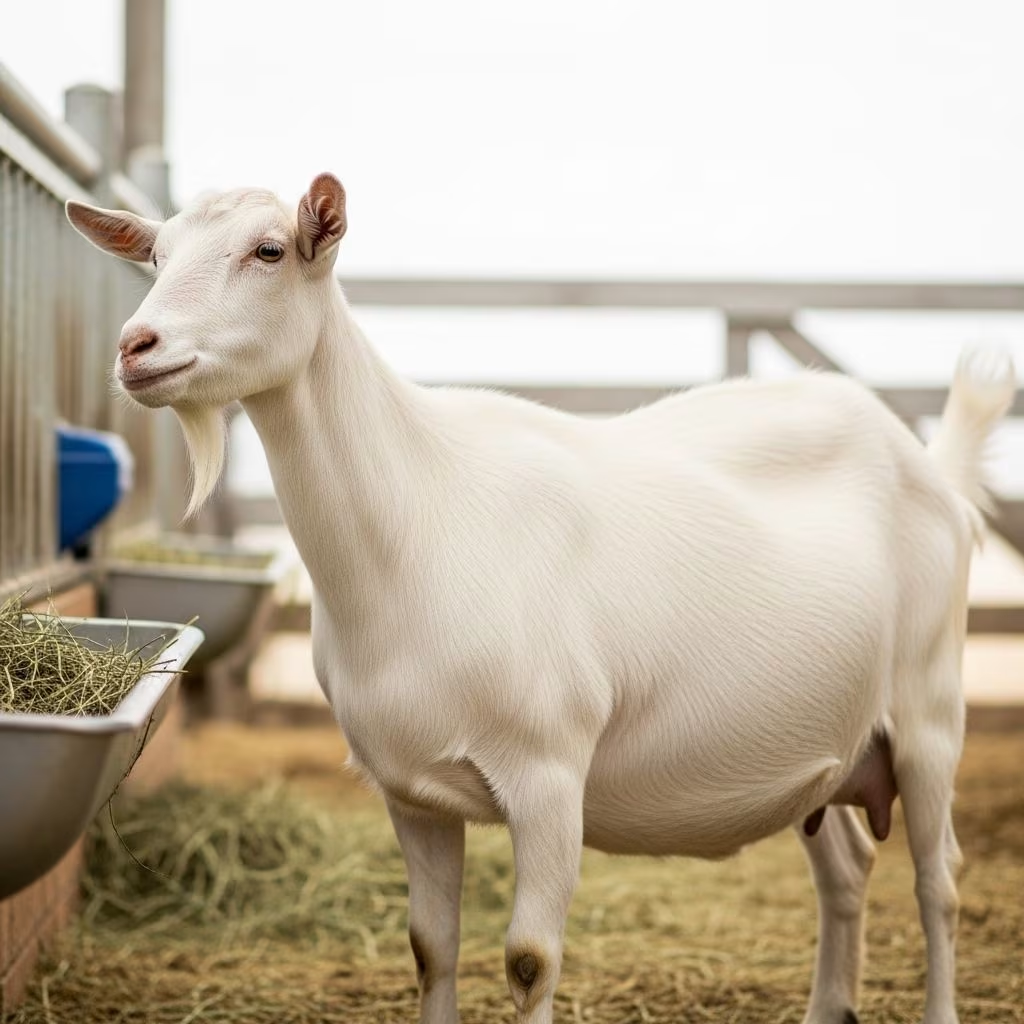
Successfully managing pregnant goats requires understanding the physiological changes occurring throughout gestation and implementing appropriate nutritional and management strategies. Proper care during pregnancy directly influences the health of both the doe and her offspring, making it essential for producers to understand each phase of gestation and associated management practices.
Understanding the Goat Gestation Timeline
The gestation period in goats typically ranges from 145 to 150 days, averaging approximately five months from the date of breeding. This timeframe can vary based on several factors, including breed characteristics, doe age, and the number of offspring she is carrying. Larger breeds such as Nubians and Boers tend to have slightly longer gestation periods, while miniature breeds like Nigerian Dwarfs may deliver somewhat earlier. Does carrying multiple kids generally give birth several days before those carrying a single kid, as the increased space demands trigger labor initiation.
Understanding this timeline allows producers to accurately predict kidding dates and prepare appropriate facilities and resources in advance. Maintaining detailed breeding records enables accurate tracking of expected delivery windows and helps identify does that may require veterinary attention if they deviate significantly from expected timelines.
Trimester-Based Pregnancy Stages and Development
Dividing goat pregnancy into three distinct trimesters, each lasting approximately 50 days, provides a useful framework for understanding physiological changes and adjusting management practices accordingly.
First Trimester: Foundation Phase (Days 1-50)
During the initial stage of pregnancy, the embryo undergoes rapid cellular division and begins establishing connection with the uterine wall. By day 12, the developing embryo attaches to the uterine lining, initiating the embryonic period. At day 20, cardiac function begins, representing a critical developmental milestone.
Physically, pregnant does typically show minimal external signs during this period. The primary behavioral indicator is the absence of a return to estrus approximately 18-21 days after successful breeding, which serves as an early confirmation of pregnancy. Some does may display subtle temperament changes, with previously sociable animals becoming more withdrawn or vice versa.
Management priorities during this trimester focus on maintaining consistent nutrition and minimizing stress. Does should receive a stable diet providing slightly above-maintenance nutrition levels, as pregnancy establishment requires adequate energy and nutrient availability.
Second Trimester: Growth Acceleration Phase (Days 51-100)
During the middle trimester, fetal development accelerates substantially, with major organs and systems becoming increasingly defined. By day 42, embryonic structures have transformed into identifiable fetal tissues, marking the transition from embryonic to fetal stage. Limb development progresses, sensory organs begin functioning, and skeletal structures form.
Physical changes become more apparent in the doe during this period. Abdominal enlargement becomes noticeable, particularly in does carrying multiple offspring. Appetite increases as the doe’s body demands additional nutrients to support rapid fetal growth. Many producers observe that does previously producing milk show decreased milk output as their bodies redirect resources toward pregnancy support.
If the doe was being milked before breeding, most producers discontinue milking around week 12-13 (approximately 60 days before the expected delivery date) to allow her body to rest and prepare colostrum production for newborn kids. Nutritional requirements remain similar to the first trimester, though feeding quality becomes increasingly important.
Third Trimester: Final Development Phase (Days 101-150)
The final trimester represents the most critical nutritional period for both doe and developing kids. By day 90, each fetus measures approximately 10 inches, and from this point, size varies significantly based on breed and individual genetics. Continued growth and development of all body systems occur during this phase, with fetal viability typically achieved by day 141.
Visible physical changes become pronounced during the third trimester. The doe’s abdomen visibly expands as kids increase in size, her udder fills with colostrum, and her overall body condition reflects the pregnancy demands. In the final weeks, careful palpation of the right abdominal side may reveal fetal movement, including hooves or noses pushing against the abdominal wall.
Nutritional requirements increase significantly during this trimester, particularly in the final 3-4 weeks before the expected kidding date. Energy and protein demands peak as fetal growth accelerates and the doe prepares for milk production. Inadequate nutrition during this critical period increases the risk of pregnancy toxemia (ketosis), a potentially fatal metabolic condition that occurs when does cannot meet their energy demands.
Fetal Development Milestones
Understanding specific developmental milestones helps producers recognize normal fetal progression and identify potential complications:
- Days 1-3: Fertilization and early cell division occur; the embryo enters the uterus by days 3-4
- Day 12: Embryonic attachment to uterine wall initiates the formal embryonic period
- Day 20: Cardiac function begins
- Days 28-35: Visible limb buds appear
- Day 42: Fetus measures approximately 1.5 inches; major tissues and organs are defined; embryonic period concludes
- Days 49-56: Ear canal development and opening occurs
- Days 56-63: Nostrils become patent
- Day 60: Fetus reaches 4 inches in length; eyes, eyelids, and nostrils become identifiable
- Days 77-84: Horn development begins with visible horn pits
- Day 90: Fetus achieves 10-inch length
- Days 98-105: Hair growth begins around facial features and tooth eruption initiates
- Days 119-126: Body hair coverage becomes complete
- Day 141: Fetal viability is achieved
- Days 145-152: Normal kidding occurs
Nutritional Management Throughout Pregnancy
Appropriate nutrition directly influences pregnancy outcomes, kid vigor, and doe recovery. Nutritional requirements vary based on the pregnancy stage, with the third trimester presenting the most challenging demands.
| Trimester | Duration | Nutritional Focus | Feeding Recommendations |
|---|---|---|---|
| First | Days 1-50 | Maintenance plus modest increase | Quality hay; diet consistency critical; avoid sudden changes |
| Second | Days 51-100 | Maintenance plus modest increase | Quality hay with grain supplementation as needed; monitor body condition |
| Third | Days 101-150 | Significant increase 3-4 weeks before kidding | High-quality hay; increased grain; adequate calcium and phosphorus; prevent overfeeding |
During early pregnancy, maintaining diet stability is particularly important as sudden nutritional changes can compromise pregnancy establishment. As pregnancy progresses, fiber quality becomes increasingly important, with high-quality hay supporting both energy needs and proper rumen function.
In the final month before kidding, feeding management becomes critical for preventing pregnancy toxemia. Energy requirements increase substantially as does must simultaneously support late-stage fetal growth and prepare for lactation. However, overfeeding poses equal risk, as excessive body condition gain predisposes does to metabolic complications. Strategic grain supplementation, beginning 3-4 weeks before expected kidding, supports energy needs without promoting dangerous weight gain.
Mineral nutrition, particularly calcium and phosphorus balance, becomes critical during late pregnancy, as fetal skeletal development demands substantial mineral deposition. Adequate vitamin supplementation, especially vitamins A, D, and E, supports both fetal development and does’ immune function during this demanding period.
Pre-Kidding Management Practices
During the final weeks of pregnancy, specific management practices prepare both the doe and facilities for successful kidding:
- Hoof Trimming: Perform hoof trimming 3-4 weeks before the expected kidding date to improve comfort and traction during labor
- Health Preparations: Administer CDT vaccine and BoSe injections (if recommended by veterinary assessment for selenium and vitamin E deficiencies) during this pre-kidding window
- Facility Preparation: Clean and prepare kidding pens with appropriate bedding materials to support comfort and sanitation during delivery
- Nesting Behavior Observation: Watch for increased restlessness, bedding manipulation, and separation from the herd, which indicate approaching labor
- Milk Production Assessment: Monitor for wax-capped teats and colostrum appearance, indicators of imminent kidding
Early Pregnancy Detection Methods
Confirming pregnancy early allows producers to implement appropriate management practices and feeding strategies. Multiple detection methods offer varying accuracy and timing:
- Behavioral Observation: Noting absence of estrus 18-21 days after breeding provides initial indication, though this method offers lower certainty than diagnostic tests
- Progesterone Testing: Blood or milk progesterone tests provide reliable confirmation approximately 3 weeks after breeding, detecting pregnancy establishment through hormonal markers
- Ultrasound Examination: Goat pregnancy ultrasound can confirm pregnancy as early as 30 days after breeding, also providing information about fetal number and viability
- Physical Examination: Subtle changes in udder tissue firmness and body condition may suggest pregnancy, though physical signs typically appear later than hormonal or ultrasound evidence
Preparing for the Kidding Process
Successful kidding begins with adequate preparation during the pregnancy period. Understanding labor progression and recognizing preparation signs enables timely intervention when necessary.
Labor unfolds in three distinct stages. During the preparation stage, does become increasingly restless, separate from herd mates, and display frequent tail raising and abdominal side hollowing as their bodies prepare for delivery. This stage typically lasts 4-8 hours in experienced does and 6-12 hours in first-time mothers, with significant variation among individuals.
The delivery stage begins with water sac appearance and progresses through active labor with contractions and pushing efforts. Proper facility design supporting the doe’s comfort and allowing safe delivery without complications represents essential preparation occurring during pregnancy.
Frequently Asked Questions
How early can pregnancy be confirmed in goats?
Pregnancy can be reliably confirmed as early as 30 days after breeding using ultrasound examination. Blood or milk progesterone tests provide reliable confirmation at approximately 3 weeks post-breeding, while behavioral observation (absence of heat return) offers earlier indication though with lower certainty.
What are the most reliable early physical signs of pregnancy?
Absence of return to estrus 18-21 days after breeding represents the most reliable early behavioral indicator. Early physical signs such as shinier coat, brighter eyes, or subtle udder changes may appear but typically emerge later and are less dependable than hormonal or ultrasound confirmation.
How should nutrition change as pregnancy progresses?
Early pregnancy requires slightly above-maintenance nutrition with emphasis on diet consistency. By the third trimester, particularly the final 3-4 weeks, significantly increased energy and protein become necessary to support rapid fetal growth and prepare for lactation, with careful attention to preventing overfeeding.
What is pregnancy toxemia and how is it prevented?
Pregnancy toxemia (ketosis) occurs when does cannot meet energy demands, particularly during late pregnancy and early lactation. Prevention focuses on adequate third-trimester nutrition beginning 3-4 weeks before kidding, avoiding sudden feed changes, preventing obesity, and monitoring body condition closely during late pregnancy.
At what point should a milking doe be dried off before kidding?
Does being milked should be dried off (stopped from milking) around week 12-13 of pregnancy, approximately 60 days before the expected kidding date, allowing her body adequate time to rest and prepare colostrum production for newborn kids.
References
- Stages of Goat Pregnancy — Eden Hills. Accessed February 24, 2026. https://edenhills.wordpress.com/2012/04/01/stages-of-goat-pregnancy/
- How to Tell if Your Goat is Pregnant: A Guide to Gestation and Pregnancy Stages — Goat Care. Accessed February 24, 2026. https://goatcare.com/blogs/goats/how-to-tell-if-your-goat-is-pregnant-a-guide-to-gestation-and-pregnancy-stages
- Goat Pregnancy Signs & Stages: A Complete Care Guide — FarmKeep. Accessed February 24, 2026. https://www.farmkeep.com/farm-guides/breeding/goat-pregnancy-signs
- Gestation Period of a Goat: Birthing Kids Labor Timeline — Manna Pro. Accessed February 24, 2026. https://mannapro.com/blogs/news/birthing-goat-kids-labor-timeline
- How long are goats pregnant [gestation calculator] — Grazing with Leslie. Accessed February 24, 2026. https://grazingwithleslie.com/raising-goats/goat-gestation-calculator/
- Chapter 8 Kidding — Oklahoma State University Extension. Accessed February 24, 2026. https://extension.okstate.edu/programs/meat-goat-production/site-files/docs/chapter-8-kidding.pdf
- Live Stock :: Goat :: Reproduction — Tamil Nadu Agricultural University. Accessed February 24, 2026. https://agritech.tnau.ac.in/animal_husbandry/ani_goat_reproduction.html



