

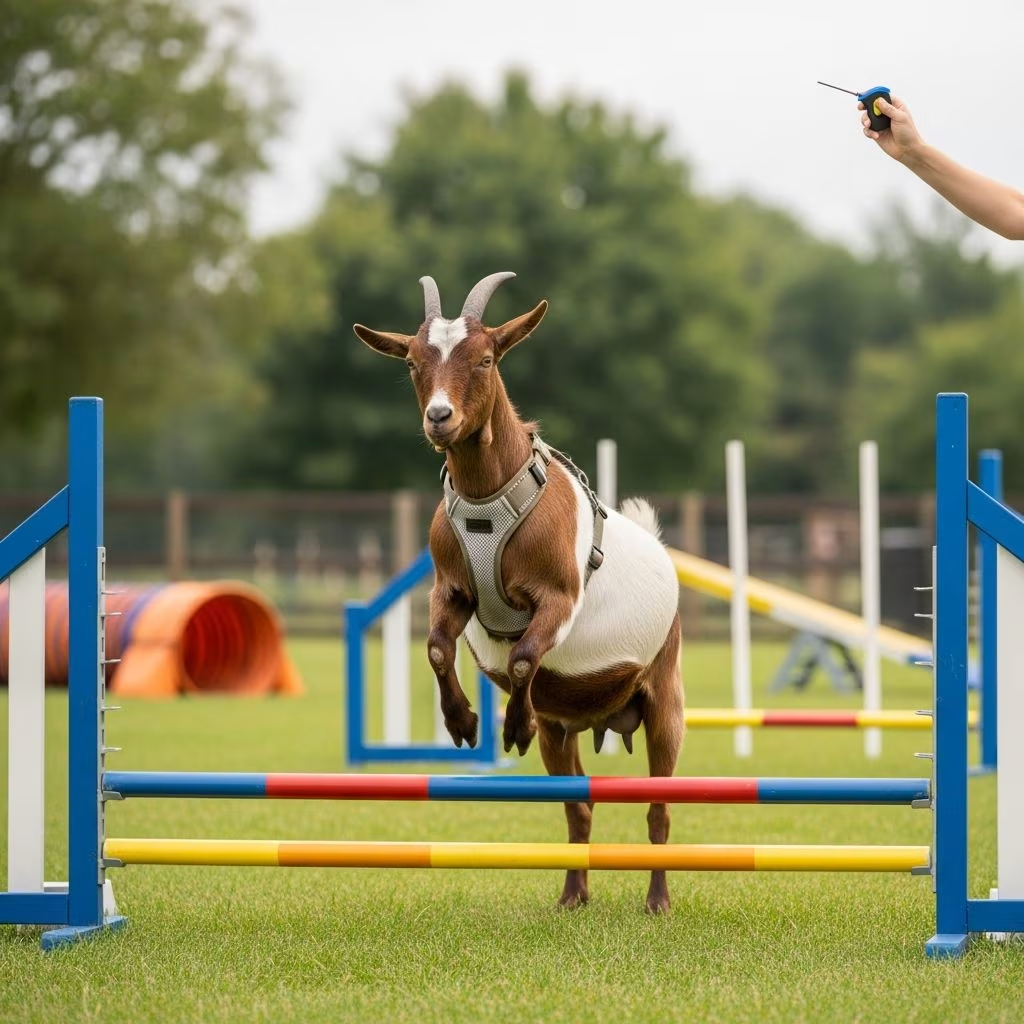
Goat Clicker Training and Agility Course Tricks
Goats are remarkably intelligent and trainable animals that respond exceptionally well to positive reinforcement methods. One of the most effective and enjoyable ways to build trust with goats while providing them with essential mental and physical stimulation is through clicker training combined with agility course activities. This approach has proven successful at sanctuaries, farms, and zoos worldwide, transforming the way caregivers interact with goats and helping these animals reach their full potential.
Clicker training represents a revolutionary approach to animal behavior modification that transcends species boundaries. When a goat performs a desired behavior, a trainer uses a small mechanical device to produce a distinctive clicking sound, immediately followed by a reward—typically a favorite treat. This immediate positive association helps the goat understand exactly which action earned the reward, making learning faster and more intuitive than traditional training methods.
Understanding Clicker Training Fundamentals
Clicker training operates on the principle of operant conditioning, where animals learn to associate their actions with positive outcomes. The click serves as a “bridge” signal that tells the goat their behavior was correct before the treat arrives. This timing is crucial for effective learning and creates a clear communication channel between trainer and animal.
The beauty of clicker training lies in its versatility and positive nature. Unlike force-based training methods that rely on punishment or coercion, clicker training leverages a goat’s natural desire for food rewards and interaction. Goats, being prey animals by instinct, naturally fear and flee from perceived threats. By using kindness, patience, and positive reinforcement, trainers can gradually overcome these instincts and build genuine trust and loyalty with even shy or skittish animals.
The process begins by establishing what trainers call “charging the clicker.” This involves repeatedly clicking and immediately providing a treat until the goat develops a strong association between the sound and the reward. Once this foundation is solid, trainers can begin shaping increasingly complex behaviors.
Building Trust Through Positive Reinforcement
One of the most significant advantages of clicker training is its effectiveness in building trust with goats that may be naturally wary or have had negative experiences with humans. Traditional methods of chasing, forcing, or punishing goats into compliance create fear and resistance, making the animal more likely to avoid human contact. In contrast, positive reinforcement creates an anticipation of good things happening when humans are present.
Patience and creativity form the foundation of successful goat training. When introducing new goats to clicker training, trainers should work at the animal’s pace, allowing it to become comfortable with both the trainer and the basic clicking sound before expecting complex behaviors. Over time, even the most cautious goat will begin approaching the trainer eagerly, anticipating the training sessions and the rewards they bring.
This trust-building extends beyond basic interactions. Once goats have been clicker-trained, they become far more cooperative during essential husbandry activities such as being milked, having hooves trimmed, and receiving veterinary examinations. This cooperation reduces stress for both the animal and the caregiver, making routine care procedures safer and more efficient.
Behavioral Achievements and Learned Skills
Goats trained with clicker methods consistently demonstrate remarkable learning capacity and behavioral flexibility. Beyond basic obedience, trained goats can master numerous skills that showcase their intelligence and athleticism. Common learned behaviors include:
Walking calmly on a leash represents one of the foundational skills that prevents goats from pulling or bolting during handling. Advanced training can teach goats to stand still for extended periods, respond to specific verbal cues or hand signals, and execute tricks that demonstrate their physical capabilities and mental engagement.
The most impressive aspect of clicker-trained goats is their ability to offer new behaviors spontaneously. As trainers continue working with individual goats, these animals begin experimenting with different movements and behaviors to see what might earn a click and reward. This “offering” behavior indicates genuine engagement with the training process and showcases how much these animals enjoy the mental stimulation.
Each goat demonstrates individual personality and learning style. Some goats, particularly dwarf breeds like Nigerian Dwarf and Nubian varieties, prove especially adept at learning complex sequences. These intelligent animals quickly master agility obstacles and eagerly perform behaviors to interact with their trainers.
Designing and Building Agility Courses
An agility course for goats functions similarly to a “jungle gym” or playground, providing varied obstacles that challenge the goats physically while encouraging them to think and problem-solve. These courses capitalize on goats’ natural climbing behaviors and instinctive desire to explore elevated surfaces and navigate complex environments.
Creating an effective agility course doesn’t require expensive equipment. Many successful courses utilize recycled and salvaged materials including:
– Wooden pallets transformed into A-frame structures and elevated platforms
– Empty electrical spools serving as teeter-totter bases and jumping obstacles
– Two-by-four lumber used for balance beams and framework construction
– Concrete blocks, tires, and other common farm materials repurposed creatively
Construction requires basic carpentry knowledge and attention to safety. All obstacles must be structurally sound with no sharp edges or protruding fasteners that could injure the goats. Obstacles should vary in difficulty, allowing goats of different ages, sizes, and abilities to participate. Some structures may be partially buried in the ground—such as electrical spools used as teeter-totters—to provide additional stability.
The most effective courses include diverse challenge types: climbing structures, balance beams, jumping obstacles, and walking elements that require careful hoof placement. This variety maintains goat interest and prevents boredom, while ensuring comprehensive physical development.
Physical and Mental Benefits of Agility Training
Regular participation in agility courses provides goats with multiple health and behavioral benefits that extend well beyond simple entertainment. The physical exercise strengthens muscles, improves cardiovascular health, and maintains healthy body weight—particularly important for sanctuary animals and those in domestic settings where natural running and climbing may be limited.
Mental stimulation proves equally crucial for goat wellbeing. Bored animals frequently develop destructive or problematic behaviors including excessive pacing, hair pulling, and aggression toward humans or other animals. These stereotypic behaviors indicate stress and poor psychological welfare. Agility training directly addresses this issue by providing an engaging outlet for natural behaviors and the mental challenge that goats inherently crave.
The combination of clicker rewards with physical obstacles creates powerful motivation. Goats quickly learn that negotiating the agility course leads to clicks and treats, making them eager participants. This motivation transforms training from something imposed on the goat into an activity the animal actively seeks and enjoys.
Beyond individual benefits, agility training facilitates positive social interactions between goats and their human caretakers. These interactions strengthen bonds and create opportunities for consistent, positive human contact that improves the goats’ overall socialization and disposition.
Learning From Observation and Social Modeling
Goats demonstrate remarkable capacity for learning through observation. When advanced trainees complete agility obstacles successfully, receiving clicks and treats as rewards, other goats watch intently and begin attempting the same obstacles. This “monkey see, monkey do” dynamic accelerates learning across the herd and creates a positive social structure where successful goats serve as role models.
This observational learning extends to behavior adoption. When one goat willingly participates in agility training and clearly enjoys the experience, other goats become curious and eager to join in. The combination of seeing rewards being distributed and observing a herd mate’s obvious enjoyment proves irresistible to most goats.
Social modeling also applies to basic training behaviors. As leading goats become proficient at responding to trainer signals and reliably approaching for training sessions, subordinate herd members gradually adopt these behaviors through observation and social context. This cascading effect makes training multiple goats in a group setting increasingly efficient.
Reaching Full Potential Through Training
Clicker training combined with agility course work allows goats to demonstrate their full intellectual and physical capabilities. These training modalities move beyond basic control or compliance into the realm of allowing goats to express their natural abilities in structured, rewarding contexts.
Well-trained, agile goats become ambassadors for their species, demonstrating to potential adopters and the general public just how intelligent, friendly, and capable these animals truly are. Goats exhibiting sophisticated training and agility skills present themselves as engaging, interactive companions rather than simple livestock. This transformation in perception often makes the difference for goats in sanctuary or rescue settings seeking permanent homes.
The confidence that develops through successful agility training also benefits the goats psychologically. As they master increasingly challenging obstacles and receive consistent positive reinforcement, their self-assurance grows. This confidence transfers to other areas, making these goats more resilient, adaptable, and generally happier animals.
Practical Training Progressions
Effective clicker training follows a logical progression from simple to complex. Trainers typically begin with basic obstacle introduction, allowing goats to explore the course freely while clicking and treating any interaction with the structures. Once a goat voluntarily engages with obstacles, trainers can begin shaping more specific behaviors, such as walking across a balance beam or climbing an A-frame.
Advanced training introduces sequencing, where goats learn to complete multiple obstacles in order. Some goats develop such proficiency that they can complete entire courses without trainer direction, racing between obstacles and waiting for the trainer to direct them to the next element.
Duration of training sessions should match goat attention spans and enthusiasm levels. Short, engaging sessions typically prove more effective than extended training periods that may lead to fatigue or frustration. Consistency matters tremendously—regular training sessions establish routine and maintain skill development more effectively than sporadic efforts.
Frequently Asked Questions
Q: Can all goats be clicker-trained?
A: Yes, goats of all breeds and ages can be clicker-trained. Success depends more on trainer patience and consistency than the goat’s inherent traits. Even naturally shy or skittish goats respond well to clicker training when given time and positive experiences.
Q: What treats work best for clicker training goats?
A: Goats vary in their preferences, but many respond well to grain, dried fruit, or commercial goat treats. The key is using treats the individual goat genuinely values, making the reward meaningful enough to motivate continued participation.
Q: How long does it take to train a goat?
A: Basic clicker training fundamentals can be established within a few weeks of consistent work. Advanced agility skills may take months to develop fully. Individual goats progress at their own pace, and pressure-free training respects each animal’s learning timeline.
Q: Can older goats be trained?
A: Absolutely. While younger goats may pick up training slightly faster, goats of any age can learn new behaviors through clicker training. Age provides no barrier to participation in agility training or trick learning.
Q: What safety considerations apply to agility course design?
A: All structures must be sturdy, stable, and free of sharp edges or hazards. Obstacles should match goat sizes and abilities. Regular maintenance ensures no deterioration or dangerous conditions. Supervision during training prevents injuries.
Q: How does agility training improve veterinary care?
A: Trained goats comfortable with human handling and body contact become far more cooperative during veterinary examinations, reducing stress and making procedures safer and more efficient for both the animal and the veterinarian.
References
- Goat Clicker Training and Agility Course Tricks — Best Friends Animal Society. 2025. https://bestfriends.org/stories/features/goat-clicker-training-and-agility-course-tricks
- Clicker Training Goats — Prancing Pony Farm. 2025. https://www.prancingponyfarm.com/clicker-training-goats.html
- Goat Agility Training — Philadelphia Zoo. 2014. https://www.youtube.com/watch?v=183QTOhSRYg
- How Play Structures Build Goat Agility — Pack Goats. 2025. https://packgoats.com/blogs/news/how-play-structures-build-goat-agility



